
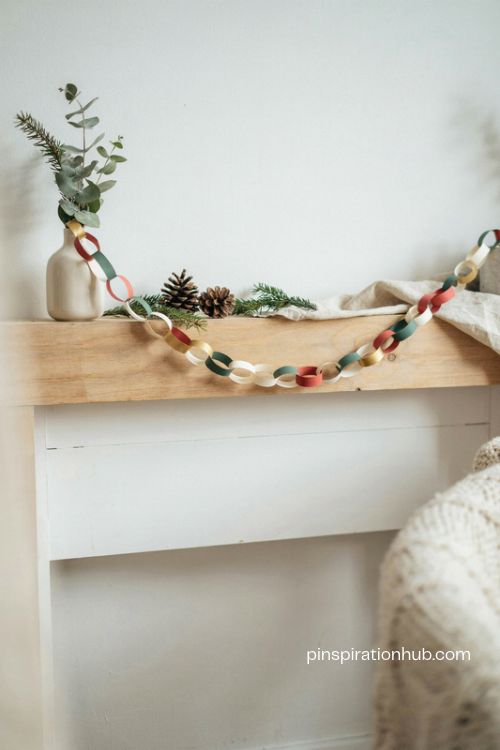
The table sets the tone for everything that happens around it, and the first thing people notice when they walk into a room is whether that table looks cared for. It’s also the last thing most hosts actually get around to planning, usually squeezed in the night before everyone arrives. The good news is you don’t need weeks of prep to pull together christmas table decorations ideas that feel considered rather than rushed. Below are fifteen approaches — some quick, some a little more involved — that work whether you’re hosting a big family dinner or a smaller, quieter meal.
1. Start with a Decorative Linen
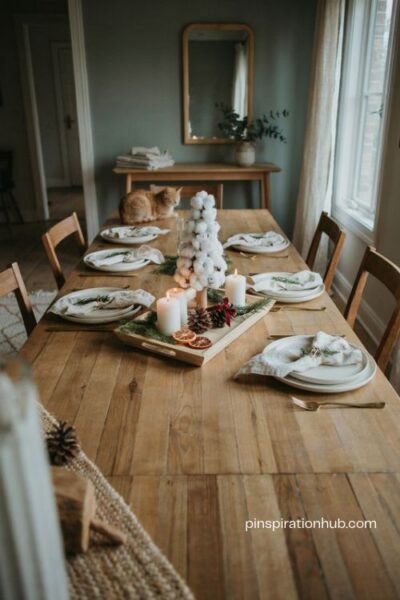
A patterned or textured tablecloth does more of the visual work than almost anything else you’ll add, since it becomes the backdrop for every other decision. Pick something with a subtle print or an interesting weave and the rest of the table practically decorates itself — a few candles and a little greenery is often all you need on top. This is the easiest place to begin if you’re staring at a bare table and don’t know where to start. Even a runner over a plain cloth can do the same job on a smaller budget.
2. Include Party Crackers
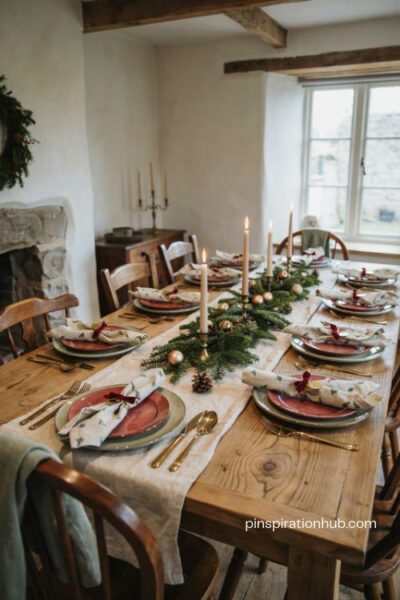
Beyond the fun of the pop, crackers give guests something to do the moment they sit down, which naturally breaks the ice before the first course arrives. Set one at each place, tucked beside the side plate or resting across the top of the napkin. Coordinating the cracker colors with your linens or centerpiece ties the whole table together without extra effort. It’s a small detail, but it’s often the one guests remember and mention days later.
3. Keep the Centerpiece Low
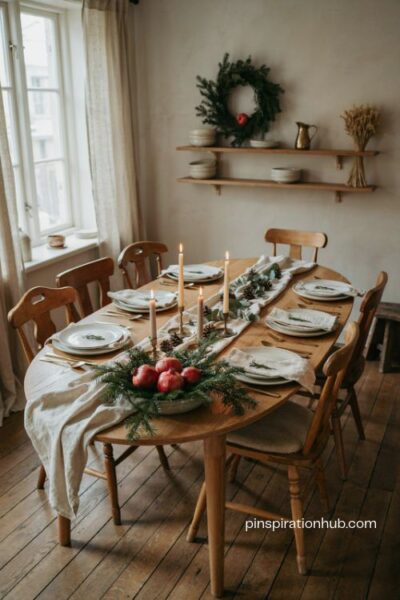
A tall arrangement in the middle of the table might look striking in photos, but it makes actual conversation across the table nearly impossible. Stick to low candles, a shallow dish of greenery, or a scattering of pomegranates and other fruit instead. This keeps sightlines open so everyone can actually see and talk to the people across from them. If you want a taller element somewhere, save it for a sideboard or the ends of the table rather than the center.
4. Try an Analogous Color Scheme
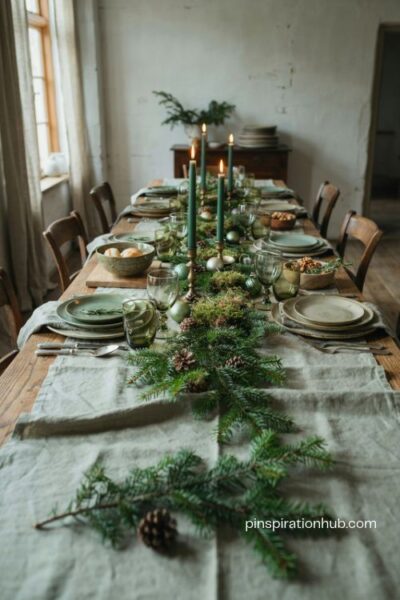
Rather than picking two contrasting colors, choose a single shade and work through its range — different greens, or blush through deep burgundy, layered across linens, plates, and candles. This approach reads as far more polished than scattering several unrelated colors around the table. Lay out your pieces together before committing, since some combinations only reveal themselves once you see the actual materials side by side. A single-color palette also makes it easier to mix old and new pieces without anything looking out of place.
5. Let a Nutcracker Light the Way
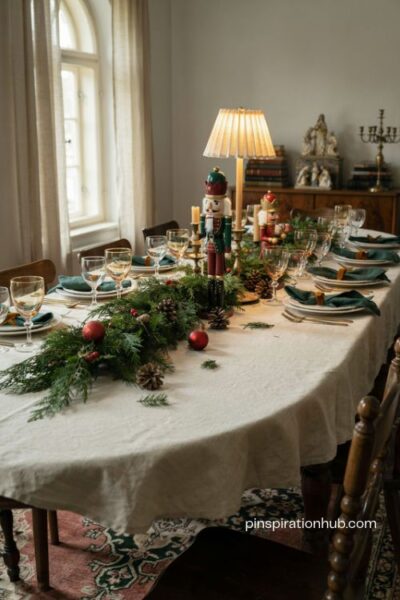
A rechargeable or battery-powered nutcracker lamp brings a bit of playful, conversation-starting charm to a table that might otherwise feel a little too serious. Set one or two along the length of the table instead of a full row of matching candles, and let them do double duty as both light source and decoration. Swapping the lampshade for something more festive is an easy way to change the look from year to year without buying a whole new piece. This works especially well for a table that already leans traditional and could use one playful touch.
6. Keep the Greenery Simple
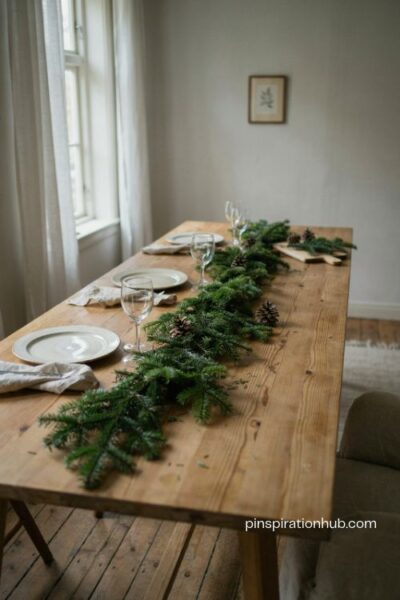
Sometimes the most elegant table is the one with the least going on. A single length of fresh evergreen down the center, with nothing else added, can look more intentional than a table crowded with multiple competing elements. This approach also happens to be the cheapest and fastest option on this list, since a few cut branches from outside are often all it takes. If you want a bit more, add one type of accent — berries or pinecones — rather than several at once.
7. Bathe the Table in Candlelight
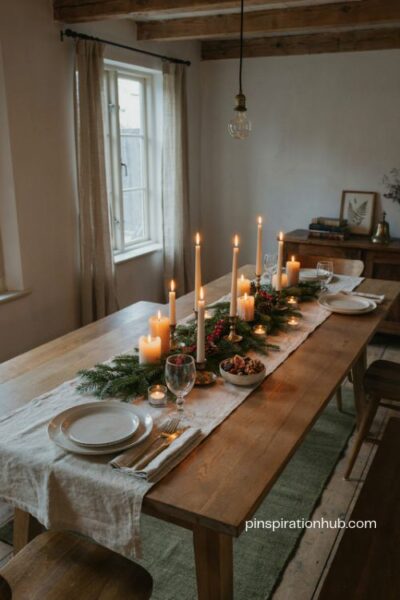
Dimming the overhead lights and relying mostly on candles instantly makes any table feel warmer and more festive, and it’s flattering for everyone sitting around it. Mix taper candles, pillar candles, and tealights at slightly different heights instead of using just one style throughout. If children will be at the table, swap a few real flames for battery tealights in glass holders so you keep the glow without the worry. This is one of the lowest-cost changes on the whole list and one of the most noticeable.
8. Lean into a Cream and White Palette
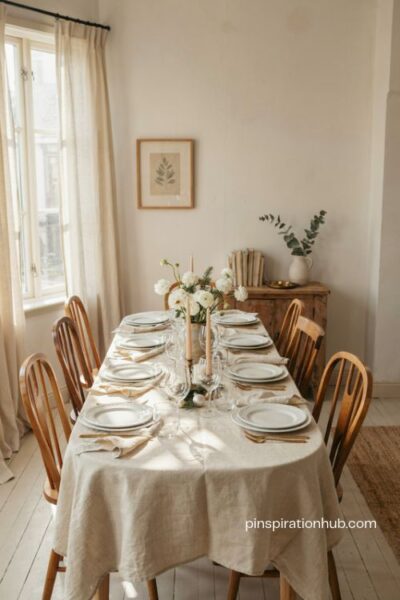
A cream and white color scheme feels crisp and elegant without trying too hard, and it pairs beautifully with white roses or other pale winter blooms. Metallic accents in gold or silver add a little warmth so the look doesn’t feel too cold or sterile. This palette also has the advantage of working with almost any dinnerware you already own, since white and cream pieces are common in most kitchens. It’s a good direction if you want a table that photographs well without a lot of color-matching effort.
9. Style with Personal Objects
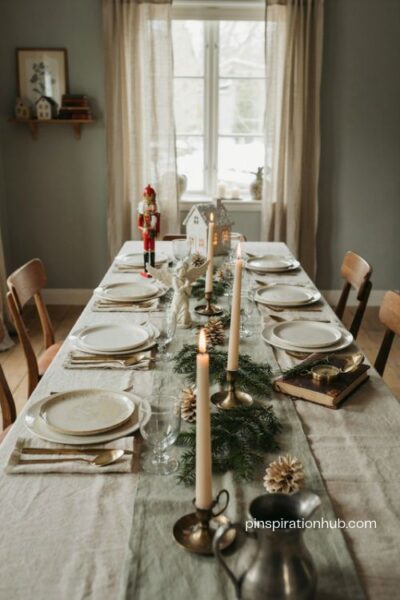
Rather than buying new decorations every year, dig through what you already own for small objects that could sit at each place setting — little ceramic houses, vintage figurines, or trinkets collected from travels. These personal touches make a table feel unique in a way that store-bought centerpieces rarely do. Grouping a few small pieces together near each place setting works better than scattering them randomly across the whole table. Guests tend to notice and ask about these details more than anything else on the table.
10. Keep the Table Approachable
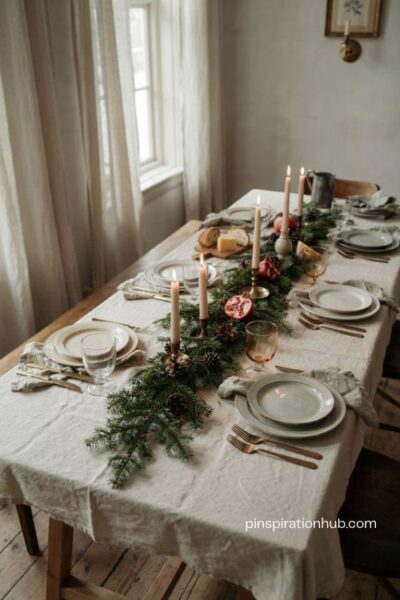
A table that looks too perfect can actually make guests hesitant to relax at it, which defeats the purpose of a holiday gathering. Leave a little breathing room rather than filling every inch with decoration, and don’t stress over pieces matching exactly. A slightly imperfect arrangement of candles or a centerpiece that leans a bit to one side often looks more inviting than a completely symmetrical setup. The goal is a table people want to sit at for hours, not one they’re afraid to touch.
11. Add a Whimsical Floral Garland
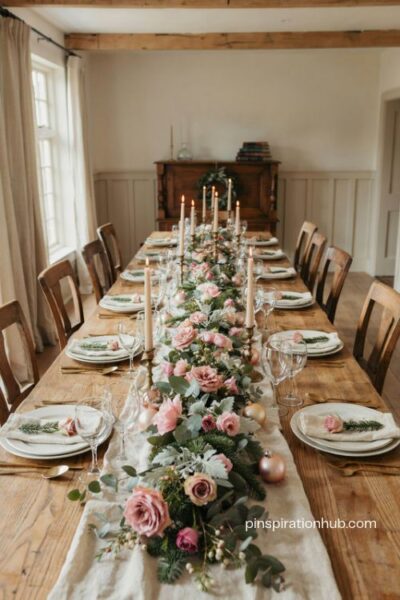
A soft floral garland in an unexpected shade — think dusty pink against silvery green — brings a note of whimsy that classic red and gold sometimes lacks. Drape it loosely down the center of the table rather than pulling it taut, so it has some natural movement and fullness. This works particularly well if you want a centerpiece that feels a little more playful without straying too far from a traditional holiday palette. Pair it with simple white candles so the garland stays the clear focal point.
12. Send Guests Home with a Small Favor
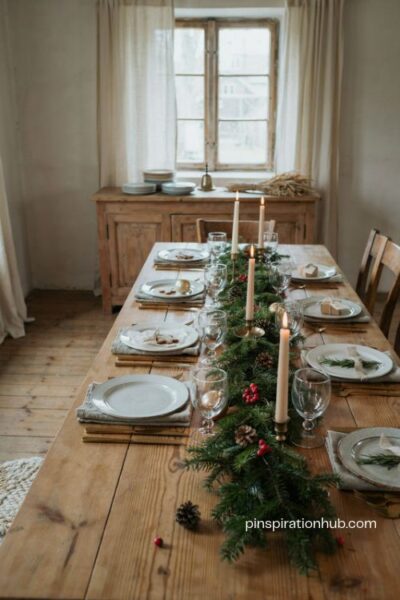
A small gift at each place setting, whether it’s an ornament, a gingerbread cookie, or a hand-written note, gives guests something to take home besides leftovers. These favors double as place cards if you attach a name tag, which solves two problems with one simple item. Keep the favor small and lightweight so it doesn’t compete for space with plates and glasses. This detail costs very little per guest but tends to leave a lasting impression well after the meal is over.
13. Festoon the Table Like a Tree
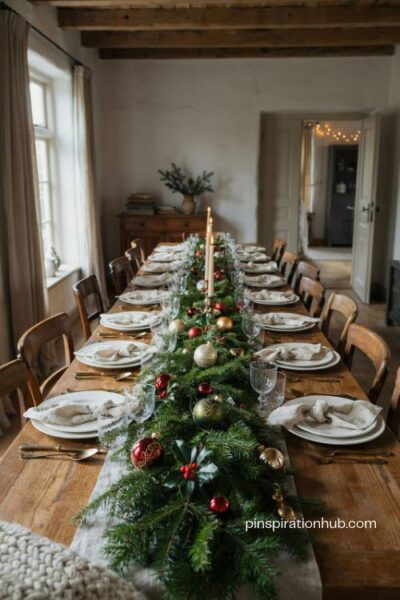
Borrow the same instinct you’d use decorating a Christmas tree and apply it straight to the table: lay a length of evergreen down the center, then hang small ornaments directly onto the branches. This gives the table a sense of dimension and sparkle without needing a separate centerpiece built from scratch. Mixing ornament sizes along the garland adds visual interest rather than making everything feel uniform. It’s a simple trick that makes use of decorations you likely already own for the tree itself.
14. Elevate the Centerpiece Overhead
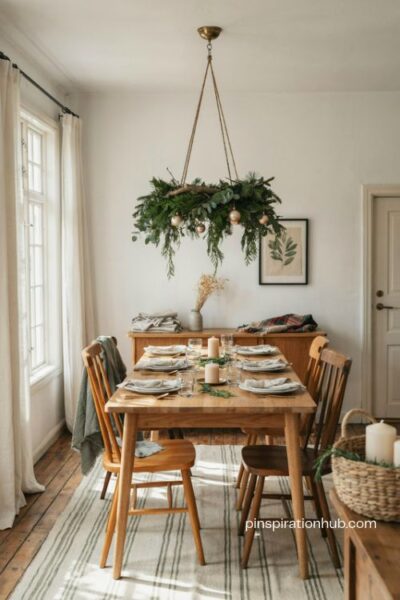
When every inch of table space is needed for food and place settings, moving the decoration upward solves the problem neatly. Suspend a foliage-wrapped branch or hoop from a light fixture above the table, letting a few sprigs hang down at different lengths for a softer look. This frees up the entire surface below for serving dishes while still making a strong visual impact. It works especially well for a smaller dining space where a traditional centerpiece would eat up too much room.
15. Pick a Mood: Cozy, Festive, or Merry and Bright
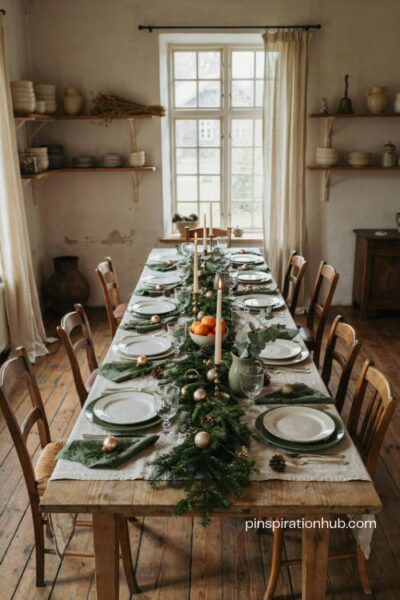
Rather than mixing every idea on this list, choose one overall feeling and build toward it — a cozy look with white linen and warm metallics, a more dramatic look with deep tones and high-shine accents, or a playful, retro-inspired table with bold clashing colors and string lights. Committing to one direction makes decorating decisions easier, since you’re no longer guessing whether a piece fits. Whichever mood you choose, keep two or three key colors or textures repeating throughout so the whole table feels connected rather than assembled at random.
Final Thoughts
Pick one or two ideas from this list rather than trying to do all fifteen at once — a table with a few well-chosen details almost always looks better than one trying to say everything. Start with whatever you already own, add one small new touch if you have the budget for it, and let candlelight cover for anything that still feels unfinished. Save this list for next year too, since half the fun is picking a different direction each holiday season.
Frequently Asked Questions
Q: What are simple Christmas table decoration ideas for beginners?
A patterned tablecloth, low candles, and a length of fresh greenery down the center cover the basics without requiring much time or skill.
Q: How do I make a Christmas table look elegant without spending much?
Choose one color palette and stick to it, use what you already own for the centerpiece, and rely on candlelight to do most of the visual work.
Q: What should I avoid when decorating a Christmas table?
Avoid tall centerpieces that block sightlines across the table, and resist over-decorating every inch, since a little empty space actually makes a table feel more inviting.