
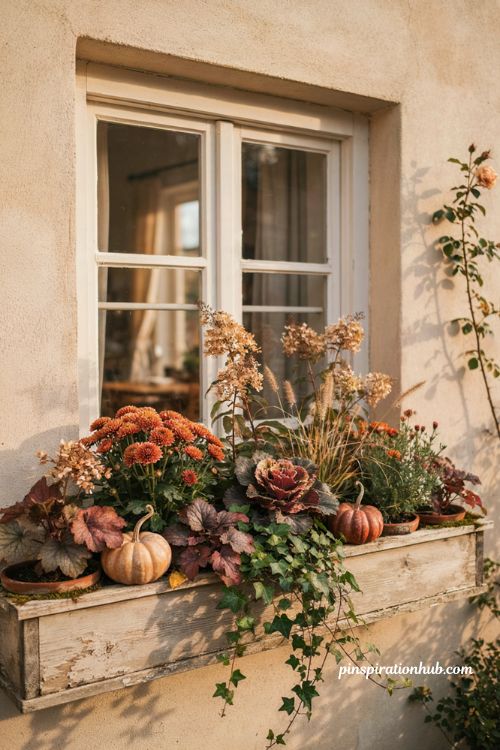
Somewhere around late August, your summer window boxes start looking a little tired — the petunias are leggy, the color’s faded, and the whole thing just reads more “end of season” than “curb appeal.” It’s a familiar problem for anyone who put in the work back in May and doesn’t want to just rip everything out and start from zero. The good news is that a fall refresh doesn’t have to mean a total overhaul. With the right mix of plants, a few seasonal accents, and one or two smart design choices, you can turn that faded summer box into something that carries you straight through the season. Here are fifteen fall window boxes ideas to steal for your own porch or windowsill.
1. Build Around Mums
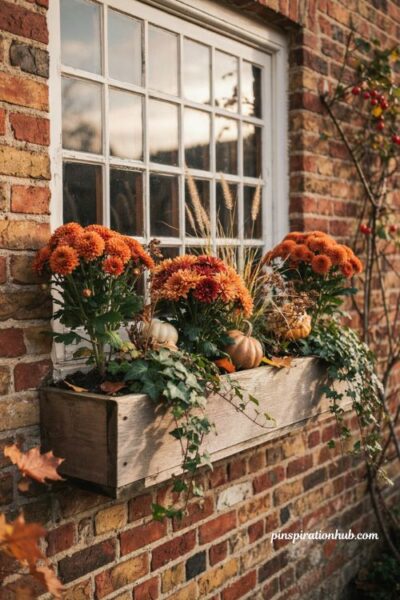
Chrysanthemums are the backbone of most fall window boxes, and for good reason — they come in nearly every warm shade you could want, from rust and burgundy to soft apricot and gold. Choose two or three pots in slightly different bloom stages so you get a longer flowering window instead of everything peaking and fading at once. Place them toward the outer edges of the box to frame whatever you’re using in the center. Skip white mums if you’re going for a classic autumn palette — they tend to read more like spring than fall against warm tones.
2. Layer in Ornamental Cabbage and Kale
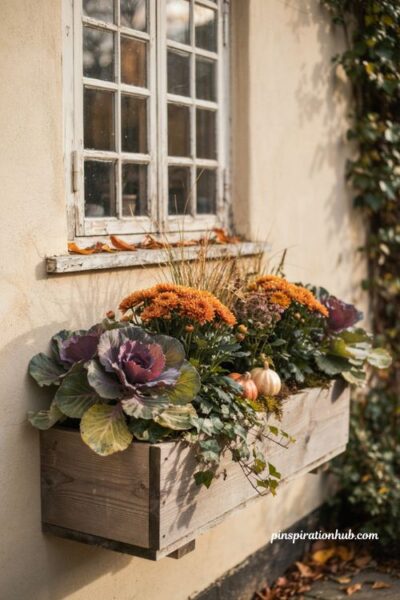
Frilly ornamental cabbage and kale bring a totally different texture to the mix, with ruffled purple and green leaves that actually get more colorful as the temperature drops. They hold up well into the cooler months, often lasting longer than the flowers around them. Give them a spot with full sun, since they tend to dry out faster than you’d expect for a plant that looks so lush. Pairing them with mums in a contrasting color, like deep purple cabbage against burnt orange blooms, creates one of the richest-looking combinations you can put together for fall.
3. Tuck in Mini Pumpkins on Picks
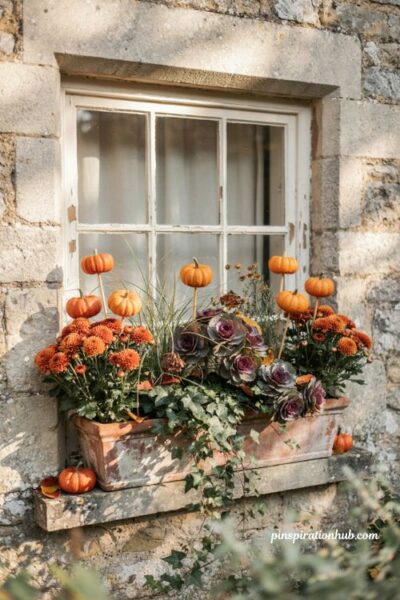
Instead of setting whole pumpkins on top of the soil where they’ll rot the plants underneath, slide a few mini pumpkins onto wooden floral picks and insert them right into the arrangement. This trick lets you add height and pops of orange exactly where the display needs it, without weighing anything down. Plan to swap the pumpkins out every few weeks since they break down faster than the plants around them. It’s a small detail, but it’s the kind of touch that makes a window box look intentionally styled rather than just planted.
4. Go Full Harvest with Gourds and Corn
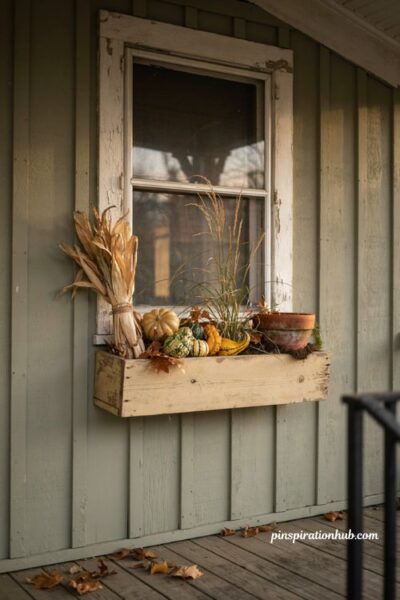
For a farmhouse feel, bundle dried corn husks together and tuck them in alongside small gourds and squash of varying shapes and colors. Wrap a bit of twine around the bundles to keep everything neat, and let a few pieces spill slightly over the edge of the box for movement. This combination works especially well on a covered porch where the dried textures won’t get soggy in the rain. Pair it with a base of ornamental grass so the whole thing doesn’t read as too stiff or static.
5. Add Height with Ornamental Grass
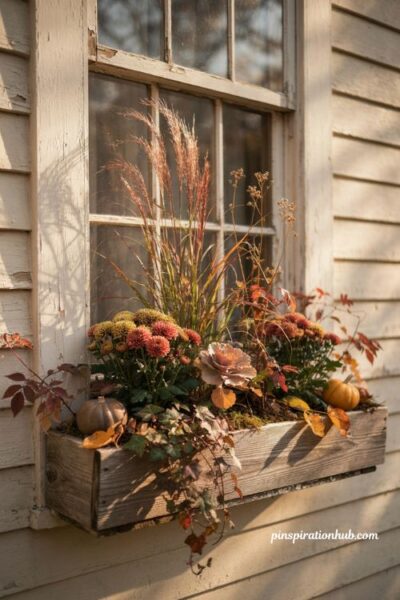
A tall grass like fountain grass or Prairie Winds gives your window box a natural “thriller” element without needing a single flower. The blades dry into warm tones of red and gold as the season goes on, so the display actually changes and deepens in color the longer it sits. Place it toward the back or center of the box depending on whether people will view it from one side or all around. It also moves gently in the wind, which adds a bit of life to an otherwise still arrangement.
6. Try a Single-Color Palette
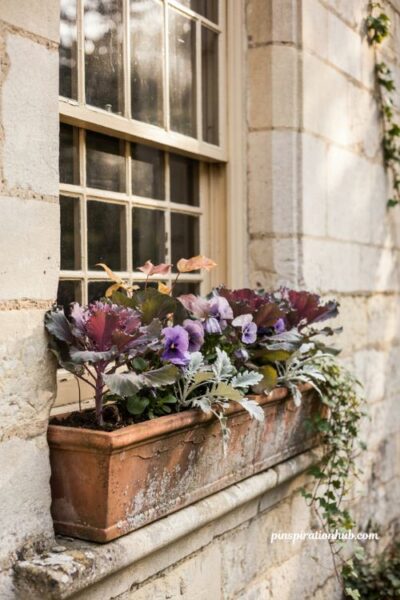
Rather than mixing every warm shade you can find, commit to one color family and let different textures do the work instead. A purple palette using ornamental kale, pansies, dusty miller, and coral bell foliage looks far more sophisticated than a rainbow mix, and it’s easier to shop for since you’re not hunting for a specific combination of hues. This approach also makes it simple to swap in fresh plants later in the season without disrupting the overall look. Stick to two or three plant varieties so the palette stays clean rather than busy.
7. Plant Something Fragrant
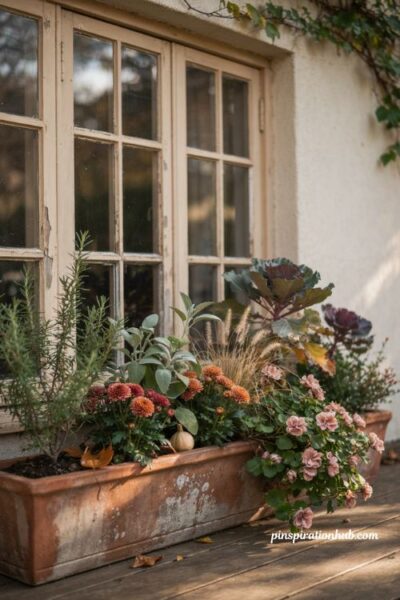
Window boxes get a lot of visual attention, but scent is easy to forget about. Rosemary, sage, and trailing herbs like Attar of Roses pelargonium add a soft fragrance to the porch every time someone brushes past, and most of them hold up well into cooler weather. Mix herbs in with your ornamental plants rather than keeping them separate, since many have attractive foliage on their own. This is also a practical choice if you like to snip a bit of rosemary or sage for cooking on your way in the door.
8. Extend Summer with Pelargoniums
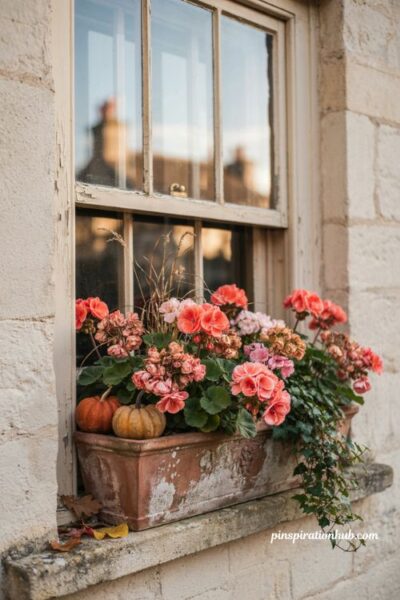
If your summer geraniums are still going strong, there’s no rule that says you have to pull them in September. Pelargoniums are surprisingly tough and will often keep flowering well into late fall with very little extra care. Add in a few seasonal accents like a small pumpkin or some dried grass around the base to shift the mood without replacing the whole planting. This is the easiest option on the list if you’d rather stretch your existing display than start over from scratch.
9. Design for Halloween
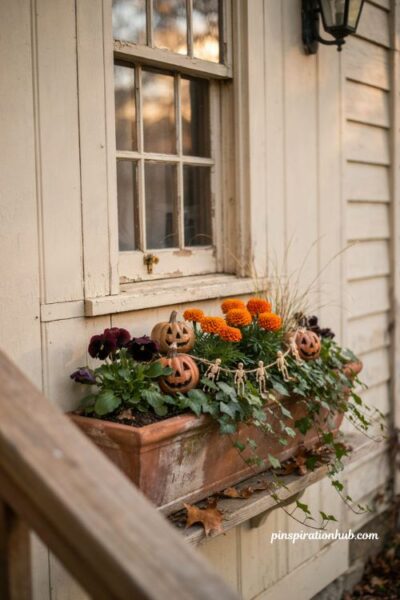
For a spookier take, mix black and orange flowers like dark pansies and orange marigolds as your base color scheme, then tuck in a couple of small jack-o’-lanterns once you’re ready to commit to the theme. A garland of tiny skeleton figurines woven through the greenery adds a playful, not-too-scary touch that still works for a family porch. Keep the plant portion of the display fairly simple so the Halloween accents have room to stand out. This version is easy to dial back to a plain autumn look once the holiday passes.
10. Set the Scene for Thanksgiving
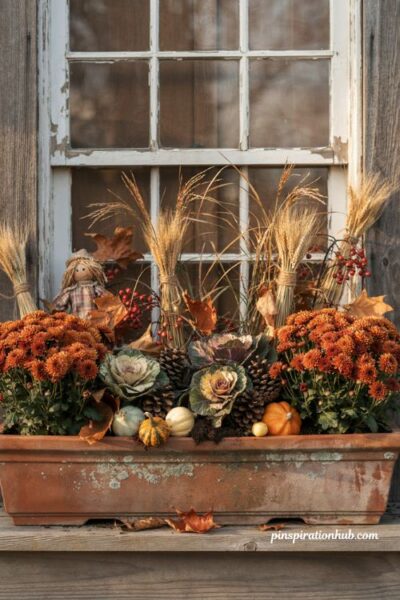
Once Halloween is over, shift the same window box toward a warmer, harvest-focused look using dried autumn leaves, pinecones, and small bundles of wheat or straw. Swap the jack-o’-lanterns for a few gourds and a scarecrow accent if you want something a little more farmhouse than spooky. Red berries tucked among the dried stalks add a welcome pop of color against all the browns and golds. This transition works well because most of the base plants — mums, kale, grasses — carry over from one theme to the next without needing to be replanted.
11. Match Your Window Box to Your House
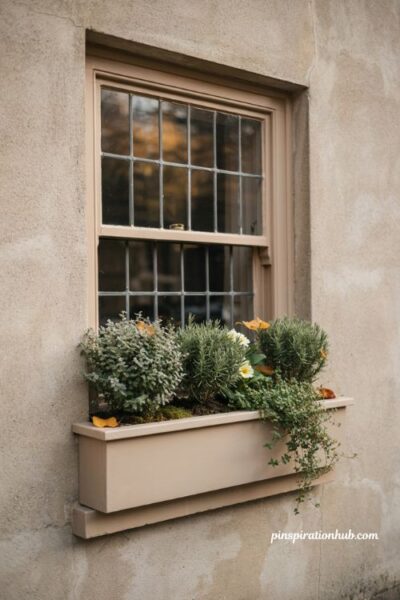
If your window boxes are a plain color, consider painting them the same shade as your window frames or trim for a more polished, cohesive exterior. A muted, coordinated look pairs especially well with restrained plantings like hebe, thyme, or clipped rosemary balls, with a touch of pale primrose for color. This approach reads as more “designed” than a mismatched box sitting under a freshly painted window. It’s a simple weekend project that makes a bigger visual difference than most people expect.
12. Use a Layered Thriller-Filler-Spiller Formula
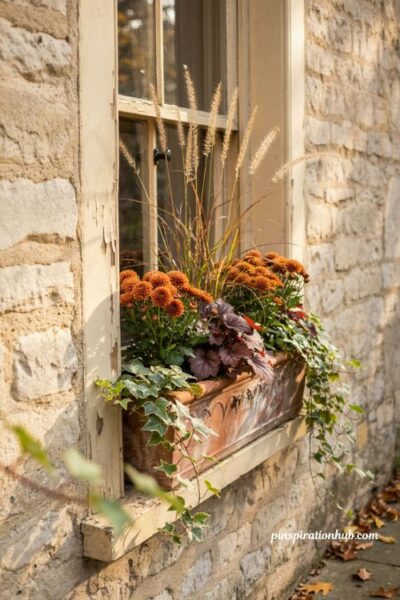
Professional-looking window boxes almost always follow the same basic structure: a tall “thriller” plant in the back or center, mid-height “filler” plants around it, and trailing “spiller” plants along the front edge. For fall, that might mean ornamental grass as your thriller, heuchera and mums as fillers, and needlepoint ivy or trailing sweet potato vine spilling over the sides. Following this formula takes the guesswork out of arranging plants that all compete for the same visual space. It’s a good starting framework even if you plan to swap out the specific plants for whatever’s available at your garden center.
13. Choose Long-Lasting Perennials
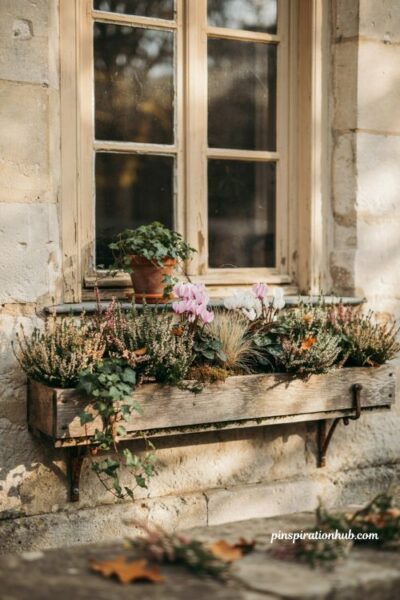
Not every fall window box needs to be ripped apart and replanted for winter. Heather and cyclamen are both known for holding up through cooler weather, with heather offering evergreen structure and cyclamen adding delicate blooms in shades of pink and white. Combining the two gives you a display with real staying power, often lasting well past the point where more delicate annuals would have given out. This is a smart pick if you’re not looking to replant again in just a few weeks once the first real cold snap hits.
14. Try Industrial-Style Containers
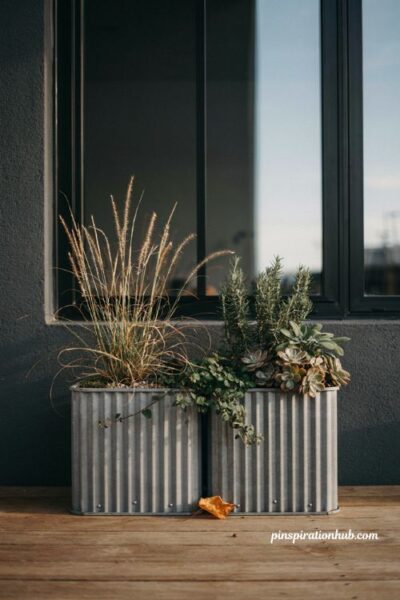
If your porch or exterior leans more modern, swap a traditional wooden box for a galvanized metal or fibreclay planter with clean, ribbed lines. These containers pair especially well with simpler plantings like succulents, herbs, or a single striking grass rather than a busy mix of colors and textures. Choose a lightweight design if you’ll want to move the boxes indoors before a hard frost, since some of these materials handle temperature swings differently than wood or plastic. The industrial look also tends to photograph beautifully against a dark-painted exterior.
15. Add Winter-Fruiting Accents
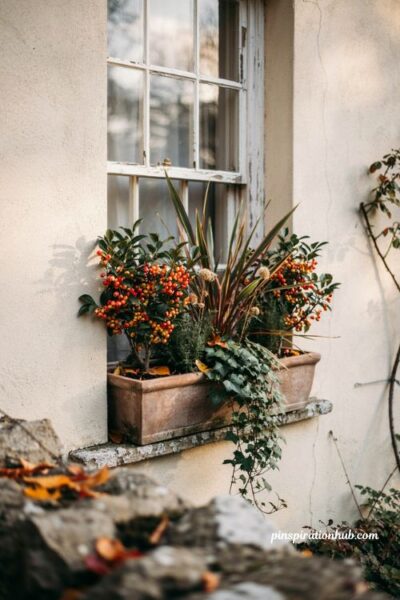
For a window box that carries you right into the cold months, look for winter-fruiting plants like Christmas cherry, whose small red, orange, or yellow berries hang on well past the point when most flowers have finished. Pair it with a trailing plant to soften the container’s edges and an upright plant like Phormium for a bit of architectural structure. This combination has real staying power and doesn’t rely on flowers at all, which means it won’t fade the way a purely floral box eventually will. It’s a great option if you want one planting to genuinely last from October through the first snow.
Final Thoughts
None of these ideas require you to be an expert gardener — most of them come down to picking two or three plants that work well together and giving them a little room to grow into the space. Start with whatever’s already thriving in your current boxes, then build outward with mums, grasses, or a few seasonal accents until it feels finished. If you fall in love with a combination this year, jot it down somewhere you’ll actually find it again next September. A little planning now means your porch gets to look this good again next fall without any of the guesswork.
Frequently Asked Questions
Q: When should I plant a fall window box? Late August through September is ideal in most climates, since the soil is still warm enough for roots to establish before the first frost arrives.
Q: Do fall window box plants need more water than summer plants? Generally less, since cooler temperatures slow evaporation, but check soil moisture regularly since some fall plants like ornamental cabbage dry out faster than expected.
Q: Can I reuse my fall window box plants after the season ends? Many fall perennials like heuchera, heather, and ornamental grasses can be transplanted into garden beds or overwintered in containers rather than thrown away.