
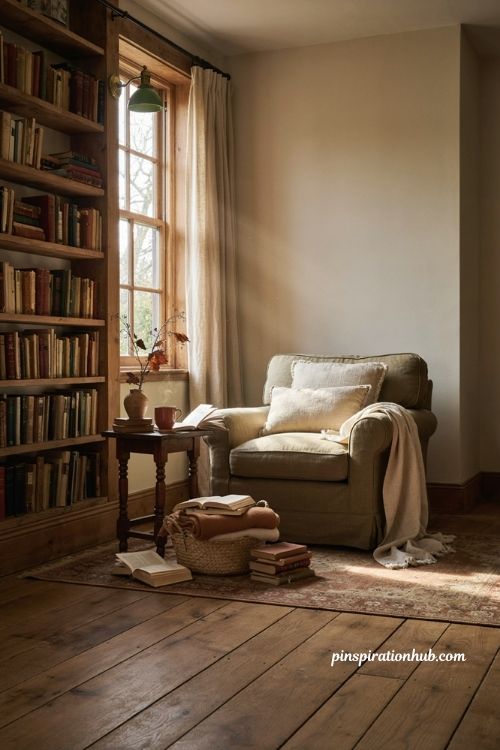
There’s a window seat somewhere in your house, or a corner near a bookshelf, or a chair that catches the afternoon light just right — and once the air turns crisp, that spot starts pulling at you differently. It’s the season when staying in with a book stops feeling like an excuse and starts feeling like the whole point. You don’t need a home library or a fireplace to make it work, either. A few small, deliberate touches can turn almost any corner into the kind of nook you actually want to disappear into for an afternoon. Here are fifteen ways to build one, wherever you happen to have the space.
1. Claim a Window for Natural Light
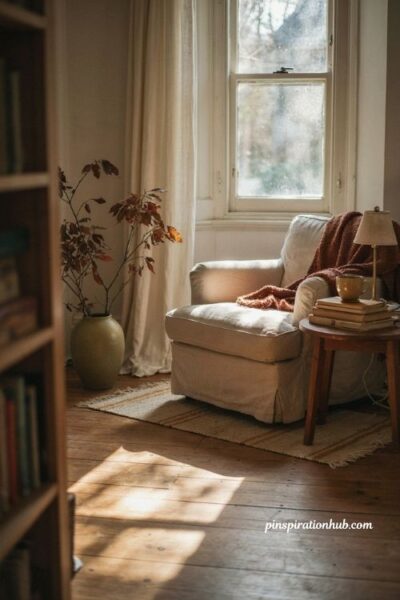
A reading nook lives or dies by its light, and a window seat or a chair pulled close to a window does more work than any lamp ever could. Fall light comes in lower and softer than summer sun, so even a north-facing window can feel warm and golden by mid-afternoon. Add a cushion with some give to it, not a flat decorative one, so you can actually sit for an hour without shifting every few minutes. If you don’t have a built-in window seat, a simple armchair angled toward the glass gets you most of the way there.
2. Layer Blankets Within Arm’s Reach

The whole appeal of a fall reading nook is not having to get up once you’re settled in, so keep a blanket close enough to grab without leaving your seat. A ladder-style blanket rack or a low basket beside the chair holds two or three throws in different weights, so you can layer up as the room cools later in the day. Chunky knits in oatmeal or rust tones read as cozier than anything smooth or synthetic. Fold one loosely over the arm of the chair so it’s already half-draped and ready before you even sit down.
3. Add a Small Side Table for Essentials
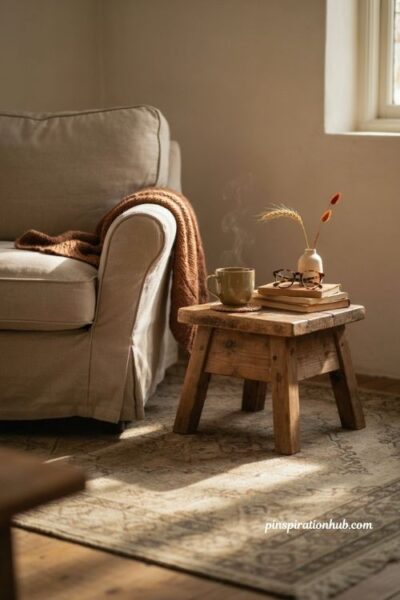
Nothing breaks the spell of a good reading session faster than having to get up for your tea or your glasses. A small side table, even a stool repurposed for the job, keeps a mug, a coaster, and your current stack of books within reach at all times. Pick something a little lower than a standard end table if your chair sits deep, so you’re not reaching up awkwardly every time you set something down. It doesn’t need to match the rest of your furniture — a slightly mismatched, well-worn piece often looks more at home here than anything new.
4. Stack Books as Part of the Decor
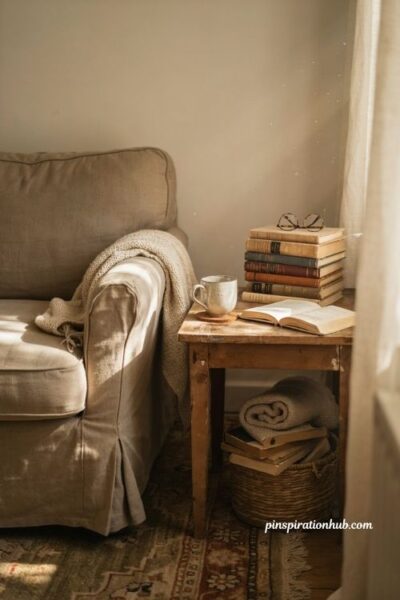
A stack of books beside your reading chair isn’t clutter — it’s part of what makes the corner feel lived-in and used. Grouping four or five titles by spine color or simply by height, with one laid flat on top, gives the pile some visual structure instead of looking like a random heap. Include a couple of books you’ve already finished alongside your current read, since a mix signals an ongoing habit rather than a single afternoon’s effort. Leave enough space nearby to set your book down open-faced when you pause, rather than losing your page.
5. Bring In a Reading Lamp With Warm Light
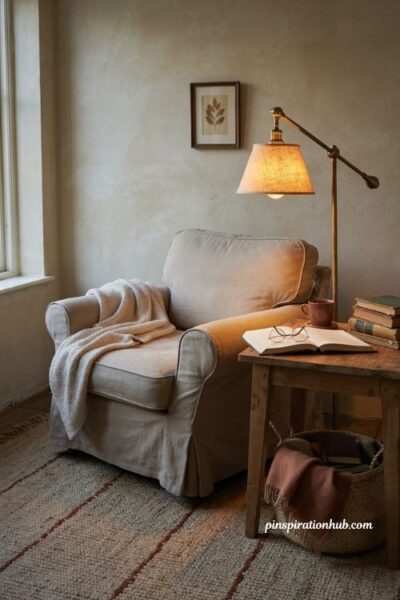
Overhead lighting almost never works for actual reading, so a dedicated lamp beside your nook matters more than people expect. A warm-toned bulb in a small table lamp or an adjustable floor lamp casts light directly onto the page without glaring across the whole room. Position it slightly behind your shoulder rather than straight ahead, so the light falls on the book and not in your eyes. As the days get shorter, this lamp becomes the thing that actually extends your reading time into the evening.
6. Add a Faux Fur or Sheepskin Throw
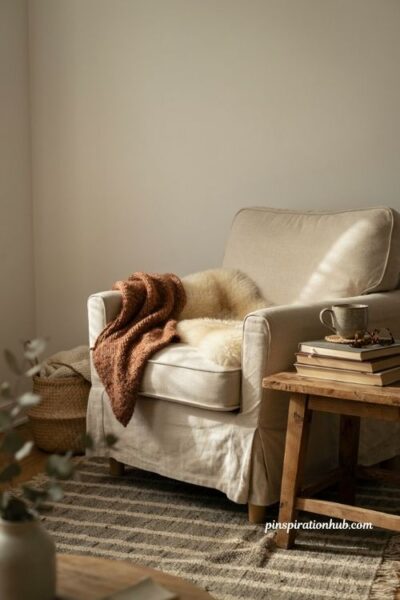
Texture is what separates a nook that looks cozy from one that actually feels cozy once you sit down. Draping a faux fur or sheepskin throw over the seat of your chair, rather than just the back, gives you something soft to sink into the moment you settle in. Cream, taupe, or charcoal tones tend to work with almost any existing color scheme, so you’re not locked into a specific palette. It also softens a firm chair cushion instantly, which matters if you’re planning to stay put for more than twenty minutes.
7. Keep a Candle Burning Nearby
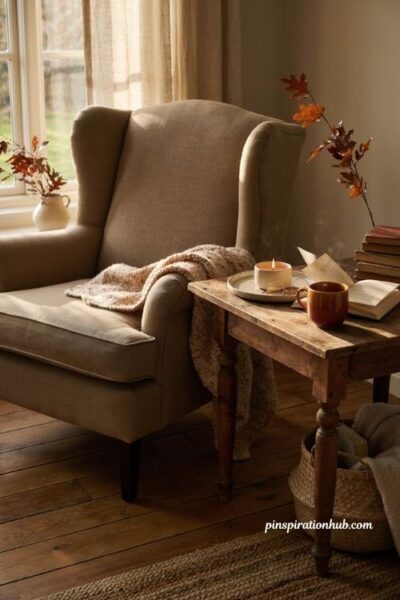
A candle does two things for a reading nook — it adds a small flicker of ambient light and it fills the immediate space with scent, which matters more than you’d think for how a room feels. Warm notes like cedar, amber, or spiced apple pair naturally with the season without turning the corner into a full autumn display. Keep it on a small dish or tray on your side table so wax doesn’t drip onto wood, and always place it somewhere it won’t tip if you’re juggling a book and a mug at the same time.
8. Choose a Rug That Warms the Floor
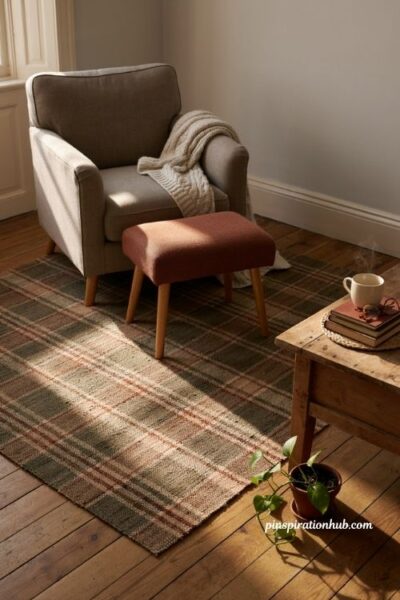
If your reading spot sits on bare wood or tile, cold feet will cut a session short faster than anything else. A small area rug just big enough for your chair and footrest adds warmth underfoot and defines the nook as its own little zone within a larger room. Wool or a thick pile in a muted plaid or solid earth tone holds up well and feels substantial rather than thin. Layering a smaller rug over existing flooring is an easy way to try this without committing to a full room change.
9. Add a Footrest or Ottoman
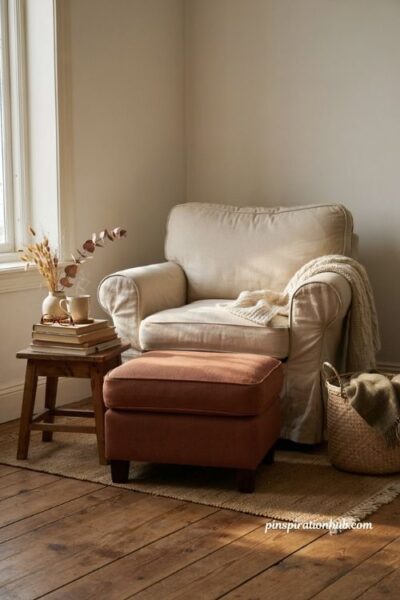
Being able to stretch your legs out changes how long you’ll actually stay in a reading nook. A small upholstered ottoman or even a repurposed vintage stool gives you somewhere to prop your feet, which takes pressure off your back during longer sessions. Choose one low enough that your knees stay relatively level with your hips once you’re settled. If space is tight, a footrest that tucks fully under the chair when not in use keeps the corner from feeling cramped.
10. Hang a Curtain or Canopy for Enclosure
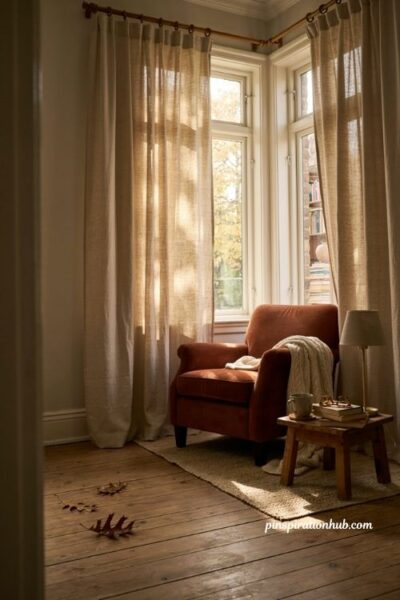
Some of the coziest reading nooks feel slightly enclosed, almost like a little pocket carved out of a bigger room. A curtain hung from a simple rod, or a canopy draped over a window seat, gives the spot a sense of privacy without needing an actual wall. Choose a fabric with some weight to it, like linen or a heavier cotton, so it drapes properly instead of looking flimsy. Pulling it half-closed while you read adds just enough separation to make the corner feel like its own small world.
11. Use a Basket for Extra Blankets and Books
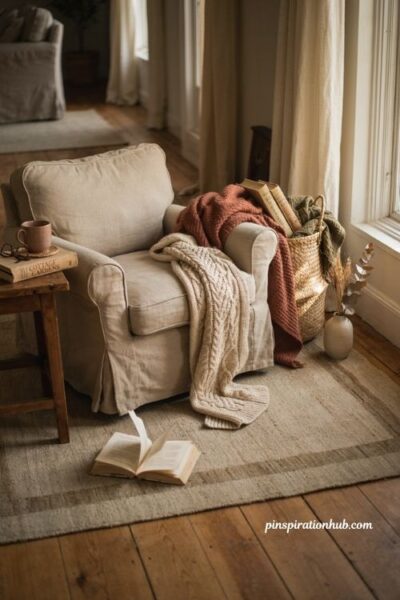
A woven basket beside your chair keeps extra throws and overflow books contained instead of scattered across the floor. Choose one with some height and a slightly loose weave, since natural texture reads warmer than anything sleek or plastic. It also solves a practical problem — once you’ve got three blankets and a stack of paperbacks in rotation, a basket is far easier to manage than piles balanced precariously on a side table. Tuck it just behind or beside the chair so it’s out of the way but still within reach.
12. Add a Small Plant for Life and Color
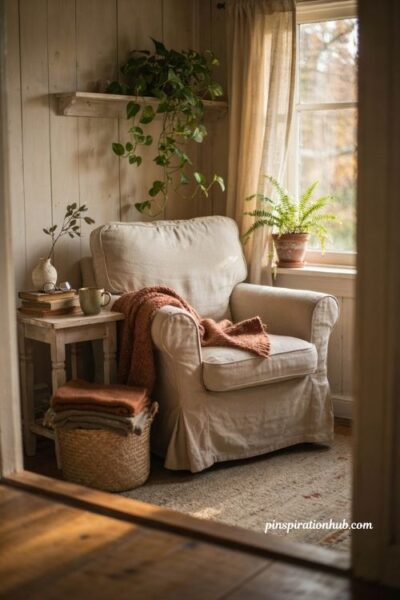
A reading nook can start to feel a little static if it’s all blankets and books, so one small plant nearby adds a bit of life without requiring much upkeep. A trailing pothos on a shelf above the chair or a small potted fern on the windowsill brings in some green that holds up well through the cooler months. Pick something low-maintenance if the nook doesn’t get much direct light, since a struggling plant undoes the cozy effect fast. Even a single stem in a small vase on the side table does enough to keep the corner feeling alive.
13. Personalize With Framed Art or Photos
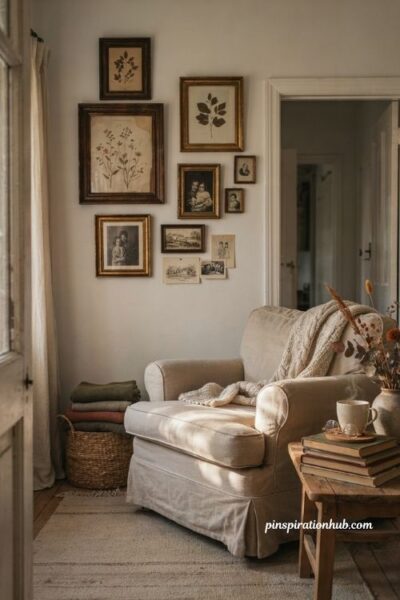
A blank wall behind your reading chair is a missed opportunity to make the nook feel like yours specifically. A small gallery of framed prints, postcards, or family photos above the chair gives your eye something to land on between chapters. Keep the frames a mix of sizes rather than perfectly matched, since a slightly imperfect arrangement tends to feel warmer than a rigid grid. This is also one of the easiest ways to make a generic corner feel unmistakably personal without touching the furniture at all.
14. Add a Bookshelf or Ladder Shelf Nearby
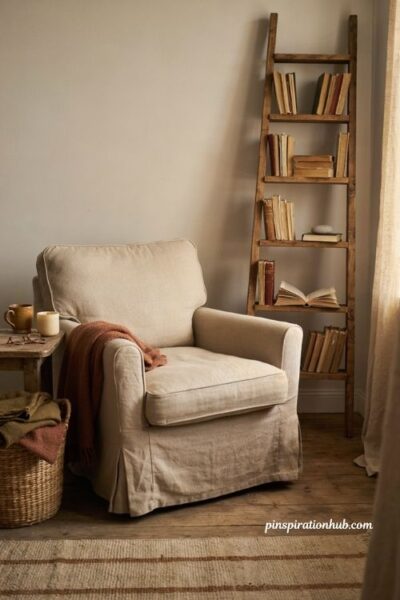
Having your books close at hand, rather than stored in another room, makes a reading nook feel like a real destination instead of a spot you occasionally borrow. A narrow ladder shelf tucked beside the chair holds a rotating selection of what you’re currently reading or planning to read next. Arrange a few spines facing out and one or two books laid flat with a small object on top, like a stone or a candle, to break up the visual rhythm. Even a shelf holding a dozen books signals that this corner is meant for reading, not just sitting.
15. Keep the Space Slightly Imperfect
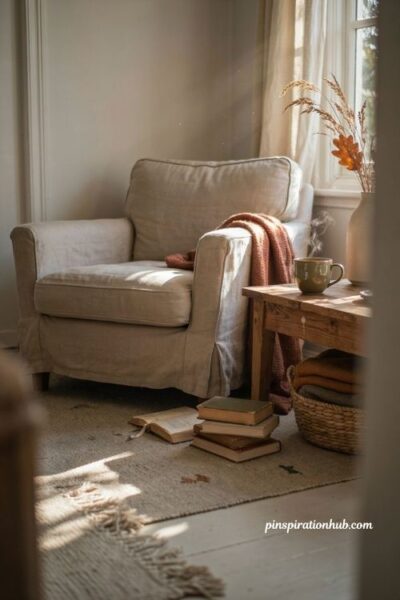
The coziest reading nooks rarely look freshly staged — they look like someone actually uses them. A blanket left slightly rumpled, a bookmark poking out of a paperback, a mug ring faintly visible on the side table — these small signs of use do more for the feeling of coziness than anything perfectly arranged ever could. Resist the urge to tidy the corner completely before you sit down. The goal isn’t a photo-ready display; it’s a spot that looks like it’s already been lived in for years.
Final Thoughts
You don’t need an entire room to build a reading nook that actually gets used — you need one good chair, decent light, and a blanket you’ll reach for without thinking twice. Pick two or three ideas from this list that fit the corner you already have, rather than trying to overhaul the whole space at once. Start with whichever change takes the least effort, whether that’s a new lamp or a stack of books moved closer to your chair, and let the rest follow naturally once the corner starts pulling you in on its own.
Frequently Asked Questions
Q: What makes a reading nook feel cozy instead of just decorative? Texture, warm lighting, and small signs of actual use — a rumpled blanket, a bookmarked page — matter more than how perfectly the space is styled.
Q: Do I need a lot of space to create a fall reading nook? No — a single chair near a window with a blanket and a side table is enough; the feeling comes from the details, not the square footage.
Q: What’s the best lighting for a reading nook? A warm-toned lamp positioned slightly behind your shoulder works best, since it lights the page directly without the glare of overhead lighting.
3 thoughts on “15 Cozy Fall Reading Nooks That Actually Feel Warm and Inviting”