
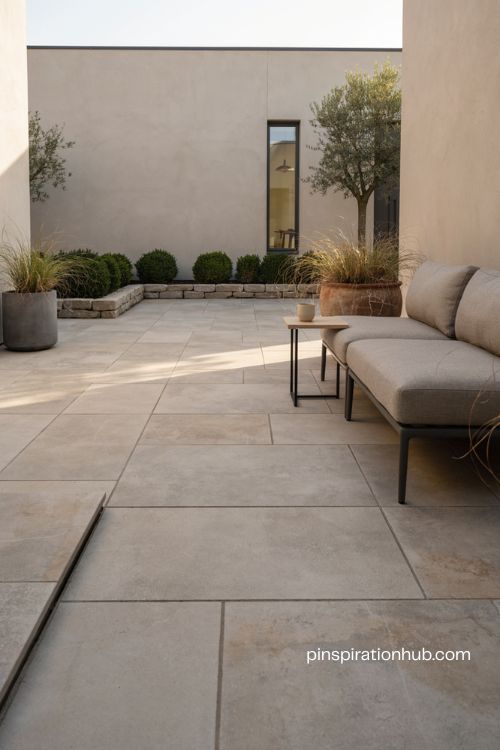
You don’t need a sprawling backyard to make a paver patio feel impressive — some of the most striking modern patios are built on surprisingly modest footprints. The trick isn’t square footage, it’s how the pavers are chosen and laid. Size, color, pattern, and joint width all work together to guide the eye and shape how open a space feels, whether you’re working with a tiny courtyard or a full backyard retreat. Here are fifteen modern patio paver ideas to help you get a clean, contemporary look that makes the most of whatever space you’ve got.
1. Go Big With Large-Format Pavers
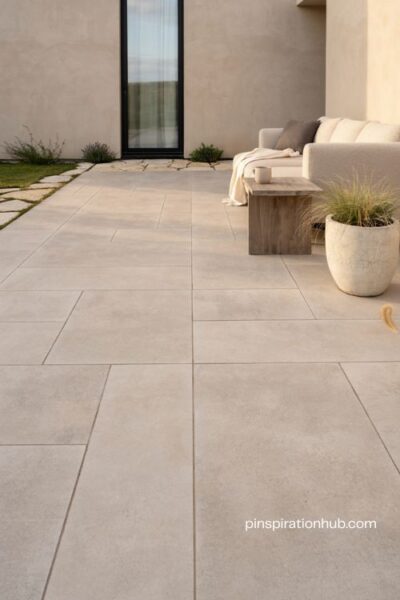
Too many small pavers packed into one patio create a grid of joint lines that reads as busy and cluttered. Switching to large-format pavers — think 24×24 inch or even 48×48 inch slabs — cuts down on those breaks and lets the surface feel continuous and calm. Large porcelain and concrete pavers both work well here, and sticking to one size (or a simple two-size modular pattern) keeps the layout from feeling chaotic. This single swap is one of the fastest ways to make a compact patio feel noticeably more open.
2. Lay Pavers in a Linear Pattern
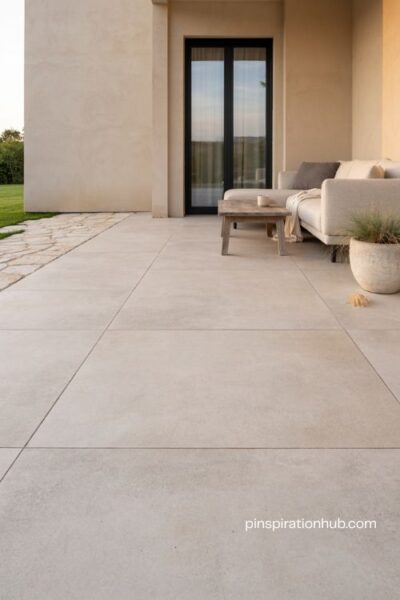
The direction pavers run changes how your brain reads the space. A stacked or running-bond layout pointed toward the patio’s longest dimension stretches the eye outward, making the area feel deeper than it actually is. Align the pattern with the main sightline from your back door or kitchen window, since that’s the angle you’ll view the space from most. A subtle diagonal variation can add even more visual length without changing a single measurement of the actual patio.
3. Choose Light, Reflective Tones
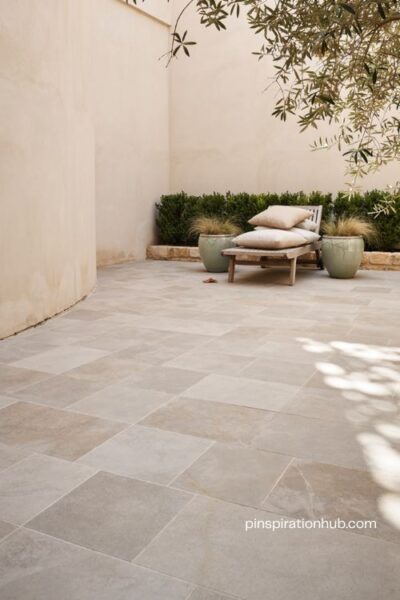
Dark pavers absorb light and pull the eye toward the edges, which makes boundaries feel closer and the whole space feel smaller. Lighter tones — soft olive limestone, pale sandstone, silver-gray porcelain — bounce sunlight back up and soften where the patio actually ends. This matters even more in shaded yards, where light colors keep the area from feeling boxed in. If you’re worried about dust or stains showing, a multi-tone blend in neutral shades hides wear better than one flat, solid color.
4. Keep Joints Narrow and Consistent
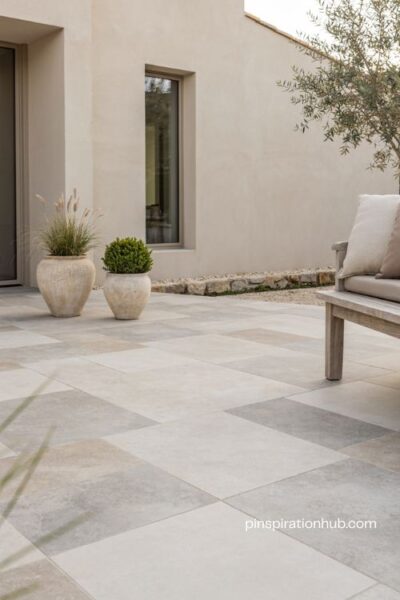
Wide joints break a patio into a visible grid, and the eye naturally reads each little square separately, which shrinks the perceived size of the whole surface. Porcelain pavers are typically set with joints around 3 to 4 millimeters, while natural stone runs slightly wider to account for its more irregular shape. What matters most isn’t the exact width, though — it’s consistency. Uniform spacing filled with joint material that matches the paver color reads as one smooth surface instead of a checkerboard.
5. Frame the Space With a Border
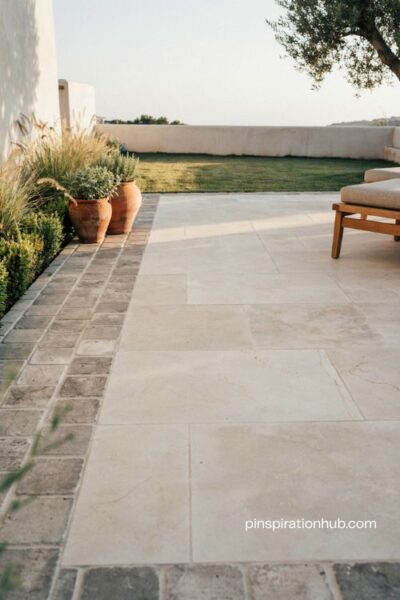
A border might sound like it would shrink a small patio, but done well it does the opposite. Without a defined edge, a patio’s boundary blurs into the surrounding lawn or garden bed, and the whole area can start to look irregular or unfinished. A slim contrasting border — a darker paver in a soldier-course layout around a lighter main field — works like a picture frame, giving the brain a clear sense of where the space begins and ends. Keep the border modest, somewhere around 4 to 8 inches, so it defines the room instead of dominating it.
6. Extend the Pattern Into Nearby Areas
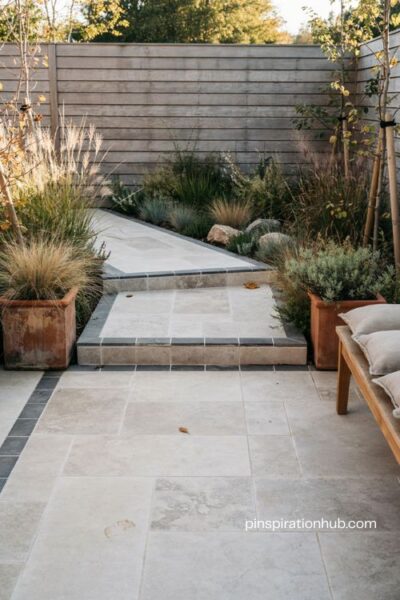
When a patio, a walkway, and a set of steps all use completely different materials, each section reads as its own disconnected chunk of yard. Carrying the same paver style from the patio into an adjacent path — or repeating the border paver along a walkway — ties everything together into one continuous outdoor living area. The eye interprets connected surfaces as a single larger space, even though no individual section actually grew. It’s a low-cost trick that pays off disproportionately in how big the whole yard feels.
7. Build In a Sleek Fire Feature
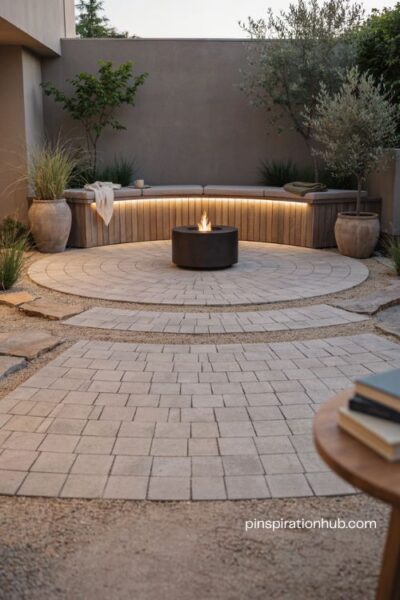
A modern gas fire bowl set into a custom hardscape design brings warmth and a strong focal point without the bulk of a traditional wood-burning pit. For a more architectural statement, a built-in outdoor fireplace with a clean, contemporary finish anchors an entire seating area and extends how late into the year the patio gets used. Either option works especially well laid into a circular paver section, since round layouts naturally draw people inward and encourage a gathering feel around the flame.
8. Add a Pergola for Shade and Structure
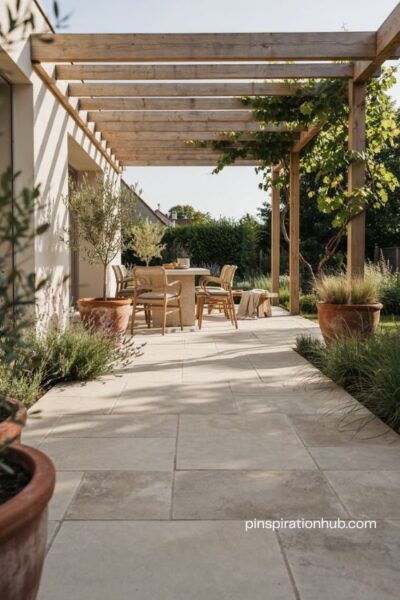
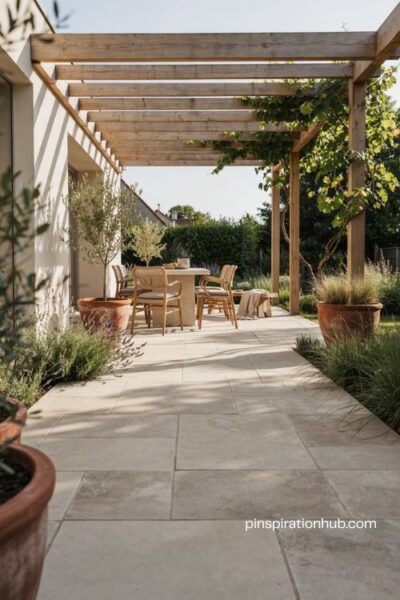
An overhead pergola does two jobs at once — it cuts direct sun and gives an open-air patio a defined “room” feeling without walls. A pergola can extend directly off your home’s roofline or stand independently on its own pillar columns, whichever suits the layout better. Training climbing vines up the columns softens the structure over time and blends the wood or stone with the surrounding landscape. Positioned over a dining or lounge zone, it instantly reads as more intentional than an open, uncovered slab.
9. Work With Elevation Changes Instead of Fighting Them
A sloped yard isn’t a problem to hide — it’s an opportunity to build in terraced “outdoor rooms.” Pairing a retaining wall with a paver patio lets you carve out distinct, level zones for dining, lounging, or a fire pit, each connected by a short run of steps. This approach turns what would otherwise be a flat, single-purpose yard into a layered space with real depth. Step treads finished in the same material as the patio keep the whole transition feeling cohesive rather than like an afterthought fix.
10. Bring In a Water Feature
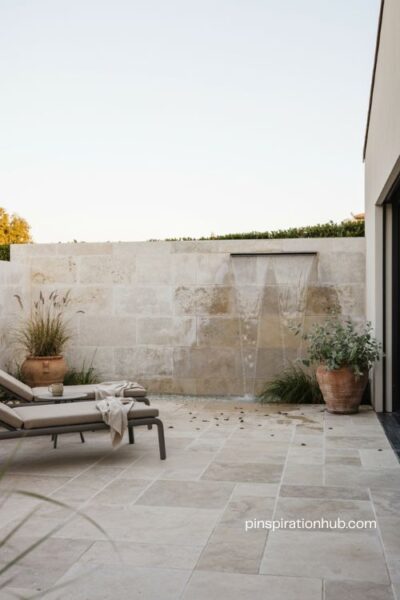
The sound of moving water adds a calming layer to a modern patio that visuals alone can’t match. A built-in water wall, spillway, or small fountain integrated into a retaining wall creates the illusion of water naturally emerging from the paved surface itself. These features work as a standalone accent or as part of a pool deck design, and even a compact version near a seating area is enough to soften hard surfaces and mask nearby street noise. It’s a detail that consistently gets noticed more than almost any other single upgrade.
11. Design an Outdoor Kitchen on a Durable Base
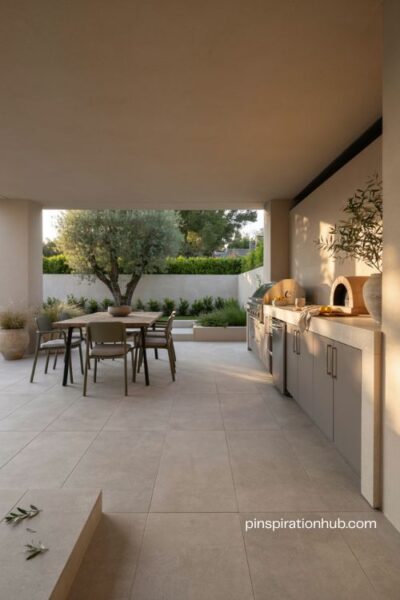
Concrete and porcelain pavers hold up well to grease, foot traffic, and heat, which makes them a natural foundation for an outdoor cooking area. A simple grilling station works for casual use, while a fully built-out kitchen with a counter, mini-fridge, and even a pizza oven turns the patio into a genuine entertaining hub. Keep the kitchen zone paved in the same material as the rest of the patio so the cooking area reads as part of the whole design rather than a separate slab bolted onto the side.
12. Add Columns or Built-In Planters
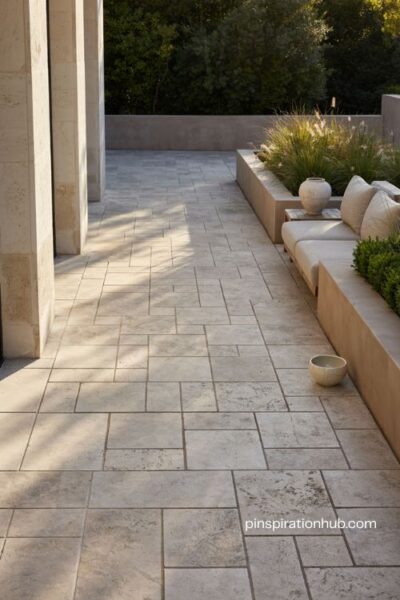
Vertical details like columns and built-in planters take a flat paver patio and give it real architectural presence. Columns can frame an entryway, support a pergola, or simply add a sense of permanence to the edges of the space, while integrated planters let greenery become part of the hardscape instead of an afterthought placed on top of it. These finishing touches are especially effective on modern layouts, where clean lines benefit from a few carefully placed vertical elements to break up an otherwise flat plane.
13. Soften Hard Edges With Rocks or Grass
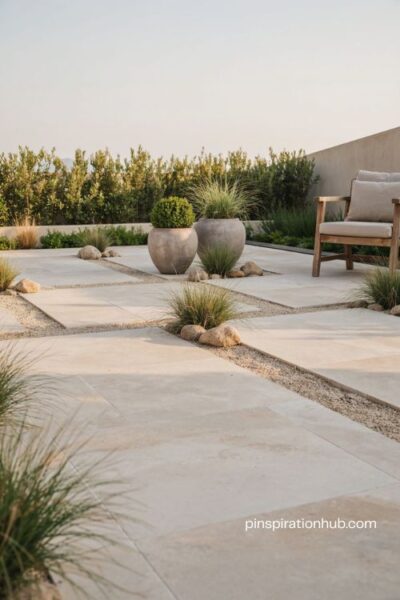
Pure pavers, wall to wall, can start to feel sterile on a modern patio. Leaving intentional gaps for gravel, ornamental grasses, or low ground cover between paving sections softens the hardscape and lets it blend into the surrounding landscape instead of looking dropped in. This approach also improves drainage, since water has somewhere to go besides running off a solid paved surface. A stepping-stone effect — pavers interspersed with artificial turf — is a popular modern take on this same idea.
14. Choose a Laying Pattern That Doubles as a Design Feature
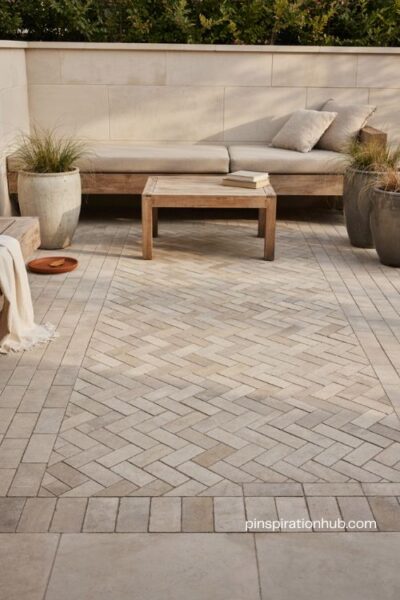
A herringbone pattern isn’t just visually interesting — the interlocking layout genuinely resists shifting better than a basic grid, which makes it a smart choice for high-traffic zones. Basketweave leans more traditional and suits relaxed or older-home settings, while a simple running bond keeps a modern space feeling calm and uncomplicated. Long, rectangular pavers laid in a traditional herringbone can even function like a paver “rug,” visually defining a seating or dining zone without adding a single physical border.
15. Keep the Overall Palette Restrained
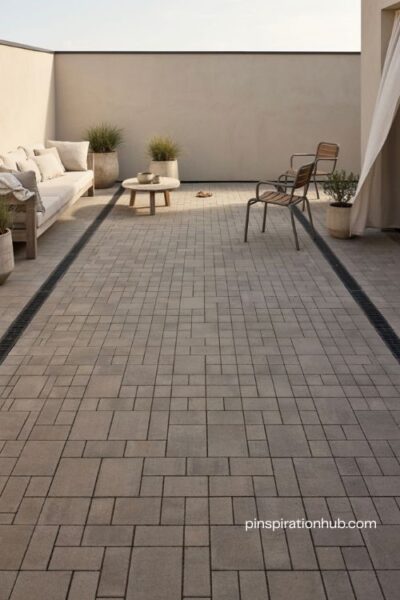
It’s tempting to mix several paver colors, textures, and patterns into one design, but that combination usually reads as visual noise rather than richness. A restrained palette — one main field color, one border color, and a single directional pattern — gives a patio real structure without overwhelming the eye. This is especially true for smaller spaces, where a busy layout can make the patio feel more cramped than it actually is. Furniture placement matters here too, since a clear central area keeps the paving pattern visible and the whole space reading as open.
Final Thoughts
You don’t need a lot of space to have a stunning modern patio — some of the best paver designs sit on lots barely bigger than a two-car driveway. What actually makes a patio feel expansive isn’t square footage, it’s the choices layered on top of it: paver size, color, joint width, and how the pattern is oriented. Start with one or two of these ideas that fit your yard’s actual shape, and build outward from there instead of trying to force every trend onto one slab.
Frequently Asked Questions
Q: What size pavers work best for a modern small patio?
Large-format pavers, 24×24 inches or bigger, reduce the number of joint lines and give a small patio a more open, continuous feel compared to smaller units.
Q: Do lighter or darker pavers make a patio look bigger?
Lighter tones like beige, light gray, and sandstone reflect more sunlight and soften the patio’s visual boundaries, which generally makes a space feel larger than darker pavers do.
Q: Are pavers better than poured concrete for a modern patio?
Pavers offer more design flexibility in color, pattern, and layout, and individual units can be replaced if damaged, whereas a cracked section of poured concrete usually means redoing the whole surface.