
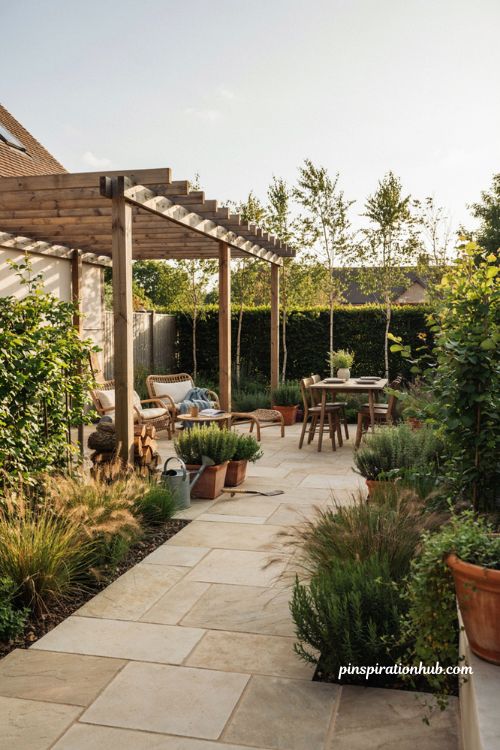
Designing a dream backyard is honestly one of the trickiest home projects to get right. There’s the sun to map, the drainage to figure out, the budget that always seems to stretch further than planned — too many decisions for most people to know where to even start. The good news is you don’t need a five-acre lot or a professional crew to pull it off. With the right zones, materials, and a few smart splurges, almost any backyard can become the outdoor space you actually want to live in. Here are fifteen ideas to help you get there.
1. Map Your Sunlight Before You Plan Anything
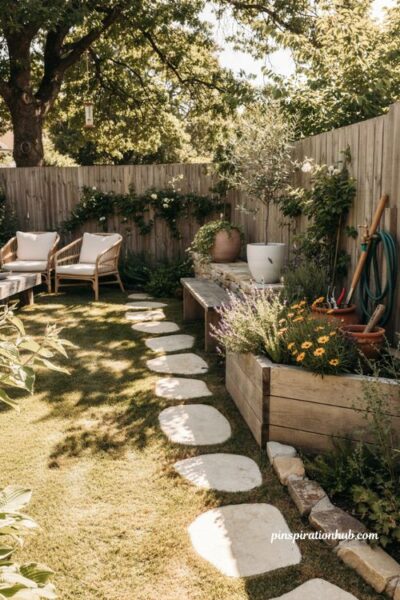
Before buying a single plant or piece of furniture, spend a full day tracking how sun moves across your yard. Take photos every two to three hours from sunrise to sunset, keeping the camera angle consistent each time. South-facing areas typically get the most exposure, while north-facing corners stay shaded most of the day. Once you know which spots get six-plus hours of sun versus which stay in partial shade, you can place your seating, garden beds, and dining area exactly where they’ll thrive instead of guessing and replanting later.
2. Create Distinct Activity Zones
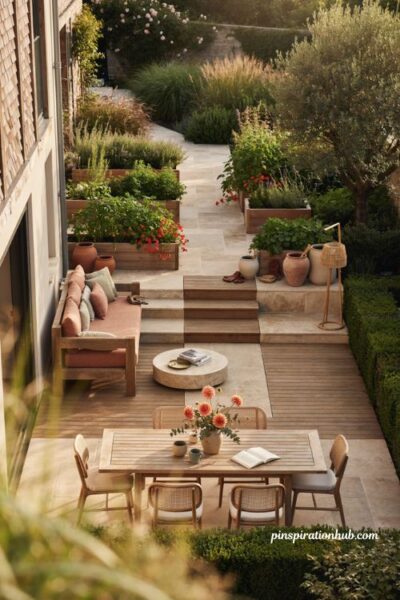
A backyard that tries to do everything in one open stretch usually ends up feeling like nothing in particular. Instead, break the space into zones — a dining area near the kitchen door, a lounge spot with deeper seating, maybe a separate corner for gardening or kids’ play. A change in flooring material, a low step, or even a cluster of potted plants is enough to signal the shift from one zone to the next without needing actual walls. This kind of layout is what makes a large yard feel intentional rather than just big.
3. Build In a Fire Pit or Fireplace
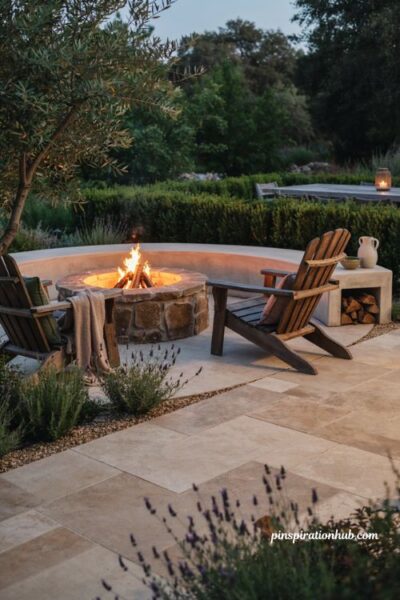
Few features extend a backyard’s usable season quite like fire. A built-in fire pit surrounded by a cement bench or simple Adirondack chairs becomes the natural gathering spot the moment temperatures drop in the evening. For a more architectural option, a stone fireplace with a mantel wide enough for candles or firewood storage adds real presence to a lounge area. Either way, keep the fire feature visible from your main seating zones so it reads as a focal point rather than an afterthought tucked in a corner.
4. Add a Pergola or Arbor for Shade and Structure
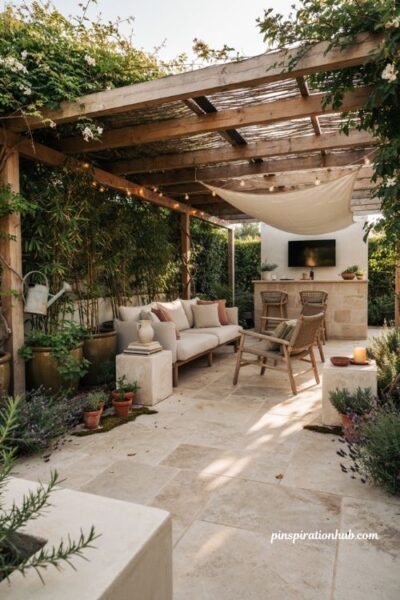
A pergola does double duty — it defines a space visually while giving you actual relief from direct sun. Cover it with a fabric canopy for full shade, or let climbing vines grow across the beams for a softer, more natural look over time. Pergolas work especially well positioned over a TV or bar area, since the overhead structure can also anchor string lights or even solar panels. If you want privacy along with shade, pair the pergola with tall potted bamboo or climbing plants along one side.
5. Bring In a Water Feature
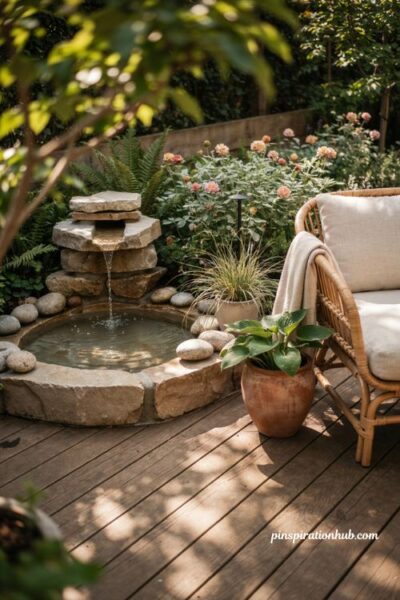
The sound of moving water does more for a backyard’s atmosphere than almost anything else you can add. A small fountain, a pondless waterfall, or even a simple solar-powered water bowl near a seating area creates a calming backdrop that masks street noise and makes the whole space feel more private. For smaller yards, a compact fountain tucked near an entry or patio corner works just as well as a large pond would in a bigger space, so don’t rule the idea out just because your square footage is limited.
6. Layer In Real Privacy
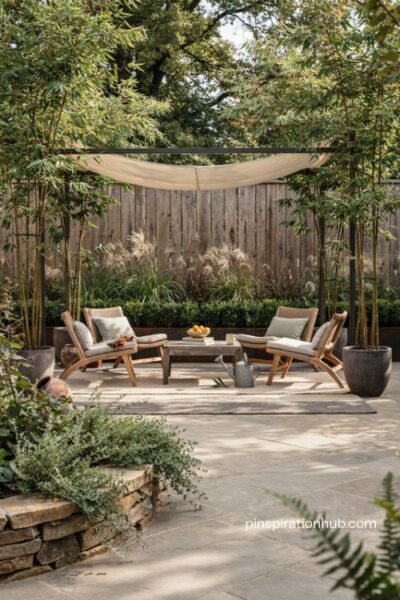
Nobody wants to feel like they’re on display in their own backyard. Tall, narrow plants like potted bamboo offer privacy you can actually move around as your needs change, while a mix of shrubs and ornamental grasses creates a layered, natural screen along a fence line. For a faster fix, a custom steel arbor with a fabric canopy blocks sightlines from a specific angle while keeping the space feeling open rather than boxed in. Position whatever privacy solution you choose close to your main seating area — that’s where it actually makes a difference.
7. Choose Furniture That Matches Your Space
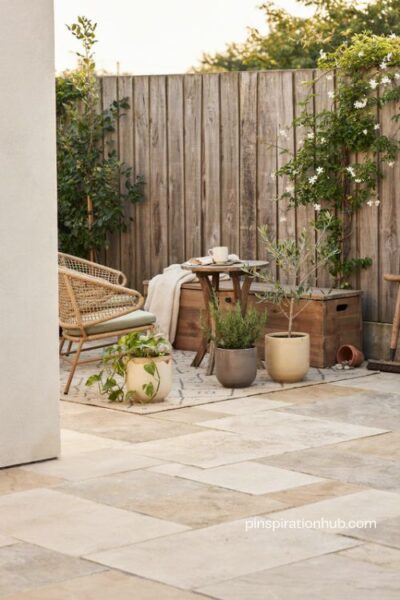
Small backyards do best with simple, scaled-down furniture — think a bistro set or a couple of accent chairs rather than a bulky sectional that swallows the whole patio. Larger yards can handle a full weather-resistant sectional for entertaining, plus a few multi-functional pieces like a storage bench that doubles as extra seating. Whatever the size, pick materials suited to your climate so you’re not constantly covering or hauling furniture inside before every rain.
8. Install a Real Outdoor Kitchen or BBQ Area
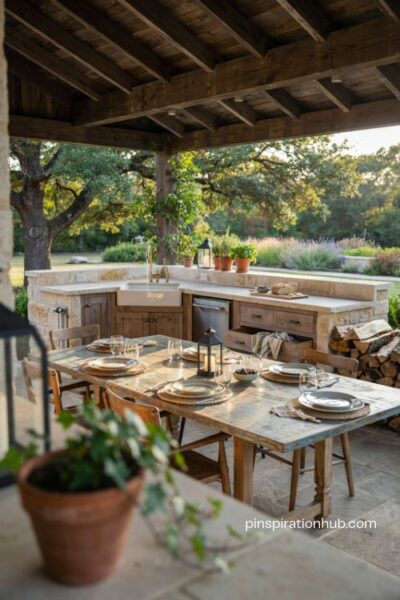
If outdoor dining is a priority, a proper cooking setup changes everything. A BBQ area with running water at a sink, a stocked mini-fridge, and drawers for outdoor plates and utensils turns grilling from a hassle into something genuinely enjoyable. Pair it with the largest dining table your space allows — a custom or repurposed piece, like an old door turned tabletop, adds character and makes the area feel more like a real dining room than an outdoor afterthought.
9. Add a Hot Tub or Plunge Pool
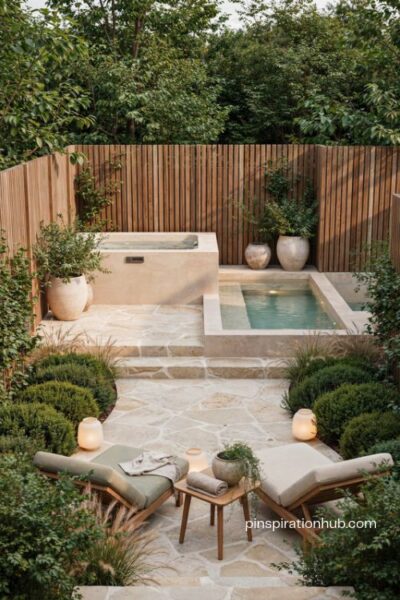
A hot tub earns its keep more than almost any other backyard investment, especially if you can control it from your phone and have it warm by the time you’re home from work. Position it with privacy and easy access in mind, and consider a Baja shelf if you’re adding a pool alongside it — the shallow ledge gives kids and anyone who doesn’t want to get their hair wet a comfortable place to gather. Even a compact plunge pool can deliver that same year-round retreat feeling in a smaller footprint.
10. String Up Layered Lighting
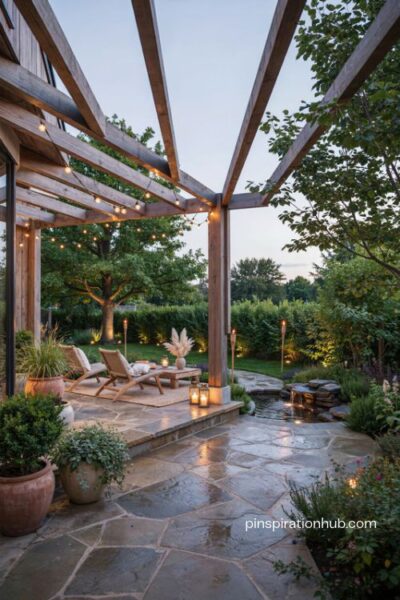
Good lighting is what makes a backyard usable after the sun goes down, and it works best in layers rather than one single source. Solar stake lights or LED strips along steps handle safety, string lights or lanterns cover general ambiance, and a few spotlights can highlight a specific tree or water feature. Tiki torches are a low-cost way to add a warm, slightly tropical feel to an evening gathering without any wiring at all.
11. Go Vertical With Your Greenery
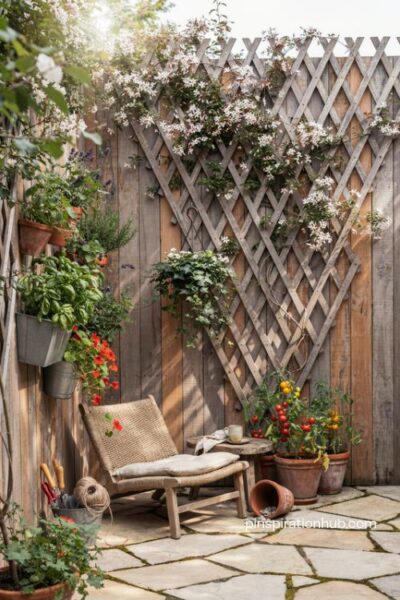
When floor space is limited, growing upward solves a lot of problems. Wall planters, trellises, and hanging baskets let you add real greenery — herbs, flowers, even climbing tomatoes — without eating into your seating or walking space. A trellis covered in flowering vines also doubles as a soft privacy screen and a built-in focal point near a patio or entry. Grape tomatoes and peppermint in containers are especially forgiving choices if you’re new to vertical gardening.
12. Choose Fencing and Decking That Fits Your Style
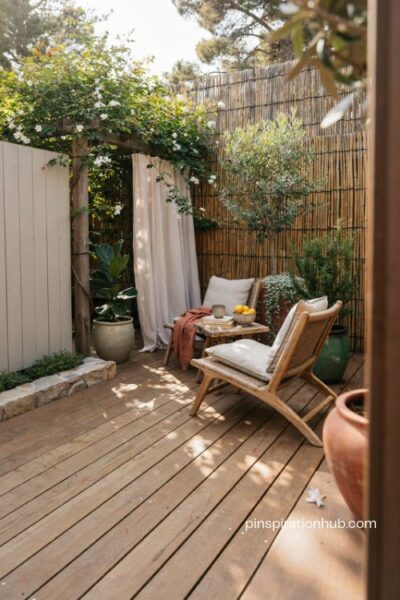
Your decking and fencing aren’t just functional — they set the tone for the whole yard. Bamboo fencing is a durable, eco-friendly option that lets light filter through while still providing privacy, and it pairs naturally with a Mediterranean or modern farmhouse look. Wood privacy panels and trellises work well if you want to grow vines directly onto the structure, and outdoor curtains offer a flexible, elegant way to section off one specific area without a permanent build.
13. Deal With Pests Before Anything Else
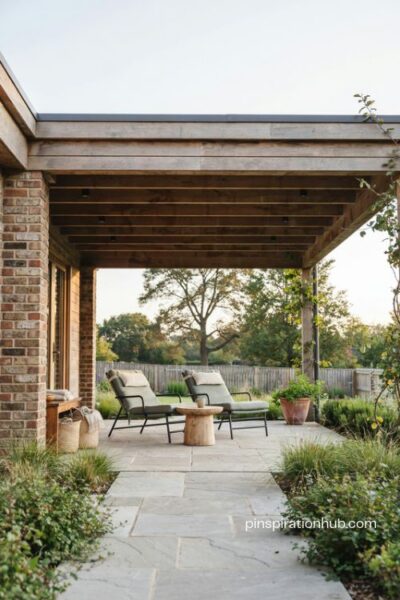
No amount of beautiful furniture or lighting matters if you can’t actually sit outside comfortably. Walk your yard and check eaves, roof gaps, and any hollow structures for wasp or hornet nests before you invest in the rest of your design. Staying vigilant matters even after the first treatment, since pests will often try to rebuild in the same spots — under furniture, in brick gaps, inside outdoor storage. Getting ahead of this one step makes every other backyard upgrade actually enjoyable to use.
14. Soften the Space With Textiles
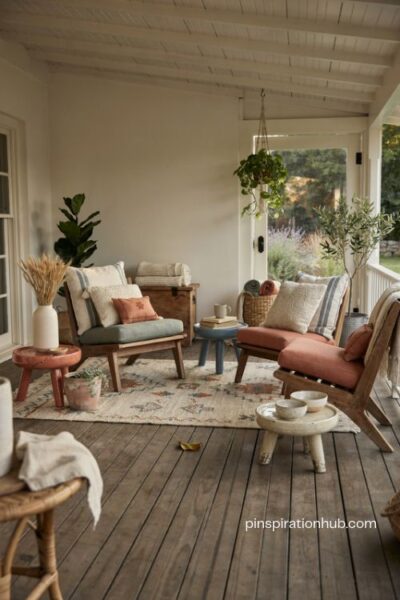
Cushions, throw pillows, and a basket of small blankets by the back door do more for comfort than most people expect. They make hard patio furniture feel inviting and give the whole space a lived-in, layered look rather than a showroom feel. Keep a storage option nearby — a bench, bin, or covered basket — so textiles can come in quickly before rain instead of getting ruined outside. Ceramic garden stools in a bold color are a nice complement here too, working as extra seating or small side tables in a pinch.
15. Plan the Build in the Right Order
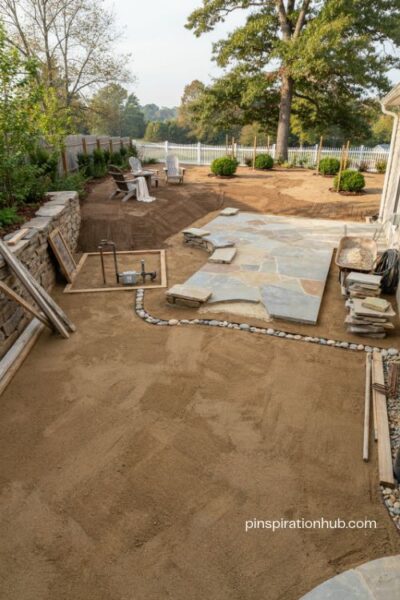
If you’re doing more than one phase, start with full site prep and grading for the entire space, not just the section you’re tackling first. Get infrastructure like utilities and drainage installed everywhere it’s needed now, even if certain features come later — it saves you from paying for the same groundwork twice. Most yards only start feeling truly usable once 50 to 75 percent of the plan is in place, so budget and sequence accordingly rather than spreading a small budget too thin across every idea at once.
Final Thoughts
Small front yards and tight budgets are honestly the trickiest combination to design around — too visible to ignore, too small to overspend on the wrong things. The backyards that actually get used aren’t the ones with every feature on this list; they’re the ones built around how the household actually spends time outside. Start with sun mapping and one or two zones that match your daily habits, then layer in the extras as budget allows. That’s really all a dream backyard takes.
Frequently Asked Questions
Q: How much does a dream backyard renovation typically cost?
Costs vary widely by scope, but landscaping projects generally range from around $2,000 for small updates to over $100,000 for a full-scale backyard transformation with features like a pool or outdoor kitchen.
Q: Should I hire a professional or DIY my backyard design?
DIY saves money and offers full creative control, while a professional designer brings expertise that helps avoid costly mistakes on larger or more complex projects — many homeowners land somewhere in between by hiring help for structural work and DIYing furniture and decor.
Q: What’s the best way to add privacy to a backyard?
Layered natural screening — like shrubs, ornamental grasses, and potted bamboo — combined with a structural element such as a pergola or arbor placed close to your seating area tends to work better than a single tall fence alone.