
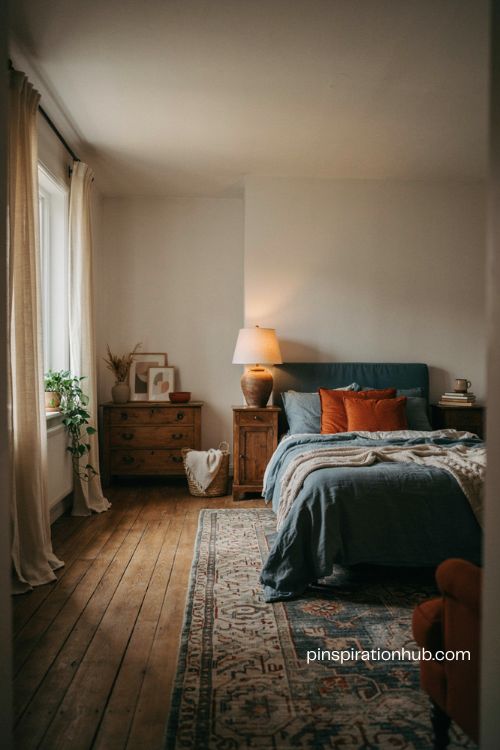
If your bedroom feels a little flat and you’re not sure how to fix it, you’re not alone. Most people default to safe neutrals and never realize how much life a bold color pairing can bring to a space. Burnt orange and blue happen to be one of the best combinations out there — they sit across from each other on the color wheel, which is exactly why they play off each other so well. Whether you lean toward a cozy, moody bedroom or something brighter and more playful, here are fifteen ways to bring this pairing into your own space.
1. Start With Orange-Toned Wood Furniture
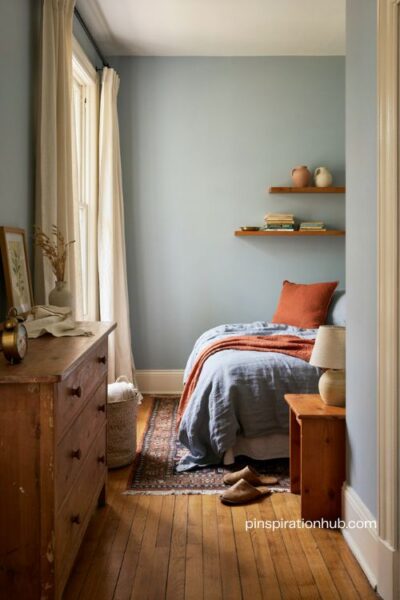
You don’t have to touch a paintbrush to bring orange into a blue bedroom. Wood furniture in warm orange-brown tones — a side table, a floating shelf, hardwood flooring — carries the color naturally without committing to a full accent wall. Pair it with paler blue walls for a soft, layered look, and let a few smaller accents like a rug or throw pillow echo the wood tone elsewhere in the room. This approach works especially well if you’re renting or just not ready to paint, since swapping out a piece of furniture is a lot easier than repainting.
2. Keep Walls Neutral, Add Color Through Accessorie
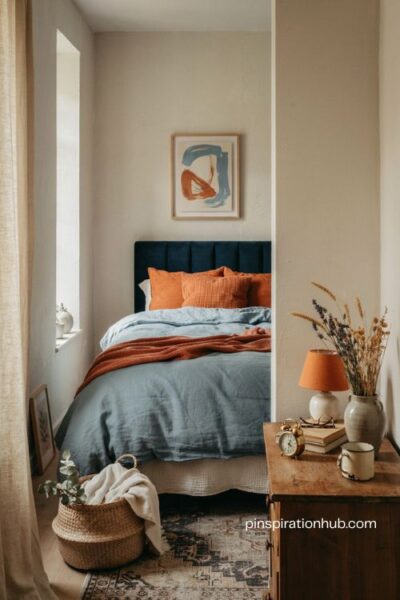
If painting isn’t an option, bedding and decor can do all the work. Start with a blue duvet and a couple of burnt orange throw pillows, then build outward with artwork that echoes one or both colors. A lamp with an orange-toned shade, a few stems of dried flowers, even a navy upholstered headboard — these small additions add up to a room that reads as intentional rather than accidental. It’s the easiest entry point if you’re testing the combo before committing to anything permanent.
3. Go Navy and Burnt Orange for a Moodier Feel
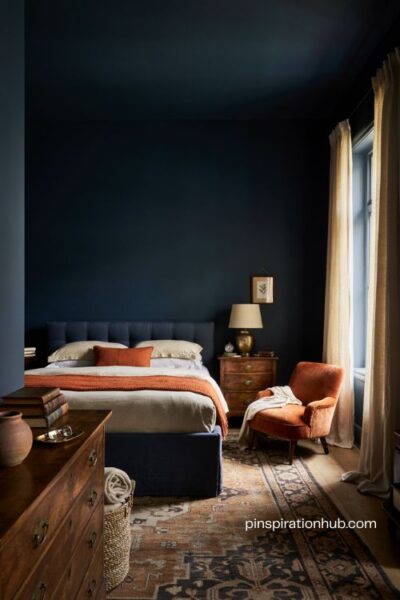
Lighter blues paired with bright orange create a cheerful, energetic space, but darker shades tell a completely different story. Navy blue combined with burnt orange feels grown-up and cozy, almost like the inside of a well-worn study. This combination reads as more “adult,” which makes it a strong choice for a primary bedroom rather than a kid’s room. Keep the orange in smaller doses — bedding trim, a single accent chair — so the navy has room to set the overall mood.
4. Use Large Textiles to Make a Statement
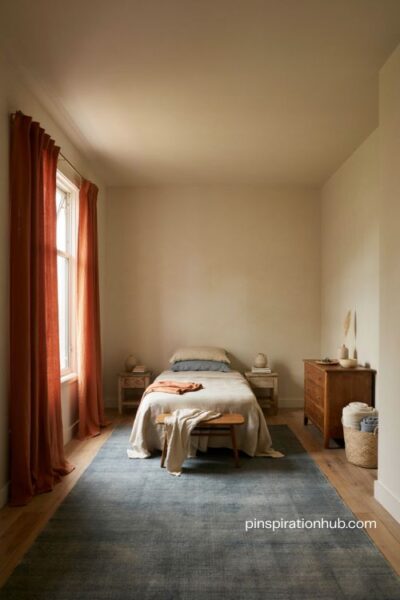
You don’t need to paint or fully commit to get a real visual impact from this pairing. One large orange curtain paired with a blue area rug can transform a neutral room without touching a single wall. The trick is scale — a big textile in each color does more visual work than several small accents scattered around. If your windows get direct rain exposure, look for rooms with awning-style windows so you can keep them cracked open without soaking your curtains.
5. Lean Mostly Blue With Just a Splash of Orange
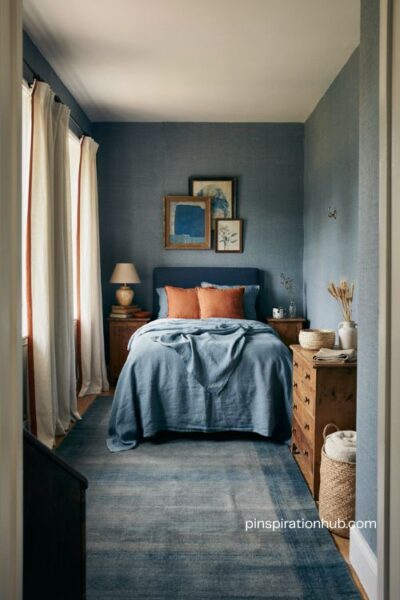
Blue is one of the safest, most universally loved bedroom colors, and there’s a good reason for that — it’s calming and easy to live with long-term. If you want the benefits of this color pairing without a big commitment, keep blue as your dominant tone throughout the walls, bedding, and artwork, then add orange in small, swappable doses like throw pillows or curtain trim. This approach also gives you an easy out if you ever want to switch the accent color down the road, since you’re only replacing a pillow or two, not repainting a whole room.
6. Pair Orange Accents With Sage Green for Balance
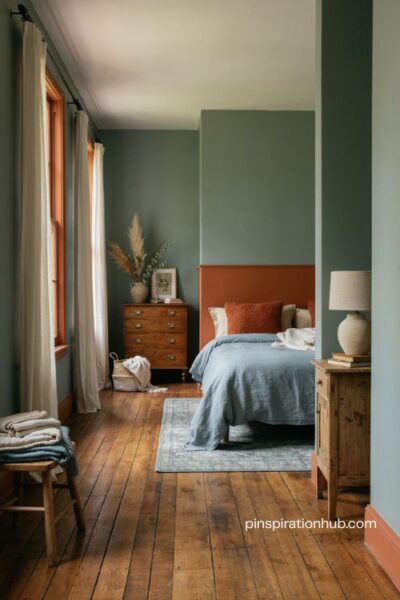
Adding a third color can actually make burnt orange and blue feel even more cohesive. Sage green works as a soft, neutral bridge between the two, softening burnt orange’s intensity while still keeping things earthy. Try sage on the main walls with burnt orange saved for an accent wall or trim, and let touches of blue come through in bedding or a small rug. This three-color approach keeps a small bedroom from feeling overwhelming while still delivering real warmth.
7. Try Burnt Orange and Gray for Modern Depth
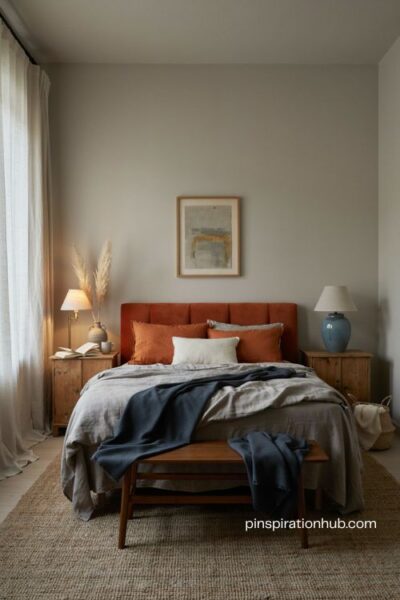
Gray is one of the most flexible backdrops for burnt orange, since its neutrality tempers the color’s intensity without dulling it. Keep burnt orange to accent pieces — a headboard, a set of pillows, a piece of framed art — while gray handles the bedding or walls. Add blue back into the mix through a single statement item, like a navy throw or a blue ceramic lamp, so the room doesn’t lose the pairing entirely. Brass lighting fixtures or a textured rug add extra depth without competing with either color.
8. Bring in Geometric Shapes
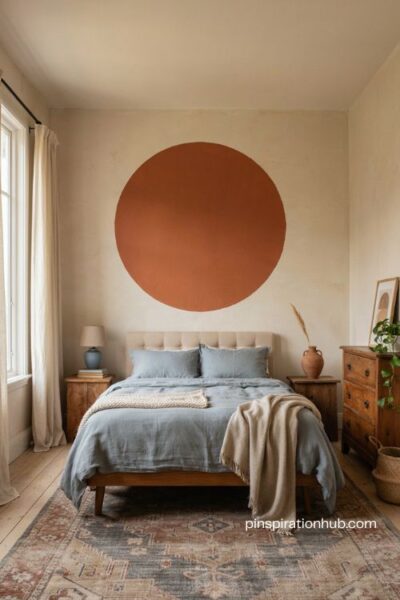
A painted shape is a surprisingly easy way to introduce color without covering an entire wall. A large orange circle or rectangle behind the headboard creates a bold focal point while leaving the rest of the room neutral or blue. Position furniture in front of the shape rather than leaving it floating alone — an empty painted shape can end up looking unfinished. This works especially well in rentals, since a painted shape is far easier to cover over later than a full accent wall.
9. Layer in Velvet for Richness
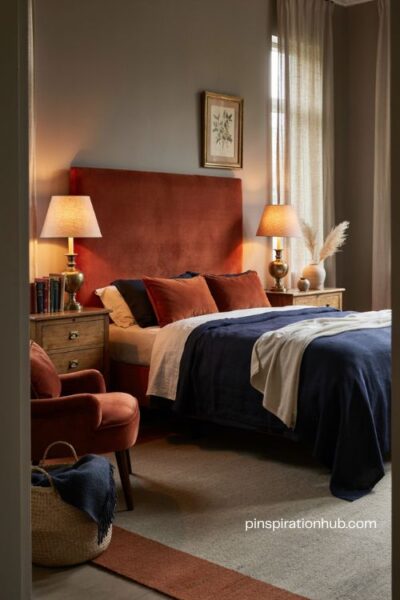
Velvet has a way of making any color feel more luxurious, and burnt orange is no exception. Velvet orange throw pillows, an upholstered headboard, or even a small accent chair catch and reflect light differently than flat cotton or linen, giving the color extra depth. Pair it with navy bedding for a rich, slightly dramatic combination that still feels cozy rather than over-the-top. This pairing tends to photograph beautifully in low, warm lighting, which makes it a strong choice for a primary bedroom you spend a lot of evening time in.
10. Add Warmth With Brass or Gold Hardware
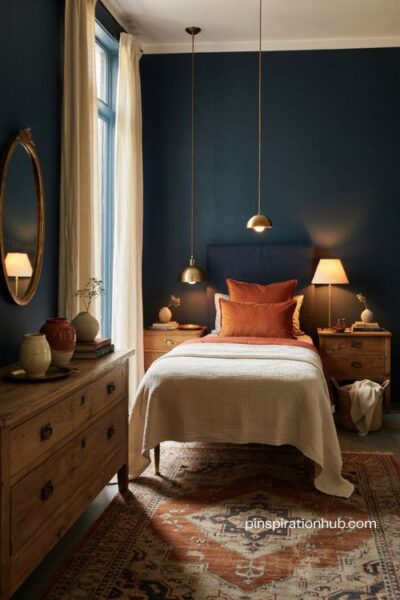
Metallic accents bring out the glow in burnt orange in a way that cooler metals like chrome or nickel simply don’t. Brass drawer pulls, a mirror frame, or a pendant light fixture pick up the warmth of the orange tones and tie the whole room together. This pairs especially well with navy blue bedding or walls, since the warm metal keeps the combination from feeling too cool or stark. A few brass-legged nightstands flanking the bed is often all it takes to pull the whole look together.
11. Use Wallpaper for a Bigger Statement
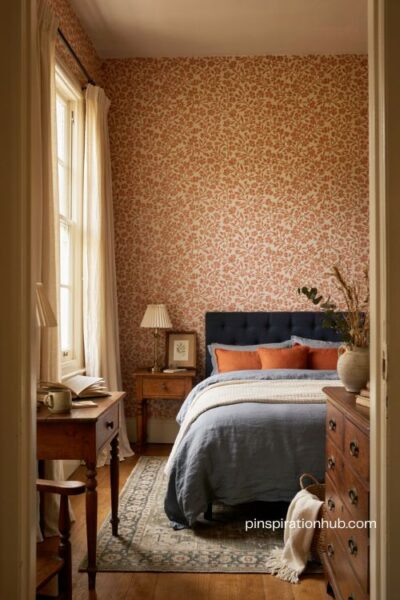
If you want more visual interest than paint alone provides, wallpaper is worth considering. Orange floral or abstract-patterned wallpaper on one or two walls adds texture and personality while still leaving room for blue accents in bedding or furniture. This approach works particularly well in bedrooms that lean more traditional or vintage, since a patterned wallpaper can soften the boldness of the color combo. Stick to an accent wall or two rather than wrapping the whole room if you want to keep the space from feeling too busy.
12. Ground the Look With Wood Tones
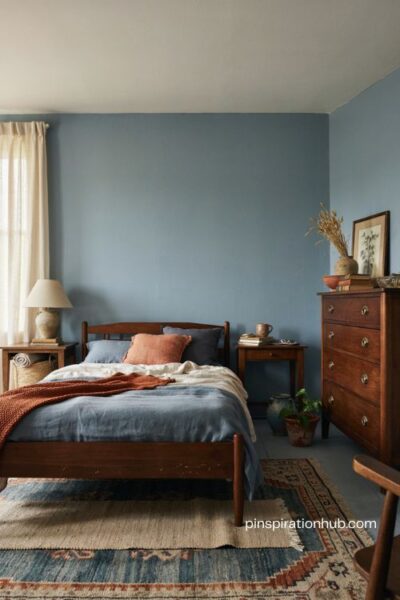
Wood furniture bridges burnt orange and blue naturally, since its warm undertones complement the orange while contrasting nicely against cooler blue walls or bedding. A wood bed frame, nightstands, or a dresser in a medium-to-dark stain keeps the room feeling grounded rather than overly saturated in color. This combination also tends to feel more timeless than an all-painted approach, since wood furniture rarely goes out of style the way a specific paint color might.
13. Add Plants for a Tropical Feel
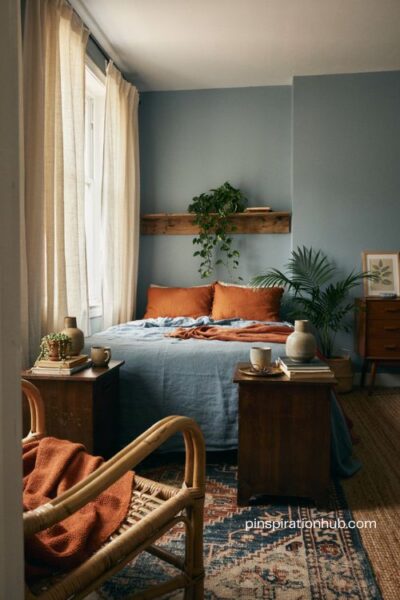
Green houseplants are an easy, low-commitment way to soften a bold color pairing. A trailing pothos or a small potted palm brings a touch of the tropics into a room that’s already leaning warm with burnt orange, and the green works as a natural bridge between the orange and blue tones elsewhere in the space. Plants also add texture and life to a room in a way that flat decor items can’t quite match, which makes the whole space feel more curated and less static.
14. Try a Two-Toned Wall Treatment
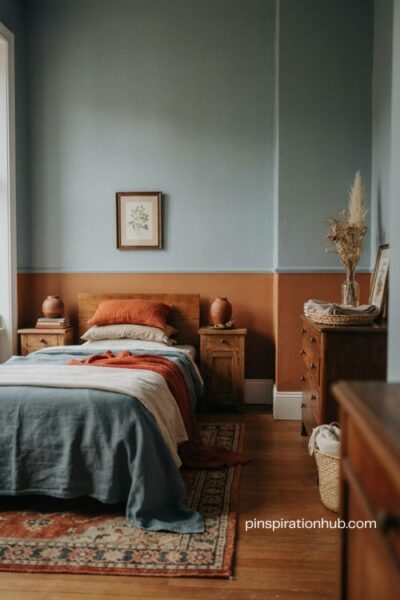
Instead of a single flat coat of color, consider painting the lower half of a wall in a deeper shade and the upper half lighter. This adds visual height to the room and gives you a natural spot to introduce both colors — burnt orange on the bottom, a soft blue-gray up top, divided by a simple trim line. It’s a slightly more advanced painting project than a standard accent wall, but the payoff is a room that feels custom-designed rather than pulled straight from a paint chip.
15. Balance With Beige or Off-White
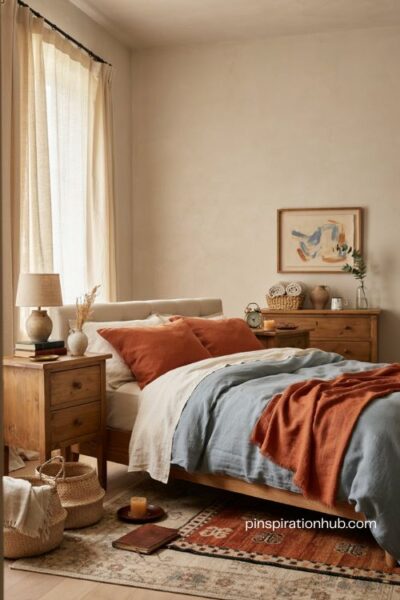
If the full-color combination feels like too much at once, dial it back with a generous dose of beige or off-white. Use these neutrals on the majority of your walls and let burnt orange and blue show up only in accents — a duvet, a few pillows, a piece of art. This keeps the room feeling calm and adaptable while still giving you that signature color contrast whenever you want it front and center. It’s also the easiest version of this look to update down the road, since neutrals never really go out of style.
Final Thoughts
There’s something surprisingly satisfying about the way burnt orange and blue land together in a bedroom — warm meets cool, and somehow neither one overpowers the other. Whichever version speaks to you, the room ends up feeling more like a real reflection of you and less like a page pulled from a catalog. That’s really the whole point of decorating in the first place.
Frequently Asked Questions
Q: Do burnt orange and blue actually work well together in a bedroom?
Yes — they sit opposite each other on the color wheel as complementary colors, which is why the pairing feels balanced rather than clashing, especially when one color is used as the dominant tone and the other as an accent.
Q: What shade of blue pairs best with burnt orange?
Navy blue creates a moodier, more grown-up feel that suits primary bedrooms, while lighter blues like powder or sky blue keep the space feeling brighter and more casual.
Q: How do I add burnt orange to a bedroom without repainting?
Bedding, throw pillows, curtains, a rug, or a single accent chair are all easy ways to bring in burnt orange without committing to paint, and they’re simple to swap out later if your taste changes.