
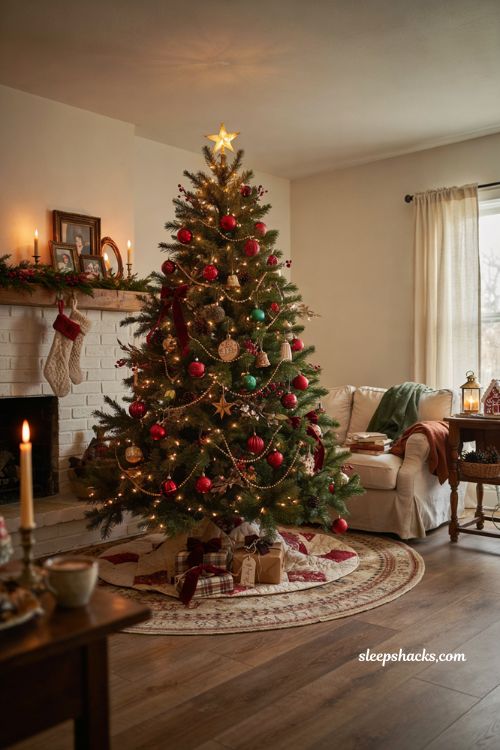
There’s something about a traditional Christmas tree that pulls you right back to childhood — the smell of pine, the glow of warm lights, ornaments that have been in the family for years. It’s not about chasing trends.
It’s about that cozy, familiar feeling that red, green and gold have carried through generations of holidays. If you’ve been wanting your tree to feel less like a showroom display and more like home, these fifteen ideas will help you build that classic look layer by layer, from the base color palette all the way up to the topper.
1. Start With the Classic Red, Green and Gold Base
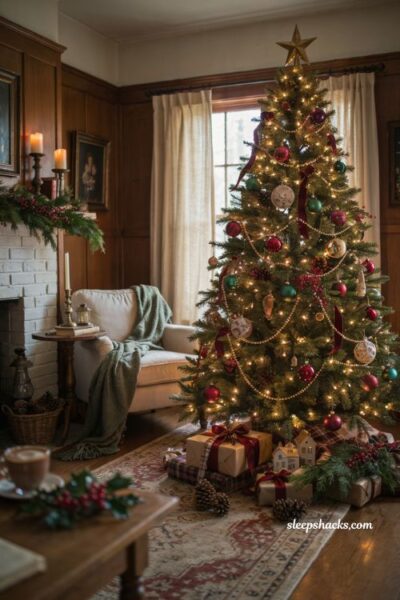
Every traditional tree begins with its color foundation, and red, green and gold is the one that never goes out of style. Pick one shade of each as your anchor — a deep cranberry red, a rich forest green, and a warm antique gold rather than bright metallic — then build everything else around those three. Keeping the palette tight actually makes a busier tree feel more pulled together, since your eye reads the colors as intentional rather than scattered. Add your lights first, then layer ornaments in, so you can see the base tones glowing through before you commit to the finishing pieces.
2. Mix In Mismatched Vintage Ornaments
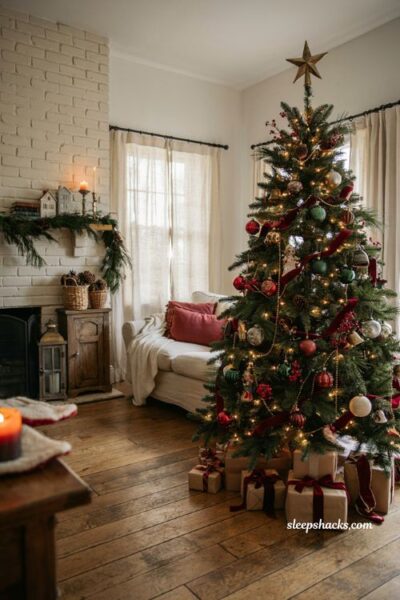
A truly traditional tree isn’t perfectly matched — it’s collected. Mismatched ornaments, especially ones with a bit of age or wear to them, give the tree the nostalgic feel that a boxed matching set never quite achieves. Look for glass baubles with a slightly worn finish, small painted figures, or vintage-style bells, and scatter them among your newer pieces rather than grouping them together. The practical trick is to hang the older, more delicate ornaments closer to the trunk where they’re better protected, saving the sturdier newer ones for the outer branches.
3. Layer In Velvet Bows for Texture
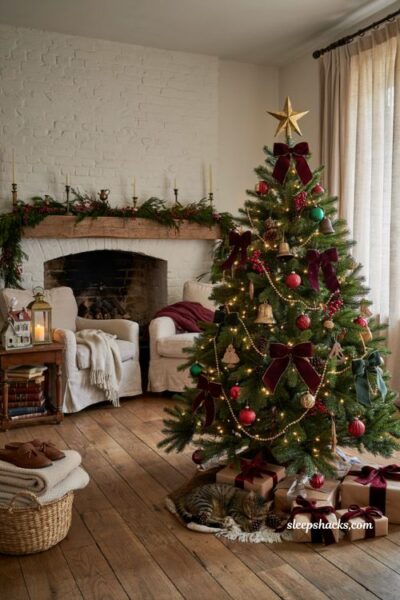
Velvet bows add a softness that glass and metal ornaments can’t. A rich red or deep burgundy velvet bow tucked between branches instantly reads as traditional, especially compared to shiny satin ribbon. Cut a few different sizes — some full and large near the top third of the tree, smaller ones scattered lower down — and use florist wire to anchor them directly onto sturdy branches rather than just draping them, so they hold their shape all season. The slight sheen of velvet under warm lights gives the whole tree a plush, old-world feel.
4. Add Berry Picks for a Natural Touch
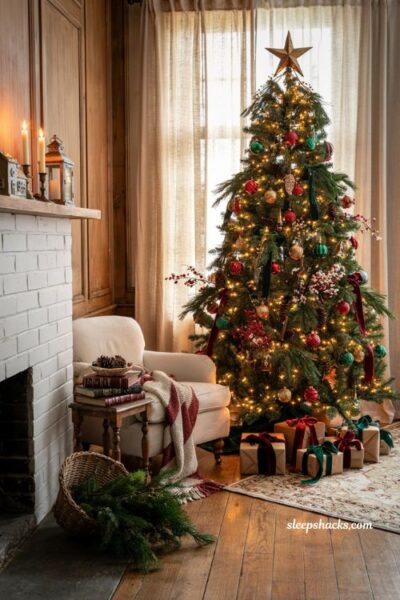
Red and white berry picks are one of the simplest ways to bring warmth into a traditional tree without adding another ornament. Tuck small clusters of them deep into the branches near the trunk, letting a few berries peek out toward the tips for a more natural, grown-in look rather than a stiff, styled one. They work especially well filling in any bare or sparse patches on an artificial tree. Combine red berries with a few white ones for contrast, and the effect starts to feel like something plucked straight from a winter garden.
5. Choose Warm White Lights Over Cool White
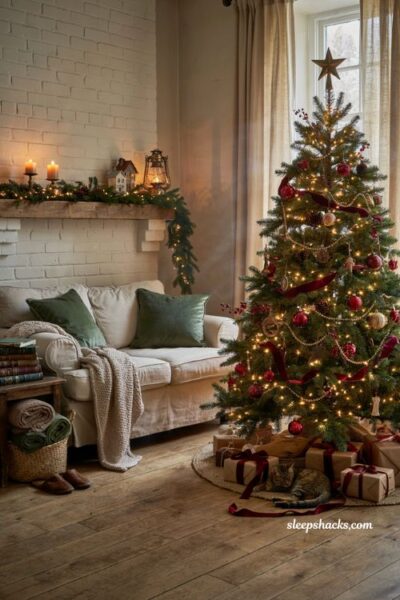
Lighting sets the entire mood of a traditional tree, and warm white bulbs are non-negotiable for that cozy, nostalgic glow. Cool white or blue-toned lights read modern and a little clinical, while warm white brings out the gold and red tones in your ornaments instead of fighting them. Wrap the lights branch by branch rather than just around the outside, working from the trunk out to the tips, so the glow comes from inside the tree as well as the surface. This one small swap does more to set the traditional tone than almost any other decoration choice.
6. Top It With a Classic Gold Star or Angel
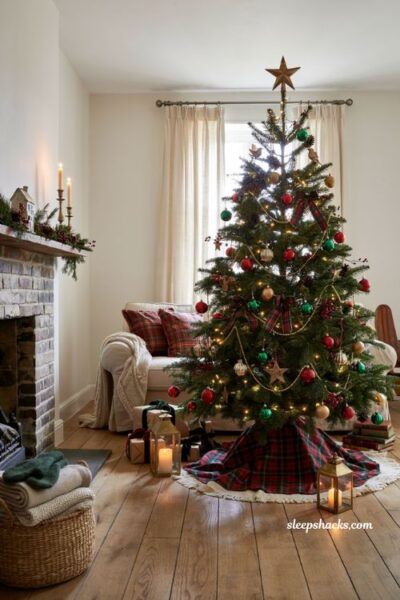
The topper is the final signature on a traditional tree, and a gold star or an angel figure are the two options that never feel dated. A star with a slightly aged or matte gold finish tends to look more timeless than a bright, glossy one, and it echoes the metallic tones already in your ornaments. If you’re leaning into a more nostalgic, family-style tree, a vintage angel topper brings a softer, sentimental note instead. Either way, make sure the topper is proportionate to the tree — roughly one-tenth of the total height looks the most balanced.
7. Use a Plaid or Tartan Tree Skirt
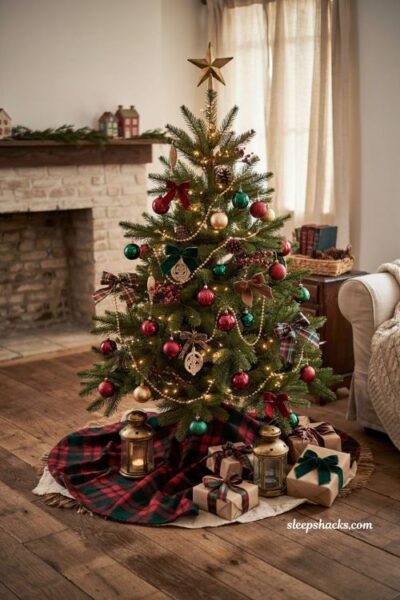
A tree skirt in a red and green plaid or tartan pattern grounds the whole design and gives the base of the tree a finished, cozy look. Look for a heavier fabric like wool or a wool blend rather than thin cotton, since it holds its shape better and pools naturally around the base. Plaid also does double duty by tying together any tartan ribbon or bows used higher up the tree, creating a sense of continuity from top to bottom. Layer a plain cream or burlap skirt underneath the plaid one for extra texture peeking out at the edges.
8. Bring In Pinecones and Greenery Sprigs
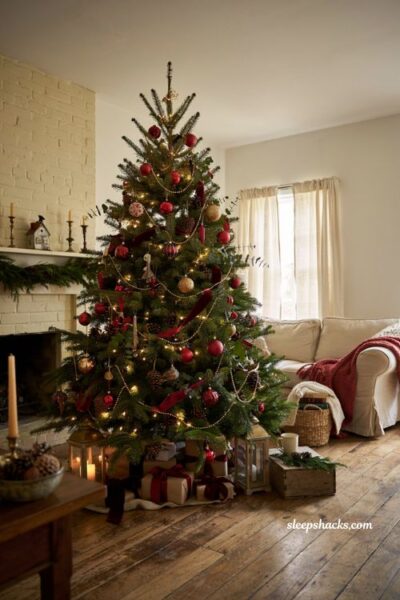
Real or faux pinecones tucked between the branches add texture and an earthy, natural note that balances out shinier ornaments. Choose pinecones in a range of sizes, and place the larger ones lower on the tree where the branches are sturdier, working up to smaller ones near the top. A few extra sprigs of greenery — cedar, eucalyptus, or even simple faux pine — layered in alongside the pinecones fills out any thin spots and adds depth. This combination gives the tree a slightly wild, foraged quality that keeps it from feeling overly polished.
9. Display Family Heirloom Ornaments Front and Center
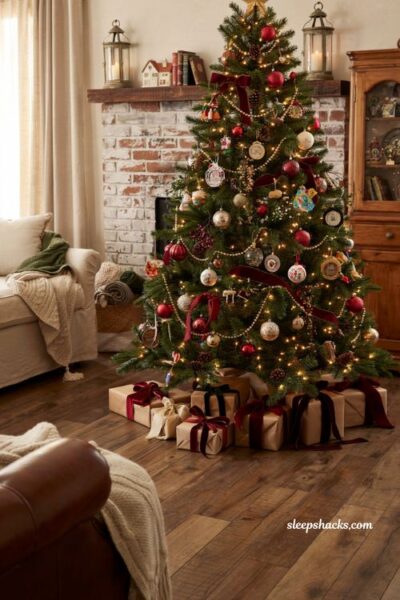
Nothing says traditional quite like ornaments that have been passed down or collected over years of holidays. Give these pieces prime real estate on the tree — around eye level and toward the front — rather than tucking them away in the back branches where they’ll go unnoticed. If you have ornaments marking specific years or milestones, consider grouping them loosely by era so the story of your family’s holidays reads naturally as you look at the tree. This is also the easiest way to make a store-bought tree feel completely personal and irreplaceable.
10. Layer Beaded Garland for Extra Shimmer
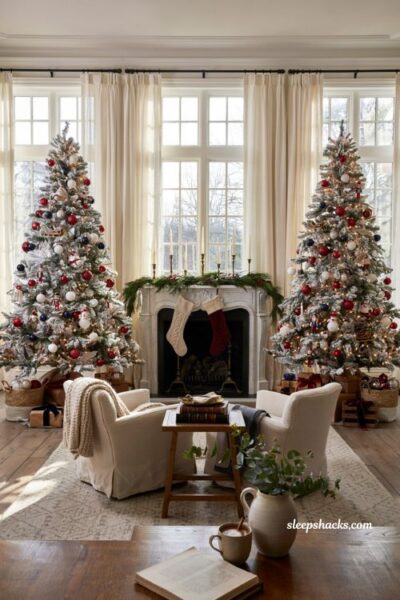
Beaded garland, especially in gold, cranberry red, or a mix of both, adds a subtle shimmer that string lights alone can’t create. Drape it in loose, uneven swags rather than tight, even loops — a slightly imperfect drape actually looks more natural and less like a store display. Start about a third of the way down from the top and work downward, letting the garland dip lower with each pass. This layer sits beautifully underneath your ornaments and bows, catching the light from a different angle as you walk past the tree.
11. Coordinate Your Stockings to the Tree Palette
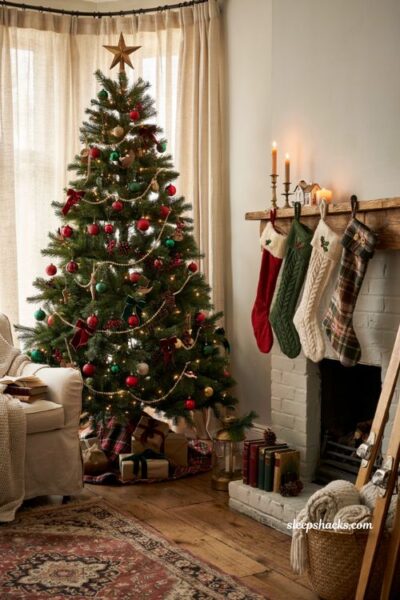
A traditional tree looks even more intentional when the stockings hanging nearby echo the same red, green and gold tones. Choose stockings with a similar texture story too — velvet or knit to match velvet bows on the tree, or a plaid cuff that mirrors your tree skirt. Hang them at slightly varied heights along the mantel or stair rail rather than in a perfectly straight line, which keeps the whole scene feeling relaxed instead of staged. This small coordination detail pulls the tree and the surrounding room together as one cohesive holiday scene.
12. Mix Glass Bauble Finishes for Depth
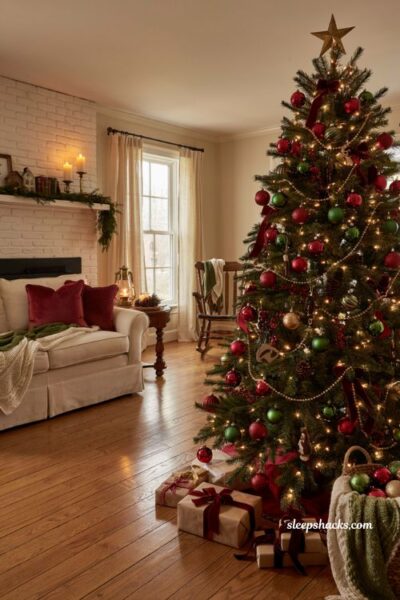
Rather than using baubles in a single finish, combine matte, glossy and glitter finishes within your red, green and gold palette for a richer, more dimensional look. The matte ornaments recede slightly under the lights while the glossy and glitter ones catch and reflect them, giving the tree visual depth instead of a flat, uniform surface. Distribute the three finishes evenly across the tree rather than clustering one type in one area. This layering trick is one of the simplest ways to make a traditional palette feel more elevated without adding new colors.
13. Add a Deeper Burgundy Layer for Richness
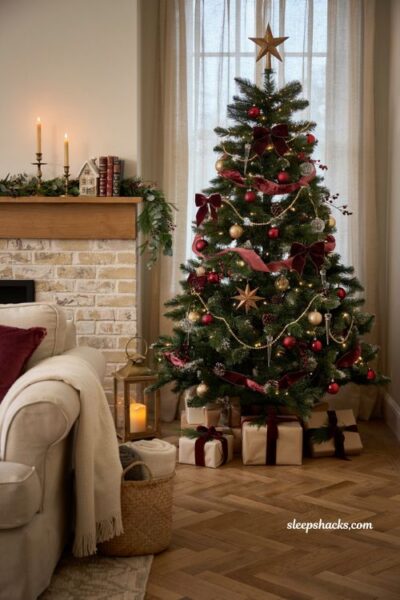
Pure red can start to feel flat on a large tree, so folding in a deeper burgundy or wine-toned accent adds richness and dimension. Use burgundy in your ribbon, a few ornaments, or even a secondary bow color layered behind the brighter red ones. This slightly darker tone photographs beautifully in lower evening light, which matters if your tree is the backdrop for holiday photos. It also pairs especially well with antique gold, deepening the whole palette without pulling it away from tradition.
14. Use Nostalgic Novelty Ornaments Sparingly
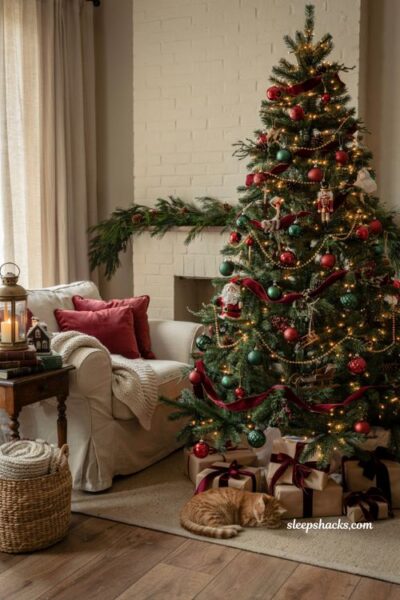
A few playful, old-fashioned novelty ornaments — a vintage-style Santa, a little sled, a classic nutcracker figure — bring charm and a bit of storytelling to an otherwise formal palette. The key word is sparingly: three or four well-placed novelty pieces read as charming, while a dozen can tip the tree from traditional into cluttered. Place them at varying heights so they read as discoveries rather than a matched set, and let the surrounding red, green and gold ornaments do the heavy lifting around them.
15. Finish With Ribbon Woven Through the Branches
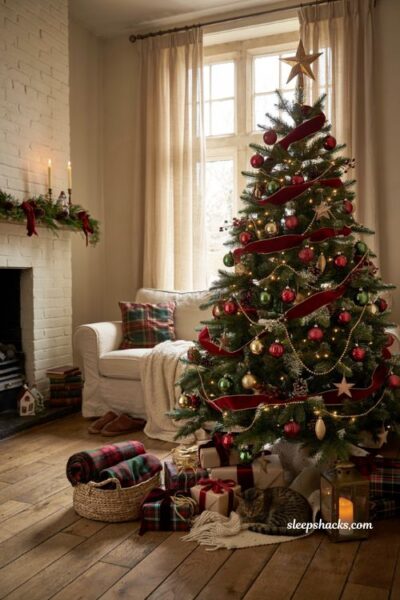
Rather than only adding ribbon as bows, weave a length of wired ribbon in and out through the branches from top to bottom for a fuller, more finished silhouette. Pinch the ribbon at the base of the loops before tucking it in, which keeps it from flattening out over the season. A wired ribbon in red, gold, or a subtle plaid holds its shape best and gives you those classic loose loops you see on professionally styled trees. This finishing step ties every other element together into one cohesive, traditional look.
Final Thoughts
A traditional Christmas tree doesn’t need to be complicated to feel special — it just needs a little intention behind the choices. Pick your color palette first, then build outward with texture, lighting and a few personal pieces that mean something to you. Even one or two of these ideas, done well, can shift a tree from generic to genuinely warm and memorable. So this year, before you reach for whatever’s easiest, take a beat and decide what “traditional” actually means for your home. That’s the tree worth pinning.
Frequently Asked Questions
Q: What colors are used in a traditional Christmas tree theme?
Red, green and gold are the classic combination, sometimes paired with white or burgundy for extra depth.
Q: Should I use warm or cool white lights for a traditional tree?
Warm white lights are the better choice, since they bring out the gold and red tones and give the tree a cozier glow.
Q: How many ornaments do I need for a full traditional tree?
As a general guide, plan for roughly 12–15 ornaments per foot of tree height so it looks full without feeling overcrowded.
1 thought on “15 Traditional Christmas Tree Ideas That Feel Warm and Timeless”