
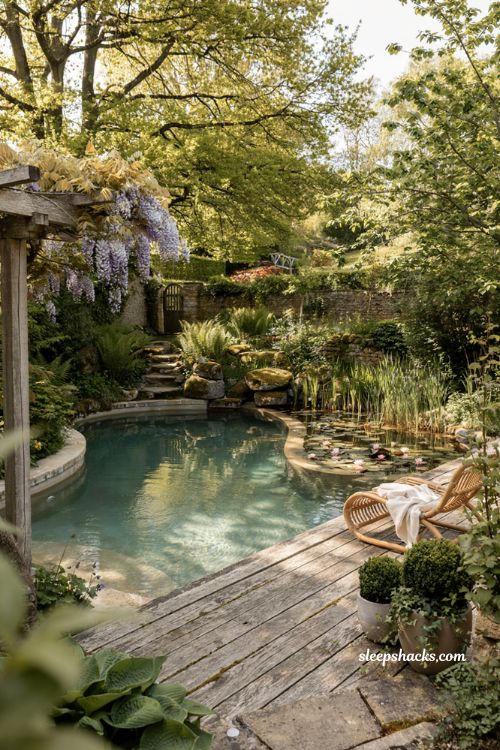
There’s something almost magical about swimming in water that actually feels alive. Not the sharp chlorine sting in your eyes, not the chemical smell that follows you inside — just cool, clear water moving gently around you like a mountain lake.
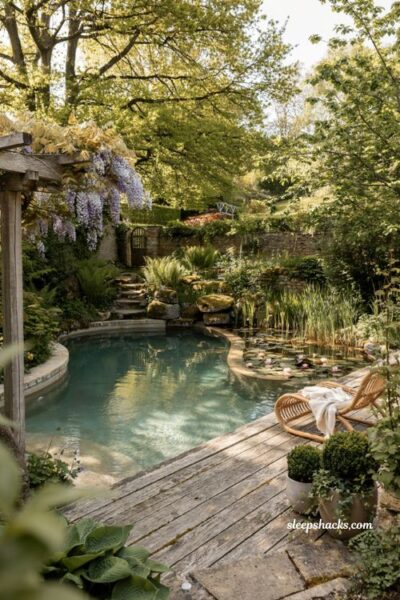
Natural pools make that possible, and they’ve quietly become one of the most interesting things happening in backyard design right now. These 17 ideas will show you what’s actually possible, from small yards to sprawling gardens.
1. A Two-Zone Pool Design With a Built-In Plant Filter
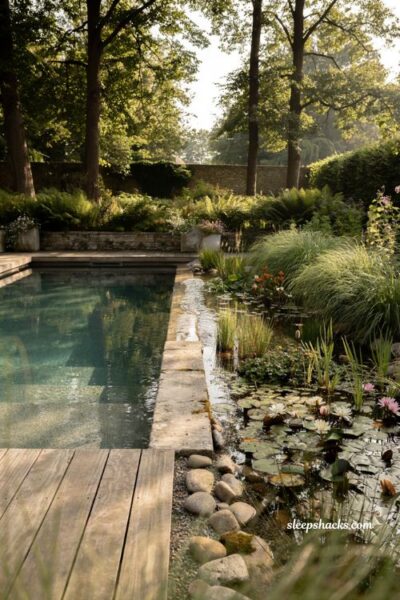
The foundation of any natural pool is the two-zone layout — a swimming area and a separate regeneration zone where plants do the cleaning work. Water flows between them continuously, passing through gravel, plant roots, and beneficial bacteria that break down contaminants naturally. Getting this flow right from the start is the single most important decision you’ll make.
2. Gravel and Stone Walls Instead of Concrete Sides
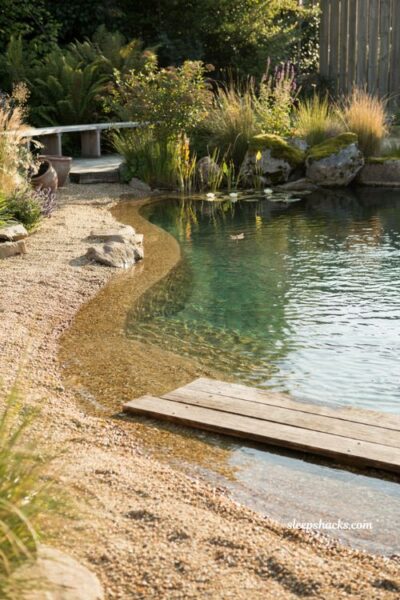
Skipping the iron framework and concrete walls is both eco-friendly and surprisingly practical. When you dig with sloping sides and line them with bentonite clay or an EPDM liner, then cover with cleaned gravel, you get walls that are stable, natural-looking, and actually support the beneficial bacteria your pool depends on. The gravel layer quietly works for you all season long.
3. Water Lilies That Do the Real Filtration Work
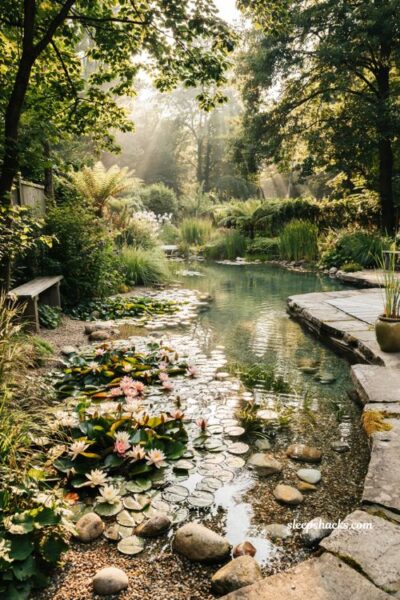
Water lilies are more than just beautiful — they’re workhorses. As they spread across the surface and cast shade on the water below, algae blooms significantly decline. Their roots absorb excess nutrients and phosphorus that would otherwise feed algae growth. Plant them in the regeneration zone where they get full sun, and let them earn their place.
4. A Shallow Regeneration Zone Packed With Reeds
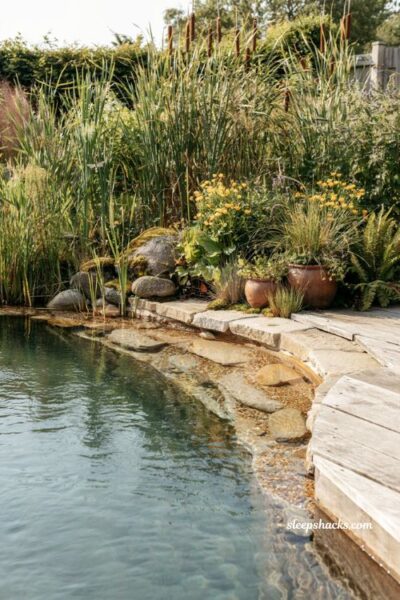
Taller aquatic plants like phragmites australis, typha gracilis, and caltha palustris belong in the shallow edges of your regeneration zone. They create a low-nutrient environment by constantly pulling waste from the water, and the shallow habitat they form also attracts dragonflies and invertebrates that naturally eat mosquito larvae. Two problems solved with one planting decision.
5. A Freeform Natural Swimming Pond Shape for Rural Yards
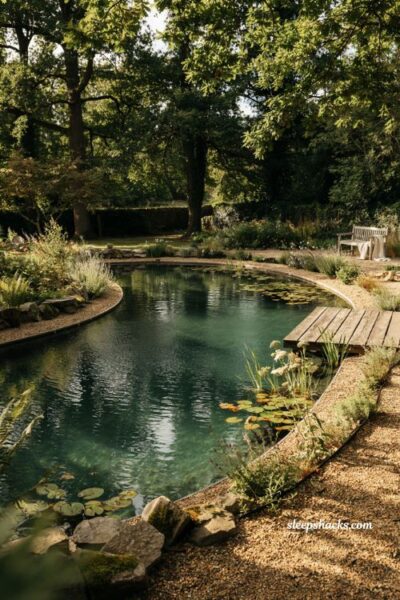
If you want the pool to feel like it belongs to the land, go irregular. Curved edges, rock outcroppings, and no hard corners help a natural swimming pond disappear into a garden landscape — especially in rural or wooded settings. The shape doesn’t follow rules, which is the whole point. Let the terrain suggest where the edges should fall.
6. A Sleek Modern Eco-Pool With Clean Geometric Lines
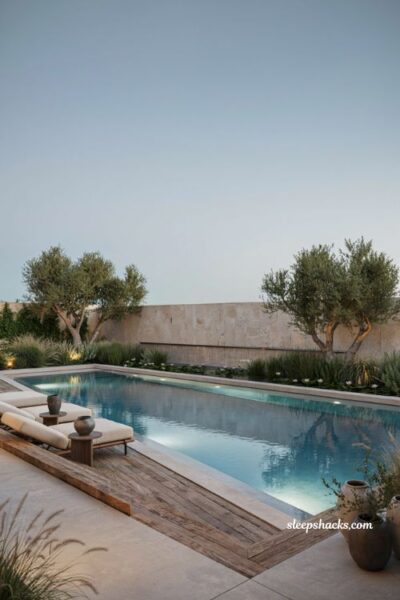
Natural filtration doesn’t have to mean rustic. A rectangular eco-pool with hardscaped concrete edges, underwater LED lighting, and neatly bordered plant beds fits just as well in a minimalist urban garden. The biological filtration happens out of sight while the pool itself looks polished and intentional. It’s the cleanest way to do something deeply natural.
7. Bentonite Clay Lining for a Truly Chemical-Free Build
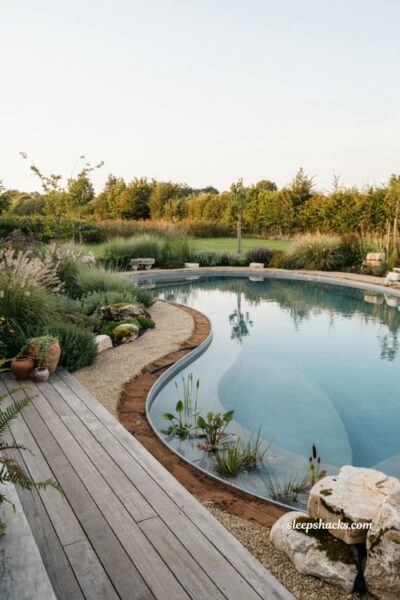
For the most natural build possible, bentonite clay applied as a lining layer seals the soil without synthetic materials. It’s been used in natural pond construction for decades and, when applied correctly at around 30cm thick, creates a watertight base that stays completely compatible with your aquatic plants and wildlife. Pair it with EPDM on any areas that need extra protection.
8. A Small Bamboo Aeration Waterfall Between Zones
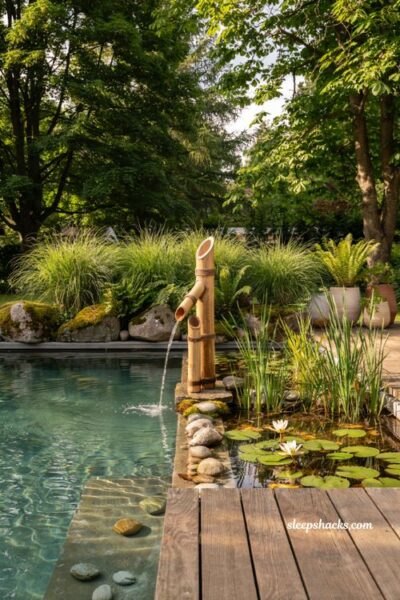
Moving water between the regeneration zone and the swimming area through a small waterfall or cascade speeds up purification noticeably. A bamboo-style water feature positioned at the border does this beautifully — it aerates the water as it falls, feeds oxygen to the beneficial bacteria, and adds that gentle sound that makes sitting near a natural pool so calming.
9. Native Aquatic Plants That Thrive in Your Climate
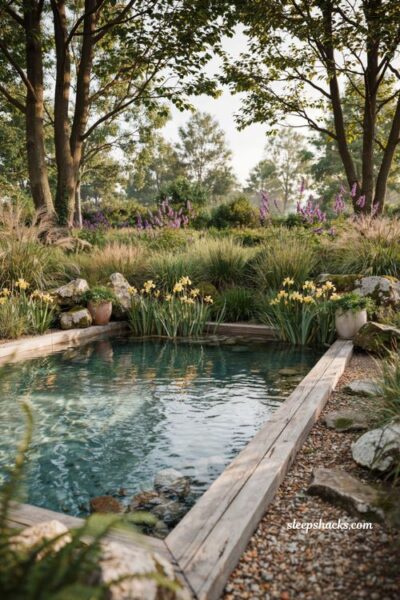
The best plant list for your natural pool isn’t a generic one — it’s specific to where you live. Native aquatic species like iris pseudacorus, lythrum salicaria, and carex acuta are already adapted to your rainfall, temperature swings, and soil. They establish faster, need less intervention, and support local wildlife more effectively than anything imported. Ask a local nursery what’s thriving in natural ponds nearby.
10. Underwater Aeration That Keeps the Water Silky Clear
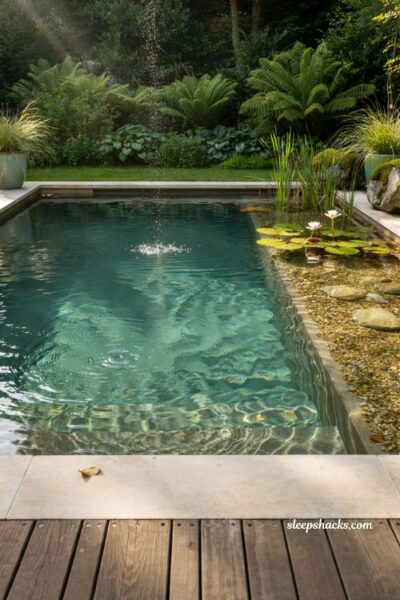
A small air compressor connected to a buried diffuser tube at the pool’s bottom is one of the most efficient ways to keep your natural pool healthy. Diffusing air from the bottom up moves water more effectively than surface aerators and keeps oxygen levels consistent throughout the water column. Run it twice daily — once in the morning when oxygen demand peaks, once in the evening.
11. A Hybrid Pool With Saltwater Backup and Plant Beds
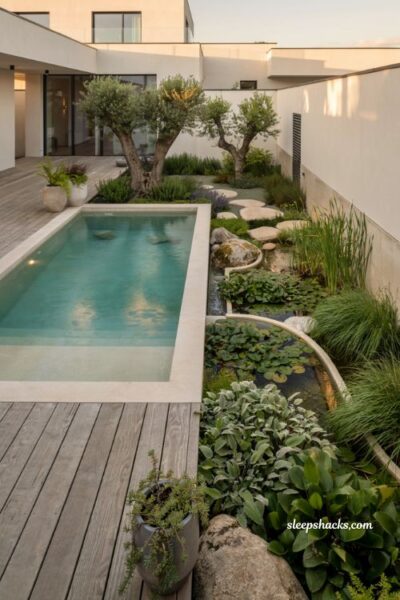
Not everyone wants to go fully chemical-free from day one. A hybrid natural pool keeps the biological filtration zones and plant beds while adding a low-salt electrolysis unit as a backup disinfection method. This system produces oxidants comparable to chlorine but without the harsh byproducts — so you still get crystal-clear water and a softer, more natural swimming experience overall.
12. Dragonfly-Friendly Shallow Edges Around the Perimeter
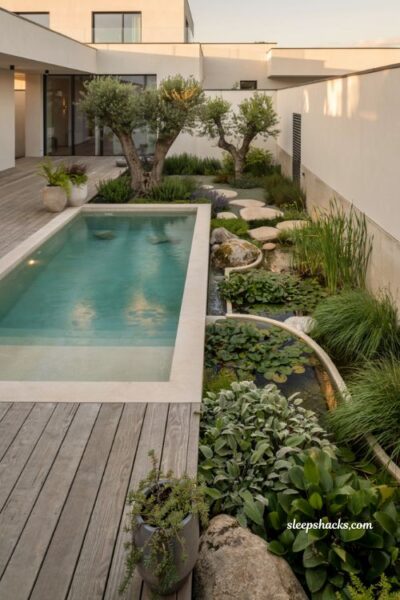
Designing a gradual shallow edge around part of your natural pool does more than look nice — it creates habitat. Dragonflies, frogs, and small aquatic insects that thrive in 15–30cm of water become part of your pool’s natural pest control and ecological balance. The shallow zone also makes it easier for birds to visit, which adds an entirely different kind of life to the space.
13. Solar Heating to Extend Your Swimming Season Naturally
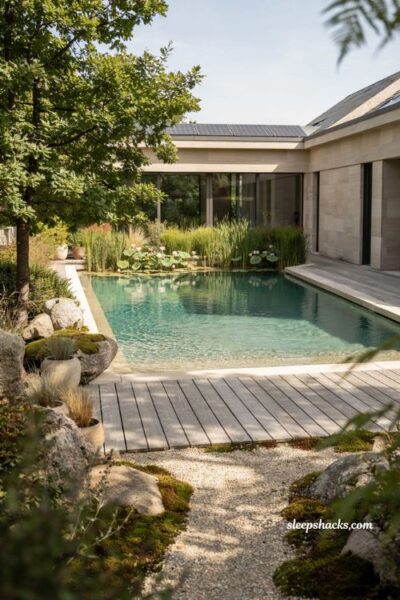
Solar panels capturing the sun’s energy to warm your pool water is the most compatible heating method for a natural ecosystem. It’s cost-effective in sunny climates, pays itself off within a few years, and doesn’t disrupt the biological balance the way aggressive heating systems can. Keep the water below 32°C to protect your aquatic plants — somewhere in the low-to-mid 20s is the sweet spot.
14. A Rocky Natural Pond Style That Blends Into the Garden
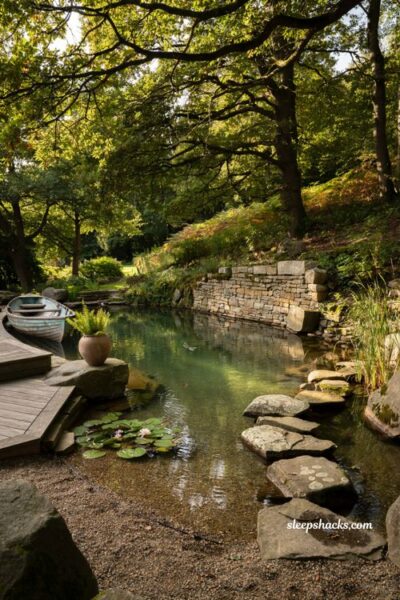
Stacked rock walls, boulder edging, and stepping stone access points make a natural pool feel like it was always there. This works especially well on sloped properties where the rocks can serve a structural purpose while also looking completely organic. Position some above the waterline and some just below to give wildlife easy entry and exit points from the water.
15. Cobblestone Steps and Wooden Decking for Pool Access
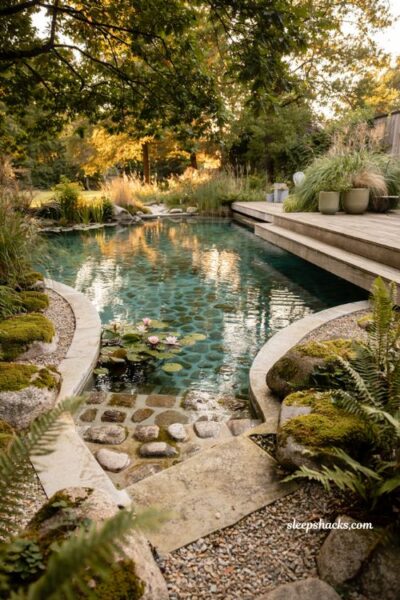
Getting in and out of a natural pool without disturbing the liner or compacting the plant zones means thinking about access from the start. Cantilevered wooden decking at water level is popular and practical, while cobblestone steps built into the pool’s sloped sides feel more organic. Either option protects the pool structure while giving you a comfortable, good-looking entry point.
16. LED Underwater Lighting for Night Swims in Your Eco-Pool
Submersible LED lights fitted along the walls of the swimming zone let you use your natural pool well after sunset — and they look genuinely stunning with clear water around them. Choose warm-toned LEDs that don’t disrupt nocturnal wildlife too aggressively, and keep them on timers. A lit natural pool at night is one of those things that makes the whole investment feel completely worth it.
17. Converting an Old Pond Into a Chemical-Free Swimming Space
If you already have a pond on your property, converting it into a natural swimming pool is very doable — though it’s not cheap or quick. The process involves draining, removing sludge, installing a proper liner and filtration system, and replanting with the right aquatic species. The upside is that you’re starting with an existing hole in the ground and potentially a soil structure that already supports aquatic life.
Frequently Asked Questions
Q: Do natural pools need chemicals to stay clean? Most natural pools run without chemicals at all — plants, gravel, and beneficial bacteria handle the filtration. Some hybrid versions add saltwater electrolysis for extra peace of mind, but no chlorine is needed.
Q: How much maintenance does a natural pool actually require? Typically half a day per month — brushing surfaces, vacuuming debris, and trimming back plant growth. Smaller pools need less, around two to three hours monthly.
Q: Can you heat a natural swimming pool? Yes, solar heaters and heat pumps both work well. Just keep the temperature under 32°C to protect your aquatic plants and the broader ecosystem.
Q: Do natural pools attract mosquitoes? Good water circulation prevents stagnation, which is what mosquitoes need to breed. As long as your pump is running, mosquito problems are minimal — and dragonflies in the shallow zones help too.