
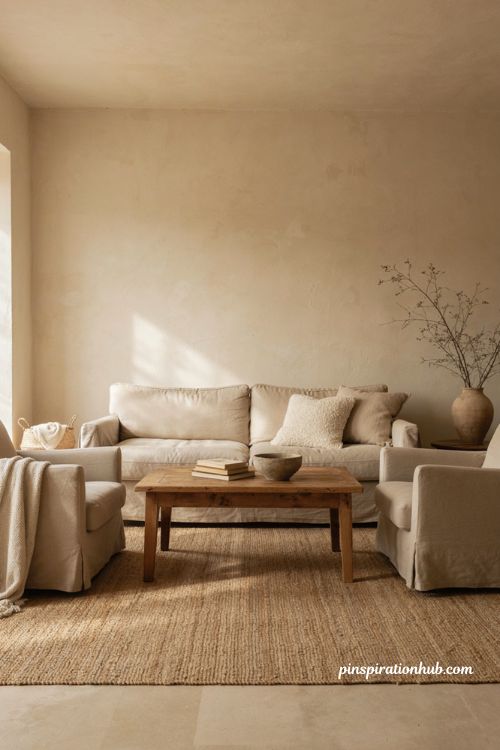
If your living room feels flat no matter how many throw pillows you add, you’re not alone. A lot of people assume neutral means boring, so they either overcorrect with too much color or give up and leave the space feeling half-finished. The truth is a neutral living room can be just as warm, layered, and full of personality as any bold-colored one — it just leans on texture, tone, and natural materials to do the work color usually does. These fifteen ideas will help you build a neutral space that actually feels inviting instead of empty.
1. Layer Mixed Textures for Warmth
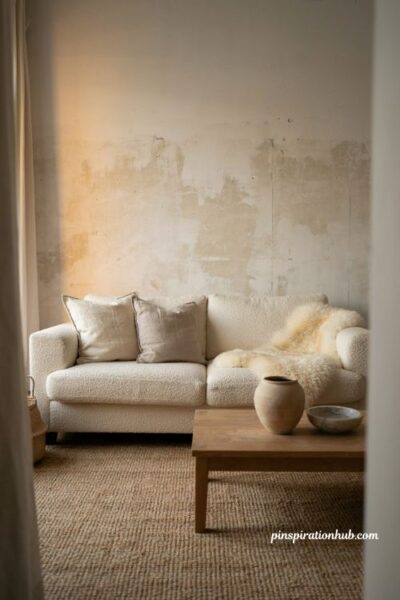
The easiest way to keep a neutral room from feeling flat is to pile on texture in every material you can find. Pair a bouclé or linen sofa with a sheepskin throw, a jute rug, and a few smooth ceramic accents so your hands have something interesting to reach for wherever they land. Limewashed walls add a subtle, chalky variation that flat paint just can’t match. The goal is contrast in feel, not color, so every surface earns its place in the room.
2. Shades of Beige for a Calm Base
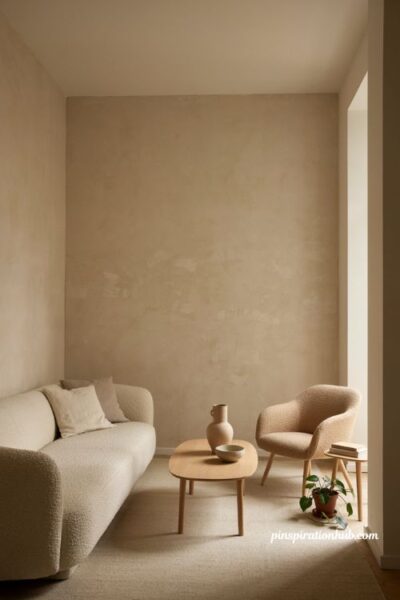
Beige gets a bad reputation, but used well it creates a soothing, uncluttered backdrop that lets furniture shape take center stage. Stick to one or two shades of beige across your walls, sofa, and rug so the room reads as intentional rather than accidental. Curvy furniture silhouettes stand out beautifully against a beige base, since there’s no competing color to distract from their lines. This approach works especially well in smaller living rooms where you want the space to feel calm rather than busy.
3. Bring in Warm Wood Tones
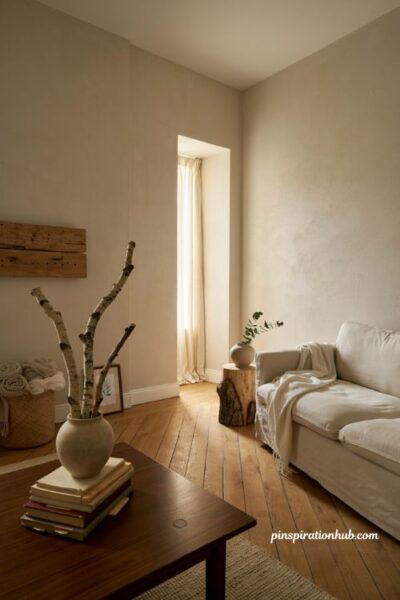
Natural wood is one of the fastest ways to add warmth to an all-white or pale neutral room without introducing any actual color. Mix a few different wood finishes, like a tree stump side table alongside a dark stained coffee table, rather than matching everything perfectly. The slight variation in tone reads as collected over time instead of bought as a set. Wood floating shelves or a chunky mantel can carry this warmth even higher up the walls if your furniture alone doesn’t do enough.
4. Add Green as a Natural Neutral
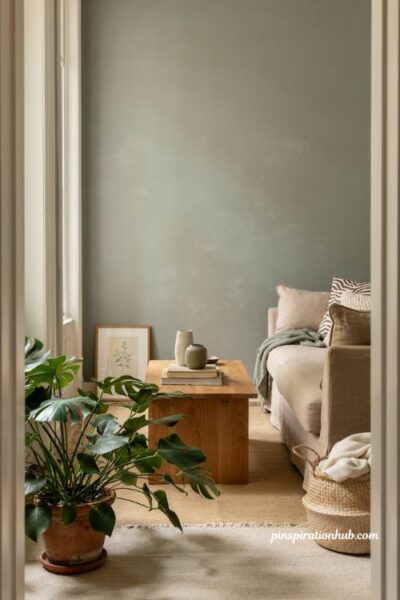
Green sits in an interesting spot — it’s not technically neutral, but muted, earthy shades of it read as calm and grounded enough to blend into a neutral scheme. Try a tonal olive or sage on an accent wall or sofa, then repeat small touches of it through pillows or a potted plant. A single animal print accent can add a little nature-inspired edge without pulling focus from the green itself. This works especially well if your room already leans toward warm, earthy neutrals like tan or camel.
5. Choose Shades of Gray
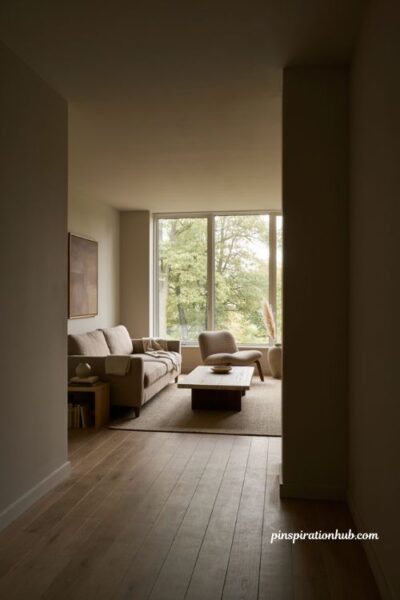
Gray remains one of the most versatile neutrals because it slides comfortably into both modern and traditional spaces without a fight. A warm, medium-toned gray on the walls, carpet, and upholstery creates a tranquil backdrop that lets a great view or a statement piece of furniture take over. Pay attention to undertones when picking your shade, since warm grays lean slightly yellow or brown while cool grays lean blue. If your room gets a lot of natural light, a warmer gray keeps it from feeling too cold or sterile.
6. Introduce Metallic Accents
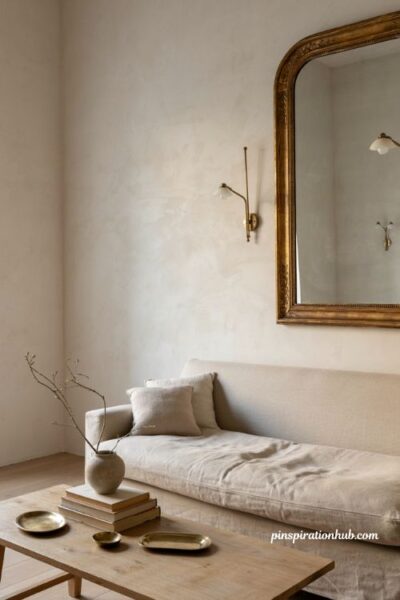
A little shine goes a long way in a neutral living room, especially in spaces that lean toward all-white or pale beige. A gilded antique mirror, a set of metallic wall sconces, or a vintage brass fireplace screen can brighten an otherwise flat wall instantly. Choose warm metals like brass or copper for rooms with warm undertones, and cooler silver or chrome for spaces built around gray and white. Keep the metallic pieces to two or three spots in the room so they read as intentional accents rather than scattered sparkle.
7. Add Statement Lighting
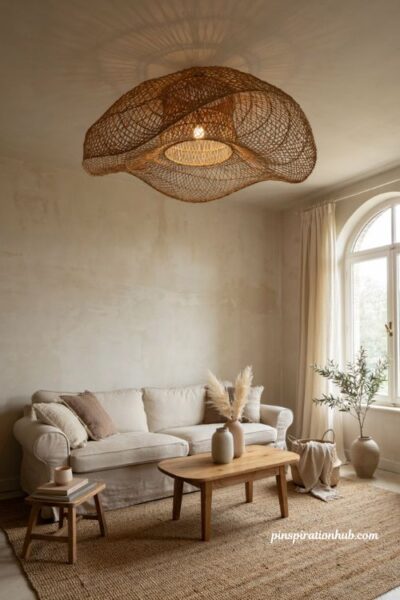
In a room without bold color, lighting becomes one of your best tools for creating a real focal point. A row of farmhouse lanterns suspended from a high ceiling, or one oversized pendant over a seating area, draws the eye upward and adds architectural interest. Choose a fixture with some texture or shape to it, like woven rattan or sculptural metal, rather than something purely functional. This is often the single easiest upgrade in a neutral room, since it doesn’t require repainting or new furniture.
8. Mix Dark and Light Tones
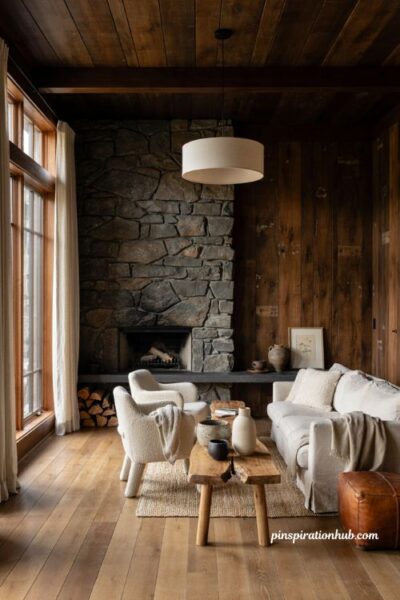
High contrast between dark and light neutrals can make a room feel more dynamic without introducing a single new color. Dark wood walls or a rustic fireplace paired with pale off-white furniture and textiles creates a push and pull that keeps the eye moving. An oversized pendant light in a pale shade can help balance out a darker wood ceiling or accent wall. This combination works particularly well in cabin-style or rustic living rooms that already have a lot of dark wood built in.
9. Layer Natural Materials
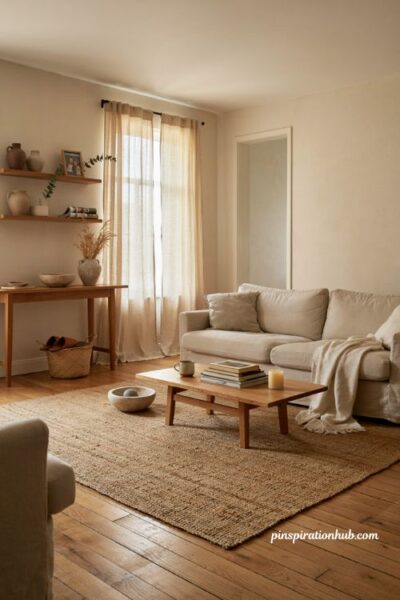
Jute, linen, wood, and stone all bring their own texture to a neutral room, and layering several together creates depth that paint color alone can’t achieve. Try a jute rug over hardwood flooring, paired with sheer linen curtains that let natural light filter through softly. Wood accents, like a console table or a set of floating shelves, round out the natural material palette. This approach tends to feel relaxed and effortless, which makes it a great fit for a family living room that sees daily use.
10. Accent With a Single Bold Color
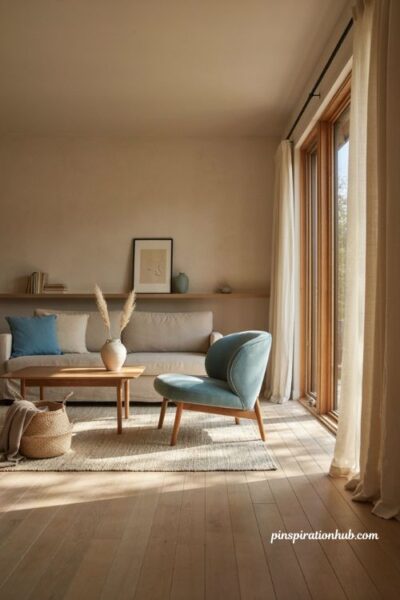
Choosing just one high-impact color to run through an otherwise neutral room keeps things interesting without overwhelming the calm base you’ve built. A faux-leather aqua chair or a sculptural glass chandelier in a single bold hue can become the room’s unofficial signature piece. Repeat that same color once or twice more in smaller doses, like a throw pillow or a vase, so it doesn’t feel like a one-off accident. This is a good option if you love the idea of a colorful room but aren’t ready to commit to it everywhere.
11. Combine Brick and Leather
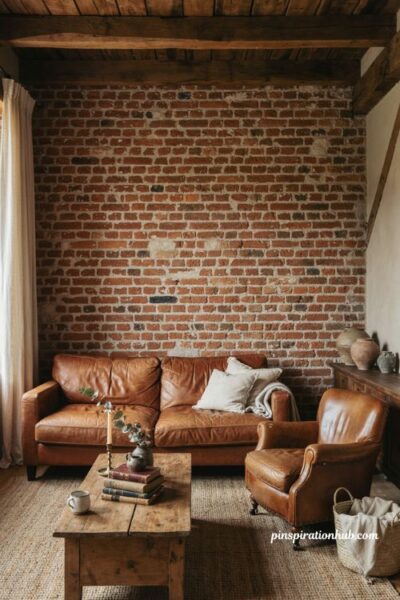
Exposed brick paired with a leather sofa or armchair brings an instantly lived-in, collected feeling to a neutral living room. A vintage leather club chair with some visible wear and patina works especially well here, since the aged look pairs naturally with brick’s rough texture. Wood beams overhead tie the two materials together and reinforce the room’s overall warmth. This combination tends to suit farmhouse or rustic-leaning spaces more than sleek, modern ones.
12. Use Black and White Contrast
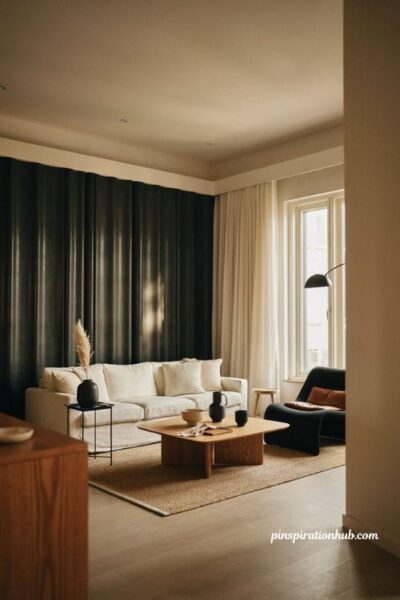
A monochromatic black and white palette can feel fresh and clean rather than stark, as long as you avoid splitting the room exactly fifty-fifty. Use a black accent wall or panel to break up a mostly white or off-white room, then place black and white furniture pieces strategically so the contrast feels balanced. Choose a satin or semi-gloss finish for any black paint so it doesn’t read as flat or heavy on the wall. Adding a little wood or leather into the mix keeps the black and white palette from feeling too cold.
13. Add Pattern Through Textiles
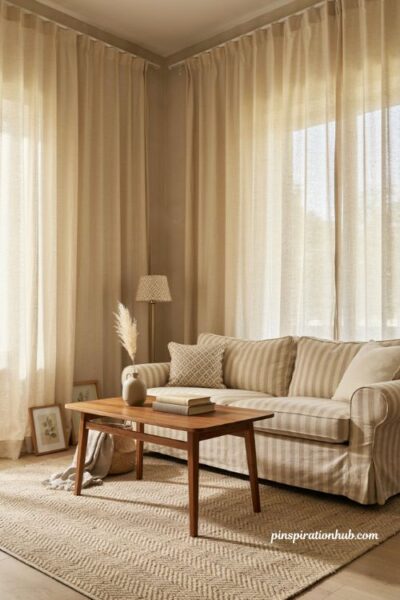
Even in a fully neutral room, pattern can sneak in through fabric without disrupting the overall calm. A herringbone-woven rug, a subtly patterned lampshade, or striped upholstery all add visual interest while staying within the same tonal family. Small-scale, repeated patterns tend to work better than large bold prints, which can start to compete with the room’s quiet backdrop. This is an easy way to add personality to a rental or a room where you’re not ready to commit to paint color.
14. Consider Natural Light Levels
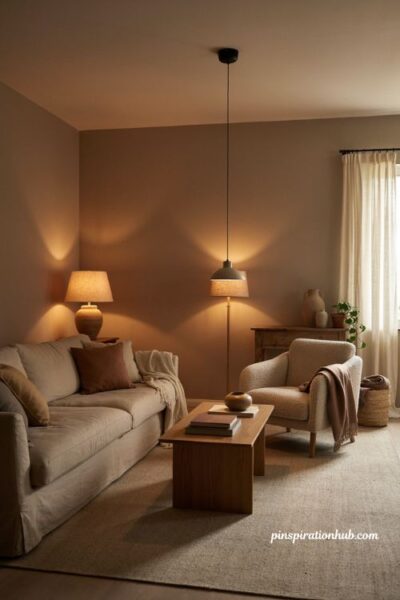
The amount of natural light your living room gets should genuinely influence which neutral shades you choose, not just personal preference. A bright, sun-filled room can handle lighter tones and will show off beautiful shadow play throughout the day. A room with less natural light often looks better in slightly deeper, moodier neutrals, since pale shades can end up looking washed out or flat. Good artificial lighting fills in the gaps either way, so don’t skip layered lamps and overhead fixtures just because the walls are neutral.
15. Add a Touch of Glam with Gold
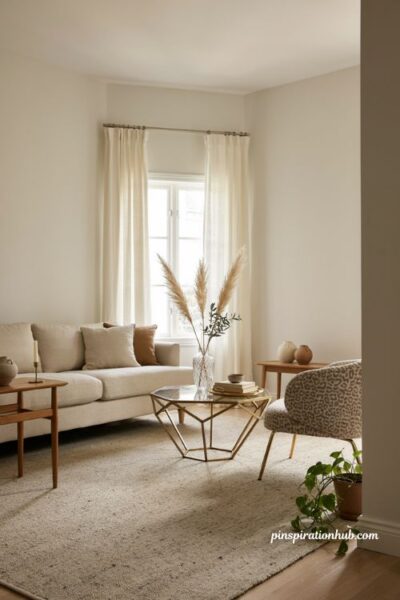
For a neutral room with a little more shine and personality, weave in touches of glam like gold finishes, faceted crystal, or a subtle animal print. A geometric gold coffee table or a few shiny brass accessories against beige walls adds polish without tipping into full maximalism. Keep the glam elements small and specific, like a coffee table or a single accent chair, rather than spreading them across every surface. This approach proves that neutral doesn’t have to mean plain — it just needs the right accents to feel finished.
Final Thoughts
At its best, a neutral living room isn’t really about the absence of color at all — it’s about letting texture, material, and light do the talking instead. Once you start looking at your space that way, choosing between beige or gray or greige stops feeling like the hard part, and layering in wood, wool, and a little shine becomes the fun part. A room built this way tends to age well too, since neutrals rarely go out of style the way trend colors do. Think of your neutral palette less as a limitation and more as the quiet foundation that lets everything else in the room shine.
Frequently Asked Questions
Q: What is a good neutral paint color for a living room?
Warm-undertone neutrals like cream, beige, tan, or greige tend to create the coziest feel, especially in rooms with plenty of natural light.
Q: How do you add warmth to a neutral living room?
Bring in wood accents, warm metal finishes like brass or copper, and layer in as many textures as you can through rugs, throws, and upholstery.
Q: What are the most common neutral colors used in living rooms?
White, cream, beige, tan, gray, greige, and taupe are the go-to choices, with black often functioning as a neutral in home design as well.