
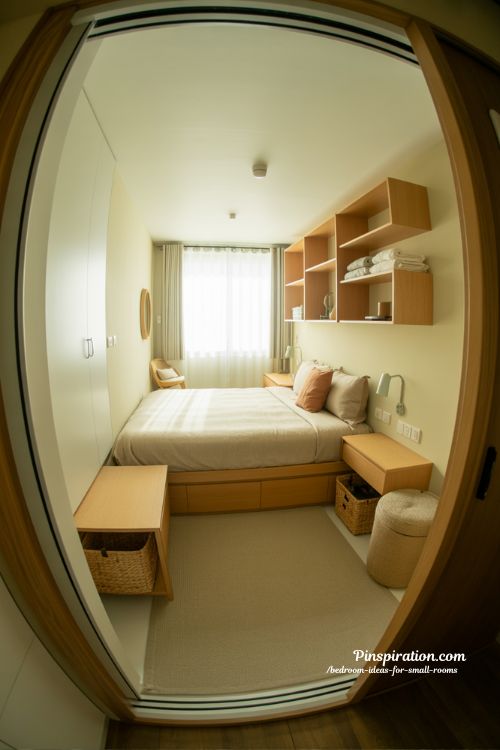
I still remember the first time I tried to make a tiny bedroom feel comfortable. It wasn’t glamorous at all—just a cramped space with a bed that took up most of the room and barely enough walking space left around it. I kept thinking there had to be a better way to make it feel calm instead of chaotic. Over time, I realized it’s less about how big the room is and more about how thoughtfully every inch is used. Small changes really do shift how a room feels.
- Smart storage can instantly free up space and reduce stress
- Light colors and simple layouts make a room feel more open
- The right furniture choices matter more than decoration overload
1. Small Bedroom Ideas for Small Rooms: Storage Bed Layout That Saves Space
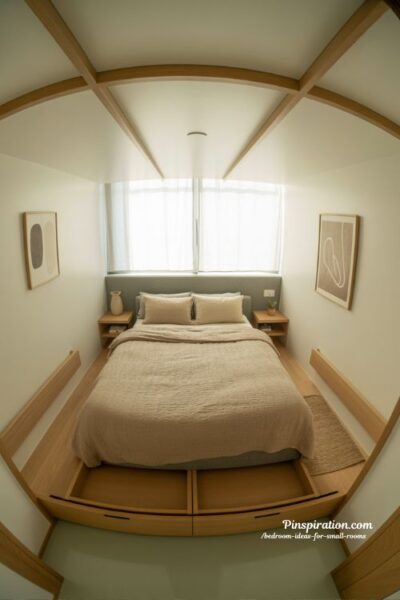
A storage bed is honestly one of those changes that makes you wonder why you didn’t do it sooner. Instead of stuffing extra cabinets into an already tight room, the bed itself becomes part of the storage system. I’ve seen how this alone can completely clear visual clutter, especially when seasonal clothes or extra bedding need a home.
The trick is to keep everything else around it simple. When the bed carries the storage load, the rest of the room can breathe a little. Even a small rug and soft lighting are enough to finish the look without overwhelming the space.
2. Mirror Tricks That Open Up Small Bedroom Spaces
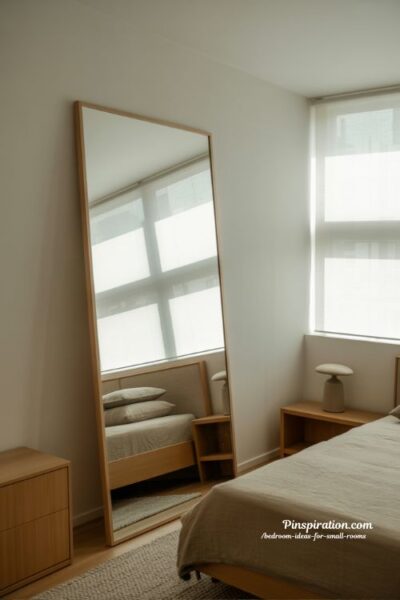
Mirrors can feel like a cheat code in small rooms. One well-placed mirror doesn’t just reflect light—it changes the whole depth of the space. I’ve noticed that when a mirror sits across from a window, the room almost feels like it has another layer you didn’t notice before.
It works best when the frame stays simple and the surrounding area isn’t crowded. Too many objects near the mirror cancel out the effect. Keep it clean, let the reflection do the work, and the room naturally feels more open.
3. Floating Furniture for a Cleaner Floor Look
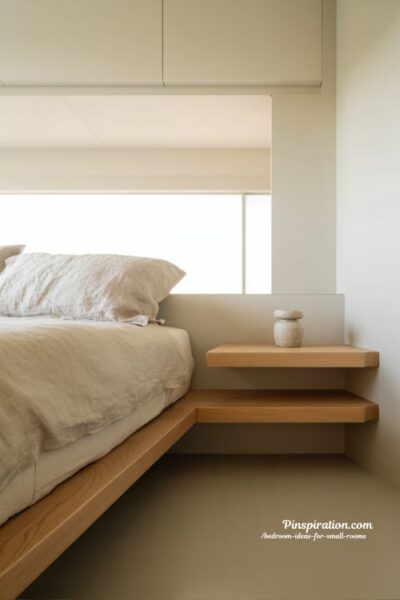
Floating nightstands or shelves can completely change how a small room feels. I used to think bedside tables were non-negotiable, but once I replaced them with wall-mounted shelves, the extra floor space made the room feel noticeably lighter.
There’s also something visually calming about seeing more floor area. It tricks the eye into thinking the room is bigger than it really is. Plus, it’s easier to clean, which is a small but very real bonus.
4. Accent Walls That Add Personality Without Clutter
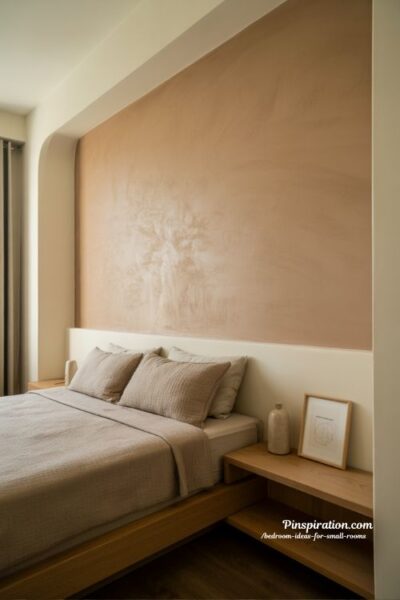
An accent wall is one of those design moves that feels bold but still practical. In small rooms, it helps create a clear focus so the eye doesn’t wander everywhere. I like using soft patterns or textured paint behind the bed because it anchors the whole space.
The key is restraint. One strong wall is enough. If every surface competes for attention, the room starts to feel busy instead of stylish.
5. Smart Lighting That Frees Up Surface Space
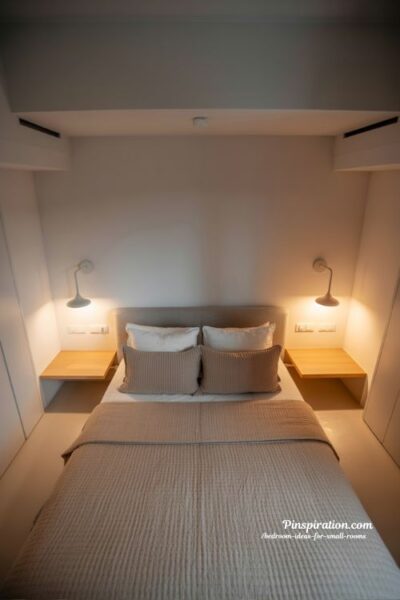
Lighting can quietly shape how a small room feels. Swapping table lamps for wall-mounted lights or slim pendants clears up space instantly. I’ve seen rooms feel twice as open just because surfaces are no longer crowded with cords and lamp bases.
Warm lighting works best here. It softens the edges of the room and makes even the smallest corners feel inviting rather than tight or boxed in.
Table 1: Lighting Choices for Small Bedrooms
Before moving on, it helps to compare lighting options. The right choice can change both mood and space usage at the same time.
| Lighting Type | Space Impact | Mood Effect |
| Table Lamp | Uses surface space | Cozy but crowded |
| Wall Sconce | Saves space | Soft and warm |
| Pendant Light | Frees surfaces | Modern and airy |
Wall lighting usually wins in smaller rooms because it keeps everything off the furniture surfaces. That small shift makes a big difference in how open the room feels overall.
6. Floor-to-Ceiling Curtains for Height Illusion
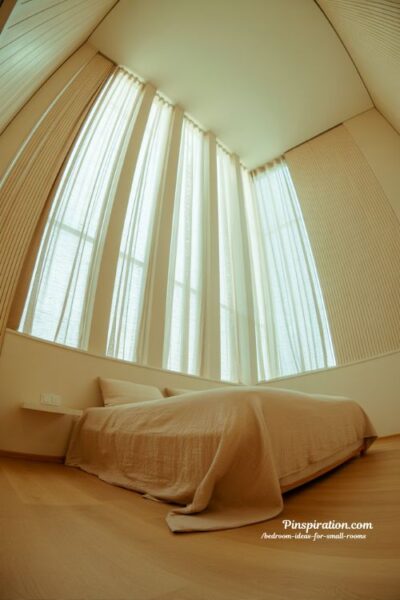
Curtains can quietly change the shape of a room. When they start higher than the window and fall all the way to the floor, the ceiling suddenly feels taller. It’s a simple visual trick, but it works every time.
Light fabrics are important here. Heavy curtains can weigh the room down visually, while soft, flowing ones keep everything feeling airy and relaxed.
7. Vertical Storage That Uses Wall Space Wisely
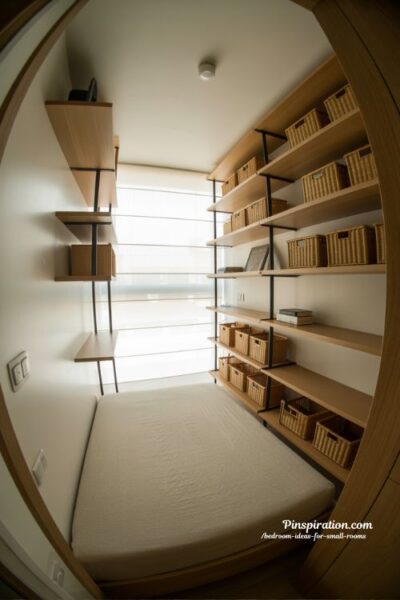
When floor space is limited, the only direction left is up. Tall shelves or wall storage units are incredibly helpful in small rooms. I’ve seen people transform cluttered corners into clean, useful storage zones just by thinking vertically.
The goal isn’t to fill every wall, though. It’s to use height in a balanced way so the room doesn’t feel stacked or overwhelming.
8. Nature-Inspired Calm Bedroom Style
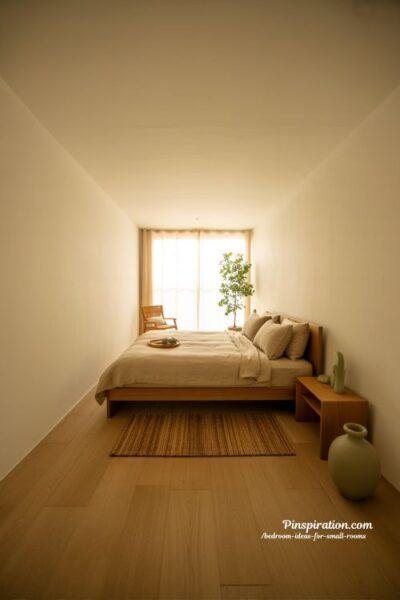
Bringing in natural elements can soften even the smallest room. A bit of wood texture, soft green tones, or a simple plant changes the mood instantly. It feels less like a tight space and more like a personal retreat.
The important part is not overdoing it. One or two natural touches are enough to make the space feel alive without adding visual noise.
9. One Strong Focal Point Design Approach
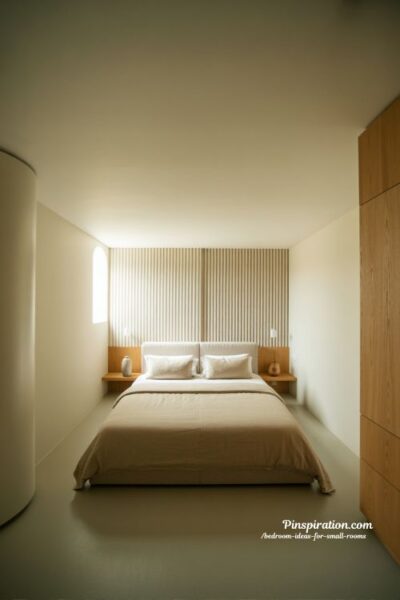
A small room works best when it has one clear focus. It could be the headboard, a piece of art, or a patterned wall. I’ve noticed that when everything tries to stand out, nothing really does.
A single focal point brings calm. The rest of the room supports it quietly instead of competing for attention.
10. Multi-Functional Furniture for Everyday Flexibility
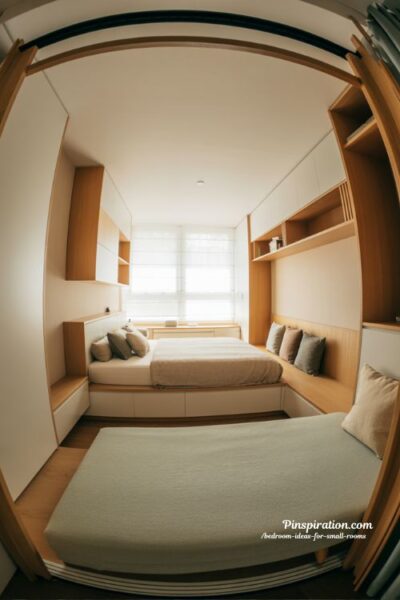
Furniture that does more than one job is a lifesaver in tight rooms. A bench that stores items or a desk that folds away can completely change how usable the space feels day to day.
It’s not about filling the room with clever pieces, though. It’s about choosing fewer items that work harder, which keeps everything feeling open.
11. Light Color Palettes That Open Up Space
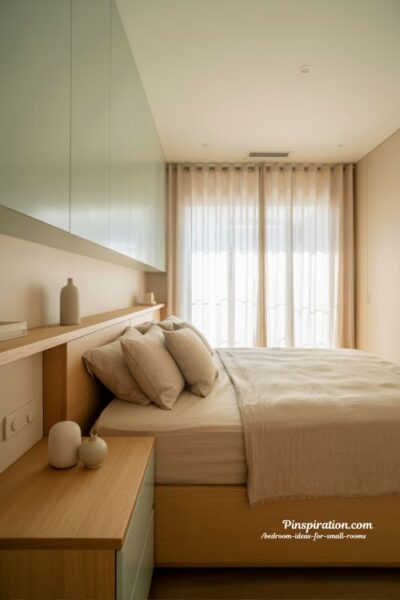
Light colors have a natural way of making rooms feel bigger. Soft whites, pale greys, and gentle earth tones reflect light and reduce visual weight. I’ve seen dark rooms feel instantly tighter just because the walls absorb too much light.
Keeping the palette consistent also helps. Too many colors can break the flow and make the space feel smaller than it is.
12. Layered Textures for Warmth Without Clutter
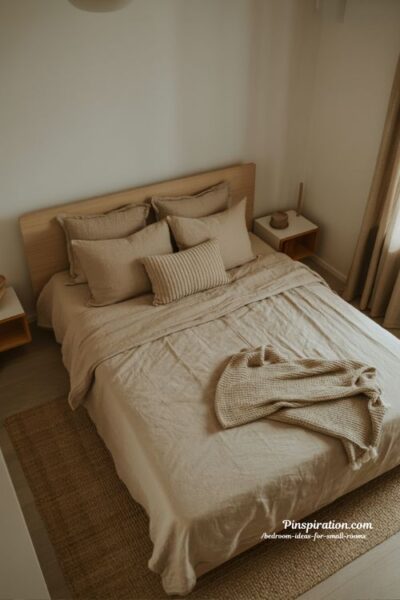
Texture adds depth when color is kept simple. Soft blankets, woven cushions, and light fabrics create warmth without making the room feel crowded. It’s a subtle way to add personality.
I like this approach because it feels lived-in but still clean. You don’t need many objects—just thoughtful layering.
Table 2: Texture Combinations for Small Bedrooms
Here’s a simple breakdown of texture pairing ideas that work well together in small spaces.
| Base Material | Soft Layer | Result Style |
| Wood | Cotton | Warm & natural |
| Neutral wall | Linen | Calm & airy |
| Smooth metal | Wool | Modern & cozy |
Mixing textures this way adds depth without adding clutter. It keeps the room visually interesting but still easy on the eyes.
13. Built-In Storage for Clean Visual Flow
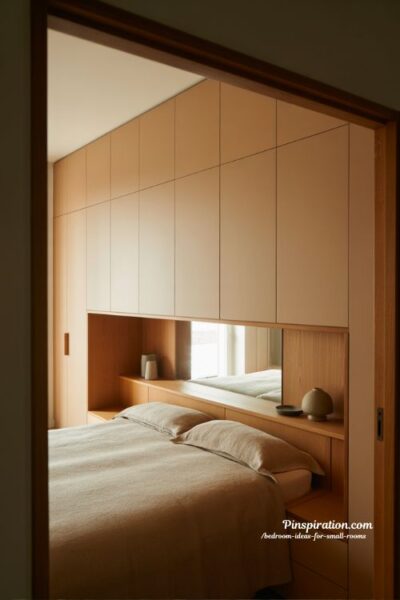
Built-ins are one of the most efficient ways to handle storage in small rooms. Instead of multiple pieces of furniture, everything sits neatly within the wall structure. It creates a smooth, uninterrupted look.
The best part is how much visual calm it brings. When things are hidden away properly, the room immediately feels more spacious.
14. Minimal Nightstand Alternatives
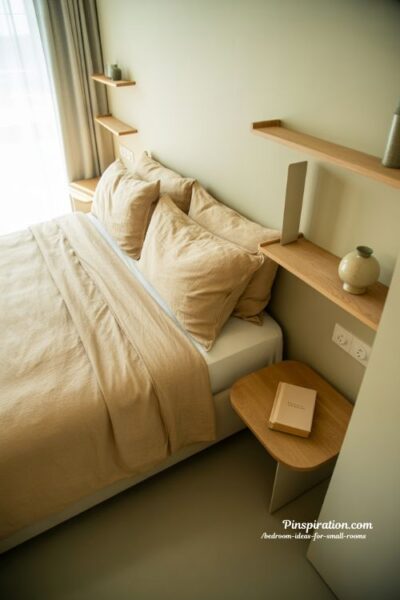
Traditional nightstands can take up more space than you think. Swapping them for small wall shelves or slim stands can open up floor space instantly. I’ve done this in tight rooms and the difference is noticeable right away.
It also encourages less clutter. With limited space, you naturally keep only what you actually need close by.
15. Smart Layout Planning for Better Movement
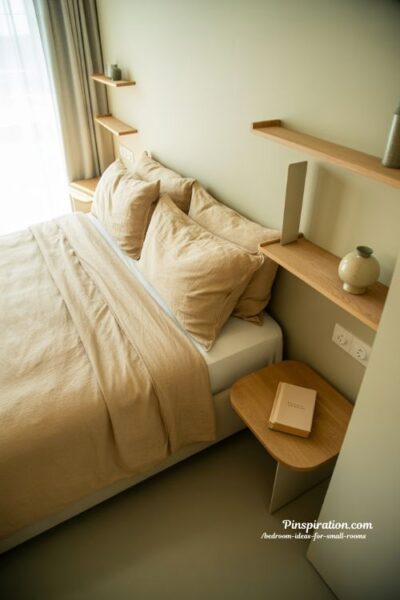
Layout is often more important than furniture itself. A poorly placed bed can block flow, no matter how nice the decor is. I usually start by figuring out how someone naturally moves through the room.
Once the walking path is clear, everything else starts falling into place. It makes even small rooms feel less restricted.
16. Subtle Color Pops for Personality
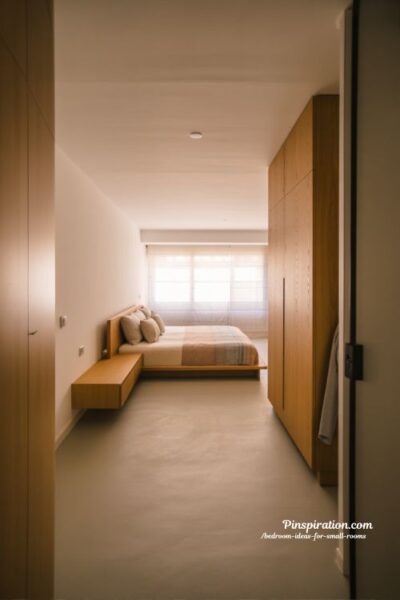
A small room doesn’t need loud colors everywhere. A few soft pops through cushions, art, or decor pieces can add personality without overwhelming the space. It’s like adding small accents rather than repainting the whole room.
This keeps the base calm while still letting the room feel personal and lived-in.
17. Minimal Clutter Zen-Inspired Design
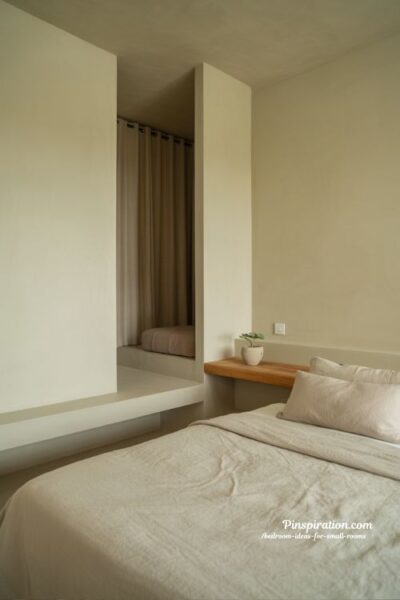
There’s something very peaceful about walking into a room that simply isn’t overloaded. Minimal clutter design focuses on keeping only what truly matters. It’s not about emptiness—it’s about clarity.
When everything has space to breathe, the room feels larger and calmer. It becomes less of a storage area and more of a place to rest properly.
FAQ
What is the best furniture for small bedrooms?
Storage beds, floating shelves, and multi-functional furniture work best because they reduce clutter and save space.
How can I make a small bedroom look bigger?
Use light colors, mirrors, vertical storage, and simple layouts to create a more open feel.
Are dark colors bad for small bedrooms?
Not always, but too many dark tones can make the room feel smaller and heavier visually.
What is the easiest small bedroom upgrade?
Improving lighting and removing bulky furniture gives the fastest visible improvement.
Do mirrors really help in small rooms?
Yes, mirrors reflect light and create the illusion of depth, making the room feel larger.
What layout works best for small bedrooms?
A clear walking path with minimal furniture around the bed usually works best.
How do I avoid clutter in a small bedroom?
Use hidden storage, limit decor items, and keep surfaces as clear as possible.