
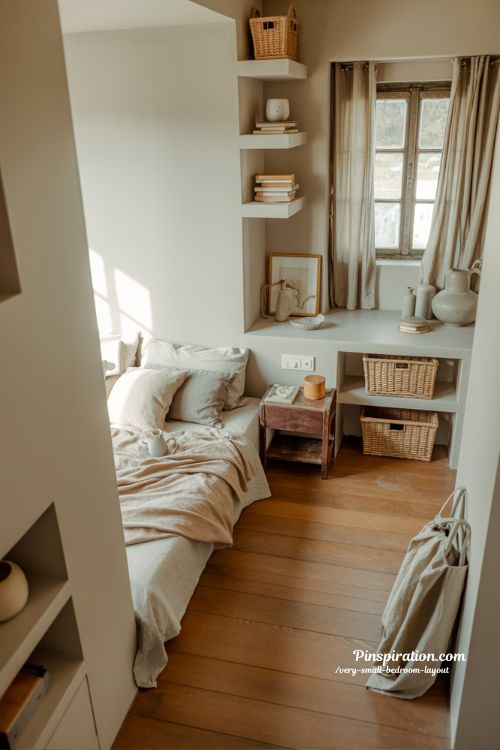
I still remember walking into a very small bedroom years ago and thinking it would never feel comfortable. The bed was squeezed in, storage was scattered, and everything felt a bit tense. But the strange thing is, once a few layout changes were made, the room didn’t get bigger—it just started feeling bigger. That’s really what a very small bedroom layout is about. Not adding space, but shaping it better so it works with you instead of against you.
- Bed placement shapes the entire room flow
- Vertical space is often more valuable than floor space
- Fewer items usually create more comfort, not less
1. A Calm Layout That Starts With the Bed
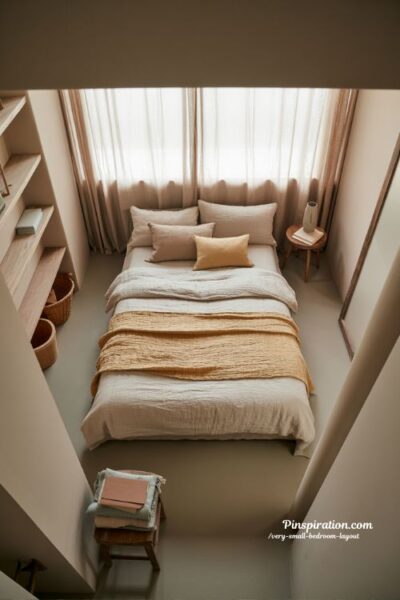
When I think about a very small bedroom layout, I always begin with the bed because it controls everything else. Where it sits decides how you move, what feels open, and what feels blocked. In tight rooms, pushing the bed into a corner often frees up valuable walking space and instantly reduces visual clutter, making the room feel less boxed in and more relaxed.
The key is not perfection but flow. You should be able to walk without turning sideways or adjusting constantly. Once the bed is placed with intention, everything else—storage, lighting, and décor—naturally falls into a more comfortable rhythm without forcing the space to behave differently than it can.
2. Floating Nightstands That Free Up the Floor
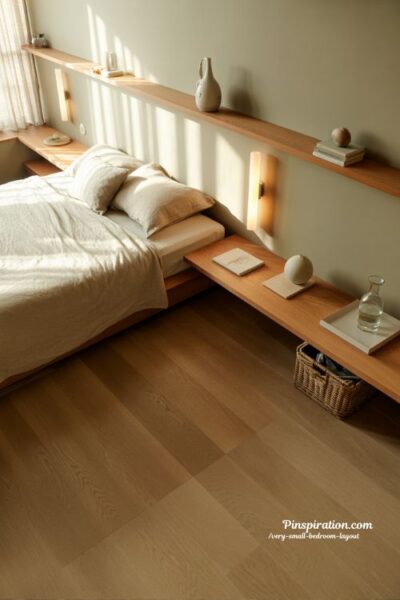
Floating nightstands are one of those simple changes that quietly transform a very small bedroom layout. Instead of bulky tables touching the floor, a wall-mounted shelf keeps essentials close while freeing up the lower visual space. That open floor area matters more than people realize because it reduces heaviness and makes the room feel less crowded.
It also changes how you interact with the room daily. Cleaning becomes easier, movement feels smoother, and the space looks more intentional. Even a small floating surface for a lamp and phone can create a cleaner, more breathable bedroom atmosphere without sacrificing function.
3. Storage Beds That Quiet the Clutter
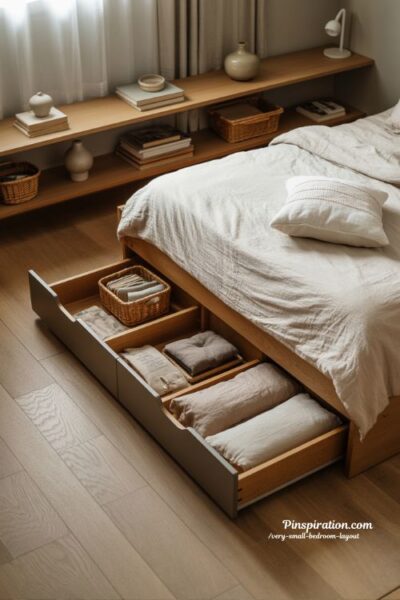
In small bedrooms, clutter is usually the real problem, not size. That’s why storage beds make such a difference. A bed with drawers or a lift-up base uses space that already exists but is often wasted. Instead of adding another cabinet or shelf, you’re turning your largest furniture piece into hidden storage.
This approach keeps the room visually calm. When things are tucked away instead of spread out, the room feels more open and controlled. It’s not about hiding everything, but about giving each item a proper place so the space doesn’t feel overwhelmed.
Storage Bed Comparison
To understand how different storage beds affect a very small bedroom layout, it helps to compare their strengths in real use. Each type solves a slightly different problem, depending on how you live and what you store.
| Type | Space Efficiency | Ease of Use | Best Use |
| Drawer Bed | Medium | Very Easy | Daily essentials |
| Lift-Up Bed | High | Moderate | Seasonal storage |
| Box Storage Under Frame | Flexible | Easy | Budget-friendly setup |
Drawer beds are practical for everyday items you reach often, while lift-up designs are better when you need maximum hidden space. The right choice depends on how often you actually access your storage.
4. Tall Storage That Pulls the Eye Up
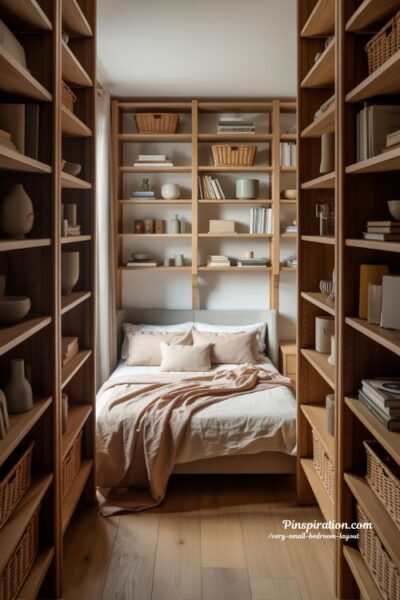
One of the most effective tricks in a very small bedroom layout is shifting attention upward. Tall shelves or vertical cabinets naturally guide the eye higher, which changes how the room is perceived. Instead of feeling compressed, the space feels stretched and more open, even though nothing physically changed.
This approach also prevents clutter from spreading across the floor. When storage grows vertically instead of outward, the room stays more breathable. It creates a sense of structure that feels intentional rather than cramped or improvised.
5. Mirrors That Open Up Tight Corners
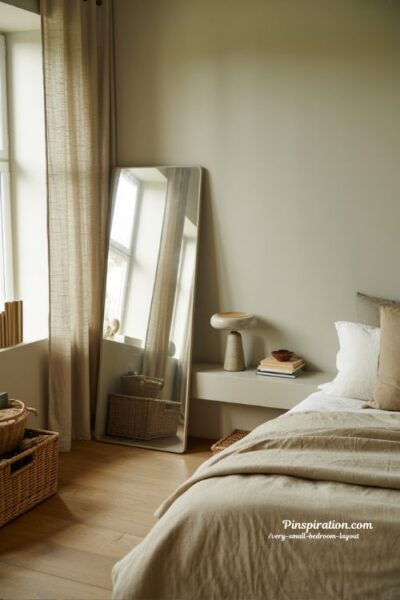
Mirrors work almost like a quiet illusion in small spaces. When placed thoughtfully, they reflect light and extend visual depth, making a very small bedroom layout feel larger than it actually is. A mirror near a window is especially effective because it doubles natural light and softens darker corners.
What I like most is how effortless it feels. You don’t need construction or renovation—just placement. Even a simple full-length mirror leaning against a wall can shift the mood of the entire room from closed to open.
6. Minimal Furniture That Doesn’t Fight the Room
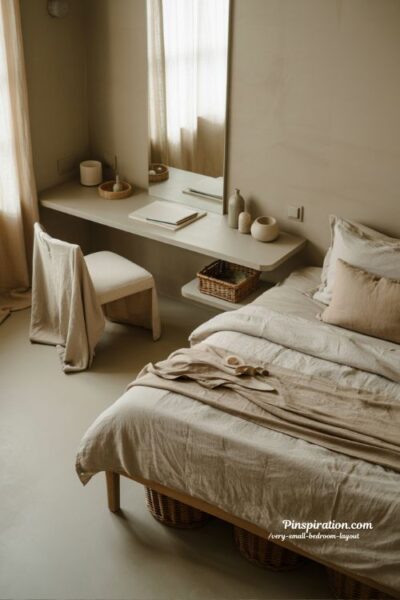
Small rooms don’t respond well to excess furniture. Every extra item competes for attention and space. In a very small bedroom layout, minimal furniture isn’t about style—it’s about survival of space. You keep only what you actually need, and everything else becomes optional rather than necessary.
Slim frames, open legs, and simple shapes help reduce visual weight. The room feels less blocked and more breathable. When furniture stops dominating the space, the room starts feeling calmer and easier to live in.
Furniture Impact Comparison
Understanding how furniture style affects perception helps when planning a small bedroom. Some pieces naturally make a room feel tighter, while others help it breathe.
| Furniture Type | Visual Impact | Room Feeling |
| Heavy Traditional | Dense | Smaller |
| Slim Modern | Light | Open |
| Multi-Use Pieces | Balanced | Flexible |
Multi-use furniture often works best because it reduces the number of items needed. One piece solving two problems is always better in compact spaces.
7. Corner Beds That Create Hidden Space
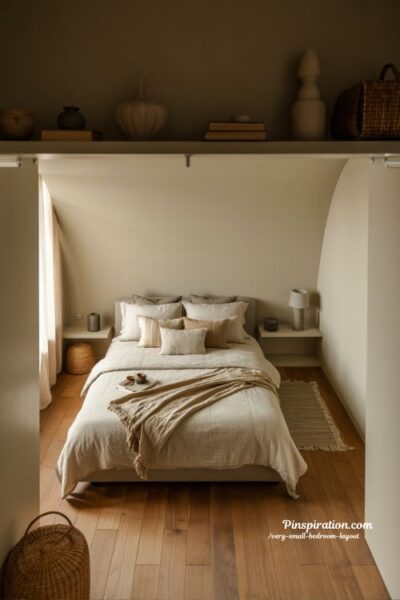
Placing a bed in the corner can feel unusual at first, but it often works better than expected. In a very small bedroom layout, it frees up one entire side of the room, which can then be used for movement, storage, or even just open breathing space. That open area changes how the room feels instantly.
It also creates a cozy, enclosed feeling that many people grow to like. Instead of the bed floating awkwardly in the center, it becomes a defined sleeping zone that feels more grounded and intentional.
8. Soft Light Instead of Harsh Overhead Glow
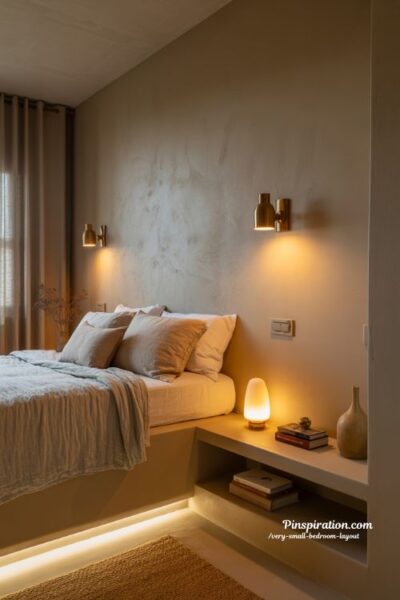
Lighting completely changes how a small room feels. Harsh ceiling lights tend to flatten everything, making the space feel tighter. Softer, layered lighting creates depth and warmth instead. In a very small bedroom layout, this difference can be surprisingly noticeable.
Using a mix of wall lights, table lamps, or indirect glow helps build a more relaxed atmosphere. The room feels lived-in rather than exposed, which makes it far more comfortable over time.
9. Light Colors That Don’t Fight the Space
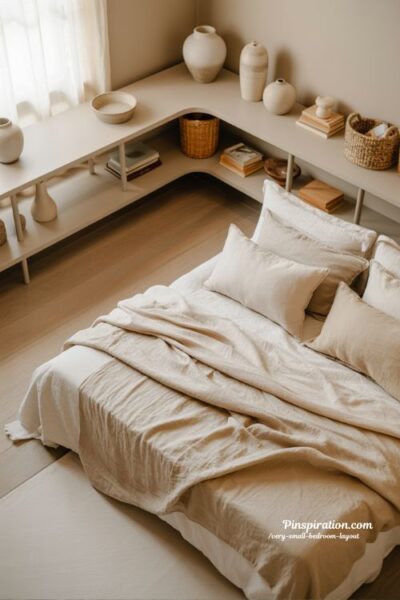
Light colors help a room feel open because they reflect more natural light. Whites, creams, and soft neutrals reduce harsh edges, which makes a very small bedroom layout feel less divided. The walls, furniture, and bedding blend more naturally, creating visual continuity.
That continuity is what gives the feeling of space. Instead of the eye stopping at every contrast, it moves smoothly across the room, making everything feel larger and more connected.
10. Vertical Stripes That Stretch the Walls
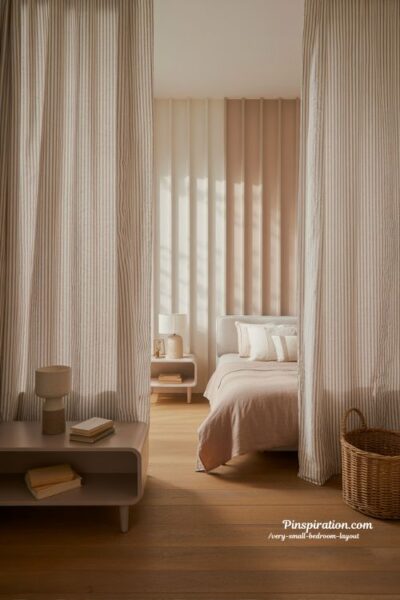
Stripes are a subtle but powerful visual trick. Vertical lines guide the eye upward, which makes ceilings feel higher than they are. In a very small bedroom layout, this helps counteract the sense of compression that often comes with low ceilings.
It works on walls, curtains, or even rugs. The key is consistency, not intensity. The effect should feel natural rather than overwhelming.
11. Built-In Storage That Disappears Into Walls
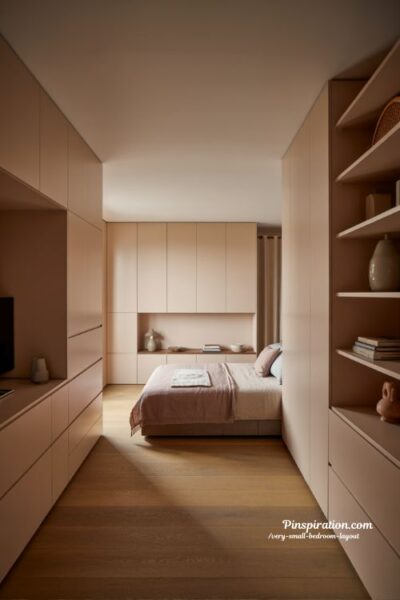
Built-in storage is one of the cleanest solutions for small rooms because it removes the visual clutter of standalone furniture. When storage blends into the wall, the room feels more structured and less crowded.
It also creates a sense of permanence. Instead of items being added into the room, they feel like part of its design, which makes everything look more intentional and organized.
12. Floating Beds That Lighten the Floor
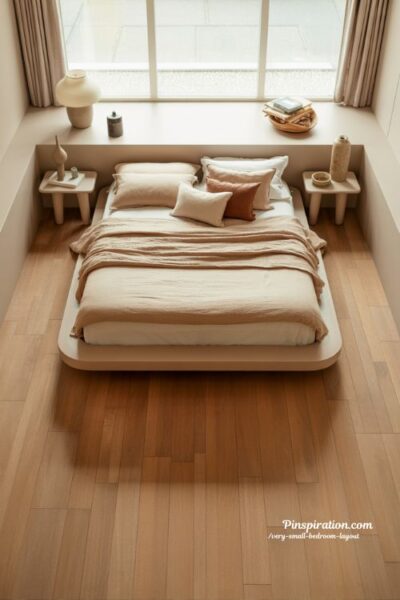
A floating visual effect—whether through raised frames or open space underneath—creates a sense of airiness. In a very small bedroom layout, this open floor area makes the room feel less heavy and more breathable.
Even if the actual size doesn’t change, the perception does. That psychological shift matters more than people think in compact spaces.
13. Curtains That Stretch the Room Higher
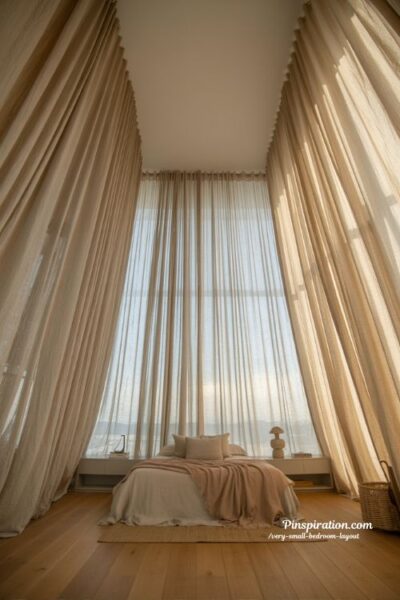
Curtains placed higher than the window frame create the illusion of taller ceilings. This small adjustment can dramatically improve a very small bedroom layout without changing anything structural.
It also makes windows feel larger and more elegant. The room suddenly feels more vertical, which balances out limited floor space.
14. Symmetry That Brings Calm Order
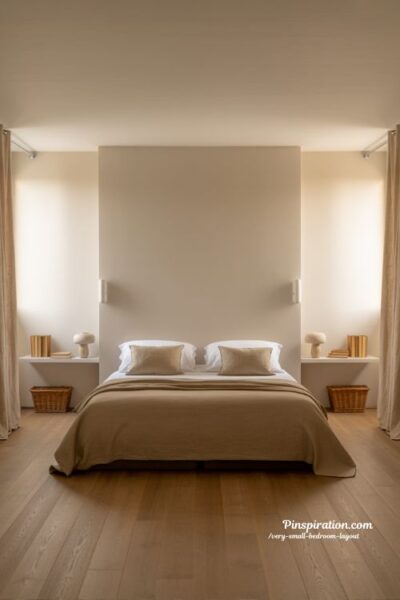
Symmetry creates visual stability. Matching lamps or balanced furniture on both sides of the bed helps the eye rest instead of scanning unpredictably. In a small room, this sense of order reduces visual stress.
It doesn’t need to be perfect symmetry, just enough balance to make the space feel intentional and grounded.
15. One Strong Feature Instead of Many
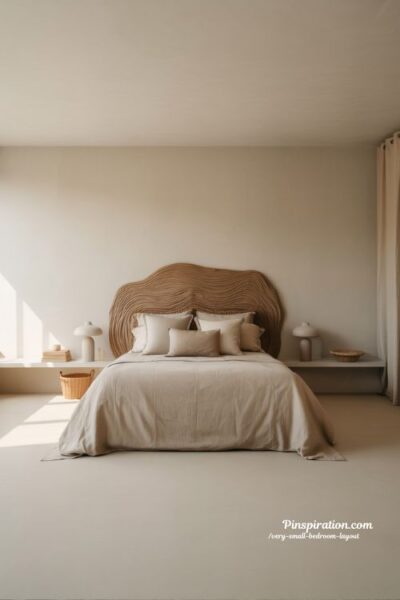
Too many focal points can make a small room feel chaotic. Choosing one strong feature—like artwork or a bold headboard—gives the room direction. Everything else supports it instead of competing with it.
This approach keeps the space clean while still allowing personality to come through.
16. Green Touches That Add Life
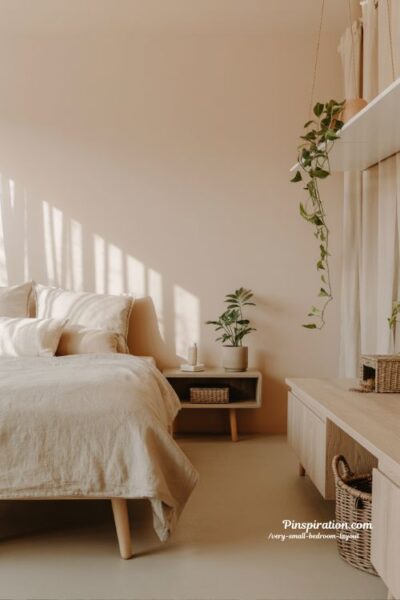
Even a small plant can soften a very small bedroom layout. It adds texture, movement, and a sense of calm without taking up much space. That small touch of nature often makes the room feel more balanced and less rigid.
It’s not about filling space—it’s about adding life to it.
17. Multi-Use Furniture That Adapts
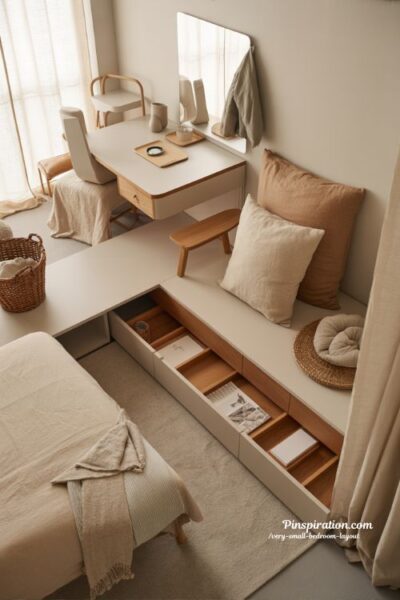
Multi-use furniture is almost essential in small bedrooms. A piece that stores items, provides seating, or serves multiple purposes reduces the need for extra objects. In a very small bedroom layout, this flexibility is what keeps the room functional without overcrowding it.
It’s less about owning more and more about making each piece earn its place in the room.
FAQ
What is the best way to start a very small bedroom layout?
Start with bed placement first. Once the bed is fixed, everything else becomes easier to arrange naturally around it.
How can I make a small bedroom feel bigger?
Use light colors, mirrors, vertical storage, and minimal furniture to create visual openness.
Are storage beds worth it?
Yes, they use existing space under the bed and reduce the need for extra furniture.
What furniture should I avoid in small bedrooms?
Avoid bulky dressers and oversized pieces that take up too much floor space.
Do mirrors really help in small rooms?
Yes, they reflect light and create depth, making the space feel more open.
How important is lighting in a small bedroom?
Very important. Soft, layered lighting makes the room feel warmer and less cramped.
Can corner beds work in small bedrooms?
Yes, they free up floor space and often improve room flow significantly.