
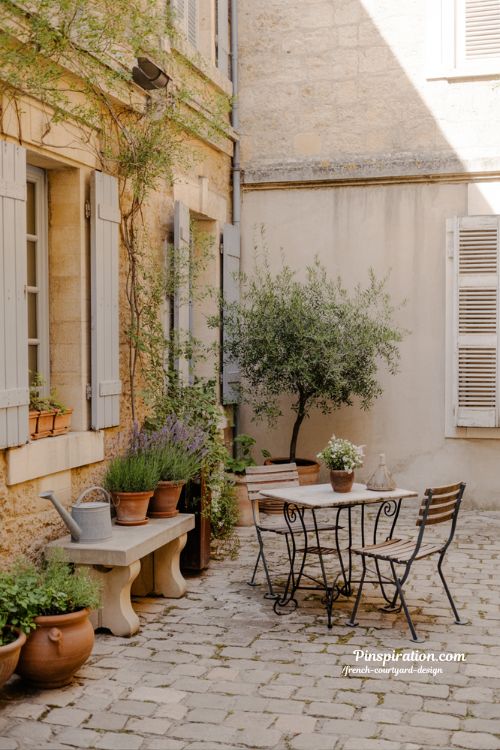
There’s something oddly comforting about a French courtyard design. Maybe it’s the way stone, plants, and quiet corners come together like they’ve known each other forever. I still remember the first time I stepped into a courtyard styled this way—it didn’t feel “designed” at all. It felt lived in, like the space had been gently shaped over years of morning coffee, slow afternoons, and soft evening light. That feeling is exactly what makes this style so special.
When I think about it now, it’s not just about beauty. It’s about mood. About slowing down without even trying.
- It works even in very small spaces
- It blends structure with soft nature
- It always feels calm, never rushed
1. French Courtyard Design for Timeless Outdoor Living
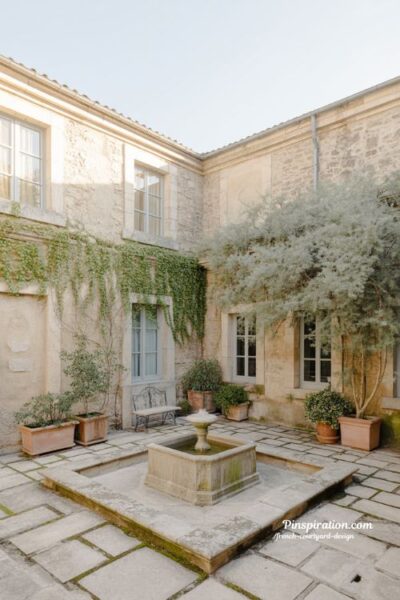
A true French courtyard design isn’t loud or overly perfect. It has this quiet confidence, like it knows it doesn’t need to impress anyone. The layout usually starts with a clear shape—square or rectangular—but the charm comes from how softly everything is placed inside it. Stone underfoot, greenery hugging the edges, and a gentle focal point somewhere in the middle.
What I love most is how it feels like a “room without walls.” You sit there, and suddenly the outside world feels a little further away. Not gone, just softened.
Key emotional elements
- Sense of privacy without isolation
- Natural balance between stone and green
- A lived-in, layered feeling
2. Small Space French Courtyard Design That Still Feels Grand
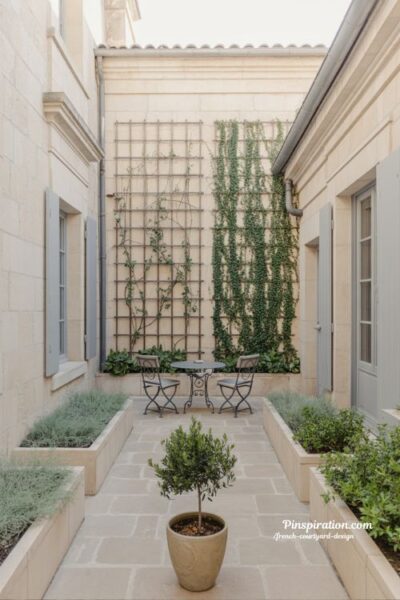
You don’t need a big estate to enjoy this style. Honestly, some of the most charming courtyards I’ve seen were tiny—barely more than a side yard. The trick is proportion and intention. Every piece has to matter. A small table here, a climbing plant there, and suddenly the space feels intentional instead of cramped.
Even a narrow outdoor strip can become something special when you treat it like a tiny outdoor room instead of leftover space.
Simple design focus for small courtyards
- Vertical greenery instead of wide planting beds
- Compact seating instead of bulky furniture
- Light-colored stone to open the space visually
3. Romantic French Courtyard Design with Lavender and Roses
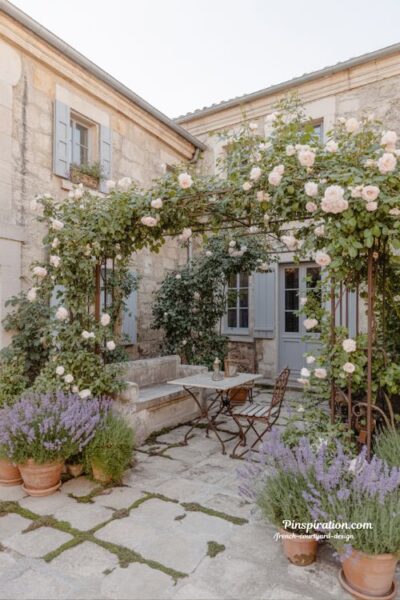
There’s a reason lavender shows up so often in French courtyard design—it just works. The scent alone can change how a space feels. Add climbing roses, and suddenly everything softens. It’s not about neatness here. It’s about gentle abundance.
I like to think of this style as slightly “messy in a beautiful way.” Nothing feels forced, but everything feels intentional.
Emotional garden layering
- Lavender for scent and calm
- Roses for softness and romance
- Herbs for a lived-in countryside feel
4. Modern French Courtyard Design with Clean Balance
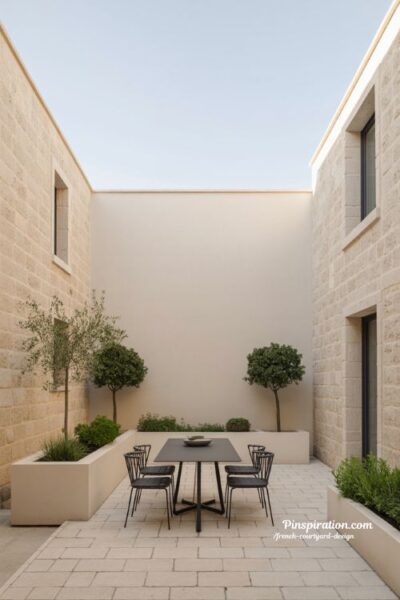
Not every courtyard has to feel old-world. A modern approach keeps the soul but clears the clutter. Lines become cleaner, colors more neutral, and furniture more minimal. Still, the heart of the style remains: that quiet, enclosed feeling.
It’s almost like the space is breathing slower. Nothing competes for attention, but nothing feels empty either.
Modern design principles
- Simple geometry with soft planting
- Neutral tones like beige, stone, and black iron
- Minimal but meaningful décor
5. French Courtyard Design with Fountain as the Soul
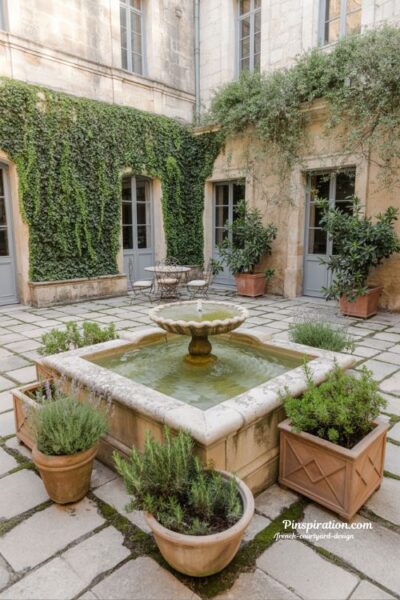
A fountain changes everything. I’ve stood near small courtyard fountains where I completely lost track of time. The sound does something subtle—it pulls you inward. In French courtyard design, the fountain often becomes the emotional center, not just decoration.
It doesn’t need to be grand. Even a small stone basin can carry the whole mood.
Why fountains matter
- Adds calming background sound
- Creates a natural focal point
- Makes the space feel alive
6. Rustic French Courtyard Design with Stone and Wood
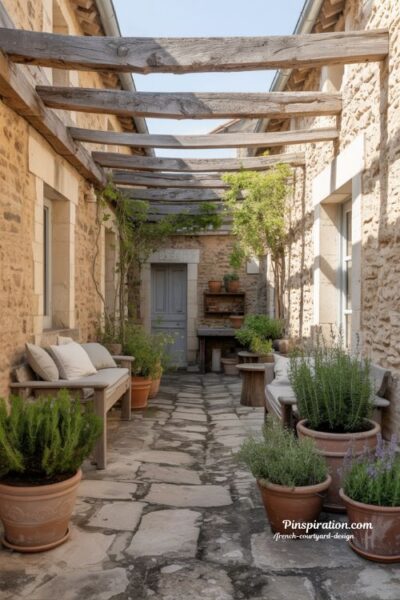
Rustic courtyards feel like they’ve been there forever. The stone isn’t perfect. The wood isn’t polished. And that’s exactly the point. There’s honesty in the materials.
When I see this style done well, it feels like the space has a memory. Like it remembers summers and long conversations.
Rustic material mood
- Weathered stone flooring
- Wooden beams or pergolas
- Terracotta pots with herbs
7. Parisian-Inspired French Courtyard Design for City Homes
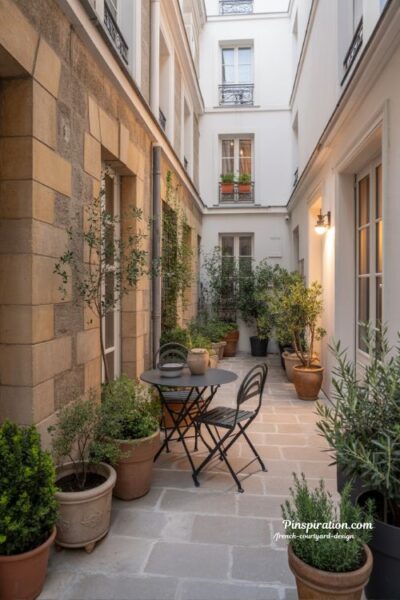
Paris-style courtyards are more about elegance than size. Even in the middle of a busy city, they create a pocket of calm. A small iron table, a few plants, and soft lighting can completely shift the feeling of a space.
It’s less about gardening and more about atmosphere.
Urban courtyard essentials
- Compact furniture with character
- Soft lighting for evenings
- Simple greenery in pots
8. Vertical Garden French Courtyard Design for Tight Spaces
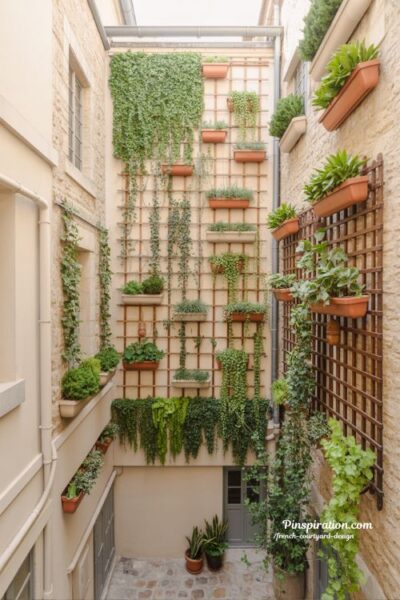
When space is limited, walls become your best friend. Vertical gardens allow greenery to climb instead of spread. It feels natural, almost like the plants are reclaiming the space gently.
This approach keeps the ground open while still giving that lush French feel.
Vertical design approach
- Wall-mounted planters
- Trellis for climbing vines
- Layered greenery for depth
9. Antique Furniture in French Courtyard Design
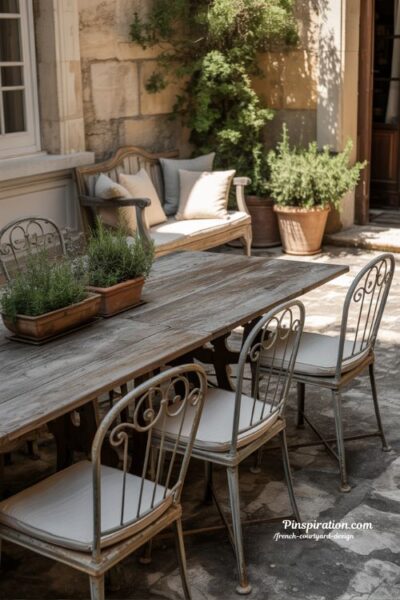
Furniture changes the mood more than people expect. Antique-style pieces bring character instantly. Even a slightly worn chair feels right in this setting.
It’s not about matching sets. It’s about pieces that feel like they have stories.
Furniture mood elements
- Wrought iron chairs
- Weathered wooden tables
- Soft cushions for comfort
10. Cozy Seating Corners in French Courtyard Design
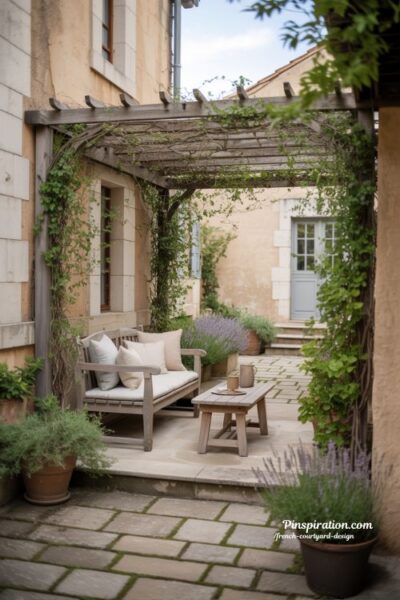
A courtyard without a seating corner feels unfinished to me. It’s where the space becomes usable, not just visual. A small bench under plants or a tucked-away table can change everything.
You don’t need much. Just enough to sit and stay a while.
Seating essentials
- Small-scale furniture
- Natural shade from plants or pergolas
- Intimate layout, not open sprawl
11. Luxury French Courtyard Design Inspired by
Villas
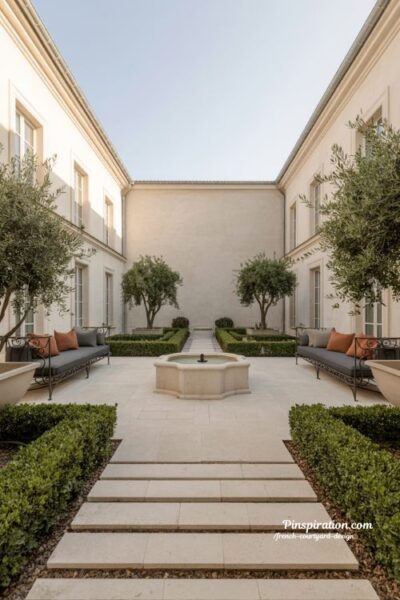
Luxury courtyards feel layered and intentional. Stone paths, structured gardens, and water features come together in a way that feels almost cinematic. But even luxury here isn’t about excess—it’s about refinement.
Everything feels balanced, not loud.
Luxury design traits
- High-quality stone finishes
- Structured planting symmetry
- Architectural focal points
12. Pathways and Flow in French Courtyard Design
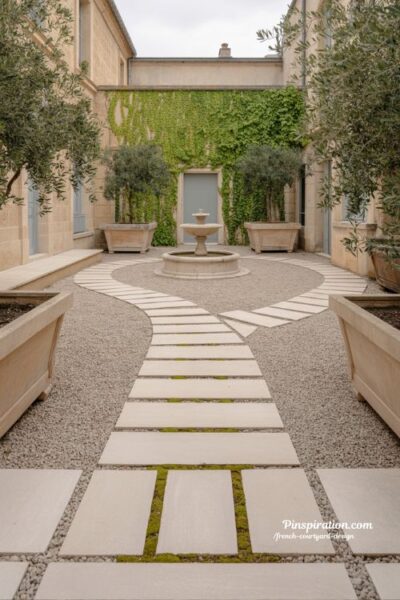
Paths are subtle guides. They don’t just move you through space—they shape how you experience it. Gravel or stone paths slow you down slightly, which strangely makes everything feel more intentional.
It’s a quiet design trick that changes behavior without you noticing.
Pathway ideas
| Material Type | Feeling Created | Best Use |
| Gravel | Soft and natural | Casual courtyards |
| Stone slabs | Structured elegance | Formal layouts |
Pathways don’t need to be complicated. Even a simple line of stone can guide emotion as much as movement.
13. Seasonal Planting in French Courtyard Design
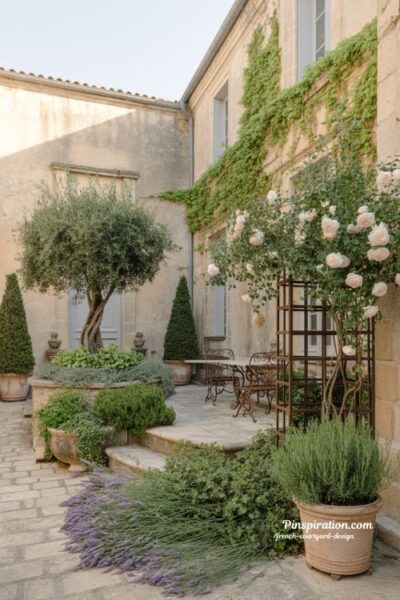
Courtyards change with the seasons, and that’s part of the charm. A good design doesn’t stay frozen—it evolves. Flowers come and go, but structure plants hold everything together.
It feels a bit like time passing visibly.
Seasonal planning approach
| Season | Plant Focus | Effect |
| Spring | Roses, blooms | Fresh and bright |
| Summer | Lavender, herbs | Full and fragrant |
The key is balance between permanence and change.
14. Minimal French Courtyard Design for Calm Spaces
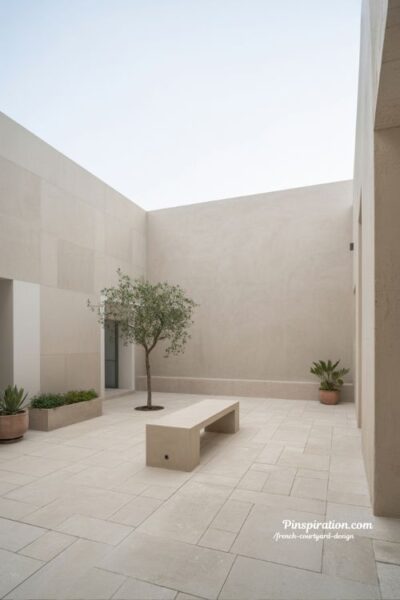
Minimal courtyards feel like a deep breath. Nothing unnecessary, nothing overwhelming. Just space, light, and a few well-chosen elements.
It’s surprising how peaceful simplicity can be when done right.
Minimalist principles
- Fewer plants, stronger structure
- Clean surfaces with texture
- Open visual space
15. Arches and Pergolas in French Courtyard Design
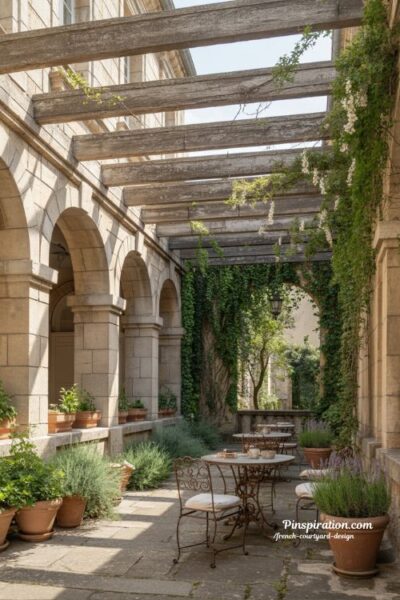
Arches feel like invitations. They guide the eye and soften transitions. When covered with vines, they almost turn into living architecture.
Pergolas add shade and structure, but also a sense of enclosure without walls.
Structural highlights
- Vine-covered arches
- Wooden pergolas
- Framed entry points
16. Budget-Friendly French Courtyard Design Ideas
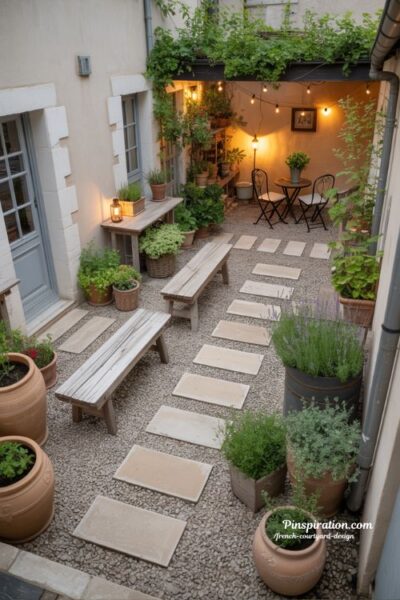
You don’t need a big budget to get the feeling right. Honestly, some of the best courtyards rely more on arrangement than expense. Gravel, reused materials, and simple plants can go a long way.
It’s more about how things are placed than what they cost.
Low-cost approach
- Reused wood and stone
- Container planting
- Simple lighting setups
17. Lighting in French Courtyard Design for Evening Mood
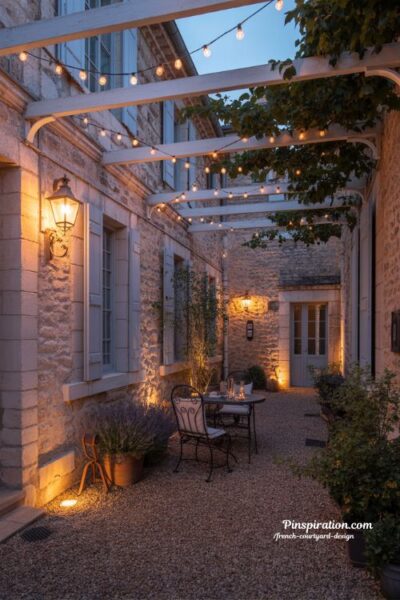
Lighting is what brings everything to life at night. Without it, even the most beautiful courtyard can feel flat after sunset. With it, everything changes.
Soft light creates warmth, shadows, and a sense of quiet magic.
Lighting atmosphere ideas
- Warm string lights overhead
- Lantern-style soft lighting
- Subtle ground illumination
FAQ
1. What is French courtyard design?
French courtyard design is a landscaping style inspired by traditional French outdoor spaces. It focuses on symmetry, natural materials, and creating small, intimate garden areas that feel calm and elegant.
2. What plants work best in a French courtyard?
Popular choices include lavender, climbing roses, boxwood, and herbs like rosemary and basil. These plants add structure, fragrance, and a soft, natural beauty to the space.
3. Can I create a French courtyard in a small space?
Yes, this style works beautifully in small areas. You can use vertical plants, compact furniture, and simple layouts to transform even a narrow patio or side yard.
4. Do I need a water feature in a French courtyard?
No, it’s not required. However, adding a small fountain or basin can enhance the atmosphere with soothing sound and gentle movement.
5. What materials are commonly used?
Stone, gravel, brick, terracotta, and wrought iron are most commonly used. These materials help achieve a classic, aged European look.
6. What kind of lighting is best?
Warm and soft lighting works best. String lights, lanterns, and subtle wall lights create a cozy and relaxing evening ambiance.
7. Can French courtyard design be modernized?
Yes, you can give it a modern touch by using clean lines, minimal furniture, and neutral colors while keeping the natural and enclosed garden feel.
8. Is a pergola necessary?
A pergola or arbor is not essential but highly beneficial. It adds structure, shade, and supports climbing plants, enhancing the overall charm.