
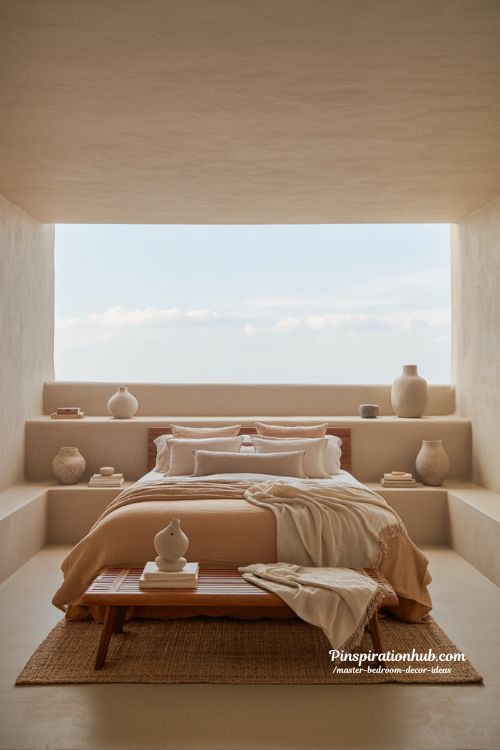
There’s something quietly heartbreaking about walking into your own bedroom and feeling nothing. No sense of relief. No “ahh, finally.” Just a room with a bed in it. If that sounds familiar, you’re not alone — and honestly, it doesn’t take a full renovation to change that feeling. The right master bedroom decor ideas can completely shift the energy of a space, making it feel like the retreat it’s supposed to be. Whether you’re starting fresh or just tired of staring at the same beige walls, this list is for you.
- The bed is the anchor of every great master bedroom — get that right first, and everything else falls into place.
- 2026’s biggest bedroom trends lean into natural textures, warm neutral palettes, and smart storage that keeps the space calm and clutter-free.
- You don’t need a huge room or a huge budget to create a bedroom that genuinely feels like yours.
Why Your Master Bedroom Deserves More Attention
Most of us spend more time in our bedroom than any other room in the house — and research suggests we spend over thirty years of our lives in bed across a lifetime. That’s a long time to feel “meh” about your surroundings. The bedroom isn’t just a place to sleep. It’s where you start and end every single day, which means its atmosphere shapes your mood more than you probably realize.
The good news? You don’t need to gut the room. Some of the most dramatic bedroom transformations come from layering texture, swapping out lighting, adding a statement wall, or simply editing what’s in the room until only the things you love remain. The ideas below cover everything from big moves like accent walls and storage beds to small finishing touches that make a bedroom feel genuinely personal.
| Design Element | Budget Level | Impact Level | Best For |
|---|---|---|---|
| Statement headboard | Low–Mid | High | Any room size |
| Accent wall (paint/wallpaper) | Low | High | Small & large rooms |
| Storage bed | Mid–High | High | Small spaces |
| Layered rugs | Low–Mid | Medium | Large rooms |
| Pendant bedside lighting | Low | Medium | Any room size |
| Built-in wardrobes | High | High | Compact apartments |
| Drapery upgrade | Low–Mid | High | Any room size |
| Timber furniture accents | Mid | Medium | Modern & Japandi styles |
17 Master Bedroom Decor Ideas That Actually Work
1. Start with a Statement Headboard
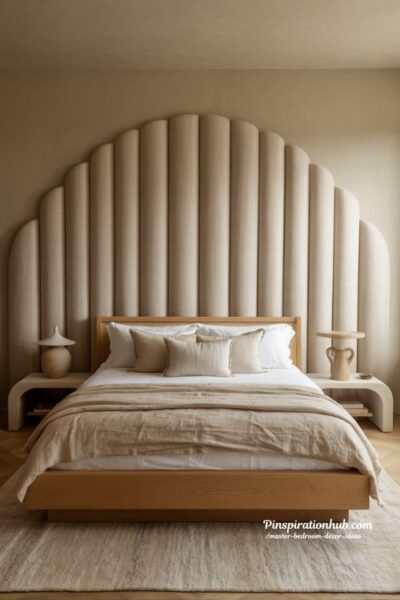
If there’s one piece of furniture that transforms a bedroom more than anything else, it’s the headboard. An upholstered headboard — in velvet, linen, or leather — instantly makes a room feel more intentional and luxurious. Arched headboards are everywhere right now, and for good reason: that curved shape softens the sharp angles of a typical bedroom and draws the eye in a way a straight frame just can’t.
You don’t have to spend a fortune here. Even a simple channel-tufted headboard in a neutral fabric adds a layer of comfort and sophistication that changes the whole feel of the room. Think about the headboard as the piece that anchors every other design decision — your color palette, your bedding, your lighting — so it’s worth getting right before anything else.
- Choose an arched or curved silhouette for softer, more current styling
- Upholstered options in linen or velvet work best in neutral palettes
- For a bolder look, try a low-profile platform bed with an extended paneled headboard
2. Build an Accent Wall Behind the Bed
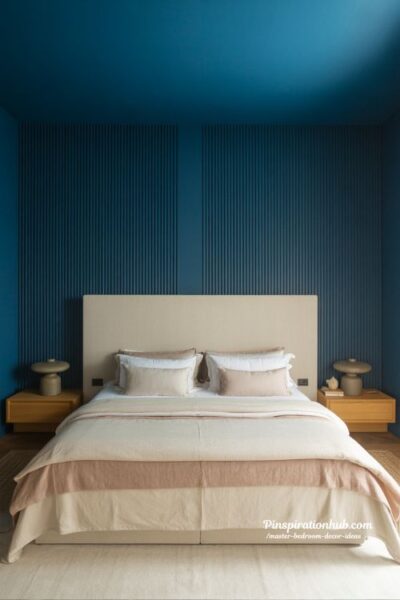
The wall behind your bed is the most viewed surface in the room — you literally face it every morning. So why leave it plain? Whether you go with deep wallpaper, textured paint, wood paneling, or a bold paint color, a well-done accent wall gives the bedroom a focal point and a personality. Sapphire blue walls wrapped in cream drapery and upholstery, for instance, create an enveloping sense of calm that a white room simply can’t deliver.
For a softer approach, vertical wood paneling works beautifully in modern and Japandi-style bedrooms. It adds depth and warmth without overwhelming the space. Fluted wood panels, in particular, are one of 2026’s strongest trending choices — they catch light beautifully and feel premium even in smaller rooms.
- Dark, saturated walls (navy, deep green, charcoal) work best in large bedrooms with plenty of natural light
- Wood-finish panels in warm tones create instant warmth in rooms with cool lighting
- For renters, peel-and-stick wallpaper or fabric panels offer a commitment-free way to create the same effect
3. Layer Your Bedding in Tonal Neutrals
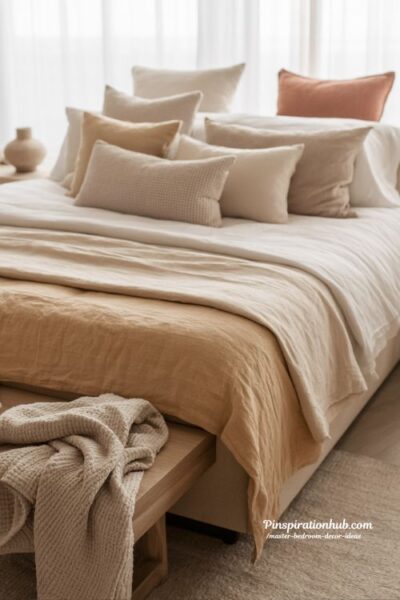
Here’s something that often gets overlooked: your bedding is doing a lot of design work. It’s the largest soft element in the room, and when it’s styled well — layered in tonal neutrals like ivory, sand, stone, and warm taupe — it makes the whole space feel cohesive and inviting. The key is to avoid mixing too many competing patterns or going too cold with stark whites and cool greys.
In 2026, the shift is clearly toward warmer, earthier tones. Think soft clay, blush, and almond in your cushion covers and throws, with crisp white sheets underneath. That layering — warm on top of clean — creates the kind of bed that looks like it belongs in a boutique hotel while still feeling entirely livable. Touches of rust or terracotta in a throw pillow add just enough depth without demanding attention.
- Layer in this order: fitted sheet, flat sheet, duvet, coverlet or lightweight throw, cushions
- Use odd numbers for cushion arrangements — three or five always looks more natural than four
- Keep the hero color to two tones max; use texture (bouclé, linen, knit) for variety instead
4. Choose Drapery Over Blinds
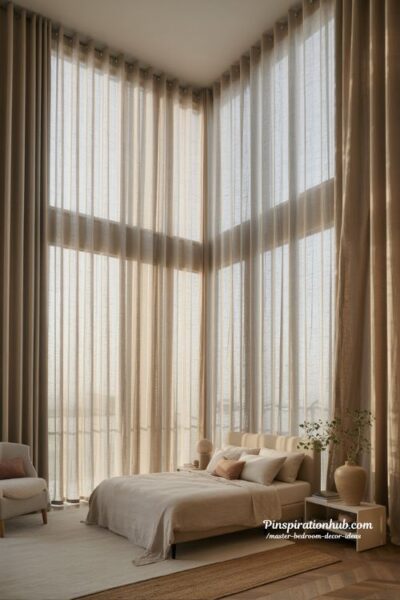
This is one of those swaps that sounds minor but genuinely changes the room. Full-length curtains in a natural fiber — linen is the classic choice — make a bedroom feel softer, more private, and considerably more elegant than roller blinds ever could. They move with the light, they soften acoustics, and they add that subtle sense of movement that makes a room feel alive rather than static.
For master bedrooms, floor-to-ceiling drapery hung as high as possible (even well above the window frame) draws the eye upward and makes the ceiling feel taller. Natural light filtering through linen in the morning creates that golden hour glow you can’t replicate with any artificial light. Sheer panels layered under heavier drapes give you flexibility between full privacy and soft diffused light throughout the day.
- Hang curtain rods 6–12 inches above the window frame to visually raise the ceiling
- Choose linen, cotton, or cotton-linen blends for that soft, natural drape
- White, off-white, and warm cream are the most versatile colors across any bedroom palette
5. Add a Bedroom Rug That Anchors the Space
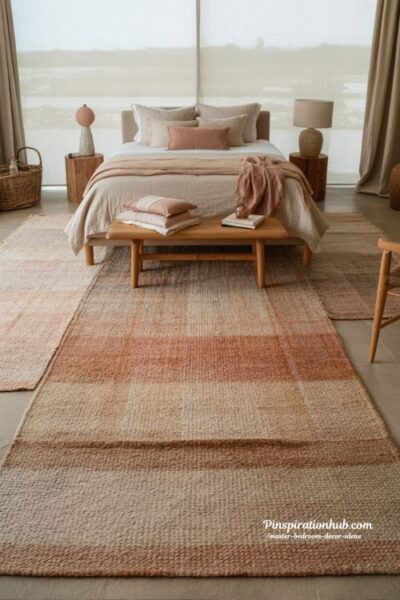
A bedroom without a rug is a missed opportunity. The right rug grounds the whole room, pulls the furniture arrangement together, and — practically speaking — gives your bare feet something wonderful to land on in the morning. For master bedrooms, a larger rug is almost always the better choice: something that extends at least two feet beyond either side of the bed, so you step onto it rather than past it.
In terms of material, a hand-loomed wool rug brings both warmth and durability, and its natural texture adds a layer of softness that synthetic options just don’t match. For color, the current trend leans toward earthy neutrals — sandstone, terracotta, dusty rose — that ground the room without competing with the bedding. If you have light walls and light bedding, a rug in a slightly deeper tone (clay, warm taupe, or sage) creates just enough contrast to anchor the space.
- Size the rug so at least 2/3 of the bed sits on it — going too small is the most common mistake
- High-pile rugs feel more luxurious underfoot; low-pile rugs are easier to clean
- Layer two rugs for visual interest: a flat-weave base under a smaller textured rug
6. Bring in Timber for Natural Warmth
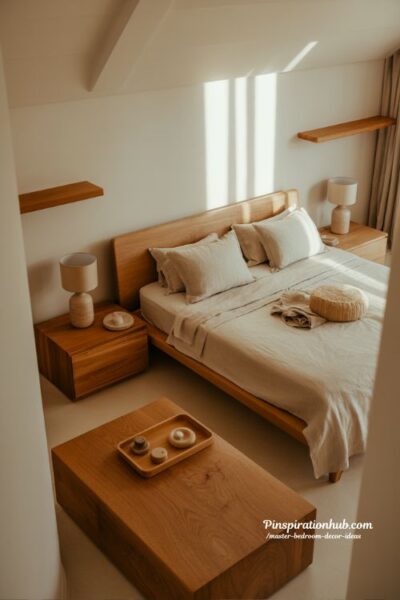
There’s a reason timber keeps coming back in interior design — it’s warm, it ages beautifully, and it connects a space to something real and organic in a way that painted MDF simply doesn’t. In a master bedroom, timber works especially well in furniture pieces that stay close to eye level: bedside tables, bed frames, floating shelves, or a low dresser.
Natural oak has a clean, contemporary feeling that suits modern and Scandinavian-influenced rooms. American walnut runs darker and richer, lending a more sophisticated edge. The key is consistency — choose one or two timber tones and carry them through the room, rather than mixing too many. Even a single timber bedside table next to an upholstered bed creates enough warmth to shift the whole mood of a neutral palette.
- Natural oak suits light, airy rooms; smoked oak and walnut work better in moodier spaces
- Repeat timber tones at least twice in the room so it feels intentional, not accidental
- Timber accessories (a bowl, a frame, a tray) are an easy way to test the warmth before committing to larger pieces
7. Try a Japandi-Inspired Bedroom Layout
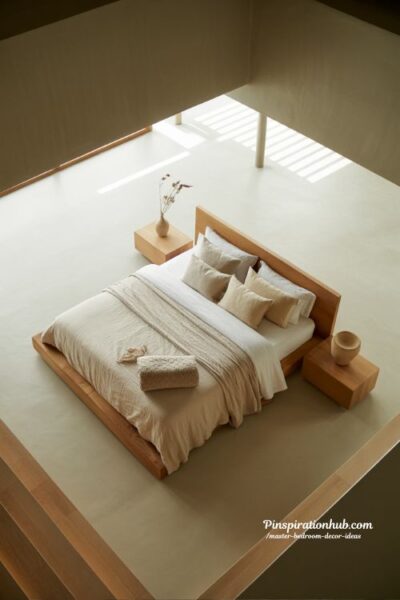
Japandi — the design marriage of Japanese minimalism and Scandinavian warmth — is one of the clearest trends shaping bedrooms right now. It’s a style that rewards restraint. Low-profile platform beds, natural timber surfaces, organic shapes, and a deeply curated approach to objects mean the room feels calm rather than empty, intentional rather than sparse.
The beauty of Japandi for master bedrooms is that it works in almost any size. A small bedroom benefits from the uncluttered floor space that low furniture creates. A larger room benefits from the deliberate placement of meaningful objects — a ceramic vase with a single stem, a hand-loomed throw draped with purpose, a stack of linen-bound books on the bedside. It’s not minimalism for minimalism’s sake. It’s about making sure everything in the room earns its place.
- Start with a low platform bed in natural timber or an upholstered neutral frame
- Style bedside tables with one or two meaningful objects only — no clutter
- Bring in one living element: a trailing plant or a small branch in a ceramic vessel
8. Layer Lighting for Every Mood
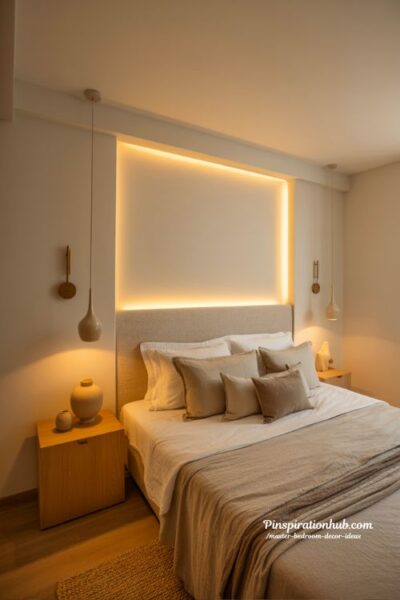
Overhead lighting is the enemy of a good bedroom atmosphere. A single ceiling light — especially a bright white one — turns a potential sanctuary into a waiting room. The solution is layering: ambient light for general visibility, task lighting for reading, and accent lighting for atmosphere. Used together, these three levels create a room that can shift from practical to romantic to deeply restful with very little effort.
Wall-mounted sconces free up bedside table space while adding warmth at exactly the right height. Pendant lights hung low on either side of the bed feel more deliberate and considered than lamps. Cove lighting or LED strip lights behind the headboard create a soft halo effect that works beautifully in rooms with darker accent walls. The rule of thumb: every light source in a master bedroom should be warm-toned and dimmable.
- Warm white bulbs (2700–3000K) are the only acceptable choice for a relaxing bedroom
- Install a dimmer switch on every light circuit — it costs very little and changes everything
- Bedside reading lights should be adjustable in position, not just brightness
9. Go for Seamless Built-In Storage
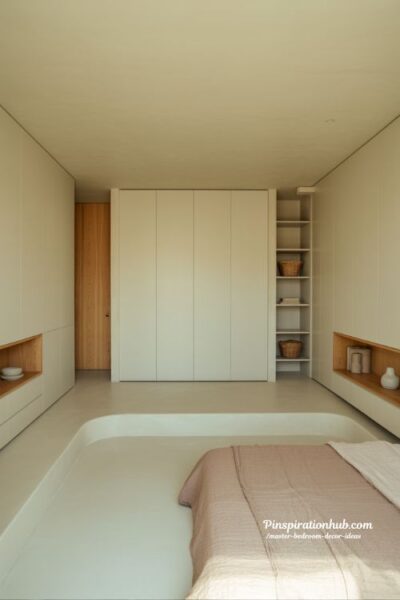
Clutter is the single biggest enemy of a calm bedroom. And in master bedrooms — especially in apartment living — storage is never quite enough. Built-in wardrobes or wall-to-wall fitted storage solve the clutter problem in the most elegant way possible: by making the storage disappear into the architecture of the room. Floor-to-ceiling wardrobes with flat, handle-free fronts read as a wall panel rather than furniture, keeping the eye moving freely around the space.
For smaller bedrooms, a storage bed with integrated drawers or a hydraulic lift base gives you back the floor space that free-standing dressers eat up. Wall-mounted bedside tables do the same — they create visual breathing room on the floor that makes even a compact room feel more spacious. The rule is simple: if storage is visible, it should be beautiful. If it doesn’t need to be seen, hide it.
- Handle-free wardrobe doors in a matching wall tone create a seamless, built-in look at a fraction of the cost
- Storage beds with hydraulic lift bases are among the most practical investments for small master bedrooms
- Use deep baskets inside open shelving to corral small items without letting them read as mess
10. Create a Sitting Area or Reading Nook
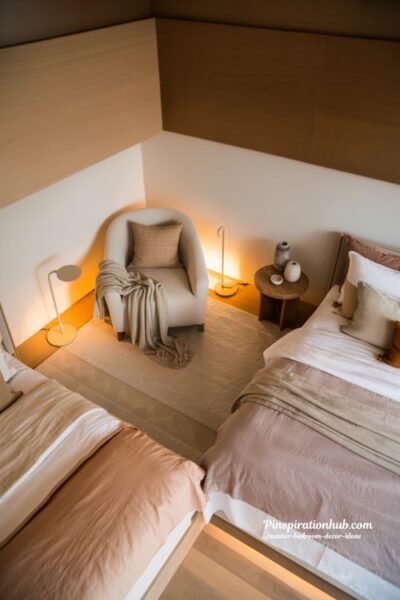
A master bedroom becomes a master suite the moment it offers more than just a place to sleep. An armchair tucked into a corner with a floor lamp and a small side table creates a reading nook that makes the whole room feel more generous and intentional. You don’t need a huge room for this — even a compact tub chair styled with a throw and a cushion signals that this space is for living, not just sleeping.
For larger bedrooms, a two-seater sofa or a pair of occasional chairs at the foot of the bed sets up a genuinely usable lounge zone. Add a low coffee table and the bedroom becomes a place where you actually want to spend time — curled up with a book, having a slow morning coffee, or watching something at a comfortable distance from the TV. These soft zones structure the space without taking anything away from the bed as the focal point.
- Position an armchair diagonally in a corner rather than flat against the wall — it looks more natural
- A small round side table is all you need to turn a chair into a proper nook
- Use a floor lamp rather than a wall light for a reading nook — it’s portable and creates a cozy pool of light
11. Use a Statement Color Palette
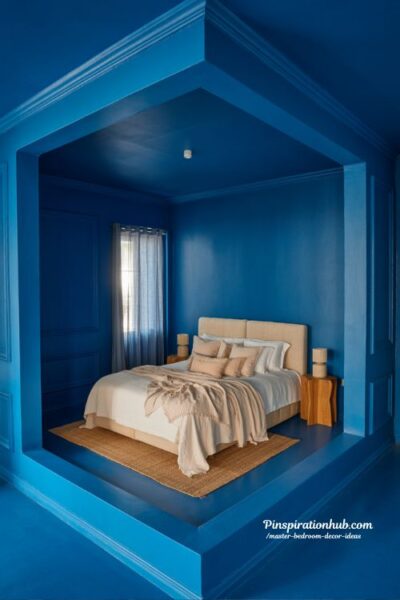
The bedroom is the one room in the house where a bold color choice actually gets better with time — because you see it every day in a state of rest, not rush. Deep, saturated colors like sapphire blue, forest green, or charcoal create an enveloping, cocoon-like atmosphere that’s genuinely hard to replicate with pale walls and generic decor. The secret is committing to the color and letting the rest of the room respond to it.
If full-wall color feels like too much, color drenching — where walls, ceiling, and trim are all painted in the same tone — creates a far more sophisticated result than a single accent wall. For 2026, the palettes that are resonating most include clay rose with terracotta, sage green with soft cream, and slate blue with warm oak. These combinations feel grounded and current without chasing a trend that’ll look dated in eighteen months.
- Color drenching (walls + ceiling + trim in one tone) creates a more considered look than a single accent wall
- Warm, muted versions of bold colors (dusty rose vs hot pink; sage vs lime) age far better
- Test paint colors in a large swatch (at least A3 size) and live with them for 48 hours before committing
12. Introduce Texture with Cane and Natural Materials
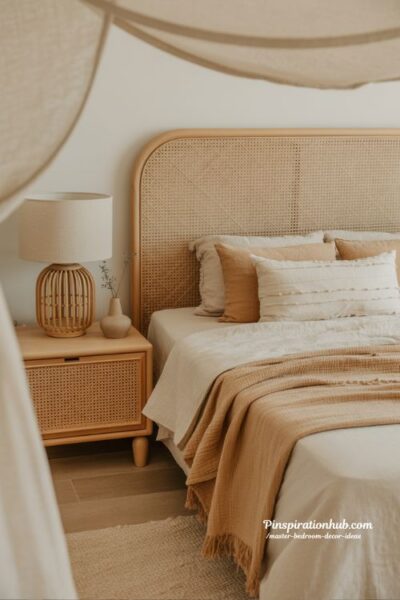
Natural textures are having a full-scale revival in bedroom interiors right now, and cane is leading the charge. Lightweight, breathable, and visually interesting without being loud, cane furniture brings a warmth and organic quality to a bedroom that painted wood simply can’t match. A cane headboard, bedside table, or lampshade base adds that slightly imperfect, artisanal quality that makes a room feel collected rather than catalogue-styled.
Cane pairs beautifully with almost every color palette — it works with white, cream, and neutral tones as a warm counterpoint, and it softens bolder colors like deep green or navy. For bedrooms that already have clean-lined, modern furniture, a single cane piece (even just a small stool or lamp base) adds enough textural contrast to keep the room from feeling sterile. It’s also a practical choice: lightweight, durable, and genuinely affordable.
- Mix cane with linen and cotton textiles for a full natural-texture palette
- Cane headboards work especially well in medium-sized bedrooms where they don’t overwhelm
- If you love the look but want something more durable, rattan (woven rather than woven-cane) is a tougher alternative
13. Add Sculptural Furniture as Accents
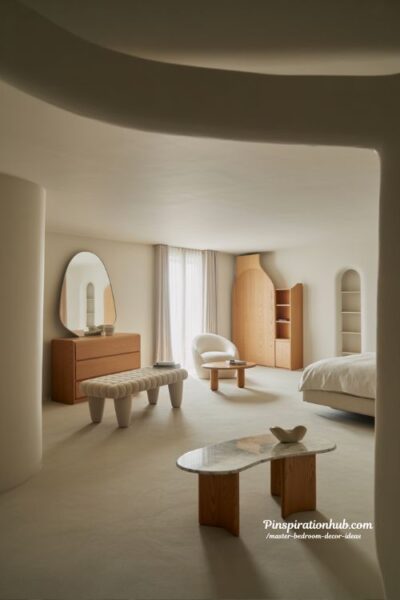
A bedroom styled entirely in straight lines and flat surfaces starts to feel corporate. Organic, sculptural shapes — a round mirror, a curved side table, an ottoman with a sculpted base — introduce movement and visual interest without requiring more color or pattern. These pieces don’t compete with each other; they create rhythm across the room.
An oval coffee table beside a reading chair, a ripple-textured wall sconce, a curved bedside with a marble top — each of these is a small thing individually, but together they build a room that feels considered and alive. Think of sculptural pieces as the punctuation in your design story: they’re not the main event, but without them, everything reads as flat and forgettable.
- Round shapes soften rooms with strong architectural lines (sharp corners, coffered ceilings)
- A curved mirror above a dresser or floating shelf is one of the highest-impact, lowest-effort swaps
- Mix one or two sculptural statement pieces with simpler, cleaner furniture to avoid visual chaos
14. Incorporate Plants and Biophilic Elements
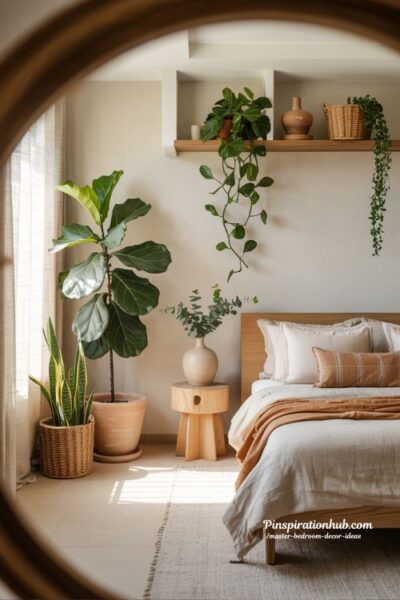
Biophilic design — the practice of connecting interior spaces to the natural world — is one of 2026’s most persistent trends, and the bedroom is where it makes the most sense. A trailing pothos on a shelf, a sculptural fiddle-leaf fig in a corner, or a simple ceramic vase with fresh stems brings an organic quality to a bedroom that no wallpaper or paint color can replicate. Plants also work hard: they improve air quality, add humidity in dry climates, and create a sense of living warmth.
You don’t need a green thumb to pull this off. Low-maintenance plants like snake plants, ZZ plants, and trailing pothos survive in low-light bedrooms and genuinely thrive on neglect. The key is pairing them with the right vessel — a hand-thrown ceramic pot, a woven basket, or a simple terracotta planter all look far more considered than a generic plastic pot.
- Position one larger plant (knee height or above) in the bedroom’s corner to anchor the room
- Dried pampas grass or eucalyptus branches add texture and organic softness without any watering required
- Fresh flowers on a bedside table are a low-cost, high-impact detail that changes every week
15. Style the Bedside Table with Purpose
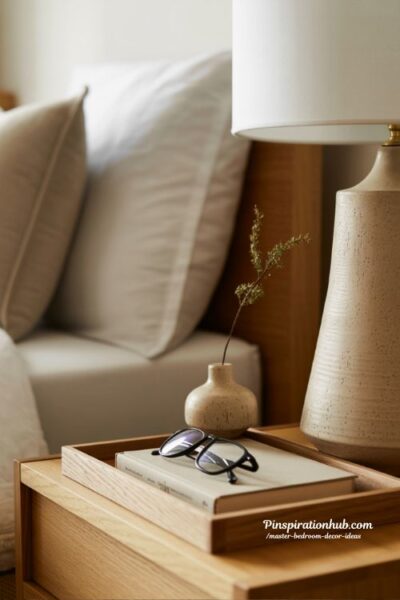
The bedside table is one of the most overlooked styling opportunities in a master bedroom. Most people treat it as a dumping ground for phones, charging cables, glasses of water, and an ever-growing book stack. But with a little intention, a bedside table becomes one of the most personal and visually interesting corners of the room.
The principle is simple: group objects in threes, vary the heights, and make sure at least one element feels beautiful rather than just functional. A lamp (the tallest), a small plant or vase (the mid-height), and a tray holding your most-reached-for items (the lowest) creates instant visual balance. A charging cable doesn’t have to disappear — but threading it neatly through a drawer or behind the lamp makes all the difference.
- Style in odd numbers: three objects read as arranged; two read as random; four reads as symmetrical and stiff
- Vary heights deliberately — a tall lamp, a medium object, a low tray or book
- A small ceramic tray corrals small items (chapstick, earrings, reading glasses) without them reading as clutter
16. Make Storage Look Intentional
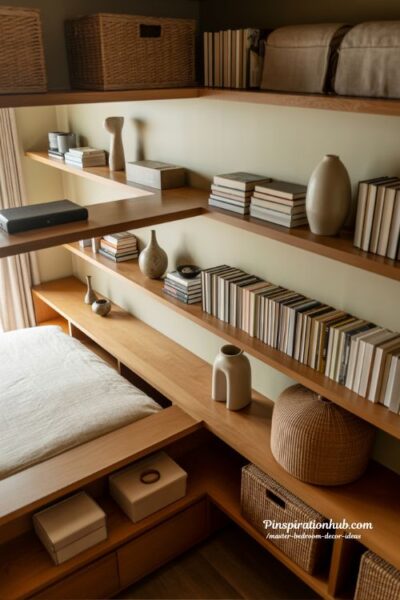
Open shelving in a bedroom can be a beautiful thing or a chaotic mess — the difference is in how you approach what goes on them. Rather than using shelves as overflow storage, treat them as a curated display: a row of books with consistent spine colors, a small collection of ceramics, one or two framed photos that actually mean something to you. The same principle applies to dressers, consoles, and any surface in the room that’s visible from the bed.
The Japandi approach is useful here: edit down to what you genuinely use or love, then find beautiful ways to store the rest out of sight. Low-profile storage baskets are perfect for tucking under beds or on lower shelves. Lidded boxes on the top shelf of a wardrobe keep seasonal items tidy without demanding attention. The goal isn’t perfection — it’s a room that feels thoughtfully edited rather than randomly accumulated.
- Use consistent containers (same material, same color family) on open shelves to unify mismatched items
- The “one in, one out” rule for bedside tables keeps everyday clutter from building up
- Books stacked horizontally rather than vertical rows create a more relaxed, less library-like look
17. Personalize with Art and Objects That Mean Something
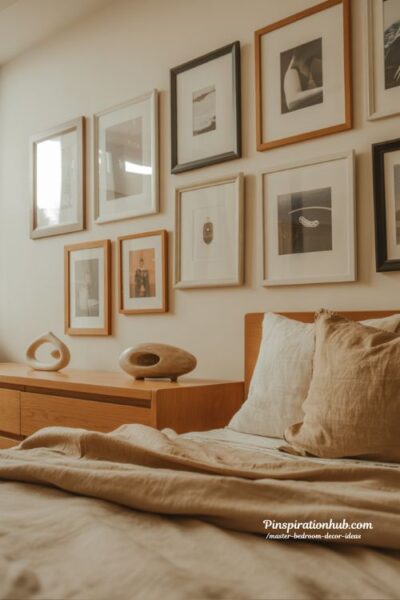
This is the step that turns a well-designed bedroom into your bedroom. A gallery wall of prints you genuinely love, a found object from a trip that sits on your dresser, a framed photograph from a moment that mattered — these things do something that no furniture purchase can do. They make the room feel inhabited rather than staged. They make it feel like you actually live there.
The instinct is often to buy “bedroom art” — something neutral and inoffensive that goes with everything. Resist that instinct. A piece of art that genuinely moves you, even if it’s bold or unexpected, will make the room feel more alive every time you look at it. The same goes for objects: choose things that carry meaning, not just things that look like bedroom accessories are supposed to look.
- Create a gallery wall before you hang anything — lay it out on the floor first to test the arrangement
- Mix framed prints with three-dimensional objects (a small sculpture, a ceramic) for depth
- Don’t feel the need to fill every wall — negative space is one of the most powerful tools in bedroom design
Master Bedroom Decor Ideas: Quick Comparison Guide
Use this table to match each idea to your specific situation before you start.
| Idea | Best Room Size | Budget | Visual Impact | 2026 Trend? |
|---|---|---|---|---|
| Statement headboard | Any | Low–Mid | High | Yes |
| Accent wall | Any | Low | High | Yes |
| Tonal bedding layers | Any | Low | High | Yes |
| Floor-length drapery | Any | Low–Mid | High | Yes |
| Anchoring bedroom rug | Medium–Large | Mid | High | Yes |
| Timber furniture accents | Any | Mid | Medium | Yes |
| Japandi layout | Small–Medium | Mid | High | Yes |
| Layered lighting | Any | Low–Mid | High | Yes |
| Built-in storage | Small | High | High | Yes |
| Reading/sitting nook | Medium–Large | Low–Mid | Medium | Yes |
| Statement color palette | Medium–Large | Low | High | Yes |
| Cane and natural textures | Any | Low | Medium | Yes |
| Sculptural furniture accents | Any | Mid | Medium | Yes |
| Biophilic/plants | Any | Low | Medium | Yes |
| Intentional bedside styling | Any | Low | Medium | No |
| Curated open shelving | Any | Low | Medium | No |
| Personal art and objects | Any | Low–High | High | No |
Frequently Asked Questions About Master Bedroom Decor
What are the most important master bedroom decor ideas for 2026?
The biggest shifts in 2026 are toward natural textures, warm earthy tones, and built-in storage that keeps the room calm and uncluttered. Statement headboards (especially arched and upholstered styles), Japandi-inspired layouts with low platform beds, and layered lighting have all moved from trend to mainstream. If you’re only making one change this year, add a proper bedroom rug or upgrade your bedside lighting — both have an outsized impact on how the room feels.
How do I make a small master bedroom feel bigger?
Low furniture is your best friend in a small master bedroom. A platform bed with a low-profile frame creates more visual breathing room than a high bed does. Wall-to-wall built-in wardrobes make storage disappear into the architecture. Floating bedside tables free up floor space. A large mirror (ideally full-length or round, positioned to reflect natural light) makes the room feel significantly more open. Keep the color palette light and warm, and avoid anything that breaks up the floor plane unnecessarily.
What colors are trending for master bedrooms right now?
Warm, earthy neutrals dominate 2026 bedroom palettes: clay rose, terracotta, sage green, warm beige, and dusty taupe. Cooler tones like slate blue work beautifully when paired with warm oak timber finishes. Deep jewel tones — sapphire blue, forest green, charcoal — are strong choices for larger bedrooms where you want that enveloping, cocoon-like atmosphere. The key shift away from previous years is the move away from cool grey toward anything with warmth and organic depth.
How do I style a master bedroom on a tight budget?
The highest-impact, lowest-cost changes are: new bedding layered in tonal neutrals, floor-length curtains replacing existing blinds, a statement bedside lamp, and rearranging what you already have. Thrift stores and online marketplaces are excellent sources for timber furniture, ceramic accessories, and lamps — pieces that carry character and warmth without the new furniture price tag. Don’t underestimate paint: a single accent wall in a deep, rich color costs very little and completely transforms the room’s atmosphere.
What bedroom furniture should I prioritize buying first?
Start with the bed — specifically the mattress and the headboard. These are the pieces you interact with most, and they anchor every other design decision in the room. A good quality mattress and a headboard you genuinely love will make a bigger difference to your daily life than any decorative choice. After that, a rug that properly sizes the bed zone, and bedside lighting that’s actually functional. Everything else — occasional chairs, art, plants, accessories — can be built up over time.
How do I add luxury to a master bedroom without spending a lot?
Luxury in a bedroom is mostly about texture and layering, not price tags. Linen bedding, a high-pile rug, full-length curtains, and a well-placed reading lamp feel genuinely indulgent even when they’re budget-friendly choices. Edit the room down — remove anything that doesn’t serve a purpose or bring you joy — and the remaining pieces immediately read as more considered and intentional. Fresh flowers on a bedside table, a scented candle, and a tray holding your morning coffee essentials cost almost nothing and make the room feel like a boutique hotel.
What is Japandi bedroom style and how do I achieve it?
Japandi blends the clean simplicity of Japanese design with the warmth and coziness of Scandinavian interiors. In a bedroom, it means low platform beds, natural timber finishes, neutral or muted palettes, and a deliberate approach to objects — only things that are beautiful or genuinely functional make the cut. The atmosphere is calm and considered, not sparse. Achieve it by stripping the room back to its essentials, then reintroducing only the pieces that feel both useful and meaningful. Natural materials (timber, linen, ceramic, cane) are central to the style.