
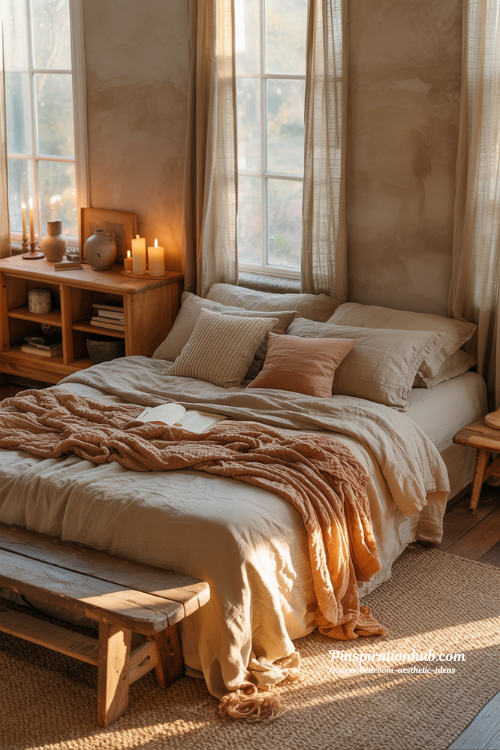
There’s a specific feeling you get when you walk into a bedroom that’s done right. Everything feels soft. The light is golden. You just want to sit down and never leave. That’s the warm bedroom aesthetic — and once you know how to create it, you’ll wonder why you waited so long. In this guide, I’m sharing 20 real ideas across color, lighting, furniture, and texture to help you build a bedroom that feels like a retreat every single day.
- Warm bedroom aesthetics rely on layered textures, earthy color palettes, and soft ambient lighting working together — not just one of those things alone.
- You don’t need to spend a lot: swapping light bulbs, adding a throw, and thrifting a wooden piece can completely shift how a room feels.
- Lighting is almost always the first problem and the last thing people think to fix — it’s the single highest-impact change you can make.
Why the Warm Bedroom Aesthetic Feels So Different
Most bedrooms are arranged, not designed. The furniture fits, the bedding matches, but nothing feels particularly warm or restful. The warm aesthetic is different because it’s built around how a space makes you feel, not just how it looks in a photo. It combines earthy colors like terracotta, cream, and warm taupe with natural materials, layered fabrics, and light sources that glow rather than blast.
The effect is immediate. Think of walking into a hotel room with a walnut bed frame, a linen duvet, and a single ceramic lamp casting a narrow pool of warm light — no overhead lighting at all. You sit on the edge of the bed and feel instantly settled. That’s what this aesthetic does, and you can absolutely create it at home.
| Element | What to Use | Why It Works |
|---|---|---|
| Color Palette | Cream, beige, terracotta, rust | Reduces visual stress, adds warmth |
| Textures | Linen, velvet, chunky knit, rattan | Creates depth and tactile comfort |
| Lighting | Warm bulbs, table lamps, candles | Signals relaxation, eliminates harshness |
| Materials | Wood, jute, woven cotton | Natural aging, grounding presence |
| Accents | Clay vases, dried botanicals, wicker | Personal, organic, non-corporate feel |
20 Warm Aesthetic Bedroom Ideas
1. Switch to Warm White Bulbs Immediately
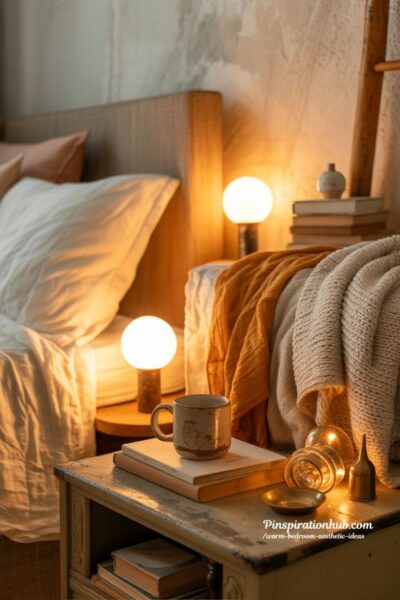
This is the fastest, cheapest thing you can do. Cool white bulbs make your bedroom feel like a hospital corridor. Warm white bulbs — anything labeled 2700K or lower — cast a soft yellow glow that makes walls look richer and fabrics look more inviting. The difference costs about two dollars. Do this before anything else.
- Replace all visible bulbs at once for a consistent effect
- Look for “warm white” or “soft white” on the packaging, not “bright white”
- Use 40-watt equivalent bulbs maximum for bedside lamps
2. Layer Your Bedding With Mixed Textures
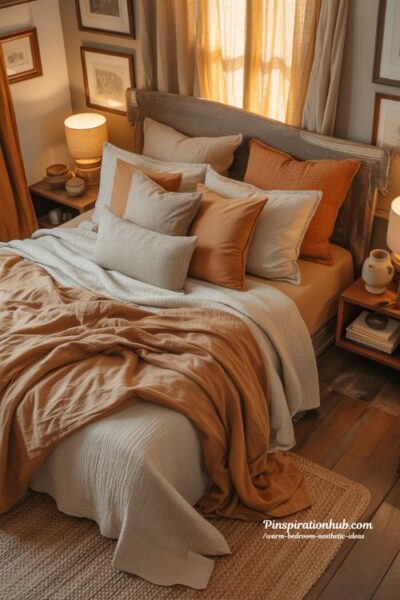
A flat, matched bedding set looks neat but never feels cozy. The trick is layering: start with washed linen sheets in oat or cream, add a lightweight cotton quilt as a middle layer, then drape a chunky knit throw across the foot. Mix one velvet pillow in with your cotton ones. The slight variation in texture is what makes the bed look inviting rather than just arranged.
- Keep all colors within the same warm family — ivory, oat, rust, dusty brown
- Don’t match everything perfectly; the lived-in look is intentional
- Add a middle quilt layer between the flat sheet and duvet for real substance
3. Replace One Piece of Furniture With Wood
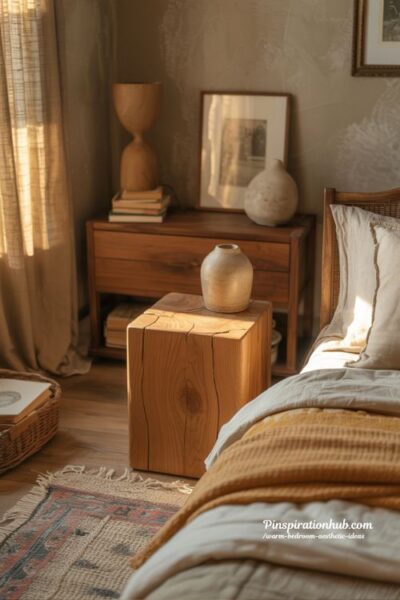
Plastic and laminate furniture feels cold at a subconscious level. A solid wood nightstand, even a secondhand one, changes the whole atmosphere of a room. Wood at eye level while you’re lying down grounds the space in a way that’s genuinely hard to explain until you experience it. Oak, walnut, and pine all work beautifully in a warm aesthetic.
- Look for secondhand pieces at thrift stores — solid wood is easy to spot and lasts forever
- Mix light and dark wood tones for a more collected, natural look
- Pair wooden pieces with soft textiles to balance hard surfaces
4. Add a Terracotta or Rust Accent
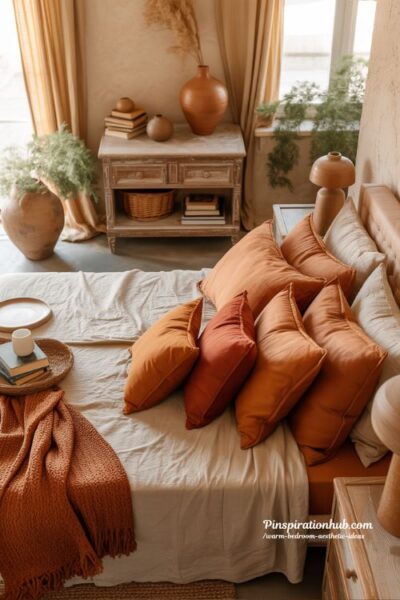
Terracotta is having a long moment in interior design for good reason. That warm clay tone mimics sunset light and makes everything around it feel warmer. You don’t need to paint a whole wall — a rust-toned throw, a set of terracotta planters, or a clay vase on your dresser is enough to shift the color temperature of the whole room.
- Test paint samples at different times of day before committing to an accent wall
- Pair terracotta tones with cream and sage green for a grounded, earthy palette
- Rust-colored pillows are one of the easiest and most affordable seasonal swaps
5. Put Floor Lamps in Corners
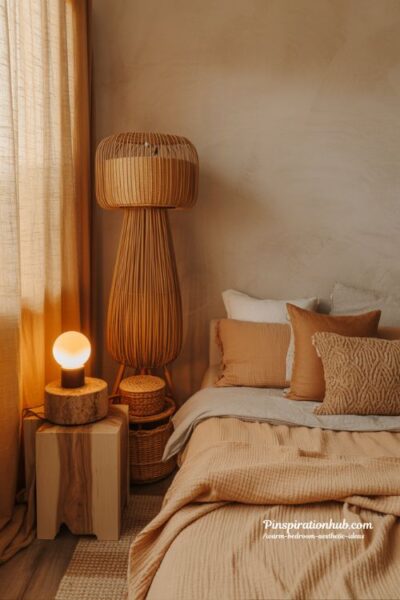
Here’s the thing most people miss: one lamp on a nightstand is good, but a taller floor lamp in the corner is what actually changes the room’s atmosphere. It lifts the light source, adds height variation, and creates a warm pool of glow in an area that’s usually just dead space. A rattan or bamboo floor lamp gives you texture and light at the same time.
- Place one floor lamp in a corner diagonal from your bed for the most balanced effect
- Use a drum shade or woven shade to diffuse light rather than direct it
- Layer it with your bedside lamp so you have two separate warm light sources
6. Choose Linen Curtains Over Synthetic Ones
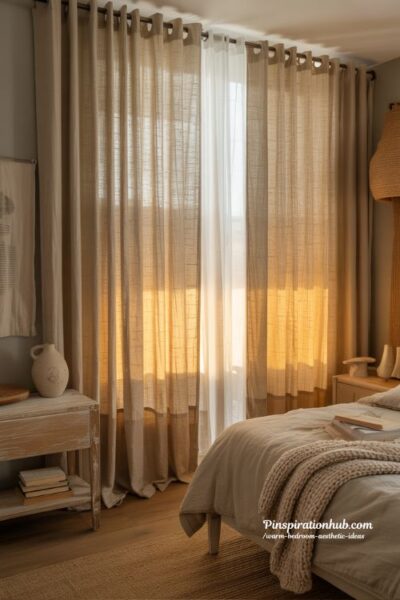
Synthetic curtains are fine, but they reflect light in a slightly flat, plastic way. Natural linen curtains drape differently — softly, loosely, with a gentle texture that makes afternoon light look genuinely beautiful. Floor-length linen in cream or warm ivory also makes ceilings look taller and windows look bigger without any other changes.
- Hang the curtain rod close to the ceiling, not just above the window frame
- Choose pre-washed linen so it hangs with a natural, relaxed drape from day one
- Layer sheers with blackout curtains for full light control at night
7. Bring in Rattan or Woven Details
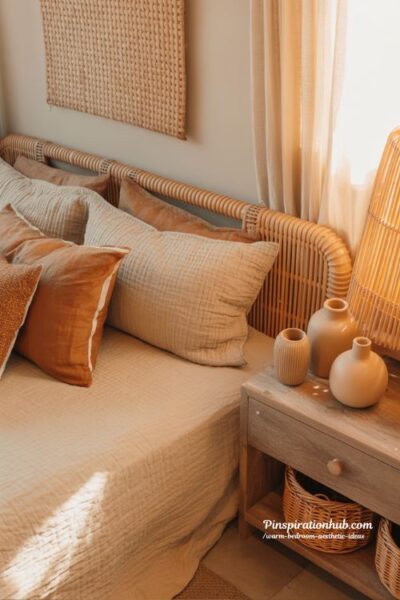
Rattan baskets, a woven wall hanging, a bamboo lamp base — these small additions do something that painted walls and matched furniture can’t. They add handmade, natural texture that makes a room feel like it was put together thoughtfully rather than ordered all at once. Even one rattan piece makes the aesthetic feel warmer and more personal.
- Use a rattan basket under the bed or beside the dresser for practical hidden storage
- Group woven and ceramic pieces together on a shelf for a curated, artisan look
- Rattan ages beautifully — don’t avoid it because it looks casual
8. Use a Soft Area Rug Beside the Bed
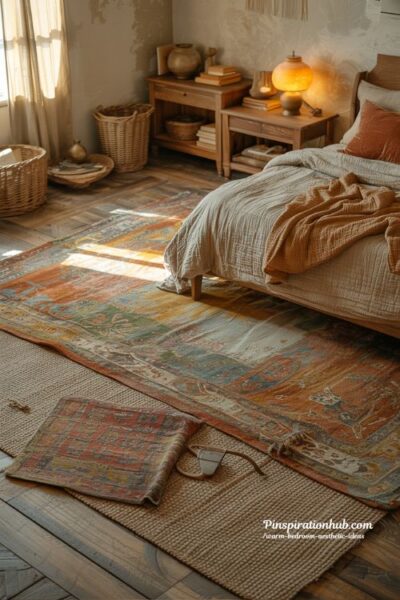
Cold floors in the morning undo all the cozy atmosphere you built the night before. A soft rug on at least one side of the bed fixes this completely. Go bigger than you think — a 5×7 at minimum, and ideally large enough that the rug extends under the bottom third of the bed frame. Vintage-style rugs in rust, olive, and cream tones work perfectly with a warm palette.
- Measure your floor space before buying — going too small is the most common rug mistake
- Add a rug pad underneath for softness and to prevent slipping
- Layering a smaller vintage rug over a plain jute base adds depth and warmth
9. Swap in a Velvet or Linen Headboard
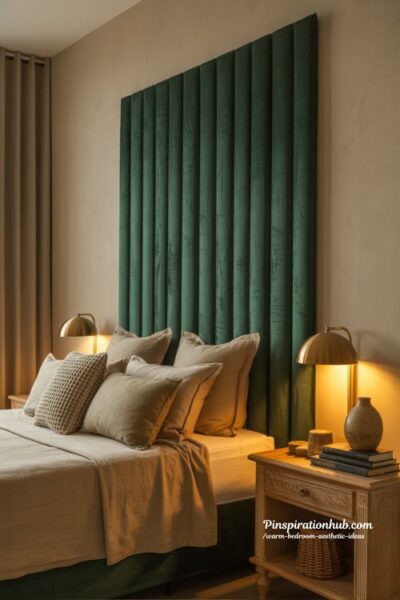
A bare wall behind your bed is a missed opportunity. An upholstered headboard in linen or velvet does two things at once: it anchors the whole room visually and makes sitting up in bed genuinely comfortable. Linen headboards are calm and neutral; velvet ones in deep tones like emerald or burgundy make a bedroom feel like a true sanctuary.
- Keep bedding neutral if your headboard is a deep or rich tone
- Brush velvet fabric occasionally to maintain its soft texture
- Pair the headboard with matching bedside lamps for a balanced, finished look
10. Display Clay Vases and Neutral Ceramics
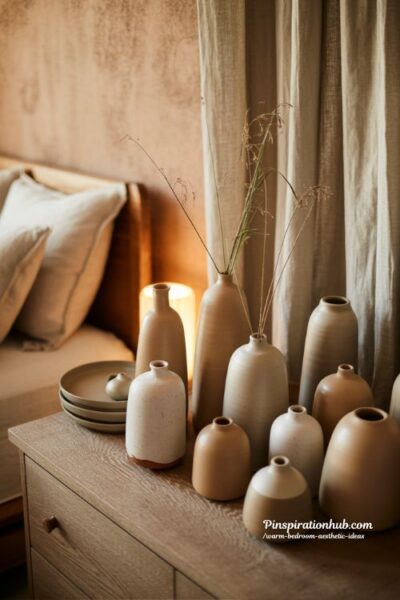
Store-bought decor rarely has the same effect as handmade pieces. Clay vases and ceramic objects with slightly imperfect glazes have a warmth and character that mass-produced items lack. A few pieces grouped together on a dresser or nightstand — varying heights, same earthy color family — creates that carefully curated look without trying too hard.
- Mix different heights and rounded shapes for the most natural grouping
- Use vases as holders for dried stems or simple fresh flowers
- Keep the color palette to sand, cream, and terracotta tones for cohesion
11. Try Peel-and-Stick Wallpaper on One Wall
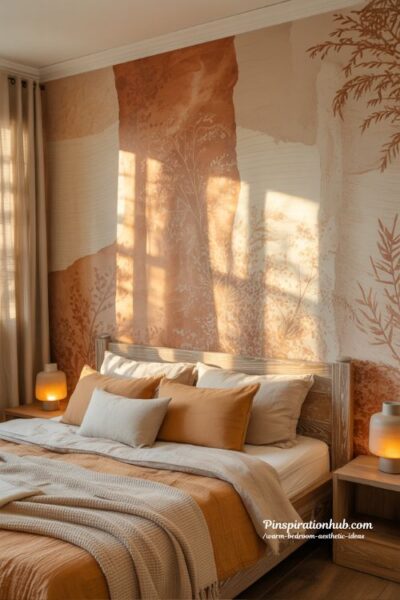
If you’re renting or not ready to paint, peel-and-stick wallpaper is genuinely a good option. A single accent wall in a warm terracotta print or a linen-textured neutral can transform a bedroom without permanent changes. It peels off cleanly when you want to move, and the installation is simpler than it looks.
- Start application from the top and work downward for the cleanest result
- Choose warm-toned patterns — terracotta, botanical prints, soft stripes
- Test a small corner section first before committing to the full wall
12. Add Indoor Plants and Dried Botanicals
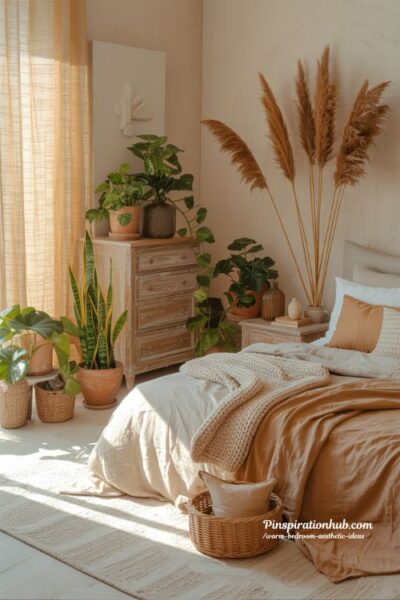
Plants do more than look good — they bring a sense of life and freshness into a bedroom that decor alone can’t replicate. Low-maintenance options like pothos, snake plants, or peace lilies work well with minimal fuss. Dried pampas grass in a tall floor vase adds height and soft texture without any maintenance at all. The combination of living and dried botanicals creates an organic, layered feel.
- Group plants in odd numbers — three or five — for more natural visual balance
- Place taller dried botanicals in corners to add height to the room
- Choose terracotta planters to stay within the warm earthy palette
13. Use Candles or LED Candles for Night Ambiance
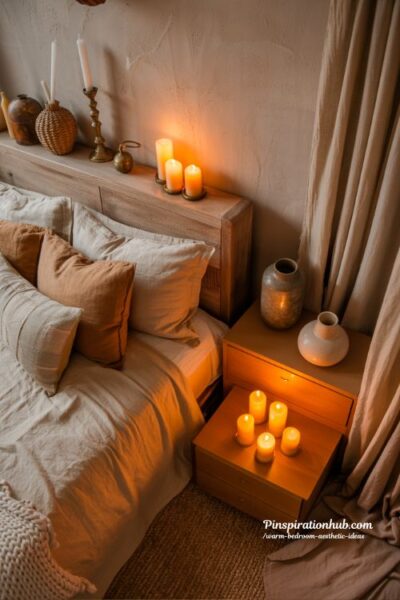
There’s something about candlelight that nothing else replicates. The soft, flickering glow makes a room feel intimate and calm in a way even the best warm-white bulb can’t quite achieve. Vintage-style brass or ceramic candle holders add to the mood. LED candles are a smart option if you don’t want to manage an open flame before falling asleep.
- Keep real candles at least a foot away from any fabric or bedding
- Unscented candles work better in the bedroom for most people — strong scents can disrupt sleep
- Group candles in sets of three at different heights for the most atmospheric effect
14. Bring in a Reading Chair or Bench
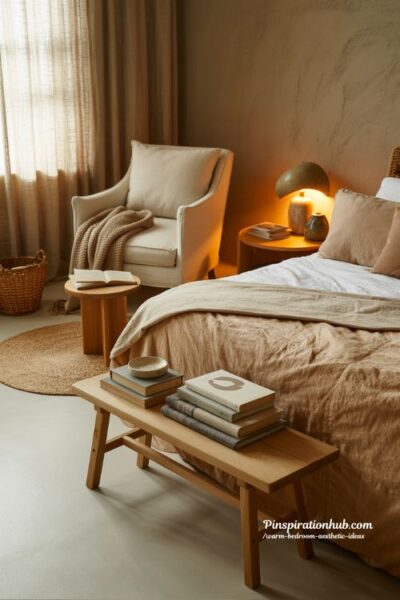
A cozy bedroom needs at least one piece of furniture that isn’t just functional. A plush armchair in a corner, a small bench at the foot of the bed, even a pouffe — these pieces signal that the room is for more than sleeping. They create a moment of pause, a spot to land. A bench at the foot of the bed is particularly practical: it holds extra blankets and gives you a place to sit while getting dressed.
- Measure the space carefully before buying — something too large crowds the room
- Choose an armchair with good back support if you read or spend time in it regularly
- Drape a throw over the arm or back for that intentionally relaxed look
15. String Lights Around Your Headboard
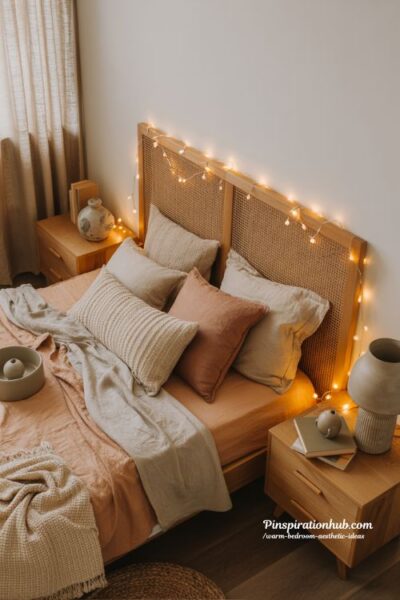
For under fifteen dollars, warm fairy lights create a level of atmosphere that’s genuinely surprising. Hung loosely around your headboard or along a shelf, they add a layer of soft ambient glow that works especially well in the evenings. Warm white only — pure white fairy lights undermine the whole palette.
- Use clear command hooks so you can adjust or remove them without wall damage
- Battery-operated versions work anywhere without needing an outlet nearby
- Combine with sheer curtains for a genuinely dreamy nighttime effect
16. Create a Gallery Wall With Personal Pieces
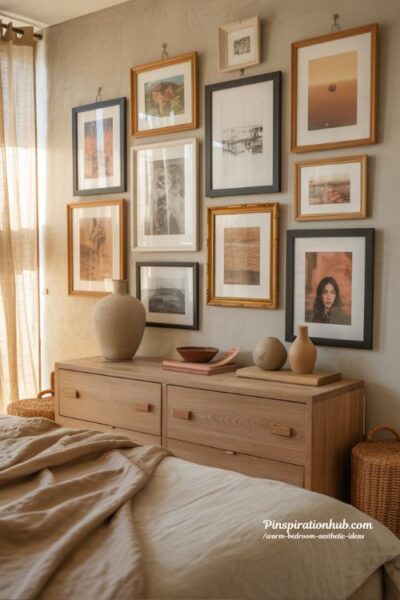
A warm bedroom should feel like yours, not like a hotel room or a mood board. Framed photos, travel prints, or artwork in warm tones on the wall behind your dresser or above your reading corner creates a personal anchor. Gallery walls don’t need to be perfectly symmetrical — a relaxed arrangement often looks more intentional than a rigid grid.
- Use matching frames for a more cohesive look even when the art is varied
- Mix personal photos with art prints so it feels curated, not just a family album
- Picture ledges make it easy to rearrange without filling your walls with holes
17. Choose a Warm Neutral Paint Color
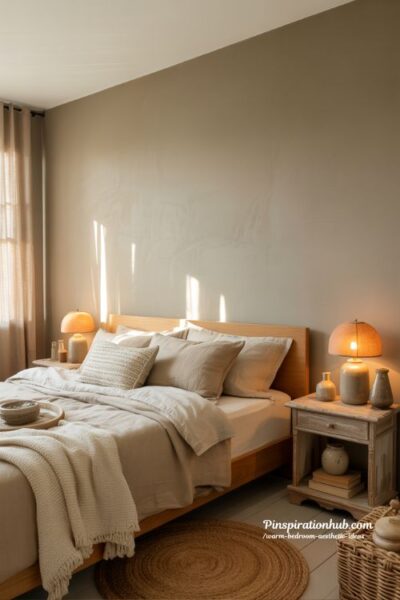
Cream, warm taupe, and greige (gray-beige) are the unsung heroes of bedroom design. They work in almost any light, they don’t compete with your textiles, and they make everything else in the room look more expensive. Go one shade lighter than you think you want — paint always reads darker on a full wall than it does on a sample card.
- Test samples on the corner where two walls meet, not flat on a single wall
- Observe the sample in morning, afternoon, and evening light before deciding
- Matte finish reads warmer and softer than satin or semi-gloss
18. Add Floating Shelves With Curated Decor
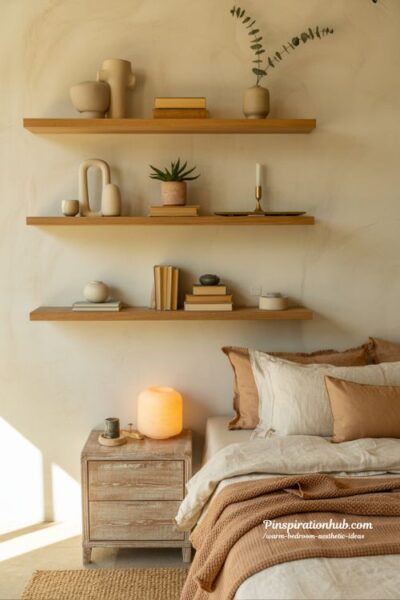
Floating shelves above nightstands or on an empty wall add function and visual interest without taking up floor space. The key is restraint: three to five pieces per shelf, combining vertical and horizontal objects, with negative space intentionally left between them. Neutral ceramics, a small plant, a candle, and a stack of books in warm-toned spines — that’s all you need.
- Use matching brackets for a cleaner, more finished look
- Include at least one organic element — a plant, a dried stem, a piece of driftwood
- Avoid filling shelves completely; the empty space is part of the design
19. Layer Window Treatments for Depth and Control
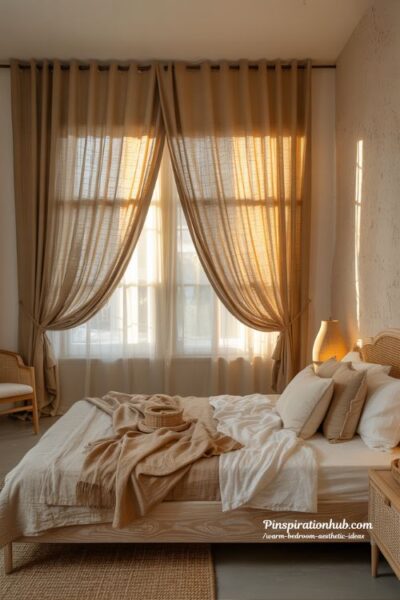
One curtain panel per window is functional but flat. Layering sheer curtains with heavier linen or velvet drapes gives you full control over light and adds real visual depth. During the day, sheers filter sunlight into that soft golden glow that makes everything look warm. At night, heavier panels close completely for privacy and darkness.
- Use double curtain rods to hang both layers without complicated hardware
- Choose complementary colors — cream sheers with a slightly deeper linen drape, for example
- Steam fabric regularly to maintain the natural drape and avoid stiff-looking curtains
20. Keep Surfaces Clear and Let Textures Do the Work
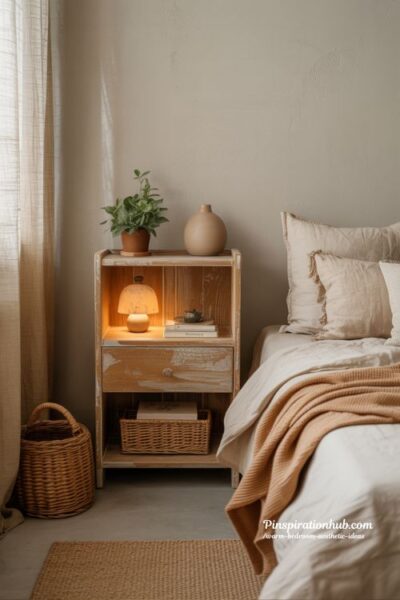
The final piece of the warm bedroom aesthetic puzzle is editing. A cozy room isn’t a cluttered room. The textures — the linen, the wood grain, the woven basket — need space to breathe. Clear your nightstand down to three or four intentional items. Put excess objects away. The warmth comes from what’s there, not how much of it there is.
- One lamp, one small plant, and one personal object per nightstand is a good rule
- Use woven baskets for storage so necessities are accessible but not visible
- Clean surfaces make every other element in the room feel more deliberate and considered
Quick Comparison: Warm Bedroom Aesthetic Ideas by Budget and Impact
| Idea | Budget Level | Visual Impact | Effort Level |
|---|---|---|---|
| Swap to warm white bulbs | Under $10 | Very High | Very Easy |
| Layer bedding textures | $20–$60 | High | Easy |
| Thrifted wood nightstand | $5–$30 | High | Easy |
| Terracotta or rust throw | $15–$40 | Medium | Very Easy |
| Floor lamp in corner | $30–$80 | High | Easy |
| Linen curtains | $40–$100 | High | Moderate |
| Rattan basket or lamp | $15–$50 | Medium | Very Easy |
| Soft area rug | $50–$150 | Very High | Moderate |
| Upholstered headboard | $80–$300 | Very High | Moderate |
| Peel-and-stick wallpaper | $30–$80 | Very High | Moderate |
Warm Bedroom Aesthetic Color Palettes That Work
Colors carry the emotional weight of the whole room. You don’t need to repaint to test a palette — start with your bedding and throws, then move toward walls once you know what feels right.
The most reliable warm palettes combine a neutral base with one earthy accent and one natural material tone. Cream walls with oatmeal linen and a rust throw. Warm taupe walls with ivory bedding and aged wood. Greige with sage green plants and terracotta accents. These combinations feel calm because there’s no visual conflict — everything speaks the same temperature.
Muted tones always outperform saturated ones in a warm bedroom aesthetic. Dusty rose instead of hot pink. Olive instead of bright green. Rust instead of orange. The muted version of any warm color is almost always the better choice.
Frequently Asked Questions
What is the warm bedroom aesthetic exactly?
The warm bedroom aesthetic is a design approach that prioritizes comfort, calm, and emotional warmth over visual perfection. It relies on earthy color palettes, natural materials like wood and rattan, layered soft textures, and ambient lighting instead of harsh overhead lights. The goal is a room that feels genuinely restful rather than just styled.
What colors work best for a warm bedroom aesthetic?
Cream, warm taupe, beige, rust, terracotta, dusty rose, greige, and olive green are the most reliable options. Choose muted versions of warm tones rather than saturated ones — they read calmer and more restful. Test paint samples in your actual lighting conditions before committing, since artificial light can shift colors significantly.
How do I make a warm bedroom aesthetic on a budget?
Start with lighting — replacing cool white bulbs with warm white ones is under ten dollars and makes an immediate difference. Then layer textures through affordable throws and mixed pillows. Thrift stores are excellent for solid wood furniture and ceramic pieces. You don’t need to buy everything new; the combination and layering of elements matters more than the price of individual pieces.
Does the warm bedroom aesthetic work in small bedrooms?
It actually works better in small bedrooms. Smaller spaces feel more intimate, and warm tones make walls feel like they’re embracing you rather than closing in. Use light neutrals on the walls to keep the room feeling open, and add warmth through textiles, lighting, and natural accents rather than large furniture pieces.
How important is lighting in the warm bedroom aesthetic?
It’s the most important element. You can have the perfect throw, the right paint color, and beautiful wood furniture — and the room still won’t feel cozy if the lighting is wrong. Switch off overhead lights in the evening, use warm-white bulbs in table and floor lamps, and add candles or string lights for extra layering. Lighting is what separates a nice-looking room from one that feels like a true retreat.
What natural materials work best for a warm bedroom?
Wood, rattan, jute, cotton, and linen are the core natural materials for this aesthetic. Solid wood in any tone (oak, walnut, pine, or acacia) brings the most grounding effect. Rattan and jute add tactile texture. Linen bedding and curtains bring softness and age beautifully with every wash. Mixing three or four of these materials together creates a layered, organic atmosphere that synthetic alternatives simply can’t replicate.
How do I start if I want to try the warm bedroom aesthetic without redecorating everything?
Pick one change from the lighting category first — it costs almost nothing and makes the biggest visual difference. Then add one textural element, like a chunky knit throw or a woven basket. After that, bring in one natural material piece, even something small like a clay vase or a wooden tray on your nightstand. Three small changes is often enough to shift the entire feeling of the room.