
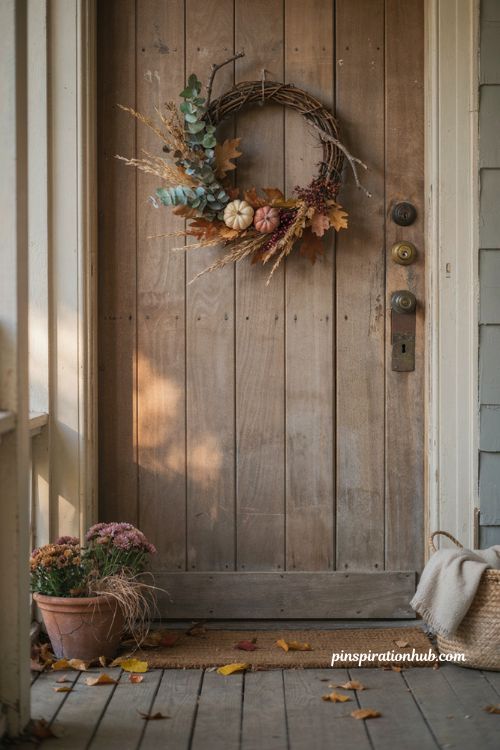
There’s something about the first cool morning of the season that makes you want to walk outside and actually look at your front door again. Maybe it’s the light changing, maybe it’s the smell of someone’s neighbor burning leaves somewhere down the block. Either way, a bare door just doesn’t feel right once autumn shows up. A wreath is the fastest, easiest fix — one round shape hung at eye level and suddenly your whole entryway feels intentional. Whether you buy one ready-made or build it yourself from a grapevine base and a handful of stems, here are fifteen fall wreath ideas worth stealing this year.
1. Start With a Grapevine Base
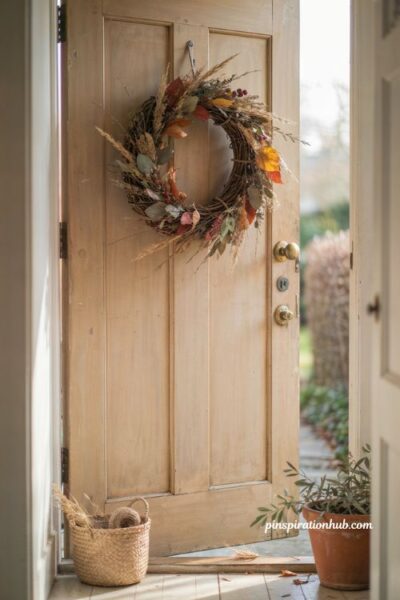
Most of the best-looking fall wreaths you’ll find online start the exact same way — with a plain grapevine wreath form instead of a foam or wire ring. Grapevine gives you natural texture right out of the gate, and the gaps between the vines make it easy to wedge in stems without wiring or gluing everything down. It also means you can pull the wreath apart at the end of the season and reuse the base again for winter. If you’re new to wreath making, grab an 18-inch form, start with your longest stems first, and work forward in layers until the gaps disappear.
2. Go Big With a Sunflower Harvest Wreath
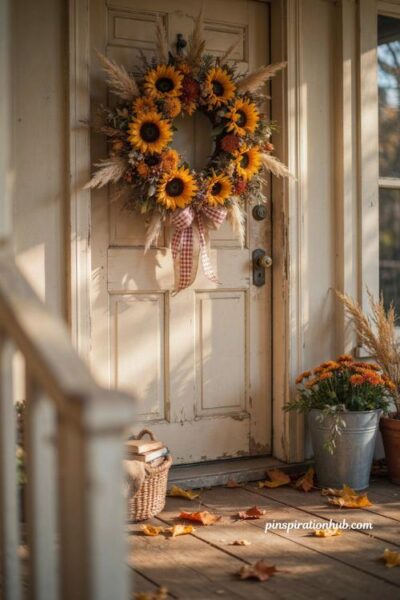
Sunflowers bring instant warmth to a front door, and they pair beautifully with sunburst-style wreath forms that echo their shape. Layer in a few burnt-orange and yellow blooms alongside dried grasses or wheat stems for a farmhouse harvest look. A 24-inch size tends to read best on a standard front door — anything smaller can get lost against the frame. Finish with a gingham or burlap bow at the base for a cheerful, welcoming touch that photographs well against almost any door color.
3. Keep It Elegant With Magnolia Leaves
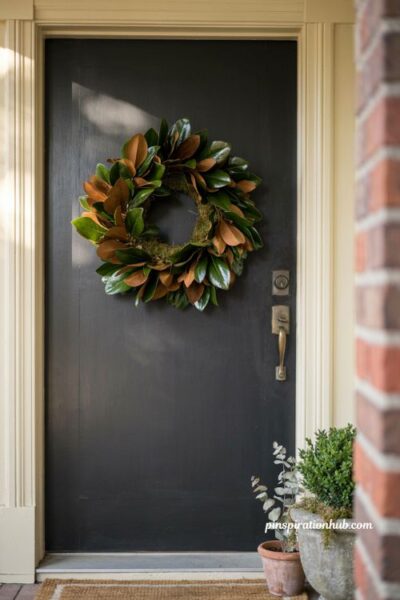
If bright orange and gold feel like too much, a magnolia leaf wreath is the quieter alternative. The leaves have a glossy green front and a soft brown-velvet back, so alternating the two sides as you attach them gives the wreath natural depth without adding a single flower. Secure the leaves into a moss-covered base for an elegant, almost formal finish. This style works especially well on darker doors — navy, black, or deep green — where the contrast between the leaf and the paint really stands out.
4. Try a Boho Pampas Wreath
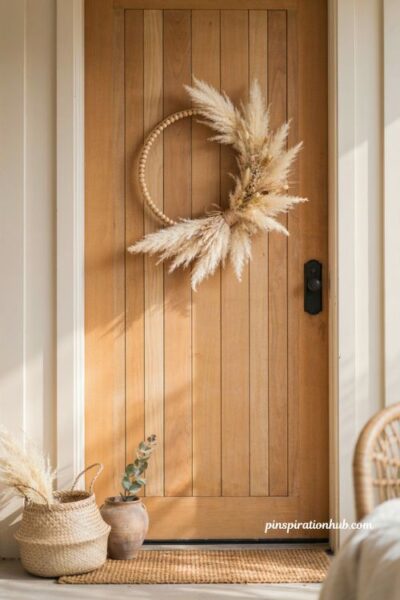
Pampas grass wreaths have that soft, sun-bleached look that feels more relaxed than a traditional harvest design. Attach bleached or blush-toned pampas fronds to a wooden bead hoop in a crescent shape, leaving one side of the ring bare for visual balance. Tuck in a little dried grass or a few seed pods where the pampas gathers, then finish the center with a loose raffia knot instead of a stiff bow. It’s an easy weekend project and it holds up well indoors or on a covered porch.
5. Add Drama With a Metallic Falloween Wreath
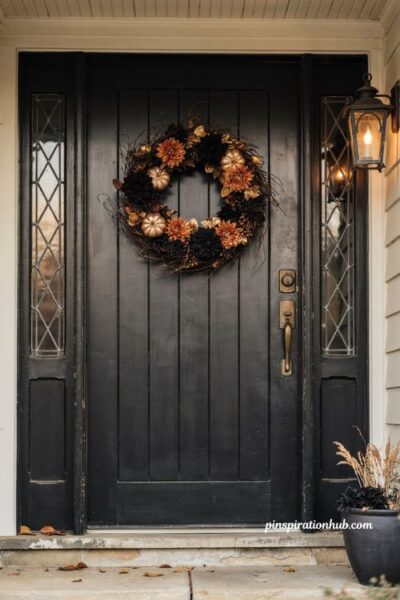
For anyone who decorates for fall and Halloween at the same time, a metallic wreath bridges both moods well. Mix black and burnt-orange florals with a few gilded or glittery mini pumpkins for a design that feels gothic but still seasonal. Building it on a dark twiggy base helps the metallics pop instead of getting washed out. It reads as elegant rather than costume-y, which makes it a good pick if you want your porch to carry through from late September into early November.
6. Soften Things Up With Dusty Pink
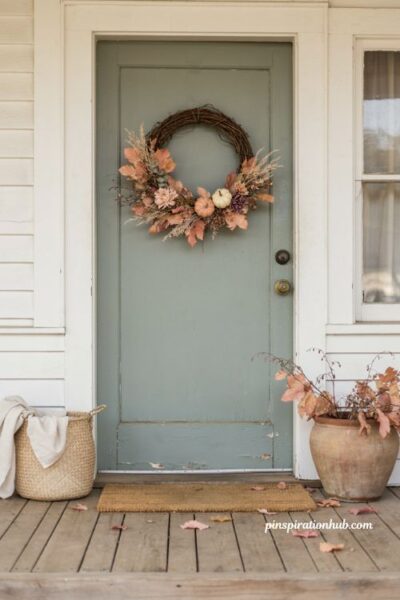
Fall doesn’t have to mean only orange and brown. A dusty rose, mauve, and neutral floral combination gives the same cozy, seasonal feeling with a softer palette. Layer in a few faded apricot leaves as your base, then add blush blooms and a couple of muted pumpkins for contrast. This look tends to cost far less than people expect, since a lot of it comes down to simple craft store stems and a hot glue gun rather than anything specialty. It’s especially pretty against a sage or cream-colored door.
7. Forage a Pinecone and Acorn Wreath
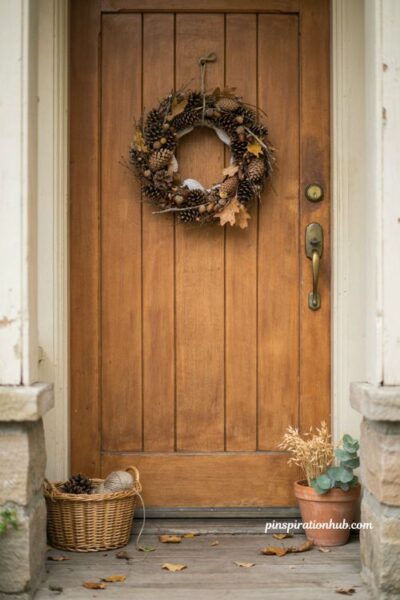
If you want something that costs almost nothing, take a walk and collect pinecones and acorns from your own yard. Glue them onto a foam ring in slightly varied sizes so the surface has texture instead of looking uniform, then tuck in a few dried mushrooms or small twigs to fill gaps. One tip that actually matters: bake foraged acorns at a low oven temperature for an hour or two first, which keeps bugs and mold from becoming a problem later. Hang it with plain twine for a woodsy, unfussy look.
8. Bring In Fresh Eucalyptus
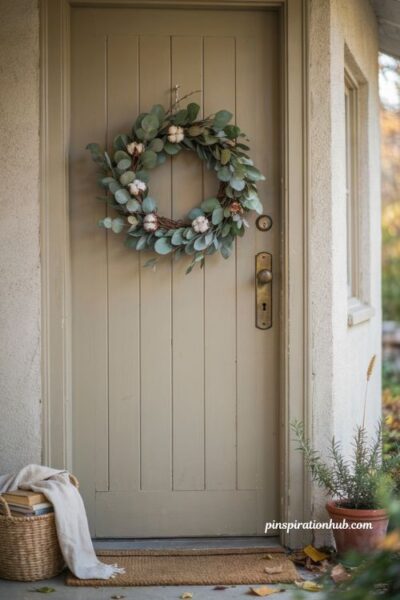
A fresh eucalyptus wreath smells incredible and looks a little different from the usual faux-leaf options on the market. Mix silvery eucalyptus stems with a few dried cotton stems for contrast, and know going in that a fresh wreath will dry out and shift in color over a few weeks rather than staying store-fresh forever. That’s part of the charm, honestly — it ages into a rustic, muted look that still works right through Thanksgiving. Hang it somewhere it’ll get a little airflow so it dries evenly.
9. Try a Corn Husk Wreath for Texture
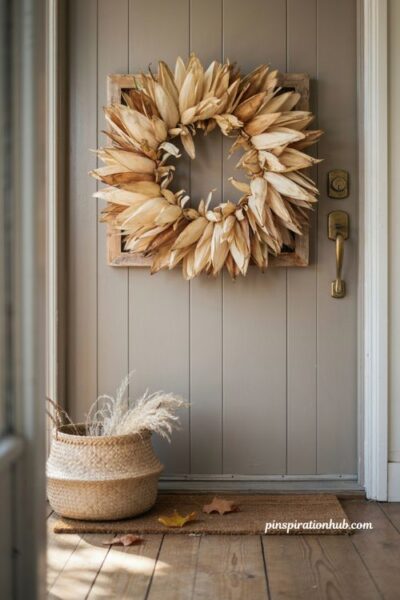
Corn husks aren’t just for tamales — soaked, shaped, and layered onto a wreath form, they create a ruffled, almost floral texture that’s completely different from anything with silk leaves. A square wreath frame gives this style a modern twist instead of the usual round shape. It’s a great option if you want something that feels handmade and a little unexpected, and the natural cream and tan tones work with nearly every door color without clashing.
10. Layer In Feathers for Something Unexpected
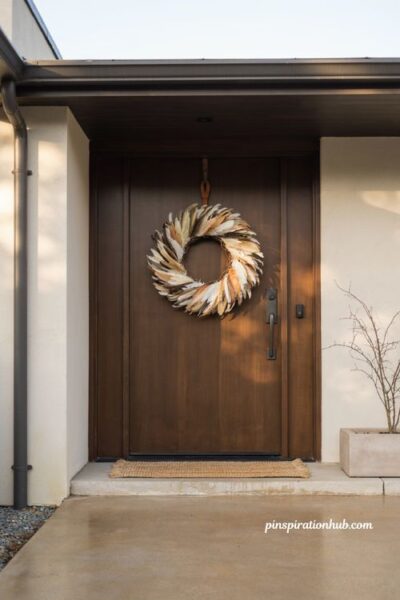
A feather wreath sounds like an odd choice until you see one in person — it has real movement and catches light in a way that florals never do. Start with a grapevine or beaded hoop base, then layer faux pheasant or ostrich feathers pointing in the same direction, gluing as you go so there are no visible gaps. A walnut-stained leather strap for hanging ties the whole thing together and keeps the look grounded rather than costume-like. It’s a striking choice for a modern or minimalist front porch.
11. Go Rich With a Berry Wreath
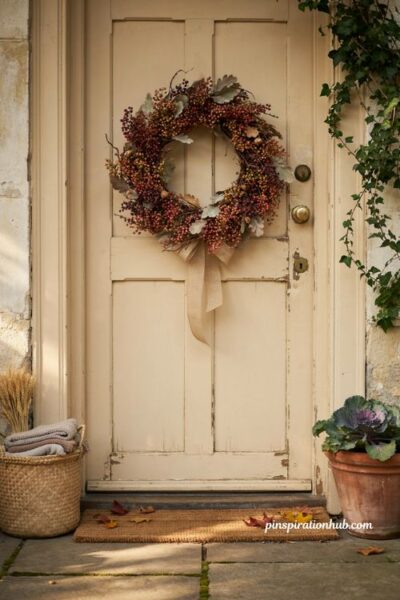
Berries bring a saturated pop of color that faux leaves alone can’t always deliver. Fill a grapevine or foam base generously with burgundy, rust, and marigold berry stems, applying the darkest tones first and layering lighter ones over top for dimension. A few sage-toned oak leaves worked in between the berries keep the color from feeling flat. This style also transitions easily — swap the ribbon from burlap to red velvet and the same wreath carries you straight into the holidays.
12. Combine Hydrangea and Pumpkins
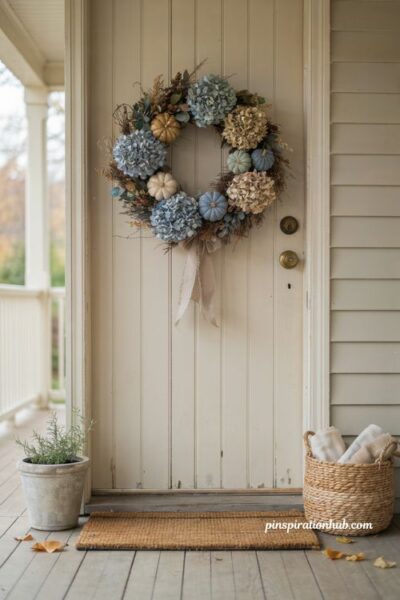
Hydrangea blooms add real volume to a wreath, and pairing them with small faux pumpkins keeps the whole thing feeling like fall instead of summer leftovers. Blue, sage, or dusty gold pumpkins tend to look more sophisticated than the standard bright orange ones, especially against a lighter door. If you’re using fresh hydrangea for an event, a water-soaked foam base will keep the blooms hydrated for a day or two, though a faux version will obviously last the whole season without wilting.
13. Keep It Minimal With an Embroidery Hoop
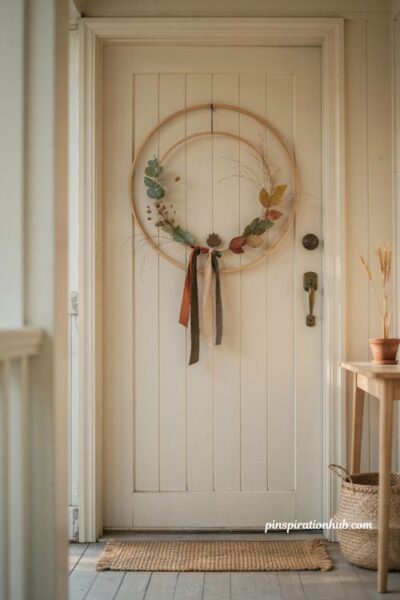
Not every wreath needs to be full and dramatic — sometimes a large embroidery hoop with just a few well-placed sprigs looks more polished than something packed with stems. Use both the inner and outer rings to spread your florals across a wider surface, then add two contrasting ribbon colors and a small fall sign for personality. This is the fastest option on the list if you’re short on time, and it works just as well hung indoors above a console table as it does outside.
14. Swap the Wreath for a Hanging Basket
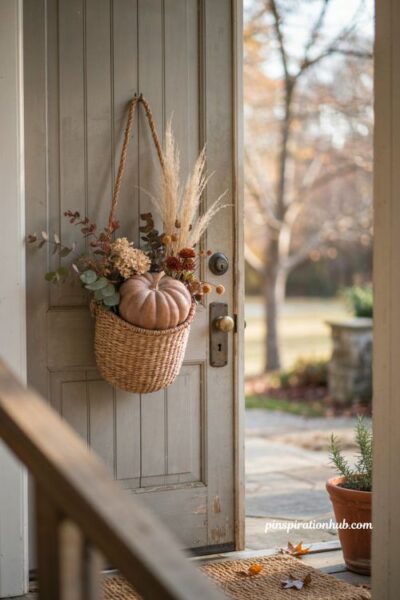
A basket filled with seasonal stems can stand in for a traditional wreath and adds a little variety to a front porch that’s had the same round shape for years. Choose a sturdy woven basket, place your longest stems toward the back for depth, and create one clear focal point — a big bloom or a cluster of pumpkins — rather than spreading everything evenly. If the basket is deep, stuff the bottom with black bags first so shorter stems still reach the opening without looking sparse.
15. Personalize It With a Monogram
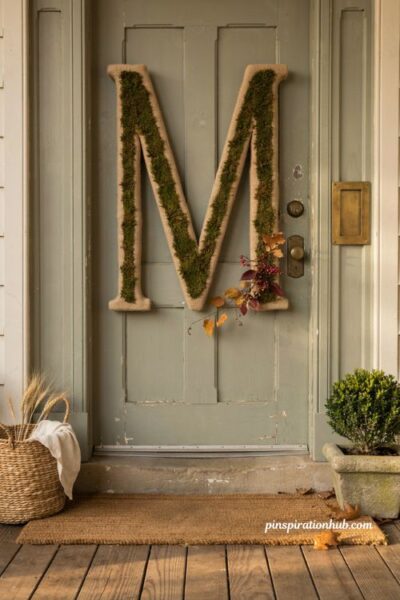
A wreath doesn’t have to be round at all. A moss-covered or jute-wrapped letter, styled with a few faux fall leaves and berries, makes a distinctive alternative that still reads as seasonal decor from the street. It’s a nice option for a shared entryway or a home where you want the decor to feel a little more custom. Pair the letter with your house number or a small welcome sign nearby, and it doubles as decor guests genuinely remember.
Final Thoughts
At the end of the day, the “right” fall wreath is really just the one that matches how you actually want your front door to feel — cozy and traditional, a little wild and boho, or clean and pared back. Start with a base you like working with, whether that’s grapevine, a foam ring, or something as simple as an embroidery hoop, and build from there one stem at a time. None of these ideas require special skills, just a hot glue gun, some patience, and a willingness to keep adjusting until it looks right to your eye.
Frequently Asked Questions
Q: What size wreath should I get for my front door?
As a general rule, the wreath’s diameter should be about half to two-thirds the height of your door, so a 22 to 24-inch wreath fits most standard doors well.
Q: How do I keep a fresh wreath from wilting too fast?
Fresh eucalyptus, hydrangea, or berry wreaths last longer if hung somewhere with some airflow and out of direct, harsh sun, though they’ll naturally dry out and change color over a few weeks.
Q: Can I make a fall wreath without a glue gun?
Yes — a grapevine base lets you wedge sturdy stems and picks directly between the vines, so many designs come together with little or no hot glue at all.
4 thoughts on “15 Stunning Fall Wreath Ideas That Make Any Front Door Shine”