
There’s a moment every September when the air shifts just slightly, and suddenly you’re standing in front of your door thinking it looks a little bare. A wreath fixes that in one move — it’s the fastest way to make a house feel like it’s ready for the season. Whether you lean toward soft neutrals, jewel tones, or something a little wild with pampas grass and dried citrus, there’s a version of fall wreath that fits your porch and your personality. Below are fifteen ideas pulled from real front doors and real front-porch makeovers, covering everything from budget burlap builds to elegant magnolia designs, so you can find the one that feels like yours.
1. Magnolia Leaf and White Pumpkin Wreath
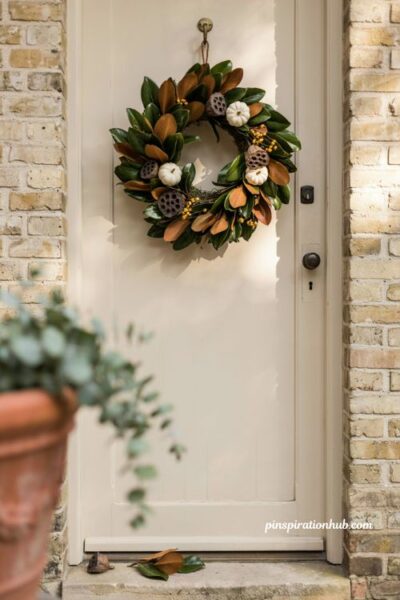
Glossy magnolia leaves give a wreath instant polish, especially when you let the leaves show both their deep green front and their soft brown backside for contrast. Layer in a few crisp white pumpkins and some warm lotus pods for a design that reads elegant rather than costume-y. The trick is building the base first with twigs or a moss form, then adding your magnolia in overlapping layers so no gaps show through. Finish with small clusters of yellow billy buttons or dried berries tucked near the pumpkins. This style works beautifully on a brick or neutral-toned house, and it holds up for months since the materials are naturally sturdy once dried.
2. Metallic “Falloween” Wreath
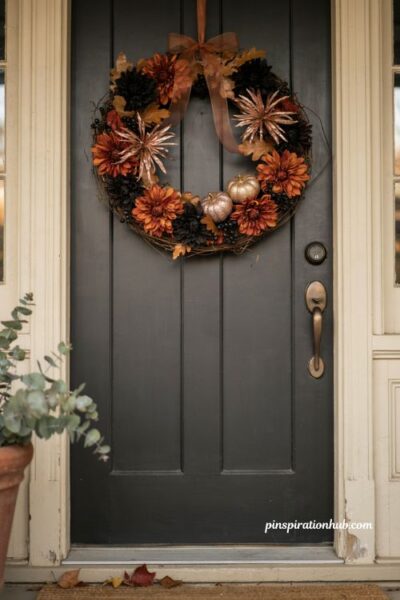
If you want your door to carry you straight from fall into Halloween, a metallic wreath does double duty. Mix burnt orange and black florals with a few glittery mini pumpkins for a look that feels a little gothic without going full costume shop. Start with a dark base wreath, then add your metallic stems in clusters rather than spreading them evenly, so the eye has a focal point. A copper or gold ribbon at the top ties the whole thing together. It’s a great pick if your porch decor usually straddles both holidays and you don’t want to swap wreaths twice in six weeks.
3. Boho Dusty Pink Pumpkin Wreath
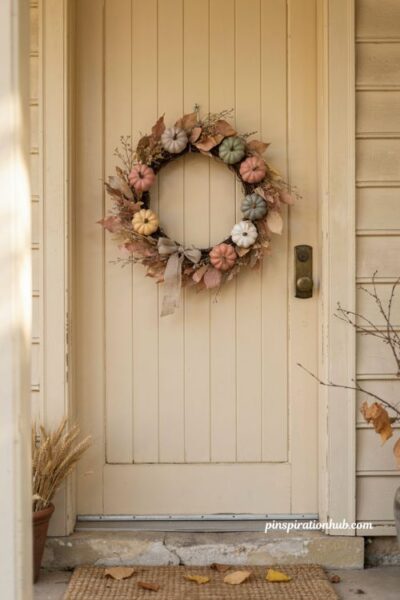
Pink isn’t a color most people reach for in autumn, but a dusty rose wreath against warm fall foliage looks surprisingly natural. Combine faded pink and beige silk leaves with a scattering of small painted pumpkins for a neutral-but-different take on the season. Dollar store pumpkins spray-painted in muted tones work just as well as pricier versions, which keeps this whole project affordable. Hot glue your elements in loose, uneven clusters rather than a tight pattern for that lived-in boho feel. It’s an especially good choice for yellow, sage, or cream front doors where a traditional orange wreath might clash.
4. Feather and Walnut Wreath

For something moodier, start with a plain beaded hoop and build outward with faux pheasant or ostrich feathers stained in walnut tones. The result feels more like a piece of wall art than a typical seasonal wreath, which makes it a fun option if your style skews modern or eclectic. A suede or leather strap at the top adds another textural layer and keeps the color palette grounded in browns and blacks. Because feathers and hoops aren’t tied to any one holiday, this wreath can realistically stay up from October straight through the winter months without ever feeling out of place.
5. Unexpected Blue and Orange Color Palette
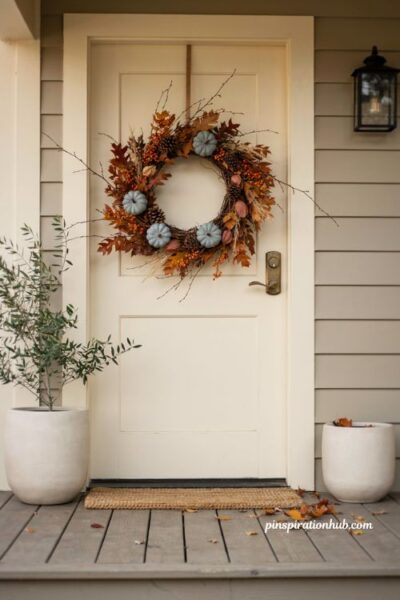
Most fall wreaths lean entirely into warm tones, but pairing orange with a dusty French blue creates a combination that stands out on a street full of matching rust-colored porches. Start with a grapevine or boxwood base, then work in branches, berry sprays, and pinecones in your warm shades before adding the blue pumpkins as accents rather than the main event. This kind of color-wheel thinking — using complementary hues instead of the expected palette — makes the whole design feel intentional. It photographs beautifully too, since the contrast reads clearly even from the street or in a quick phone photo.
6. Color-Blocked Sorghum Wreath
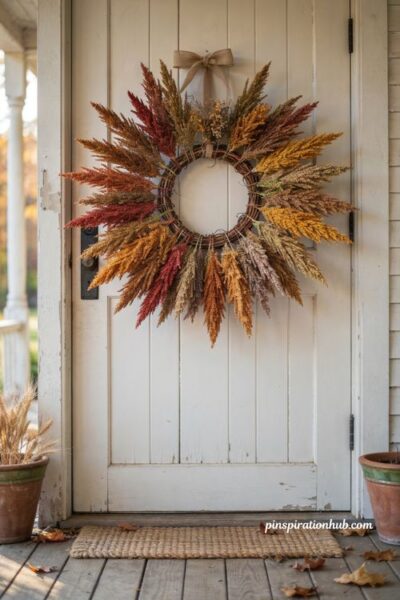
Sorghum stems have a natural sunburst shape that lends itself to a bold, color-blocked design once you group your red, rust, apricot, and marigold stems into distinct sections rather than mixing them randomly. Attach them to a simple grapevine base with floral wire, working outward from the center so the stems fan out like rays. Silk versions exist if you’d rather skip drying your own grains, and they hold their color far longer outdoors. This one has a traditional harvest feel that suits a farmhouse or classic colonial front door especially well, and it pairs nicely with a plain jute or burlap ribbon.
7. Pastel Ombre Pumpkin Wreath
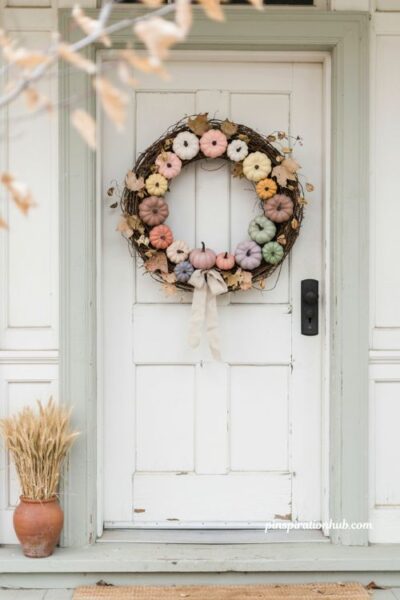
Those mini plastic pumpkins sitting in your storage bin from past Halloweens can get a second life with a coat of spray paint in confection colors like blush, lavender, and soft peach. Cover your wreath base in faded maple or beige leaves first, then hot glue the pumpkins in a gradient pattern from lightest to darkest. Arranging them in an ombre flow rather than scattering them randomly is what makes this design read as polished instead of thrown together. It’s a fun weekend project if you already have a collection of mismatched pumpkins that need a refresh before they go back on display.
8. Ruffled Burlap Farmhouse Wreath
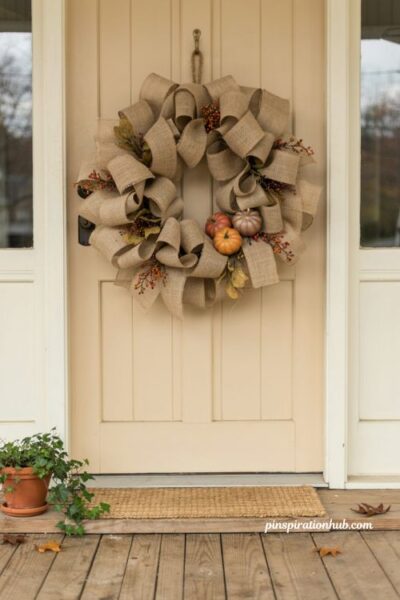
Burlap ribbon wrapped around a wire wreath form creates volume fast, and it’s one of the more budget-friendly wreaths you can build from scratch. Layer in orange pom branches, small berry sprays, and a trio of mini pumpkins once your ruffled burlap base is complete. The voluminous shape reads as expensive even though the materials are simple, which makes this a favorite for anyone decorating on a budget. Many versions of this wreath can later be adapted for winter by swapping in red accents, so you get more mileage out of one base design across two seasons.
9. Crepe Paper Magnolia, Pinecone, and Acorn Wreath
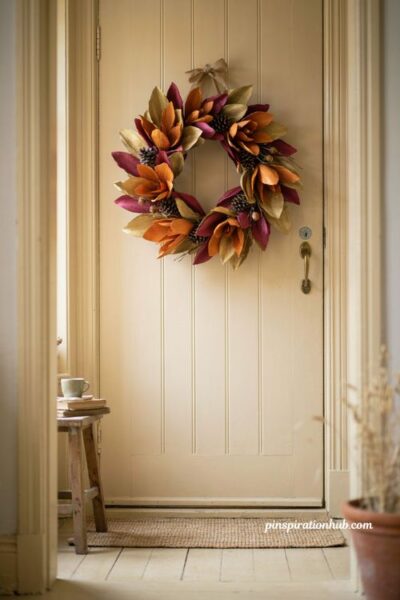
Card stock and crepe paper in gold, orange, and magenta come together to form dimensional magnolia leaves that give this wreath a handmade, textured look you won’t find in a store. Attach your paper leaves to a wreath ring with spray adhesive, then tuck in foraged or faux pinecones and acorns to fill the gaps. This is a genuinely fun craft-night project, especially if you invite a friend over to build one alongside you. Because the materials are lightweight, hang this wreath somewhere shielded from heavy rain so the paper elements keep their shape through the season.
10. Sunflower Wreath
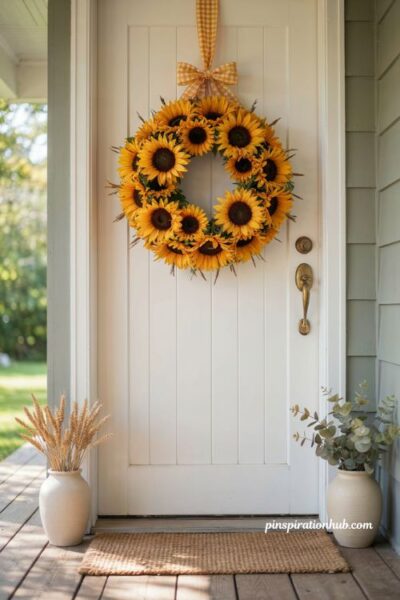
A sunburst-shaped base covered in sunflowers brings warmth to a porch no matter what the weather is doing outside. This design skips the usual pumpkins and leaves entirely, letting the flowers do all the work, which keeps the overall look clean and cheerful. Tie it off with a gingham ribbon in yellow or rust to reinforce the harvest feel without adding more visual clutter. Sunflowers read as approachable and bright, so this is a strong option if your front door already gets a lot of natural light or if your house has a farmhouse-adjacent color scheme.
11. Apple Orchard Wreath
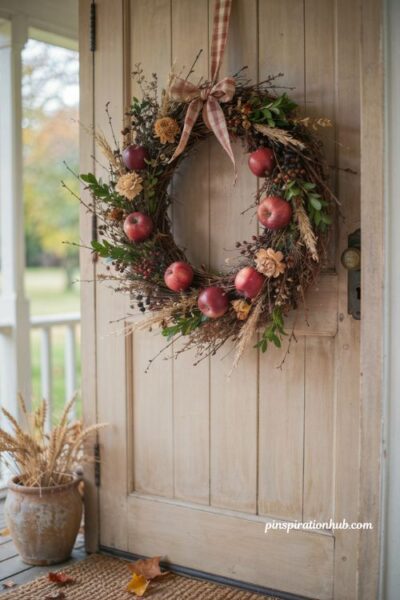
Skip pumpkins altogether and build a wreath around ruby red apples nestled into a textured base of boxwood, dried grasses, and berry sprays. The mix of woody twigs and sun-dried blooms gives the design real depth before you even add the fruit, so don’t rush that layering step. Faux apples hold their color far longer than real ones if you want a wreath that lasts the whole season rather than just a weekend gathering. This style pairs naturally with an orchard-themed fall party or harvest dinner, and it looks equally at home on a rustic wood door or a painted front entry.
12. Birch Bark Wreath
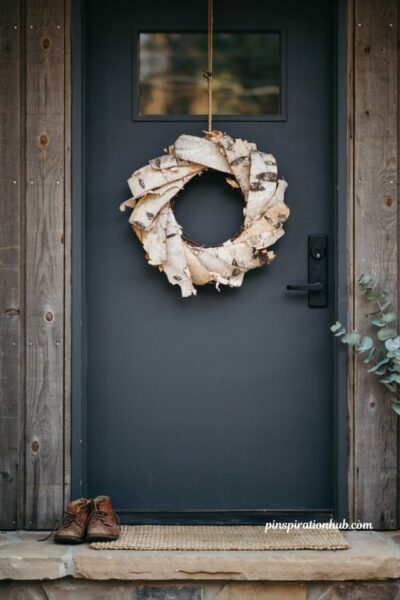
For something with a woodsy, cabin-like feel, sheets of birch bark can be shaped and secured around a simple wreath form for a design that transitions easily from fall into winter. If birch trees aren’t common where you live, bark sheets are widely available online, so this isn’t limited to any one region. The natural texture and pale color make it a striking contrast against a dark front door, and it needs almost no additional embellishment to look finished. This is one of the lower-maintenance wreaths on this list since there’s no fruit or foliage that will fade or need replacing.
13. Gingham Pumpkin Wreath
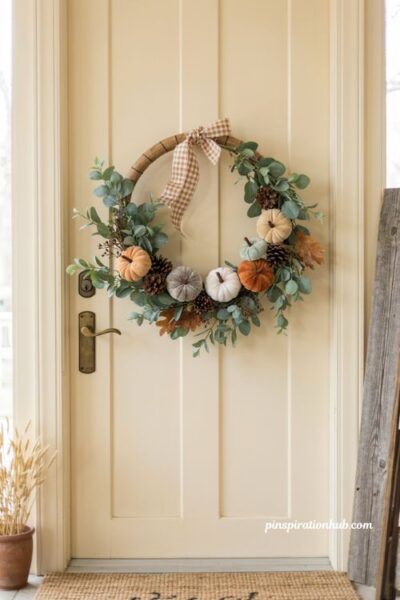
A wooden bead hoop base dressed with faux eucalyptus, pinecones, and a mix of foam and velvet pumpkins creates a farmhouse-fresh look that photographs especially well against a light-colored door. Wrap a wire-edged gingham ribbon around the top for the finishing touch that ties the whole design together. This wreath comes together with a fairly short materials list, which makes it approachable even if you’re newer to wreath-making. The plaid ribbon detail is what elevates this from a basic pumpkin wreath into something that feels a little more considered and homestead-inspired.
14. Berry and Botanical Wreath
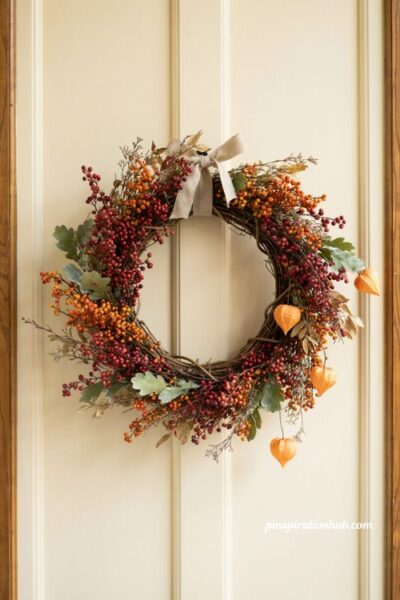
Dimensional and rich, a berry-forward wreath built on a grapevine or foam base uses layered burgundy, rust, and marigold berry stems to create texture without relying on pumpkins at all. Apply your darkest stems first, then layer lighter branches on top so the design has real depth rather than looking flat. A few sage oak leaves woven through the berries soften the overall look, and Chinese lantern blooms add an unexpected pop of orange at the edges. This wreath works well if you already have a lot of orange in your outdoor decor and want something that reads as more sophisticated than a typical pumpkin display.
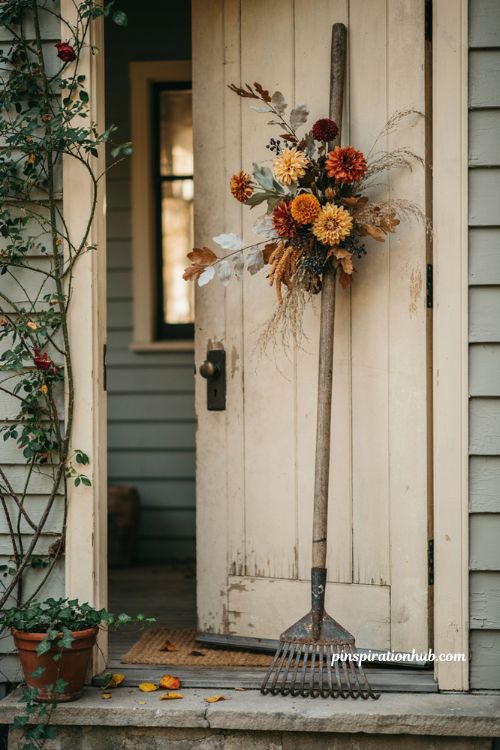
15. Rake Wreath
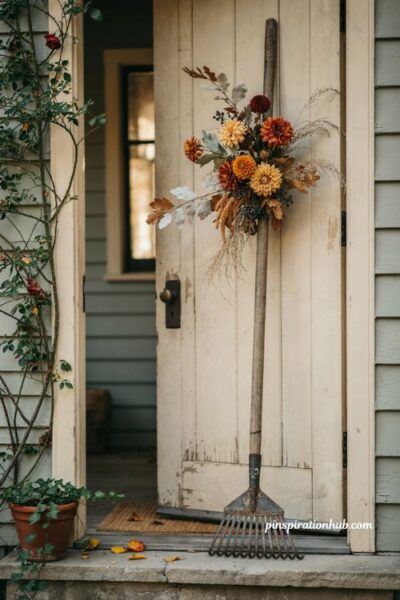
Skip the wreath form entirely and repurpose an old garden rake as your base instead, then wire on faux fall flowers and silk leaves for an arrangement that leans and hangs unlike anything else on your street. This is one of the more unexpected ideas out there, but it consistently comes up as a reader favorite because it’s so different from a standard round wreath. A thrifted or well-worn rake actually works better here than a brand-new one since the rust and wear add character. Prop it against your door frame or hang it flat depending on how much space you’re working with.
Final Thoughts
At the end of the day, the best fall wreath is the one that actually makes you want to walk up your own front steps. Pick one or two ideas from this list that caught your eye, sketch out a rough materials list, and give yourself an afternoon to put it together — most of these come together faster than you’d think. If you’re not ready to commit to a full DIY, even dressing up an old wreath with a few new stems and a fresh ribbon can make a real difference. Whatever direction you go, your door is about to look a lot more like fall.
Frequently Asked Questions
Q: What’s the best base to use for a DIY fall wreath?
A grapevine, wire, or foam wreath form all work well, with grapevine being the most versatile since it already has texture built in before you add anything else.
Q: How do I keep a fall wreath from fading outdoors?
Choose faux or silk materials over fresh ones for anything staying up longer than a few weeks, and hang your wreath somewhere shielded from direct sun and heavy rain when possible.
Q: When should I put up my fall wreath?
Most people hang their fall wreath in early to mid-September, right around when the back-to-school routine settles in and before pumpkin displays typically appear on porches.
2 thoughts on “15 Stunning Fall Wreaths for Front Door That Feel Effortless”