
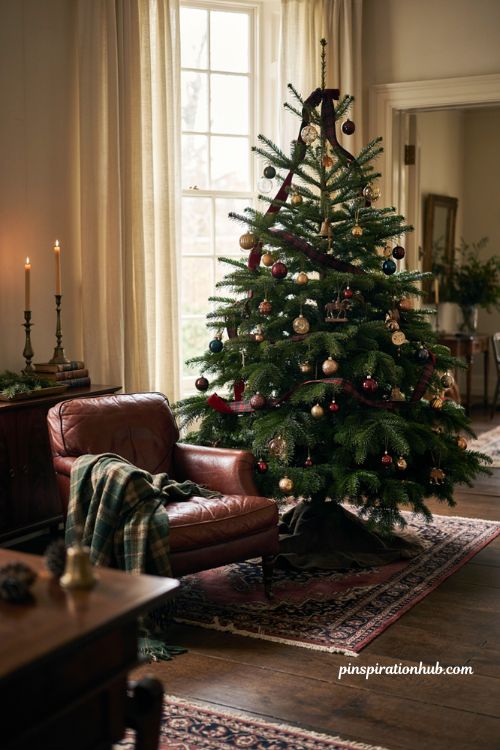
You don’t actually need a single piece of Ralph Lauren furniture to pull off a Ralph Lauren Christmas tree. What makes this look so recognizable has almost nothing to do with the brand name and everything to do with color, texture, and restraint — deep reds and navy blues, tartan ribbon, brass and gold metals, all layered with a kind of old-money calm instead of holiday clutter. It’s the opposite of a tree covered in every ornament you own; it’s more like a tree that was edited down to only the pieces that matter. The good news is that most of this comes together with things you can find at a craft store or already have tucked away in storage bins from past years. Here are fifteen ways to bring that classic, collected look to your own tree this season.
1. Warm White Lights Tucked Deep in the Branches
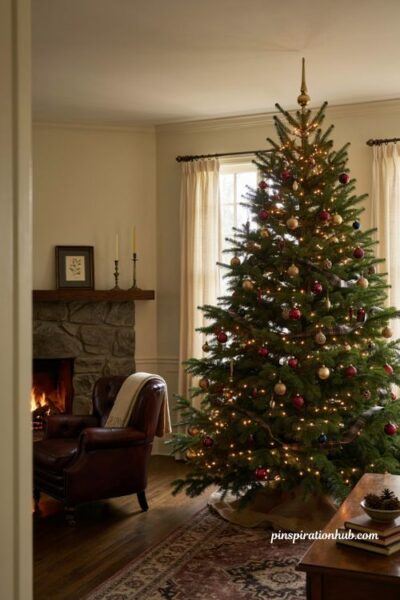
The foundation of this whole look starts before a single ornament goes on. Warm white lights, wound deep into the branches rather than just wrapped around the outside, give the tree that glowing, fireside quality this style is known for. Save a few strands for the tips of the branches so there’s some sparkle up close, but let most of the light live further inside the tree where it looks layered instead of flat. A pre-lit tree with a high bulb count makes this step effortless if you’d rather skip the wrapping entirely. Either way, this base layer is what makes every ornament placed afterward look richer.
2. Tartan Ribbon Woven Through the Branches
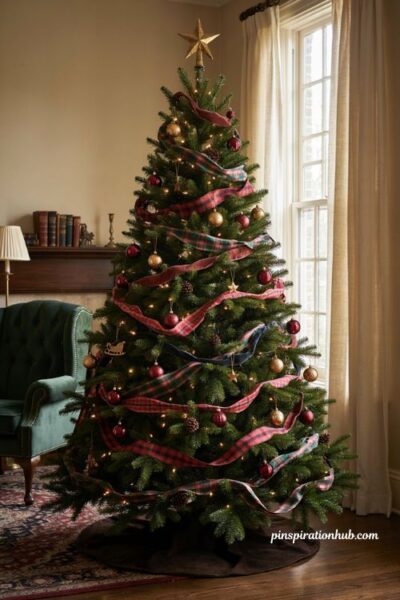
Ribbon does more heavy lifting here than almost any single ornament on the tree. Cut lengths of tartan ribbon into three or four foot pieces, then tuck and drape them loosely through the branches instead of pinning them flat — a slightly imperfect, billowy placement reads far more collected than a stiff, symmetrical one. Layering a thin velvet ribbon over a wider plaid adds a nice bit of depth if you have both on hand. Deep reds, forest greens, and navy tartans all work well together without needing to match exactly. It’s the single detail that most instantly signals this particular style to anyone walking by the tree.
3. Mixing Gold and Silver Metallics
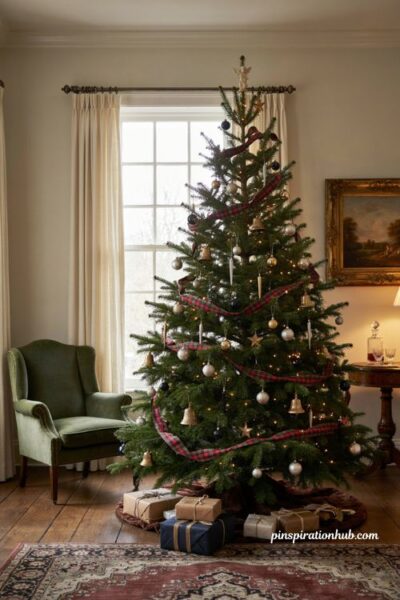
Rather than committing to one metal finish, scatter both gold and silver ornaments evenly throughout the tree so neither one clusters in a single spot. Think of the metallics the way you’d think about jewelry — a shimmer that supports the rest of the color story instead of stealing the whole scene. Small gold bells, silver glass balls, and a handful of metallic picks tucked between branches keep the eye moving around the tree naturally. Avoid grouping three or four gold pieces right next to each other, since that reads as a cluster rather than a sparkle. Spread thin, this detail adds polish without ever feeling heavy-handed.
4. Navy and Red Velvet Ornaments
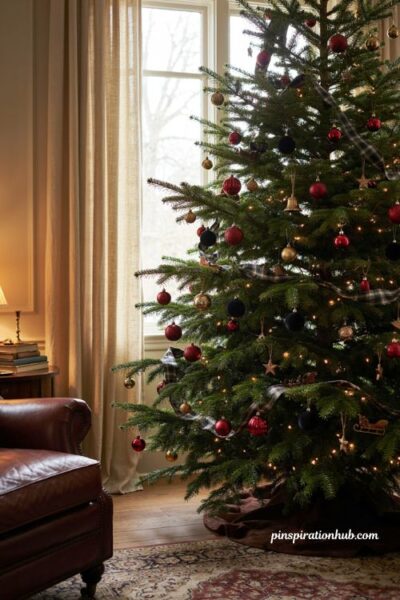
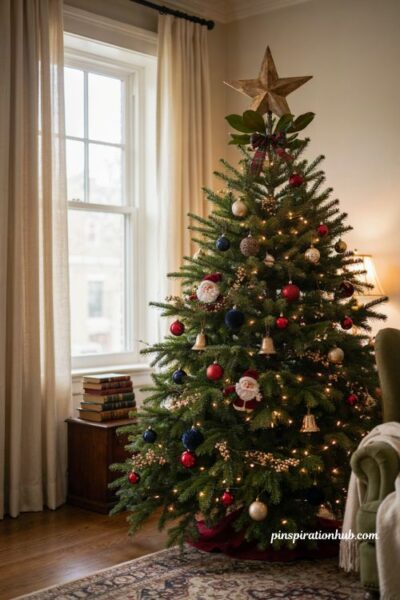
Velvet ornaments are really the heartbeat of this entire color palette. Place the navy velvet bulbs deeper inside the tree, closer to the trunk, where they create a moody, shadowed backdrop for everything else to sit against. Save the red velvet bulbs for the outer branches and tips, where they catch the light and add warmth right where the eye lands first. A soft matte velvet finish photographs and reads far richer than a shiny plastic ornament in this particular palette. Even a dozen of these mixed in among your existing ornaments can shift the whole tree toward that collected, lodge-like feeling.
5. Magnolia Stems for Traditional Texture
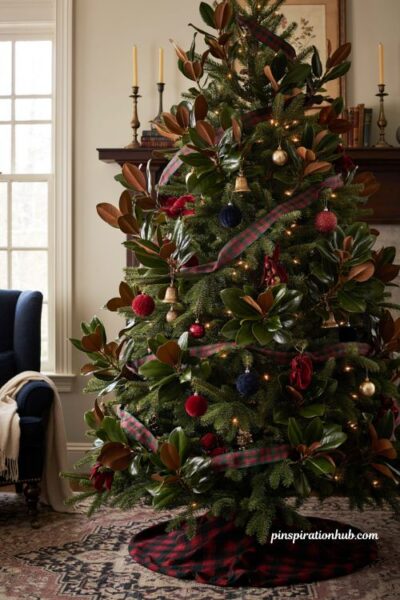
A handful of magnolia stems tucked into the top two-thirds of the tree brings in a rich, glossy texture that plastic greenery just can’t replicate. Angle the leaves so the darker green or warm brown underside faces outward, depending on which tone works better against your existing ornaments. Use these sparingly, more like an accent than a filler, since a few well-placed stems read as intentional while too many can start to look busy. Tuck them in at slightly different depths rather than lining them up in a single row for a more natural, unstudied look. It’s a small addition that adds a surprising amount of texture.
6. Gold Berry Picks for Movement
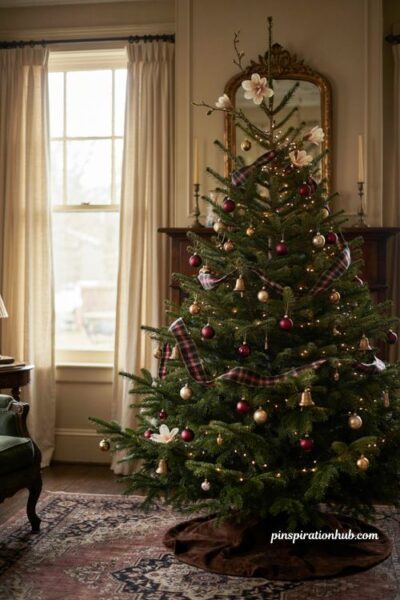
A few gold berry picks tucked into the branches give the tree a sense of movement it wouldn’t have with ornaments alone. Angle some of the stems upward and others slightly downward, the way real branches would naturally grow, rather than pointing every single one in the same direction. These work especially well tucked right where a length of ribbon dips low, since the pick fills that visual gap nicely. Concentrating a few extra picks near the top of the tree, closer to the topper, tends to look more polished than scattering them evenly top to bottom. It’s a subtle detail that photographs beautifully once the lights are on.
7. Vintage-Style Santa Ornaments
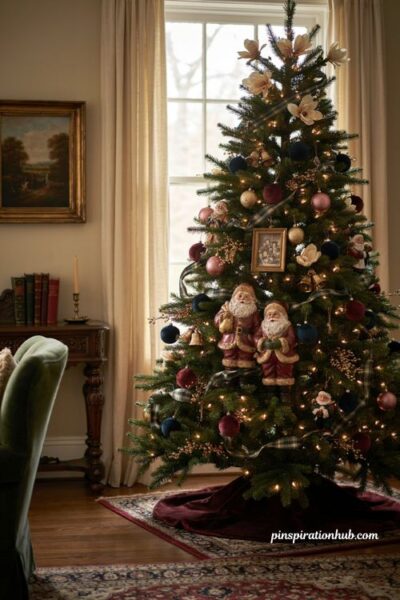
This look leans into nostalgia rather than avoiding it, and a small collection of vintage-style Santa ornaments brings that warmth right onto the tree. Look for pieces with an old-fashioned illustration style — a fuller beard, a muted red suit, maybe a touch of gold trim — rather than a modern cartoon version. Place one or two front and center at eye level so they feel like a deliberate focal point instead of getting lost among the other ornaments. Mixing in a framed photo ornament of a family member’s own Santa visit over the years adds a genuinely personal touch. It’s a fun little sub-theme that layers naturally into the rest of the tree.
8. A Wooden Star Tree Topper
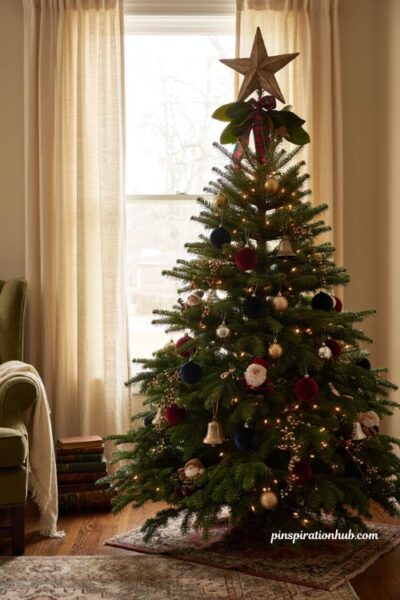
Skip the traditional bow or angel this year and finish the tree with a simple wooden star instead. The natural wood grain brings a slightly rugged, masculine warmth to the top of the tree that fits the overall lodge-like feeling of this style. A star with a rough-hewn or lightly distressed finish tends to look more intentional than a glossy painted one. Tuck a few magnolia leaves or a short length of tartan ribbon just beneath it to tie the topper into the rest of the tree, but keep the star itself as the clear focal point. It’s a quiet, confident way to finish the top of the tree.
9. Classic Plaid Christmas Stockings
Hanging plaid stockings from the mantel or stairway rail extends this look beyond just the tree itself. A mix of deep red-and-green plaid alongside a solid green or navy velvet stocking keeps the lineup from feeling too matchy. Hooks that screw directly under the mantel edge hold stockings securely and come off cleanly after the season without leaving marks behind. Adding one smaller plaid stocking for a pet gives the whole display a warmer, more personal feel. Hanging them at slightly staggered heights along the mantel, rather than in a perfectly straight row, adds a nice bit of visual interest.
10. A Tartan Tree Skirt
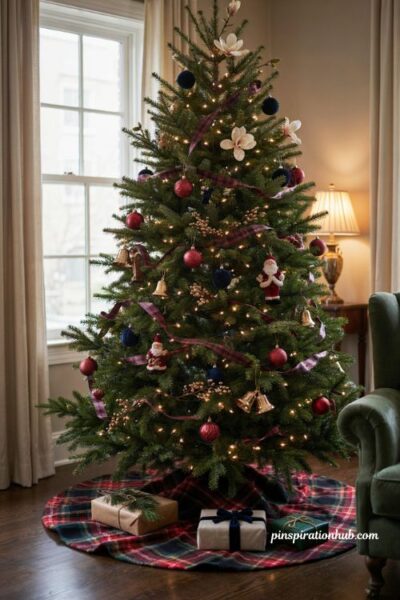
The base of the tree deserves just as much attention as the branches, and a tartan tree skirt pulls the whole look together from top to bottom. A reversible skirt gives you two color options depending on your mood that particular year, which is a nice bit of flexibility if your palette shifts from season to season. Choose a wool or wool-blend fabric over a thin polyester one, since it holds its shape and drapes more naturally around the base. Tuck the fabric loosely rather than pulling it perfectly flat, letting a few folds and creases show for a more relaxed, lived-in look. It’s the detail most people notice last but remember most.
11. Brass Bells and Sleigh Bell Ornaments
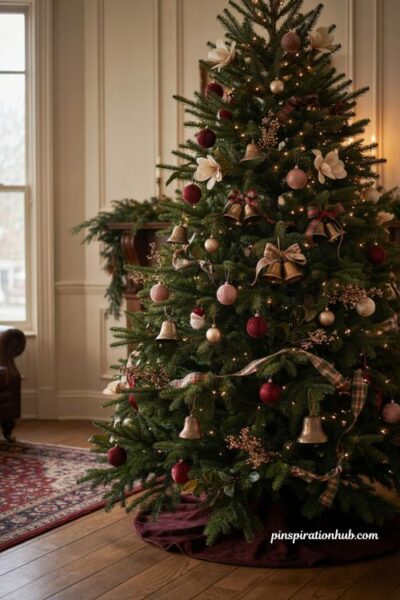
A scattering of brass bells throughout the tree adds both shine and a bit of old-world charm that plain glass ornaments don’t quite achieve on their own. Hang a few individually and cluster two or three together on a single ribbon in one or two spots for variety. The warm, slightly aged tone of brass sits beautifully against navy velvet and deep green branches without competing with the gold accents already on the tree. A single larger sleigh bell hung near eye level makes a nice focal point if you only add one statement piece. It’s a small detail that adds an unexpected bit of sound and shine.
12. Pinecone and Greenery Accents
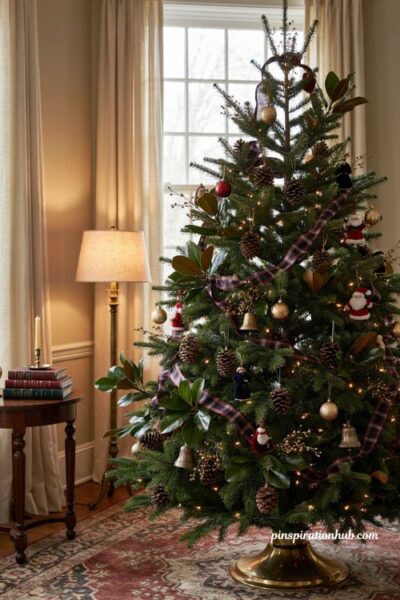
Real or realistic faux pinecones tucked throughout the tree bring in a natural, foraged quality that keeps the whole display from feeling too polished or store-bought. Mix them in among the magnolia stems and berry picks rather than clustering them all in one section, so the natural elements feel woven through rather than added as an afterthought. A light dusting of white paint or glitter on a few pinecones adds a subtle frosted look without going overboard. Larger pinecones work well lower on the tree where they have more visual weight to hold, while smaller ones fit nicely up higher. It’s an easy, low-cost way to add texture.
13. A Dried Orange Slice Garland
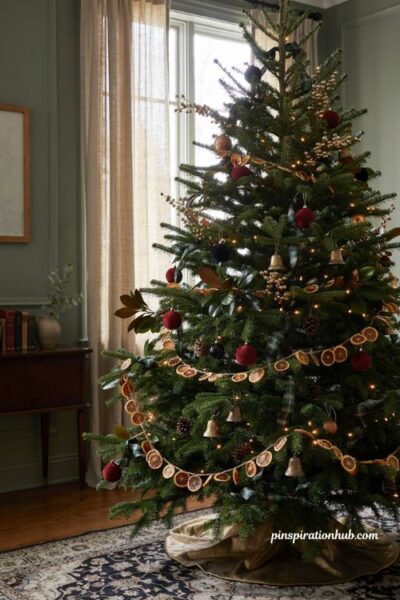
A garland made from dried orange slices strung together with twine brings a warm, rustic sweetness to this otherwise moody color palette. Slice oranges thin and dry them low and slow in the oven until they’re firm and slightly leathery before threading them onto the twine. Draping the garland loosely across the mantel or wound gently through the lower branches of the tree adds a nice pop of warm color against all that navy and green. The natural, slightly imperfect shape of each slice keeps the garland from looking too uniform or manufactured. It also fills the room with a genuinely lovely, subtle citrus scent.
14. Vintage Teddy Bear Ornaments
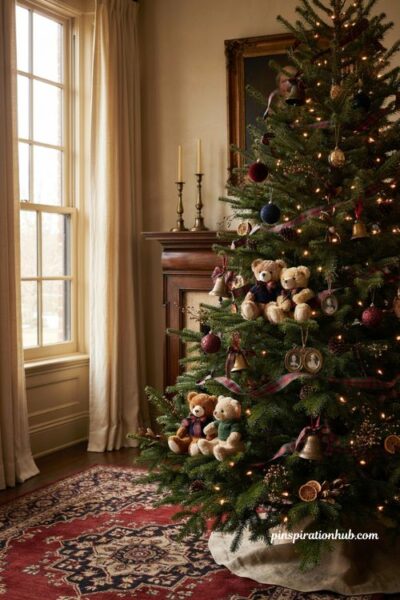
A few teddy bear ornaments, styled with a small plaid bow or a tiny knit sweater, add a charming, sentimental layer to the tree without clashing with the more traditional pieces around them. Look for a slightly worn, vintage-style bear over a glossy new one, since the softer finish fits the overall collected feeling of this look. Placing one or two near family photo ornaments ties the sentimental pieces together into their own little pocket on the tree. These work especially well lower on the tree where kids can actually see and enjoy them up close. It’s a playful detail that keeps the whole tree from feeling too formal.
15. A Matching Mantel Garland
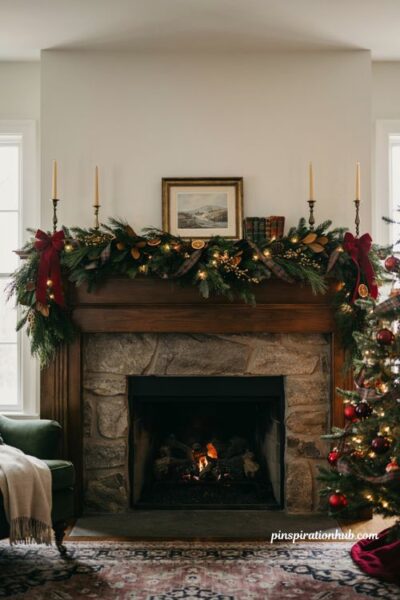
Extending this same color palette onto the mantel makes the whole room feel intentional rather than just the tree standing alone. A full, lush garland laid directly across the mantel front, tucked with a few stems of magnolia or berry picks and finished with red velvet bows at each end, mirrors the tree beautifully. Keeping the top of the mantel simple — a single framed print or a small stack of books — lets the garland stay the star of that space. Matching the ribbon colors between the tree and the mantel is what really ties the whole room together visually. It’s a small step that makes a surprisingly big difference in how finished the space feels.
Final Thoughts
There’s no single rulebook for getting this look exactly right, which is honestly what makes it so approachable to recreate at home. Maybe you already own half of what’s on this list tucked away from past years, or maybe you start with just one or two pieces and build from there next season. What would your tree look like if you leaned into just the colors and textures you’re naturally drawn to, rather than trying to copy someone else’s version exactly? That question is really the whole point of this style — it rewards whatever feels most like your own home, dressed up for the season.
Frequently Asked Questions
Q: What colors define Ralph Lauren Christmas tree decor?
Deep red, navy blue, forest green, gold, and brass are the core palette, often layered with tartan plaid for pattern.
Q: Do I need designer or branded items to get this look?
No — the aesthetic comes from color, texture, and layering rather than any specific brand, so craft-store ribbon and thrifted ornaments work just as well.
Q: What’s the easiest way to start this style on a budget?
Add tartan ribbon and a few velvet ornaments to your existing tree first, since those two elements do most of the visual work on their own.