
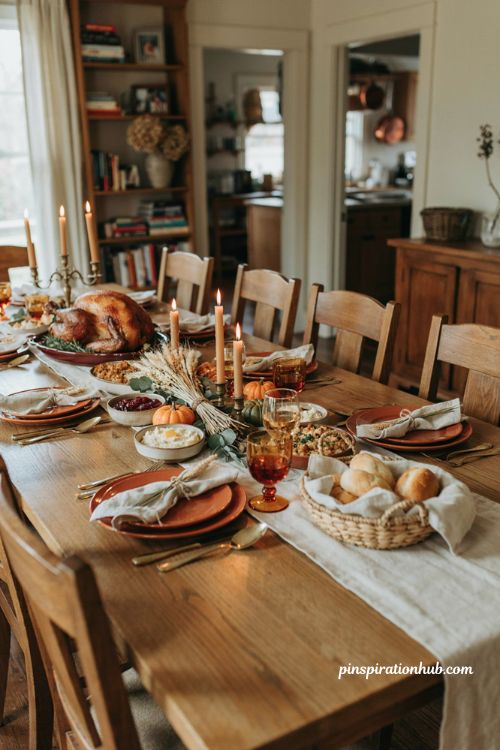
The table is where a Thanksgiving gathering actually happens. Everyone can be scattered around the kitchen and living room before dinner, but once it’s time to eat, that one table becomes the whole event. It’s worth treating it that way. You don’t need a big budget or a dining room out of a magazine to make it feel special, just a handful of intentional choices. These fifteen thanksgiving dinner table setting ideas cover everything from five-minute fixes to slightly more involved projects, so there’s something here no matter how much time you have before guests arrive.
1. Build Around Warm Earthy Colors
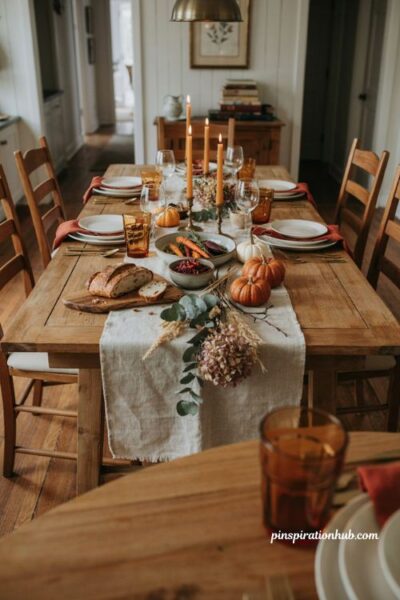
Start with a base of rust, terracotta, mustard, brown, cream, and muted green rather than trying to incorporate every fall color at once. Neutral plates and linens give you a clean canvas, then you bring the warmth in through napkins, candles, or a few small accents. This approach feels seasonal without tipping into costume-y territory. Wooden serving boards and a woven runner add texture on top of the color palette, which keeps the whole table feeling relaxed rather than stiff or overly styled.
2. Place a Mini Pumpkin at Every Seat
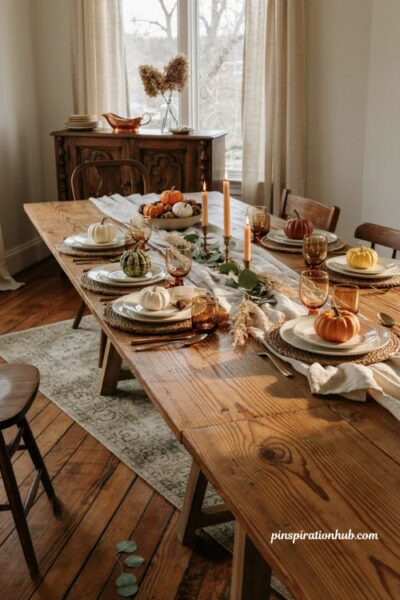
A small pumpkin or gourd beside each plate is one of the easiest place-setting details you can pull off in minutes. Mix white, orange, and heirloom varieties instead of using identical pumpkins at every seat, since the slight variation makes the table feel more natural and less assembly-line. Set the pumpkin directly on top of a folded napkin so it doesn’t roll around during the meal. This is a great last-minute addition if you’ve already set the table and it’s still missing something.
3. Go Full Rustic Farmhouse
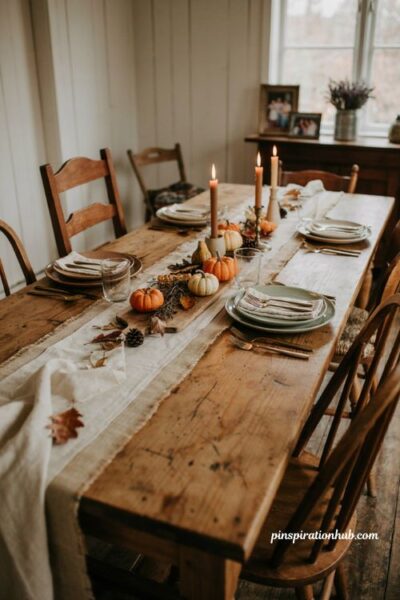
Lean hard into natural textures with a wooden table, linen napkins, ceramic plates, and simple glassware as your foundation. Add a cotton or burlap runner down the center, then layer in pumpkins, pinecones, and dried branches without overcrowding the surface. A few candles at varying heights finish the look without adding clutter. This style works especially well for a big, casual family gathering where the food gets passed around rather than plated individually.
4. Try White Dishes with Fresh Greenery
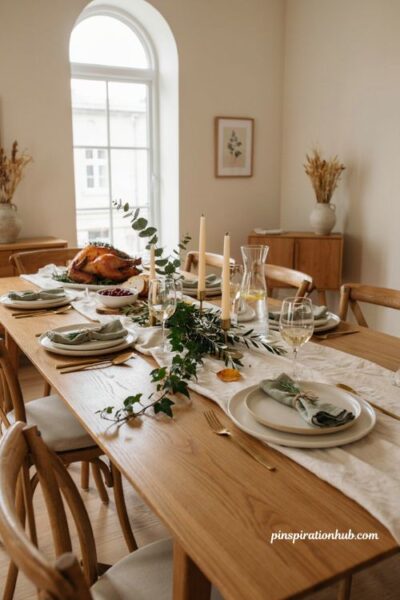
Skip the traditional orange-heavy palette entirely and build your table around white dishes, cream napkins, and clear glassware instead. Run a line of eucalyptus, olive branches, or rosemary down the center rather than a traditional floral centerpiece. A few small white pumpkins tucked into the greenery tie the look together without introducing any new colors. This combination reads as elegant and modern while still feeling entirely appropriate for the holiday.
5. Tuck Fresh Herbs Into Each Napkin
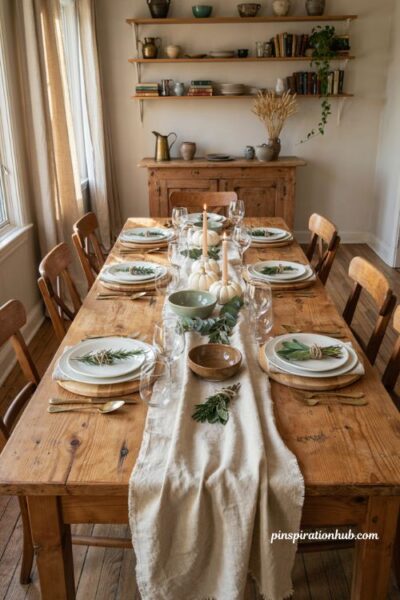
Fold each linen napkin and slide a small sprig of rosemary, sage, or thyme underneath a piece of twine at each place setting. The herb adds a small pop of green and a subtle scent that guests will actually notice as they sit down. This detail costs almost nothing if you already have herbs growing or can grab a small bunch at the grocery store. It pairs especially well with neutral, simple dinnerware where the herb becomes the main visual detail at each seat.
6. Decorate With Apples and Pears
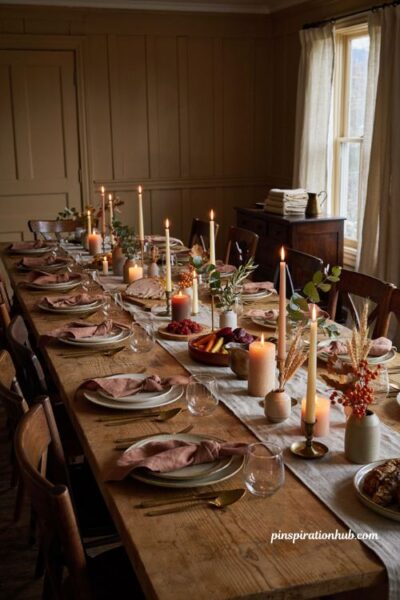
Bring fruit into your centerpiece instead of relying entirely on pumpkins and gourds. Arrange apples and pears in a shallow bowl, scatter a few between candles, or set one piece at each place setting. Choose fruit in warm reds, greens, and yellows that complement whatever linens you’re using. It gives the table a genuine harvest feeling, and unlike most centerpiece materials, it’s something you can actually eat once dinner wraps up.
7. Light the Table With Layered Candles
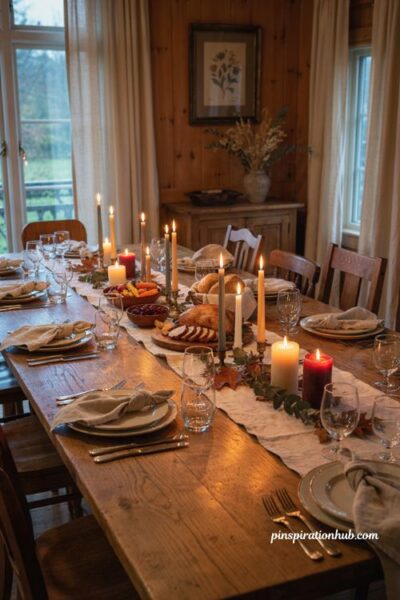
Group several candles of different heights down the center of the table, keeping them low enough that everyone can still see across to each other. Cream, ivory, and soft brown candles blend easily into most autumn color schemes without clashing. Leave enough open space around the candles for serving dishes to land, since a Thanksgiving table needs to function, not just look pretty. Once the sun sets, this simple layer of candlelight does more for the mood than almost anything else on the table.
8. Add a Dried Floral Arrangement
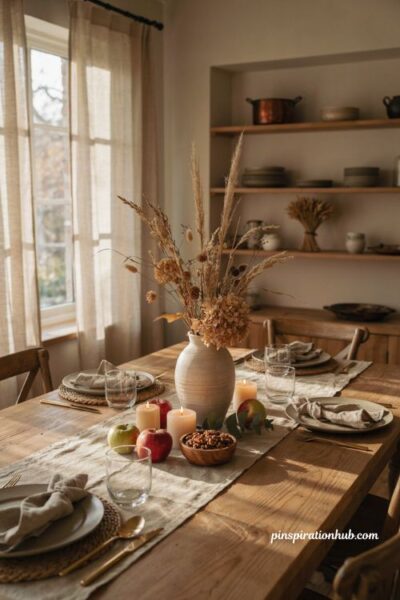
A vase of dried grasses, wheat stems, or hydrangeas gives you a centerpiece that looks good the day of and holds up for weeks afterward. Keep the arrangement loose and slightly asymmetrical rather than perfectly trimmed, since that natural look reads as more intentional than a stiff, symmetrical bouquet. Surround the base of the vase with a few small candles or pieces of fruit to fill in the space around it. It’s a practical choice if you’re setting the table more than a day in advance.
9. Write Out Personalized Place Cards
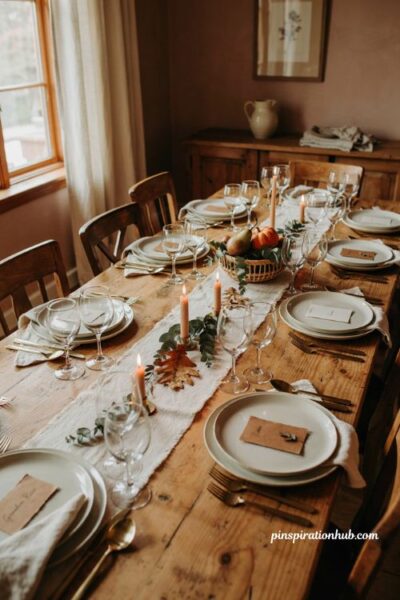
A handwritten place card at each setting makes guests feel considered before they even sit down. Kraft paper, small cardstock cards, or even a dried leaf with a name written directly on it all work well. Tuck the card into the folded napkin or set it just above the plate where it’s easy to spot. This detail costs next to nothing and takes maybe ten extra minutes, but it’s often the thing guests remember most about the table.
10. Layer Your Plates for a Fuller Look
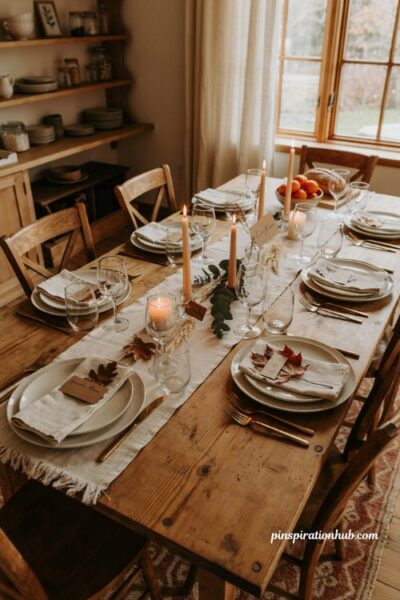
Start each place setting with a charger or woven placemat, add the dinner plate, then top it with a smaller salad plate before finishing with a folded napkin. This layering makes even simple, neutral dinnerware look more finished and considered. Mixing subtle textures between the layers, like a woven charger under a smooth ceramic plate, adds interest without adding more color. This technique works especially well when your centerpiece is intentionally minimal, since the plates themselves carry more of the visual weight.
11. Bring In Natural Wood Accents
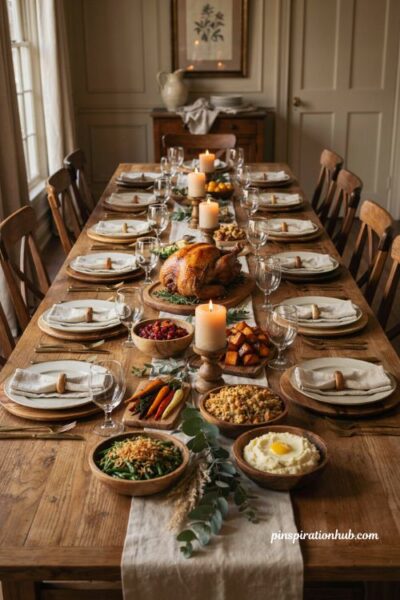
Wooden chargers, serving boards, napkin rings, and candle holders add an earthy, tactile warmth that plastic or metal accents just don’t replicate. Pair the wood with linen napkins and a bit of greenery so the look feels balanced rather than overly rustic. This combination works particularly well for a family-style meal where dishes get passed hand to hand, since wood tends to feel more casual and welcoming than anything too polished. It’s an easy category to build slowly over a few years without much investment.
12. Embrace Classic Red and Orange
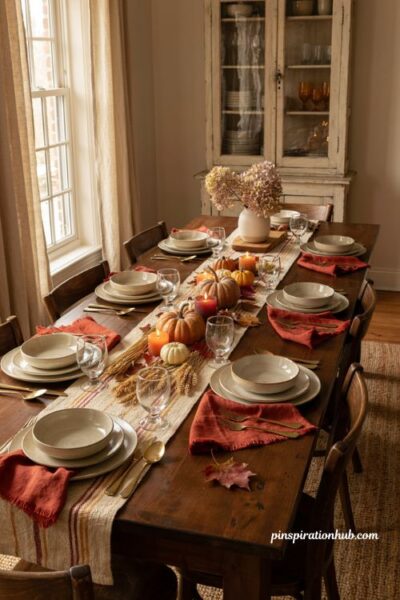
If traditional Thanksgiving colors are what feel right to you, lean fully into rich red, burnt orange, golden yellow, and brown rather than trying to modernize the palette. A patterned runner or colored napkins set the foundation, then pumpkins, fall leaves, and warm candles fill in the rest. Keep the dinnerware itself relatively plain so the color story doesn’t start to feel overwhelming. This traditional approach is instantly recognizable and honestly still one of the coziest options on this whole list.
13. Set Out Individual Mini Bouquets
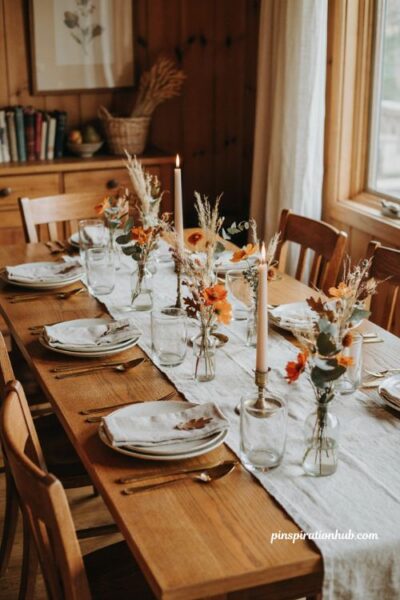
Instead of one large centerpiece, give each place setting its own tiny arrangement in a small glass jar or bud vase. Fill each one with dried flowers, fall leaves, or a bit of greenery so every seat has its own small moment of decor. This setup keeps sightlines completely open across the table, which matters more than people expect once everyone sits down to eat. As a bonus, guests can take their little bouquet home with them at the end of the night.
14. Mix Vintage Pieces With Modern Dinnerware
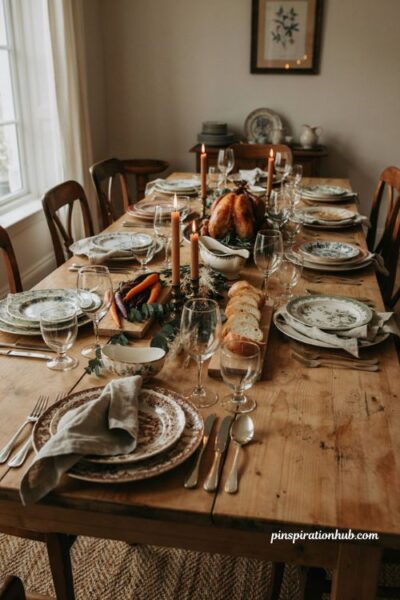
A table doesn’t need to match perfectly to look pulled together. Combine vintage plates, modern glassware, and a few old serving pieces for a table that feels collected rather than bought all at once for the occasion. Keep one element consistent, like the napkin color or the overall palette, so the mismatched pieces still read as connected rather than random. This is also a great way to finally put family heirlooms or thrifted finds to actual use instead of storing them away.
15. Anchor Everything With a Harvest Runner
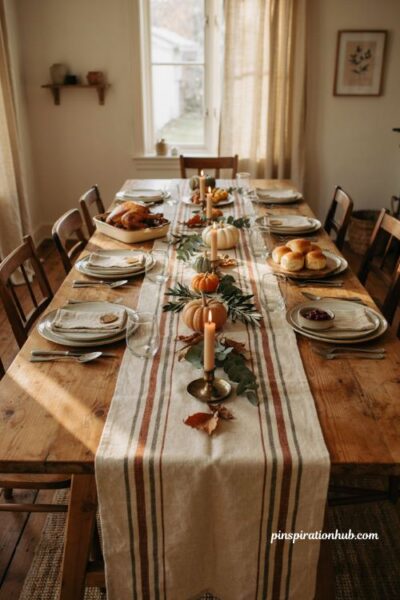
Choose a simple fabric runner in cream, rust, or olive, then build the rest of the table around that one piece. Add greenery, a few pumpkins, and some candles along its length, keeping the plates and napkins neutral so the runner stays the visual anchor. This approach is genuinely one of the fastest ways to pull a full table together, since one good runner does most of the heavy lifting. It also works well for a long table where a large centerpiece would otherwise feel out of place.
Final Thoughts
At its core, a Thanksgiving table is really just a stage for the people sitting around it. All these little details, the candles, the herbs, the mismatched vintage plates, matter mostly because they help everyone slow down and actually notice the moment they’re in. You don’t need all fifteen of these ideas working together at once. Pick the two or three that feel most like your own home, and let the table do what it’s supposed to do: bring people close for a while.
Frequently Asked Questions
Q: What colors work best for a Thanksgiving table setting?
Warm earthy tones like rust, terracotta, mustard, and cream are classic choices, though white and green combinations offer a fresher, more modern alternative.
Q: How can I make a Thanksgiving table look nice without spending a lot?
Use items you likely already own, like fruit, herbs, or mismatched dinnerware, and add small personal touches like handwritten place cards instead of buying new decor.
Q: Should my Thanksgiving centerpiece be tall or low?
A low centerpiece is usually the better choice, since it keeps sightlines open so guests can see and talk to each other across the table.