
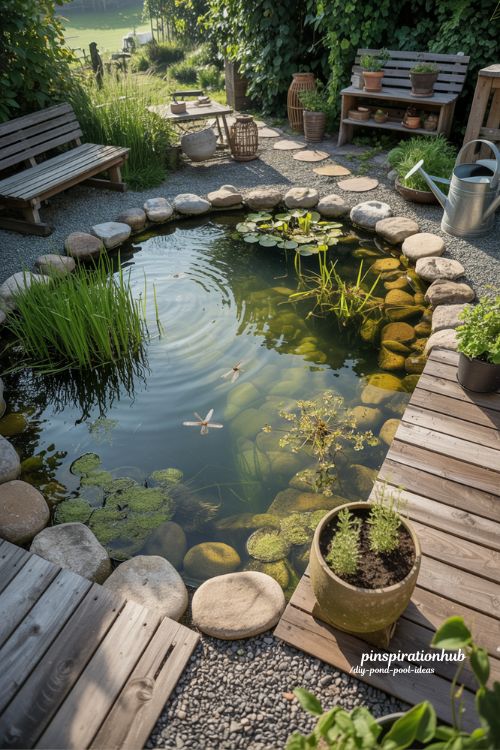
There’s something almost impossible to describe about swimming in water that’s actually alive. Not the flat, chemical blue of a chlorine pool — real water, with dragonflies skimming the surface and frogs hopping in beside you, and a clarity that comes entirely from plants and gravel and millions of beneficial microbes doing their quiet work. If you’ve been circling the idea of building your own natural swim pond, you’re not alone. DIY pond pool ideas have become one of the most-saved categories on Pinterest for good reason: they’re beautiful, they’re genuinely buildable, and once you understand the biology, they’re far simpler than most people think.
- A natural swimming pond filters water biologically using a regeneration zone — a gravel-filled submerged shelf planted with aquatic vegetation — with no chemicals required.
- The regeneration zone needs to cover at least half the total pond surface area for effective biological filtration.
- Rubber pond liners are the most reliable waterproofing choice for DIY builds; bentonite clay can work but demands much more careful application and compaction to hold water reliably.
Why a DIY Pond Pool Beats a Standard Swimming Pool
The honest case for a natural swim pond isn’t just environmental — though that matters too. It’s that a natural pond is a garden feature twelve months of the year, not just in summer. It looks beautiful when it’s frozen in January. It looks spectacular in May when the waterlilies push up. It attracts wildlife that no chlorine pool ever will, and its running costs are a fraction of a conventional pool’s annual chemical and energy spend. You’re building a living ecosystem, not just a hole in the ground filled with treated water.
The biological filtration method is elegant in its simplicity. Beneficial bacteria and microbes colonize the large surface area of the gravel in the regeneration zone and break down organic matter, keeping the water clean. A low-tech air-lift bubble-pump system — the method championed by David Pagan Butler of Organic Pools — draws water through the gravel using nothing more than rising air bubbles. The carbon footprint is minimal and the running costs are genuinely low. It’s not magic; it’s just biology doing what biology has always done.
| Feature | Natural Pond Pool | Chlorine Pool |
|---|---|---|
| Water treatment | Biological — plants and bacteria | Chemical — chlorine and pH adjusters |
| Running costs | Low — minimal energy use | High — ongoing chemicals and heating |
| Wildlife value | High — frogs, dragonflies, tadpoles | None |
| Year-round appeal | Yes — living garden feature always | No — offseason eyesore |
| DIY-friendliness | High — liner, gravel, and plants | Low — specialist pumps and equipment |
17 DIY Pond Pool Ideas Worth Saving
1. The Classic Natural Swimming Pond With a Regeneration Zone
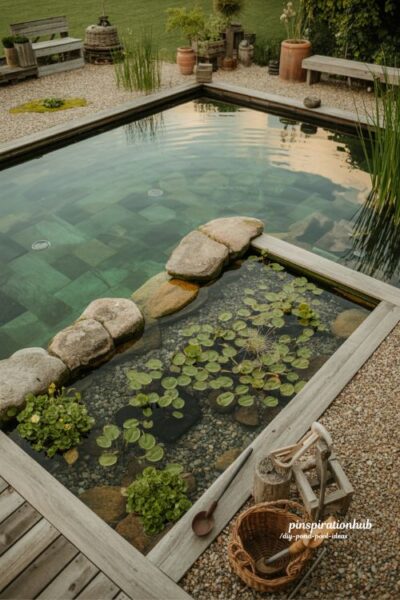
The classic design divides the pond into two zones: the deep central swimming area and the shallower surrounding regeneration zone. The regeneration zone is a gravel-filled submerged shelf where beneficial bacteria colonize and aquatic plants root directly into the gravel bed. Water circulates between zones continuously, getting cleaned as it passes through. This is the foundation of every successful natural swim pond — everything else is a variation on this core principle.
- Size the regeneration zone at exactly half the pond’s total surface area for proper filtration.
- Plant the regeneration shelf densely from the start — sparse planting takes years to establish effectively.
- Keep the central swimming zone free of plants to maintain clear, swimmable water.
2. Low-Tech Bubble-Pump Filtration — the Chemical-Free Method
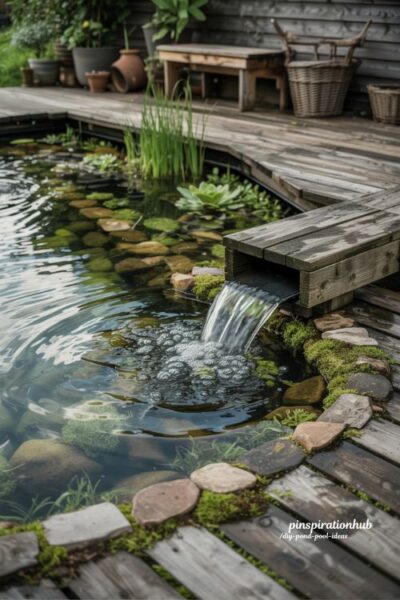
The air-lift bubble-pump system is the simplest, lowest-carbon filtration method available for a DIY pond pool. Air bubbles released at the base of a pipe rise and pull water with them through the gravel layer of the regeneration zone. The bacteria on the gravel’s surface do the actual cleaning work. No complex machinery, no specialist parts, no high energy consumption. It’s a method developed by Organic Pools founder David Pagan Butler that thousands of self-builders have applied successfully.
- Use a simple aquarium air pump to power the system in smaller ponds under 50,000 litres.
- Place the air-lift outlet at the far end of the regeneration zone from the swimming area.
- Run the pump continuously for best filtration — stopping it breaks the bacterial cycle.
3. The Gravel-Planted Submerged Shelf Design
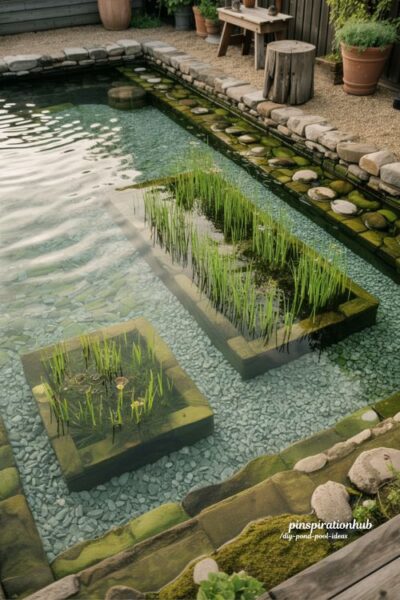
Planting directly into gravel rather than soil is one of the key things that separates a swim pond from a decorative garden pond. Soil releases nutrients that feed algae; gravel provides a stable medium for plant roots while keeping the water clear and nutrient-poor. The submerged shelf sits at a depth that suits aquatic marginal plants — typically 20 to 40cm below the waterline — and the combination of root systems and gravel surface area creates enormous biological filtering capacity.
- Use washed pea gravel or river gravel at a depth of 20–30cm across the full regeneration shelf.
- Avoid garden soil entirely in the planting zone — it will cloud the water and fuel algae blooms.
- Choose plants with vigorous root systems: iris, rushes, and reeds are among the most effective filters.
4. Big Family Pond Pool — 60 x 20ft With a Shallow Kid Zone
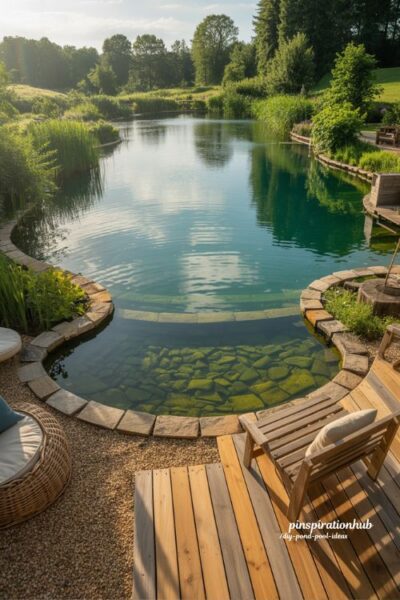
Scale changes everything in a natural swimming pond. A larger body of water holds its temperature more consistently, clears faster after disturbance, and supports a more robust and stable ecosystem. A 60 x 20ft build with a designated shallow area for younger children gives a family the full swimming experience while keeping the deep zone — ideally 2m or more — for adults. One community build achieved exactly this at 8ft deep in the main zone.
- Add a gentle slope from shallow to deep rather than a sudden step for safe, natural movement.
- Use a contrasting liner color or painted rope as a visual depth marker between zones.
- Plant the shallow children’s end with low-growing, soft aquatic plants that feel gentle underfoot.
5. Dense Planting Design That Establishes a Happy Ecosystem Fast
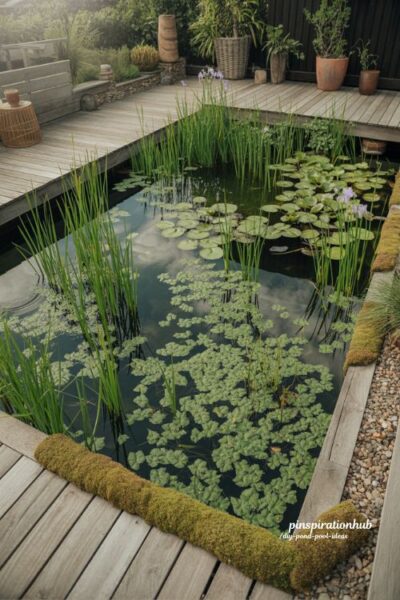
The difference between a swim pond that clears in its first season and one that struggles for years often comes down to planting density at the start. Using large specimen plants and packing the regeneration zone densely from day one gives the biological system a head start. A rich, diverse planting mix — grasses, rushes, flowering marginals, submerged oxygenators — creates a complex ecosystem that self-regulates far better than a sparse, tentative initial planting.
- Budget for specimen-sized plants rather than small plugs — they establish in one season rather than three.
- Use a mix of emergent, submerged, and floating plants for a layered, functioning ecosystem.
- Resist the urge to thin the planting in year one — density is a feature at this stage, not a problem.
6. Rubber Liner Pond Pool — the Reliable DIY Foundation
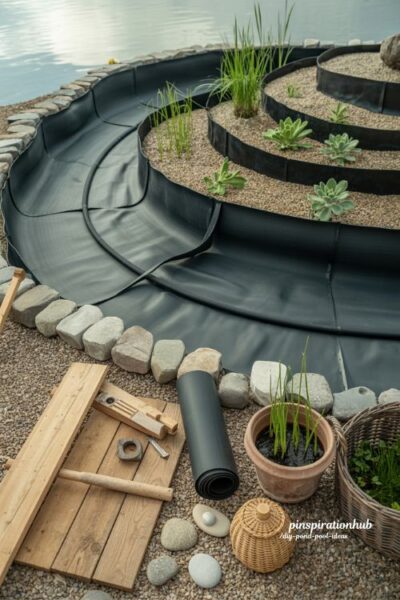
When it comes to waterproofing a DIY swim pond, a rubber pond liner — specifically EPDM (ethylene propylene diene monomer) — is the most consistently reliable choice for self-builders. It’s flexible, durable, UV-resistant, and compatible with aquatic life. One experienced community pond builder noted that after struggling with clay leakage, switching to a rubber liner solved the problem completely. For most first-time builders, it’s the choice that removes the biggest risk from the project.
- Calculate liner size as: pond length + twice the depth + 1m overlap on each side.
- Lay a protective underlay beneath the liner to guard against puncture from sharp stones below.
- Use liner adhesive and joining tape to connect sections cleanly for larger ponds over 10m long.
7. Waterlily and Water Hawthorn Rafting Cover for Summer Cooling
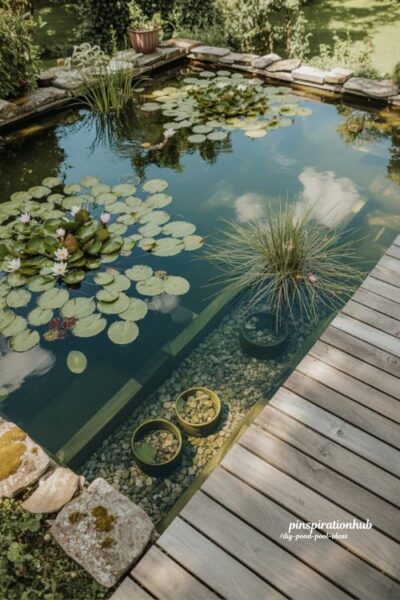
Rafting plants — those that float leaves on the surface rather than emerging upright — are among the most useful tools in the swim pond toolkit. Waterlilies and water hawthorn (Aponogeton distachyos) shade the water, reduce algae growth by blocking sunlight, and keep water temperature lower in peak summer heat. Aim to cover 30 to 50 percent of the total water surface with floating-leaf plants, leaving the swimming zone clear.
- Plant waterlilies in mesh baskets filled with aquatic compost, lowered onto the regeneration shelf.
- Water hawthorn blooms in spring and autumn when waterlilies rest — a useful seasonal complement.
- Avoid covering more than 60% of the surface or you’ll reduce oxygen levels dangerously for wildlife.
8. Wooden Sauna and Outdoor Shower Combo for Cold-Water Swimmers
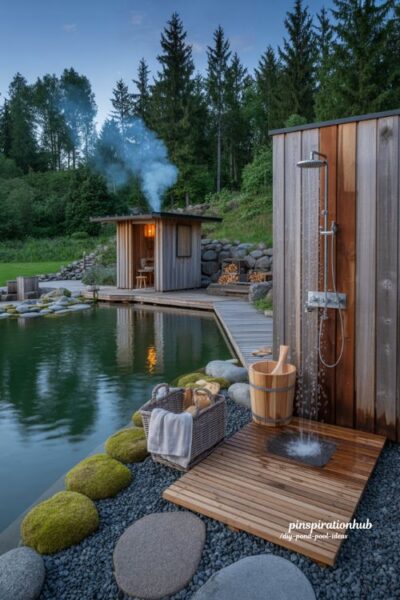
A natural swim pond isn’t just a summer feature. Pair it with a simple wooden sauna and an outdoor shower with hot water and you’ve created a year-round wellbeing space that rivals anything a gym offers. The contrast of cold-water swimming followed by a sauna session has genuine physiological benefits, and the combination adds a Scandinavian-inspired sense of ritual to your garden that nothing else quite matches. Many pond owners report this becoming their favorite part of the build.
- Site the sauna close enough to the pond for a quick run between the two without dressing.
- Install the outdoor shower on a simple timber deck with gravel drainage beneath for a clean, natural look.
- Use a wood-fired sauna rather than electric for a more atmospheric and lower-running-cost option.
9. The Deep-End Design — Why 2m Beats 1.8m Every Time
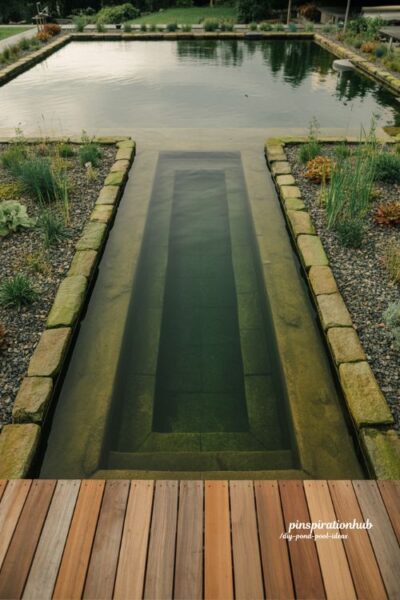
Depth matters more than most first-time pond builders expect. At 1.8m, the bottom sediment gets disturbed when swimmers are active in the pool — the result is cloudy water and a less pleasant swim experience. At 2m, there’s enough water volume above the bottom to cushion the turbulence and keep the water clear. Designer Will Tomson, who built his own swim pond at 1.8m deep, says clearly that if he built again, he’d go to 2m. That’s about as direct a recommendation as you’ll get.
- Excavate to 2m at the deepest point in the swimming zone, not including the regeneration shelf.
- Taper the sides rather than cutting vertically — it’s safer and reduces liner stress over time.
- A deeper pond also holds temperature better, which extends the swimming season into autumn.
10. Wildlife Pond Pool That Doubles as a Frog Breeding Habitat
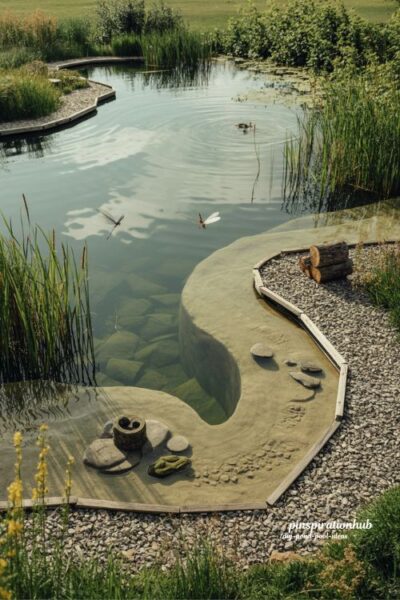
One of the quiet joys of owning a natural swim pond is watching it become a genuine wildlife haven without any extra effort. Frogs breed in natural swim ponds happily — toads use them annually, dragonflies lay eggs in the vegetation, and tadpoles graze the algae that naturally forms on submerged surfaces. The pond doesn’t just accommodate wildlife; it actively supports it. Gardening alongside these inhabitants becomes part of the experience rather than a chore to manage.
- Leave shallow, gently sloping sections at the pond edge so frog and toad spawn survives the first season.
- Never use any fish in a wildlife pond pool — they eat frog spawn and tadpoles without hesitation.
- Install a log pile near the water’s edge as a habitat feature for frogs resting outside the water.
11. The Algae-Balanced Ecosystem Pond
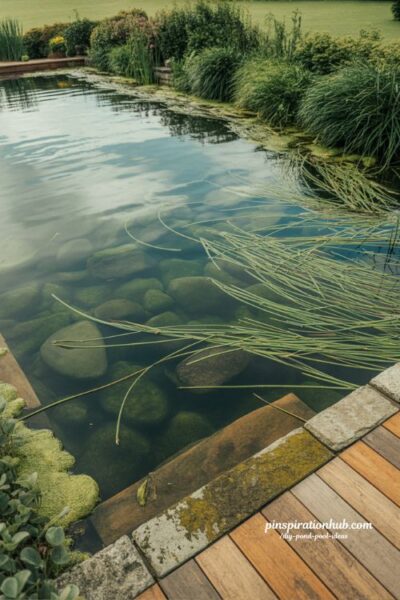
Here’s something that surprises most new pond builders: algae is part of the healthy ecosystem, not evidence that something has gone wrong. Tadpoles feed on algae. A completely algae-free pond is actually a less healthy one biologically. The goal isn’t elimination — it’s balance. Dense plant coverage in the regeneration zone, adequate depth, and good circulation keep algae at manageable levels naturally. Accepting some algae as normal makes the maintenance experience far less stressful.
- Expect more algae in the first two seasons — it reduces significantly as plants establish and shade the water.
- Never add algaecide to a natural swimming pond; it disrupts the biological balance badly.
- String algae can be hand-removed when heavy — check it carefully for larvae before composting it.
12. Specimen Plant Pond — Large Plants for Immediate Visual Impact
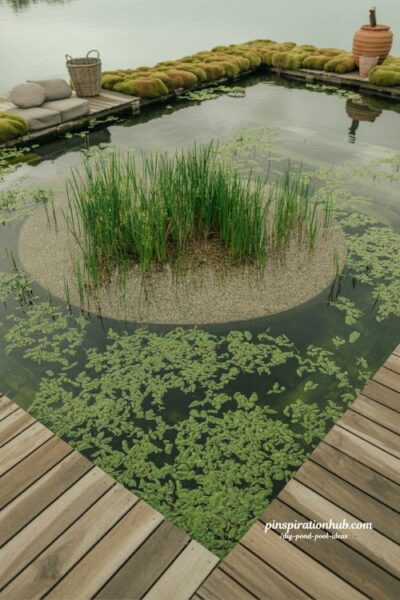
Most pond builders plant small and hope for the best over several seasons. The better approach — especially for the regeneration zone — is to source large, established specimen plants from the start. They look good immediately, establish root systems faster, and begin filtering effectively in the first season rather than the third. Yes, specimen aquatic plants cost more upfront. But they’re the single most impactful investment you can make in the biological health and visual quality of a new swim pond.
- Source plants from specialist aquatic nurseries rather than general garden centres for quality and variety.
- Focus spending on key oxygenating plants like hornwort and water milfoil — they do the most filtering work.
- Plant in bold drifts of single species rather than mixing everything together for a cleaner visual effect.
13. The Compact Backyard Swim Pond Under 10m²
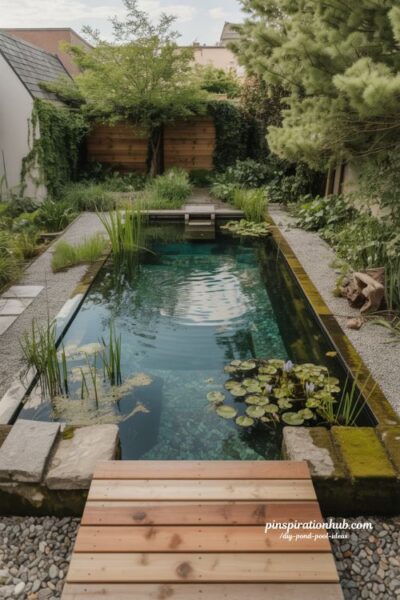
You don’t need a large property to build a natural swim pond. A compact pond in the 6m x 4m range gives enough water volume for a refreshing plunge, a functioning regeneration zone, and a genuine wildlife habitat in a relatively tight garden space. The key in smaller builds is keeping the swimming area as deep as possible — 1.5m minimum — while dedicating a proportional shelf to regeneration planting. Small swim ponds are genuinely achievable weekend projects.
- In small ponds, use a single pump-driven circulation system rather than passive flow between zones.
- Choose compact aquatic varieties — miniature waterlilies, dwarf rush, and small iris — to avoid overcrowding.
- Install a simple wooden deck at the entry point to make entering and exiting the pond clean and safe.
14. GCL Liner — Natural Clay Waterproofing Made Reliable
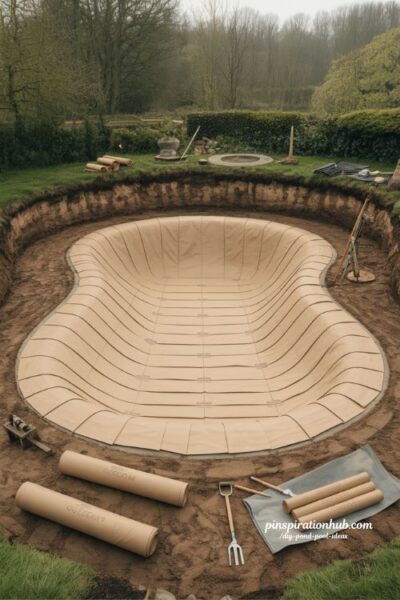
Geosynthetic Clay Liner (GCL) offers a middle path between full rubber liner and loose bentonite clay application. It delivers a consistent, evenly distributed clay layer — the natural waterproofing material — without the unpredictable compaction issues that come with applying loose bentonite. You lay GCL like a fabric sheet, landscape over the top, and the clay self-seals when it gets wet. Community pond builders consistently report GCL as more reliable than loose clay at roughly a quarter of the cost difference.
- Overlap GCL panels by at least 30cm at all joins to prevent leakage between sheets.
- Avoid heavy machinery over installed GCL before the pond fills — puncture risk is real.
- GCL works best on ponds with gentle, consistent slopes rather than sharp angular changes in depth.
15. Vegetation Removal and the Larvae-Check Maintenance Habit
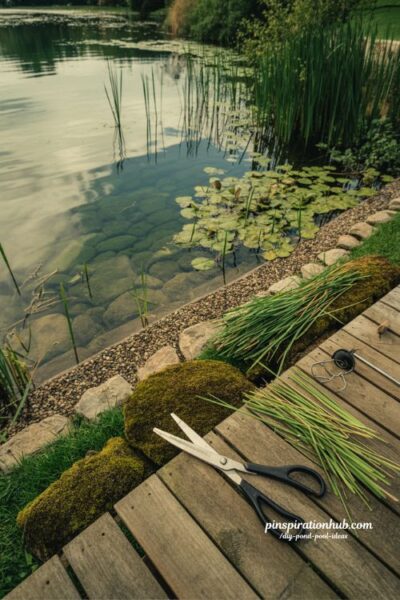
Managing plant growth in a natural swim pond is ongoing work, but it’s a different kind of work to conventional pool maintenance. When you pull vegetation from the pond — trimming overgrown rushes, removing excess blanket weed — the critical habit is picking through everything you’ve removed for larvae, eggs, and small creatures before composting. Leave the pile on the bank for a few hours first. Organisms find their way back to the water on their own. It’s careful, meditative work, and genuinely satisfying.
- Use stainless steel pond scissors rather than a knife for cleaner cuts that don’t shred stems.
- Schedule main vegetation management twice a year — late spring before breeding season and early autumn.
- Never remove more than a third of any plant species at once — shock die-back disrupts the whole system.
16. The Large-Scale Swim Pond — 25m x 10m Community-Size Build
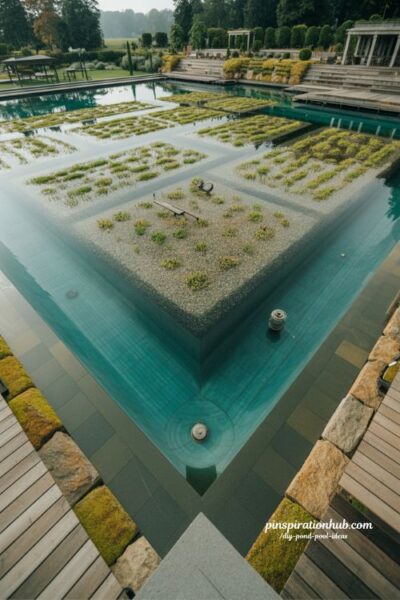
At the upper end of DIY pond building, a 25m x 10m swim pond with an average depth of 1.7m and a 63m² regeneration zone is an ambitious but achievable project. Community members in the DIY Natural Pool groups are actively building at this scale, sharing questions about bottom drain basket design, pump placement, and regional regulation differences. At this size, the pond becomes a genuinely transformative landscape feature — and the biological system is proportionally more robust and self-managing than smaller builds.
- Commission a professional structural assessment for ponds over 15m in any direction before excavating.
- Plan the bottom drain and debris collection system carefully at design stage — retrofitting is difficult.
- At this scale, a dedicated aeration system rather than a simple bubble pump gives better water quality.
17. The Slow-Build Transformation Pond That Gets Better Every Year
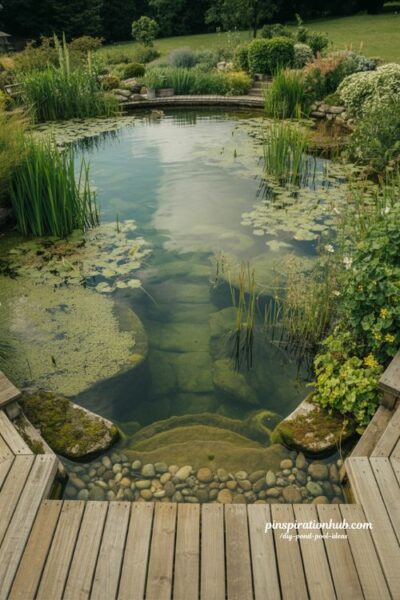
Some of the most beautiful natural swim ponds in existence started as rough excavations with a liner thrown in and a handful of plants. Two years later, they look like they’ve been there for decades. The biology does the work over time. Plants spread. Frogs arrive uninvited. The water clears as the ecosystem matures. If you start with the right structure — correct zone ratios, adequate depth, good liner — you can improve the planting and surrounding garden gradually without ever having to start again.
- Document the pond with photos every season — the transformation is faster and more dramatic than you expect.
- Add new plant species in years two and three once you understand which growing conditions your pond has.
- Resist any major structural changes after year one — the ecosystem needs stability to establish properly.
DIY Pond Pool Ideas at a Glance
Use this table to match the right approach to your garden, your budget, and your skill level.
| Idea | Skill Level | Budget | Best For | Wildlife Value |
|---|---|---|---|---|
| Classic Regen Zone Design | Intermediate | Mid | Most gardens | ★★★★★ |
| Bubble-Pump Filtration | Beginner | Low | Eco DIYers | ★★★★★ |
| Gravel Submerged Shelf | Beginner | Low | Any pond size | ★★★★☆ |
| Large Family Pond | Advanced | High | Big properties | ★★★★☆ |
| Dense Planting Start | Beginner | Mid | Fast results | ★★★★★ |
| Rubber EPDM Liner | Beginner | Mid | All builds | ★★★☆☆ |
| Waterlily Rafting Cover | Beginner | Low | Summer cooling | ★★★★☆ |
| Sauna + Shower Combo | Advanced | High | Year-round use | ★★★☆☆ |
| 2m Deep Design | Intermediate | Mid | Serious swimmers | ★★★☆☆ |
| Wildlife Frog Pond | Beginner | Low | Wildlife gardens | ★★★★★ |
| Algae-Balanced Ecosystem | Intermediate | Low | Chemical-free | ★★★★★ |
| Specimen Plant Design | Intermediate | Mid | Visual impact | ★★★★★ |
| Compact Under-10m² Pond | Beginner | Mid | Small gardens | ★★★☆☆ |
| GCL Clay Liner | Intermediate | Mid | Natural builds | ★★★★☆ |
| Larvae-Check Maintenance | Beginner | None | All pond owners | ★★★★★ |
| Large Community Pond | Advanced | High | Large plots | ★★★★☆ |
| Slow-Build Transformation | Beginner | Low–Mid | Patient gardeners | ★★★★★ |
The best DIY pond pool isn’t necessarily the biggest or the most technically complex. It’s the one you actually build, maintain with genuine enjoyment, and watch grow more beautiful every single season.
FAQ
How big should a DIY natural swimming pond be?
Think as big as your space and budget honestly allow. A larger body of water holds temperature more consistently, clears more quickly after disturbance, and supports a more stable biological ecosystem. The practical minimum for a genuine swim pond is around 6m x 4m at 1.5m deep. If you can go bigger, do — you’ll never regret extra size, but you may regret going too small. The regeneration zone must always cover at least half the total surface area, regardless of the overall size.
What’s the best liner for a DIY pond pool — rubber or clay?
Rubber EPDM liner is the most reliable option for most DIY builders. It’s flexible, durable, and consistently waterproof without the skilled application that clay demands. Bentonite clay can work beautifully, but it requires extremely even mixing and compaction — poorly applied clay simply leaks. GCL (Geosynthetic Clay Liner) offers a good middle ground if you want the natural clay option without the application complexity. Community experience overwhelmingly backs rubber liner as the lower-risk choice for first builds.
Do natural swimming ponds get green and murky?
They can in the first one to two seasons while the ecosystem is establishing. As plant coverage increases and beneficial bacteria populations build up in the regeneration gravel, the water clears naturally. A small amount of algae is completely normal and biologically healthy — tadpoles feed on it. String algae can be hand-removed when heavy. If your pond stays murky beyond year two, the most common cause is insufficient planting density in the regeneration zone.
How do I maintain a natural pond pool without chemicals?
Regular pond gardening replaces the chemical maintenance of a conventional pool. Trim overgrown vegetation twice a year, remove blanket weed by hand when necessary, keep the regeneration zone planted densely, and run your filtration system continuously. The key maintenance habit is checking all removed vegetation for larvae and small creatures before composting it — always leave the pile on the bank for a few hours first. It’s genuinely meditative work rather than a chore.
Can I have fish in a pond pool I also swim in?
It’s not recommended. Fish, especially common pond species like goldfish and koi, eat frog spawn and tadpoles, significantly reducing your pond’s wildlife value. They also increase the nutrient load in the water, which encourages algae and works against the balanced, clear ecosystem you’re trying to create. DIY pond pool ideas are best designed as fish-free spaces — let frogs, toads, newts, and dragonflies be your resident wildlife instead.
Is a bubble-pump filtration system really effective?
Yes — when sized and set up correctly, it absolutely is. The system pioneered by David Pagan Butler of Organic Pools has been used successfully in natural swim ponds across the UK and Europe. The rising air bubbles draw water through the gravel regeneration zone continuously, and the bacteria on the gravel surface handle the biological filtration. Running costs are minimal and the carbon footprint is low. For a pond under about 50,000 litres, a simple aquarium-grade air pump is sufficient to power it.
What plants should I put in the regeneration zone of a DIY pond pool?
Focus on a diverse mix of plant types: submerged oxygenators like hornwort and water milfoil, emergent marginals like yellow iris, rushes, and reeds, and floating-leaf plants like waterlilies and water hawthorn for surface coverage. Plant densely from the start using large specimens where possible, directly into the gravel layer without soil. Avoid invasive species like greater reedmace (bulrush) in smaller ponds — they’ll take over the regeneration zone within two seasons.