
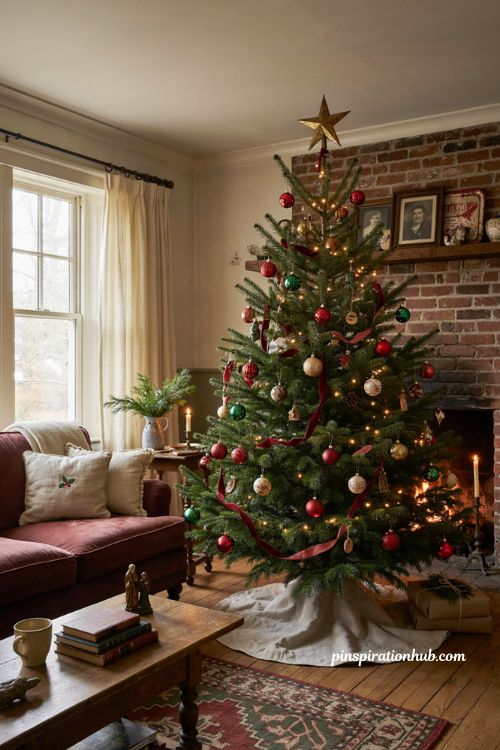
Here’s something surprising — the trees that get saved and re-created year after year are almost never the trendiest ones. They’re the traditional red-and-green trees, the ones with a few mismatched vintage ornaments and a topper that’s been in the family for decades. Traditional doesn’t mean boring, though. It means warm, familiar colors layered with just enough texture and shine to feel special every single year. Below are 15 traditional Christmas tree decor ideas that lean into that classic charm without ever looking dated.
1. Layer Red, Green, and Gold Together
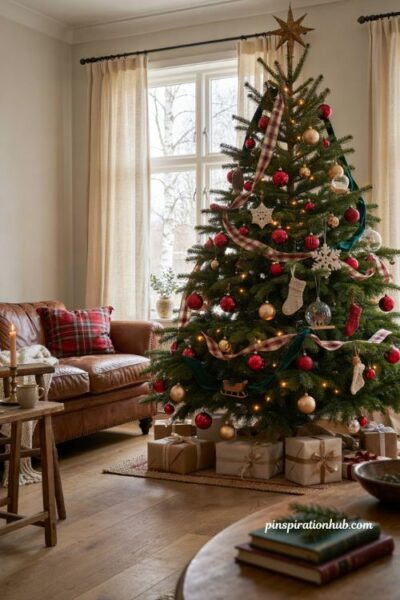
Nothing says traditional Christmas quite like the classic trio of rich reds, deep greens, and warm golds working together on one tree. Flocked branches soften the look and give the colors a snowy backdrop to pop against. Mixing in plaid and velvet ribbon adds texture between the ornaments so the tree doesn’t read as flat or one-note. Oversized baubles alongside smaller ones create that full, lush look that feels gathered over time rather than bought as a matching set. Carry the gold accents into your gift wrap underneath so the whole scene feels cohesive from top to bottom.
2. Go Classic With Red and White
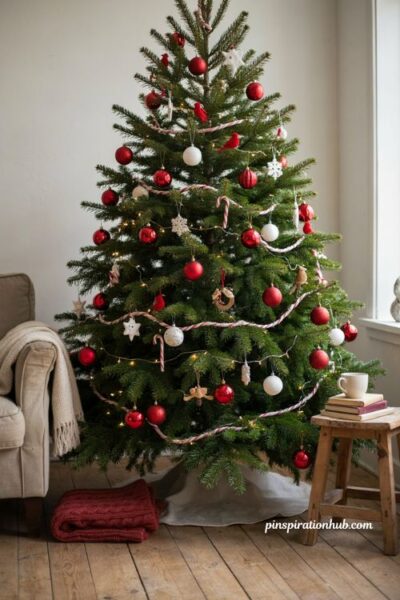
A red and white color scheme is one of the easiest traditional palettes to pull off, especially on a smaller tree where limiting your colors keeps things from feeling cluttered. Candy cane–striped ribbon woven through the branches adds a playful nod to the season without straying from tradition. Crisp white ornaments alongside bright red ones keep the contrast clean and cheerful rather than busy. Small natural touches like snowflakes or a cardinal ornament tucked into the branches add texture without overwhelming the palette. This combination works particularly well if your tree is more compact, since fewer colors read as more intentional in a smaller space.
3. Add Vintage Ornaments for Warmth
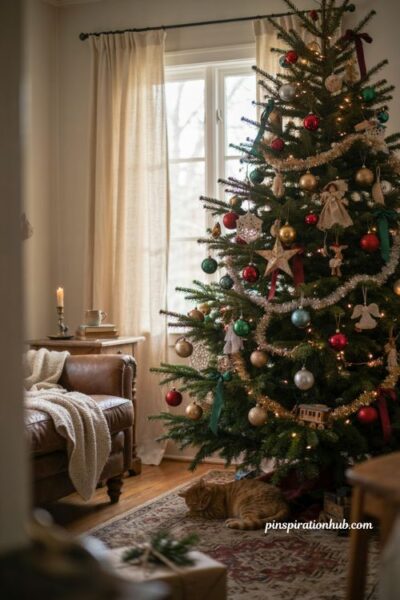
Vintage ornaments bring an old-fashioned warmth that new pieces almost never replicate, whether they’re passed down from family or found while antiquing. A tree built around inherited or thrifted pieces feels more like a scrapbook than a showroom display, and that’s exactly the point. Mixing a few vintage glass balls in with modern ornaments keeps the tree from looking like a costume rather than a lived-in collection. If you want to go further into the retro feel, bringing back tinsel from decades past adds an extra layer of nostalgia. This is one of the most personal ways to decorate traditionally, since no two vintage collections ever look quite the same.
4. Use a Cascading Ribbon Topper
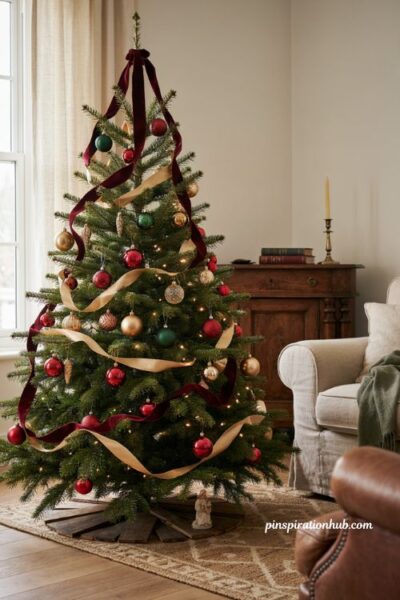
Skip the traditional star or angel topper and try a cascading ribbon instead, wound loosely from the top of the tree down through the branches. Wide ribbon in a rich color like burgundy or gold gives the tree instant movement and drama without adding a single extra ornament. Taking your time while wrapping matters here — a rushed ribbon job tends to look uneven, while a patient one drapes naturally and looks intentional. This works especially well on a tree that’s already colorful, since the ribbon acts as a unifying thread pulling everything together visually. It’s a simple swap that changes the whole silhouette of the tree from the top down.
5. Bring in Plaid for a Cozy Traditional Look
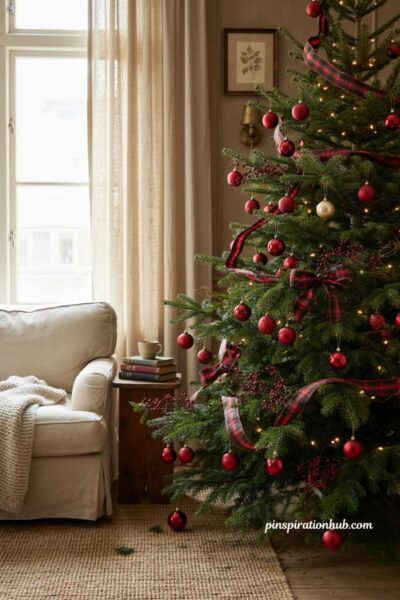
Wide, wired plaid ribbon is one of the fastest ways to push any tree toward a classic, cozy holiday look. The wire inside lets you shape the ribbon into loops and bows rather than letting it hang flat, which adds real dimension among the branches. Pairing plaid with traditional red ornaments and a touch of greenery, like small pine sprigs or berry clusters, keeps the whole look grounded and warm. This combination works well whether your tree is heavily decorated or fairly simple, since the plaid itself carries a lot of the seasonal weight. It’s an easy way to add pattern without needing dozens of extra ornaments.
6. Choose an All-Gold Color Scheme
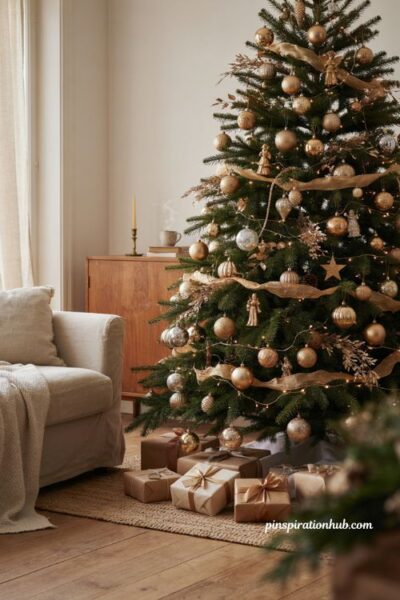
An all-gold tree takes the traditional palette and simplifies it down to just one warm, glowing metallic. Pairing antique gold ornaments with newer ones keeps the look from feeling too polished or overly “designed,” landing instead on something that feels collected. Carrying the gold theme into your gift wrap ties the whole display together under the tree, not just on it. This palette works especially well in a room that already leans warm or traditional, since the gold tones complement wood furniture and warm lighting naturally. It’s a refined option for anyone who wants tradition with a little extra shine.
7. Use Only Red and Gold Ornaments
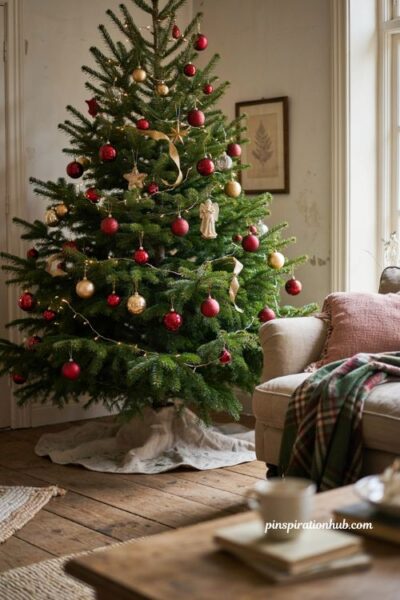
There’s a difference between a full red-and-green tree and one that skips green ornaments entirely in favor of just red and gold. This twist keeps the classic holiday palette but shifts the balance so pine needles and any green fabric nearby, like a tartan blanket, become the only green elements in the room. It’s a subtle change that still reads as thoroughly traditional but feels a touch more updated and less predictable. This approach works especially well if your surrounding decor already leans neutral, letting the red and gold do all the seasonal work. It’s proof that a nostalgic palette can still feel fresh with one small edit.
8. Wrap Every Branch With Lights
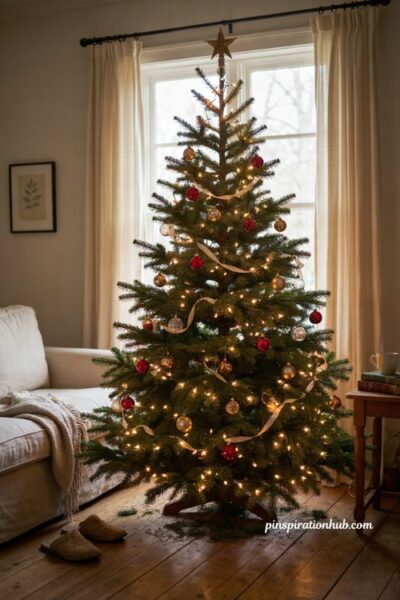
Skip the net lights and take the time to wrap string lights around each individual branch from trunk to tip. It’s genuinely more time-consuming, but the difference in how the light glows through the tree is noticeable once it’s finished. This technique works with any color scheme, since the lights themselves become the star of the display rather than competing with ornaments. Keeping the ornament count minimal after this step lets the tree’s glow really shine through without visual competition. If you’ve ever felt like your tree looks flat once it’s lit, this is usually the fix.
9. Add Texture With Velvet Ribbon
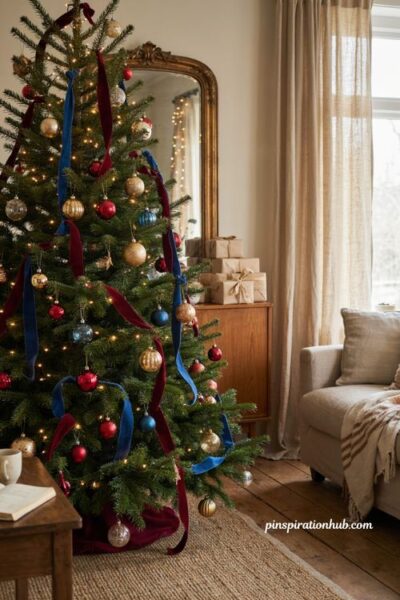
Vertical velvet ribbons cascading down through the branches add a rich, tactile texture that ornaments alone can’t quite achieve. Choosing two contrasting colors, like a deep red alongside a jewel-toned blue, gives the ribbon some visual movement instead of blending into a single mass. This pairs naturally with a family ornament collection that’s grown over the years, since the ribbon acts as a backdrop rather than competing for attention. Placing a mirror behind the tree, if your space allows it, can also amplify the glow from the lights and reflect the ribbon’s color back into the room. It’s a small addition that adds a noticeable amount of depth.
10. Try a Monochromatic Theme for Simplicity
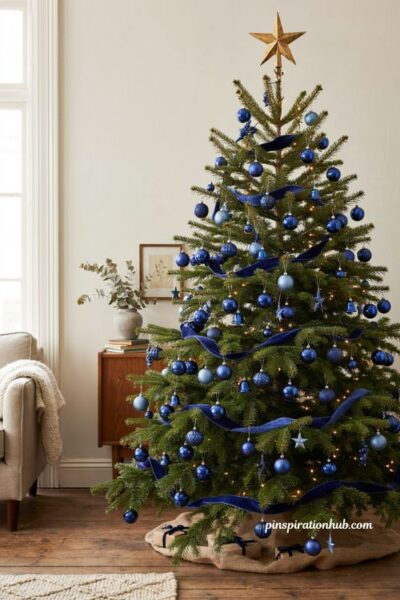
When choosing a color scheme feels overwhelming, picking just one color and building the entire tree around it removes most of the guesswork. Shop specifically for ornaments, ribbon, and accents in that single shade rather than mixing in extras that don’t match. A small pop of contrasting color on the topper alone can keep the tree from feeling too flat or one-dimensional. This approach naturally photographs well since there’s nothing competing for attention, and it works whether you’re going for a bold jewel tone or a soft neutral. It’s one of the simplest ways to make a traditional tree feel deliberate rather than thrown together.
11. Top the Tree With Bells Instead of a Star
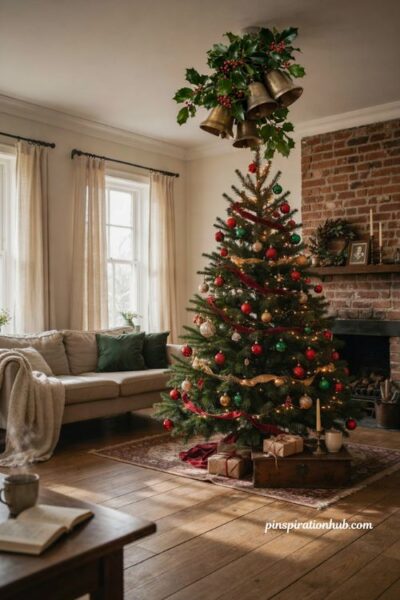
Swapping the usual star or angel for a cluster of brass or silver bells gives the top of the tree a different, slightly antique focal point. These bells are often easiest to find secondhand at antique shops or thrift stores, which adds a treasure-hunt element to the process. Filling in any gaps around the bells with holly or extra greenery ties the topper visually into the rest of the tree instead of leaving it looking separate. This works particularly well on a traditional red-and-green tree where the bells’ metallic shine adds contrast against all that color. It’s a small detail, but it changes the entire top third of the tree.
12. Use a Beaded Garland Instead of Traditional Tinsel
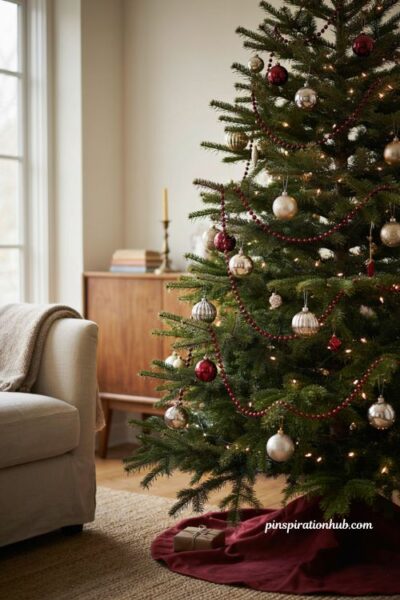
A beaded garland in red or gold gives the classic cranberry-garland look without the mess of stringing actual cranberries by hand. White lights against the beads create a soft, calming glow rather than a harsh sparkle. Mixing vintage and contemporary silver ornaments alongside the garland keeps the tree feeling elegant instead of overly matched. Carrying the same red tone into your tree skirt ties the whole base of the tree together with what’s happening in the branches above. This is a low-effort way to add a classic garland look without the time commitment of a natural one.
13. Add Natural Texture With Pinecones and Berries
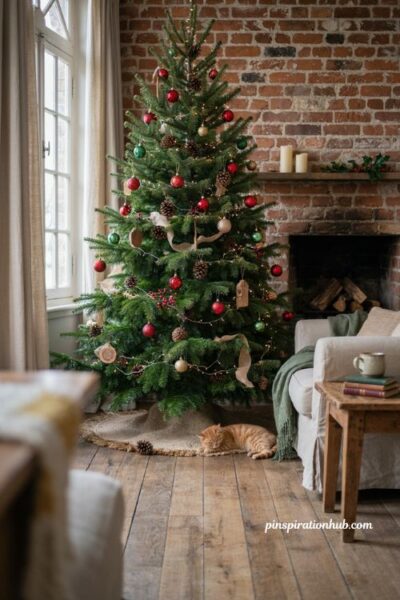
Working real or faux pinecones and small berry clusters into the branches brings an outdoorsy, natural element into an otherwise classic color palette. This pairs especially well with wooden ornaments or burlap accents if your tree is leaning more toward a cottage or farmhouse feel. Tucking the pinecones deep into the branches rather than at the tips gives the tree more depth and makes them look like part of the tree rather than an add-on. This combination also holds up well if you keep your tree up longer than usual, since none of these elements fade or wilt. It’s a simple way to bring texture into a traditional tree without adding more ornaments.
14. Ground the Tree With Burlap Accents
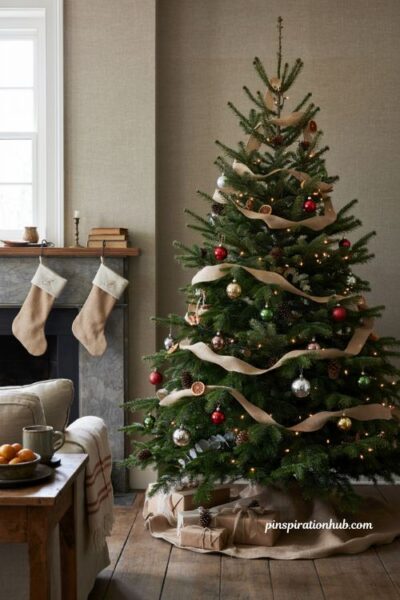
Burlap ribbon or a burlap tree skirt brings a warm, natural texture that pairs beautifully with a more rustic take on traditional decorating. This works well alongside cool-toned accents like mercury glass ornaments, which add a bit of shimmer without clashing against the burlap’s rough texture. Using burlap consistently across stockings, gift wrap, and the tree itself creates a cohesive look throughout the whole room rather than just on the tree. This combination suits homes with natural materials already in place, like slate fireplaces or grasscloth wallpaper, since the textures echo each other. It’s a grounded, less shiny take on tradition that still feels intentional.
15. Finish With a Classic Star Topper
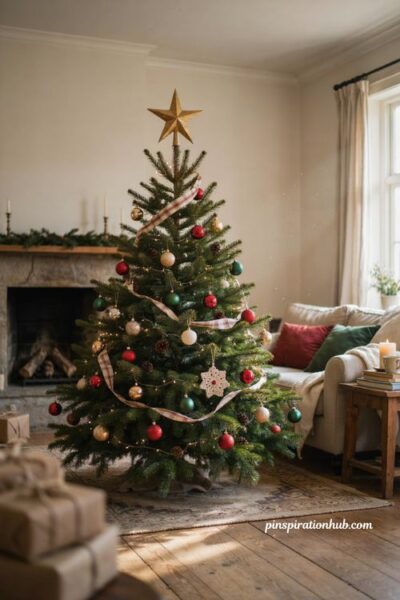
Sometimes the most traditional choice is also the simplest — a classic star, whether gold, silver, or fabric-covered, still tops trees for a reason. A star topper works with virtually any color scheme underneath it, which makes it the safest choice if you’re mixing several traditional elements already. Choosing a topper with some texture, like a woven or glittered finish, keeps it from disappearing against the tree’s top branches. If you want a personal touch, a homemade fabric star that the whole family helps decorate becomes a piece you’ll reach for every single year. It’s proof that you don’t need anything unconventional to make a tree feel complete.
Final Thoughts
Traditional Christmas tree decor isn’t really about following strict rules — it’s about leaning on colors and textures that already feel like home. A few of these ideas layered together, rather than all fifteen at once, usually gives the most balanced result. What matters most is picking the combination that actually matches how your household already lives and celebrates, not what’s trending this particular winter. Start with your base colors, add texture with ribbon or garland, and let the ornaments you already love do the rest of the work.
Frequently Asked Questions
Q: What are the most popular traditional Christmas tree decorations? Ornaments, garlands, ribbons, string lights, and candy canes remain the most common traditional choices, especially in classic red, green, and gold combinations.
Q: How many ornaments do I need for a traditional Christmas tree? A general guideline is 15 to 20 ornaments per foot of tree height to achieve a full, balanced look without appearing sparse.
Q: What colors work best for a traditional Christmas tree? Red, green, and gold remain the most classic combination, though red and white or all-gold palettes also read as traditional while feeling slightly different.