
There’s a moment — standing next to a still, clear swimming pond with reeds along the edge and dragonflies hovering above the surface — where you forget it’s man-made entirely.
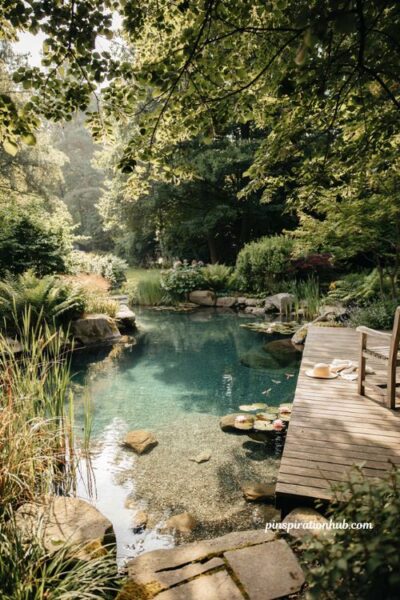
That’s exactly the appeal of natural swimming pool designs. No chlorine smell, no chemical aftertaste, just clean water filtered by plants and biology working together. Whether your backyard is large or small, rustic or modern, there’s a design here that can work for you.
1. A Two-Zone Pool That Keeps Swim Water Crystal Clear
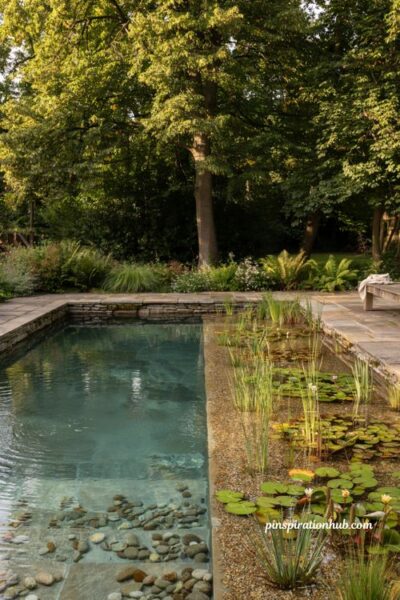
The most effective natural swimming pool designs split the water into two connected areas — a swimming zone and a regeneration zone separated by a submerged wall. Water circulates continuously between them, passing through gravel, plant roots, and beneficial bacteria before returning clean. It’s a closed-loop system that mimics what happens naturally in a healthy mountain lake, and it genuinely works.
2. An Irregular Pond Shape That Blends Into the Garden
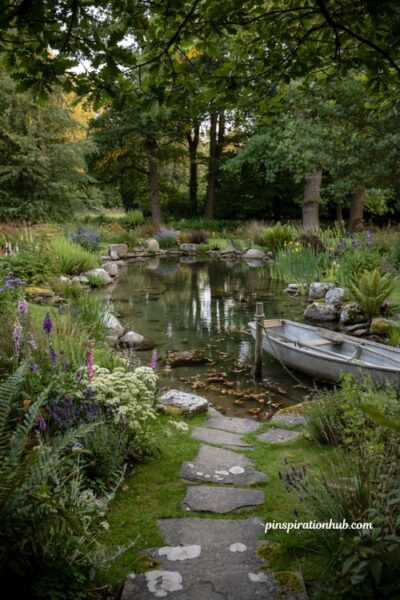
Forget perfectly straight edges. A freeform shape with soft curves and a natural, uneven perimeter lets the pool melt into the surrounding landscape rather than sitting on top of it. This style works especially well in wooded or rural settings where you want the pool to feel like it was always there, not installed last summer.
3. A Formal Rectangular Pool With a Hidden Filtration Zone
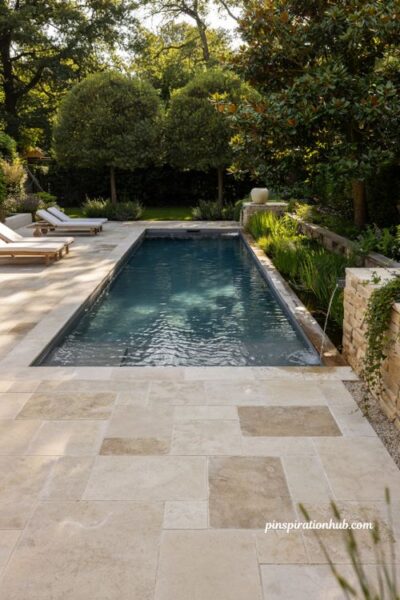
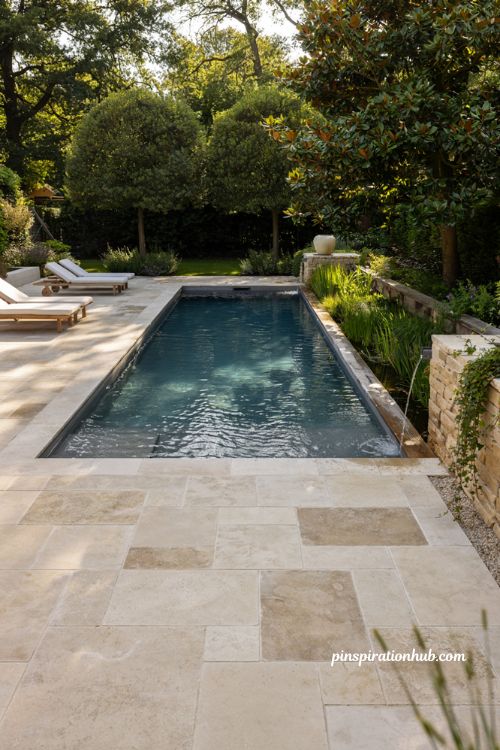
Not every natural pool has to look like a pond. A clean rectangular design with crisp edges can still be fully chemical-free — the filtration zone just gets tucked neatly to one side or integrated beneath a planted border. You get the symmetry of a traditional pool with none of the chlorine, which is honestly the best of both worlds.
4. Lush Water Lilies and Reeds as Your Living Filter
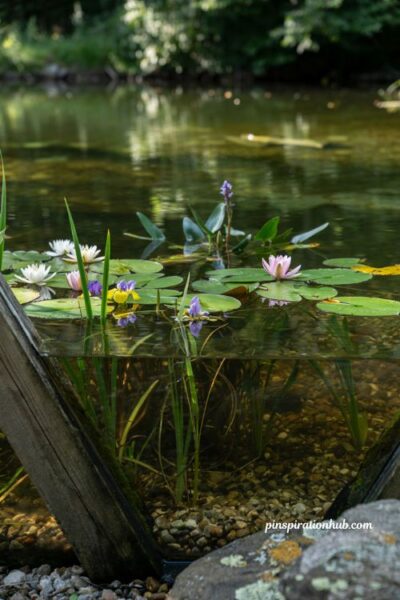
Plants do most of the heavy lifting in a natural pool. Water lilies, reeds, pickerelweed, and water irises absorb excess nutrients that would otherwise feed algae, and they oxygenate the water at the same time. The bonus is that they look genuinely beautiful — the regeneration zone ends up being one of the most visually striking parts of the whole design.
5. Rock and Gravel Edges That Look Like a Mountain Lake
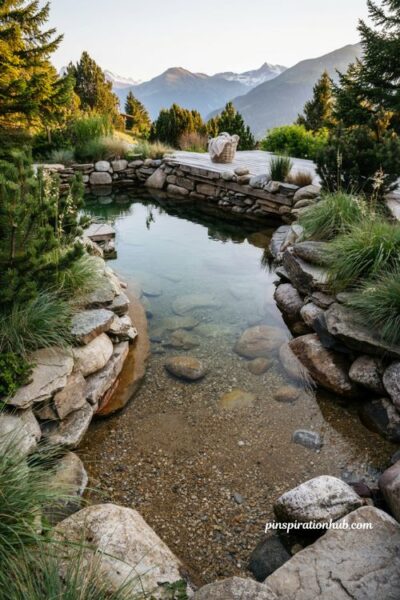
Line the perimeter with natural stone and fill the shallow areas with gravel, and suddenly your pool stops looking like a pool. This approach is popular in natural swimming pool designs because the gravel doubles as filtration media while the rocks create the kind of layered, organic edge you’d find at a real alpine lake. It’s functional and gorgeous at the same time.
6. A Modern Eco-Pool With Clean Lines and Plant Beds
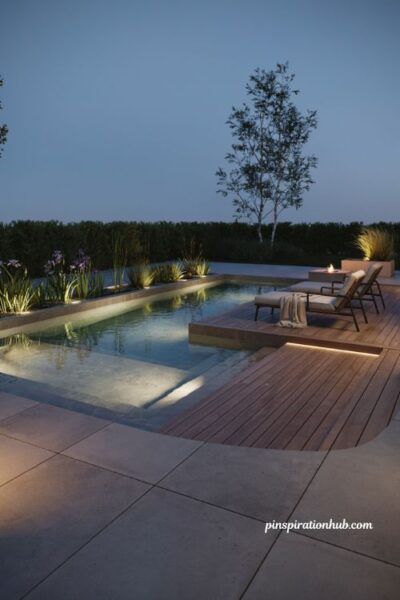
Sustainability and contemporary design are not mutually exclusive. A modern eco-pool keeps the geometric structure of a conventional pool — sharp lines, clean concrete edges — while incorporating planted filter beds along the sides. Add some underwater LED lighting and a hardscaped timber deck, and you have something that feels both cutting-edge and completely natural.
7. Low-Salt Electrolysis as a Chemical-Free Water Treatment
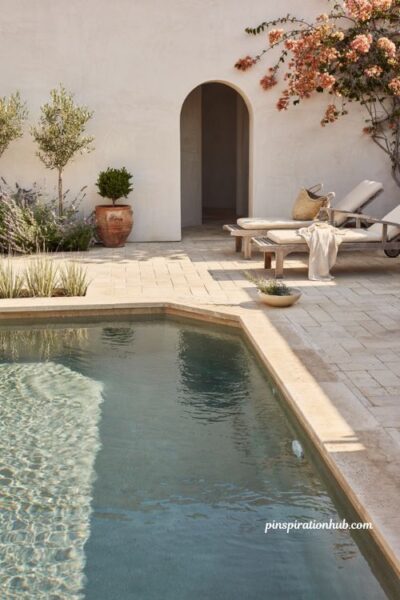
For pools in warmer climates or high-sun areas where biological filtration needs a little backup, low-salt electrolysis is a smart option. It produces oxidants as effective as chlorine for eliminating pathogens, but without the harsh byproducts or the chemical smell. It’s one of the most popular supplementary systems in modern natural swimming pool designs because it fits quietly into the background.
8. A Shallow Regeneration Zone Packed With Native Plants
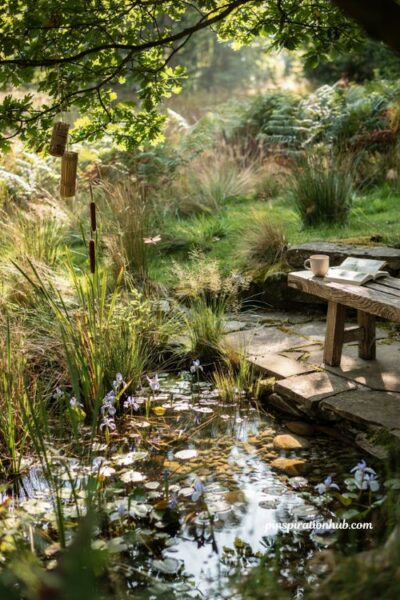
Using native aquatic plants in your regeneration zone isn’t just good for water quality — it actively supports local biodiversity. Native species are already adapted to your climate, which means they establish faster, need less care, and provide better habitat for local insects and birds. Ask a local nursery which water plants are native to your region before you plant anything.
9. UV-C Clarifiers That Stop Algae Without Harming Plants
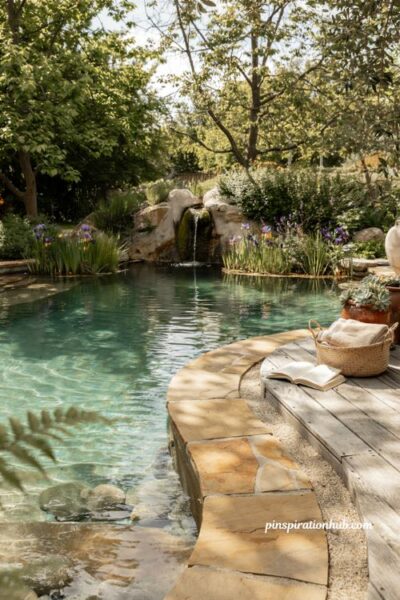
In regions with strong summer sun, algae can become a real challenge even in a well-designed natural pool. A UV-C clarifier manages algae growth by targeting single-celled organisms in the water column without disturbing the beneficial bacteria in the regeneration zone. It’s one of those additions that works invisibly — you just notice the water staying clearer for longer.
10. Submerged LED Lighting for a Stunning Evening Pool
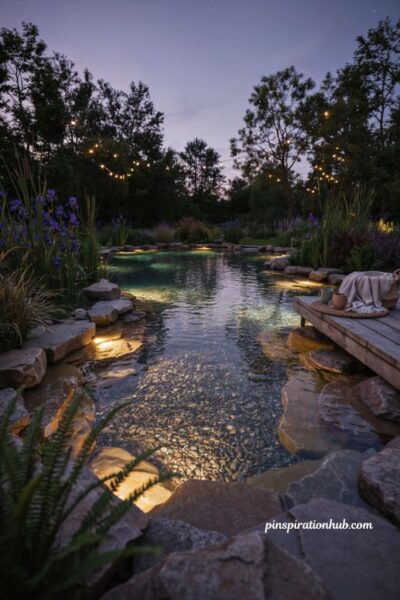
One of the underrated design moves in natural pool design is thoughtful lighting. Submersible LEDs placed along the pool floor or tucked beneath rock edges create an atmospheric glow at night that makes the whole space feel completely different after dark. Keep the tone warm and subtle — you’re not lighting a stadium, just making the water shimmer.
11. A Small Waterfall That Naturally Aerates the Water
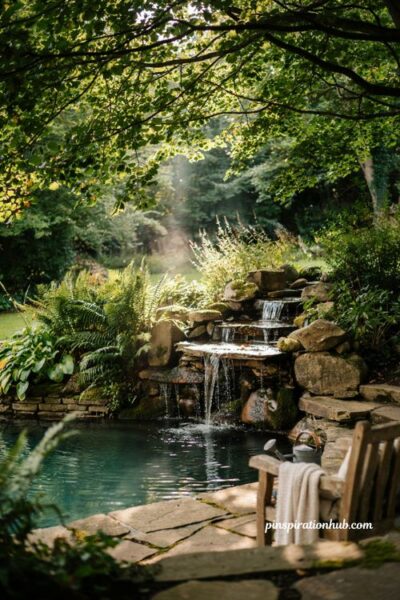
Even a modest waterfall or small cascade built into one edge of your natural pool does real work — it adds oxygen to the water, which supports both plant life and the beneficial microorganisms that keep things balanced. Beyond the biology, the sound of moving water in the backyard has a way of making everything feel more peaceful.
12. A Gunite Concrete Pool Shaped Around Your Landscape
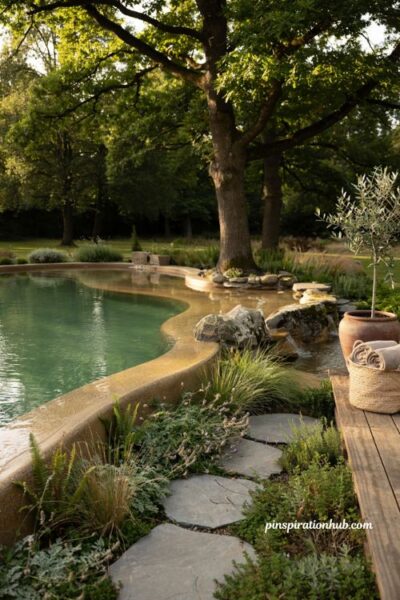
Gnuite concrete is the most durable and flexible option for natural pool construction. It’s sprayed in place, which means it can follow almost any shape you design — ideal for pools that need to curve around existing trees, rocks, or garden features. Once finished with an EPDM liner or a compatible natural coating, it’s built to last for decade
s.13. A Timber Deck That Overhangs the Swimming Zone
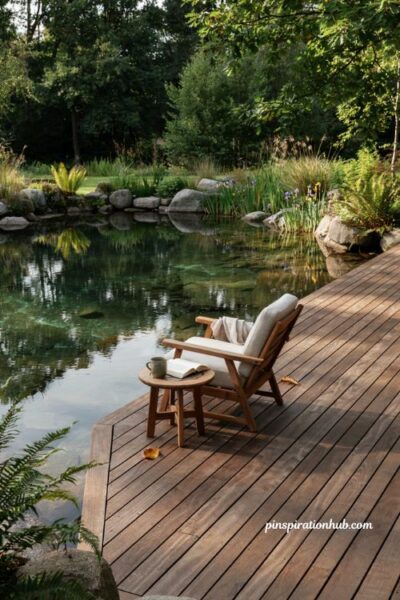
A well-placed deck changes how you experience the pool entirely. When it extends slightly over the water, you get that floating-above-the-surface feeling that makes the whole setup feel more like a resort than a backyard. Hardwood or composite timber works beautifully alongside the organic look of natural swimming ponds, and it gives you a proper spot to sit and watch the water.
14. Pickerelweed and Cattails for Both Beauty and Filtration
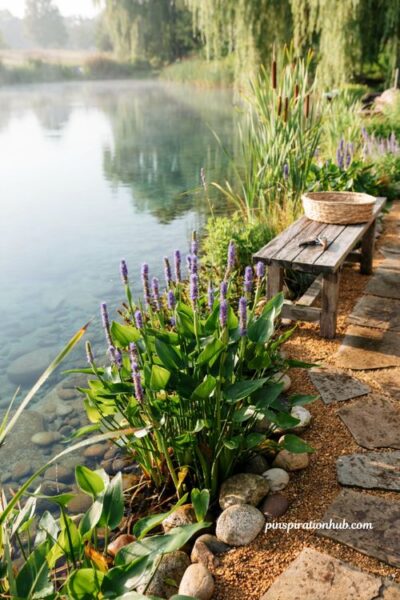
These two plants are staples in natural swimming pool designs for good reason. Pickerelweed produces violet flower spikes that look genuinely striking at the edge of a pond, while cattails add height, movement, and serious filtration capacity. Plant them in the regeneration zone and they’ll do quiet, effective work all season long while making the whole space look intentional and lush.
15. A Wildlife-Friendly Design That Attracts Birds and Frogs
A natural pool doesn’t just benefit the people swimming in it — it becomes a functioning habitat. Frogs, dragonflies, water beetles, and birds are commonly drawn to these pools, especially when the planted zone includes plenty of native species. If you want to actively support local wildlife, leave a few shallow, gently sloped areas where small animals can safely access the water.
16. A Hybrid Pool With a Backup System for Year-Round Use
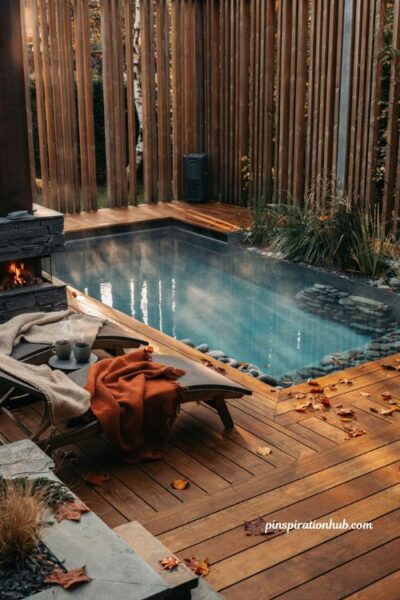
Some homeowners want the natural pool experience most of the time but need the option to heat the water or run a supplementary system during colder months. A hybrid design allows for that — the core filtration is biological, but there’s a heat pump or low-impact backup system available when the season demands it. It’s practical without compromising the whole chemical-free philosophy.
17. A Simple Skimmer and Pump Setup That Does the Heavy Lifting
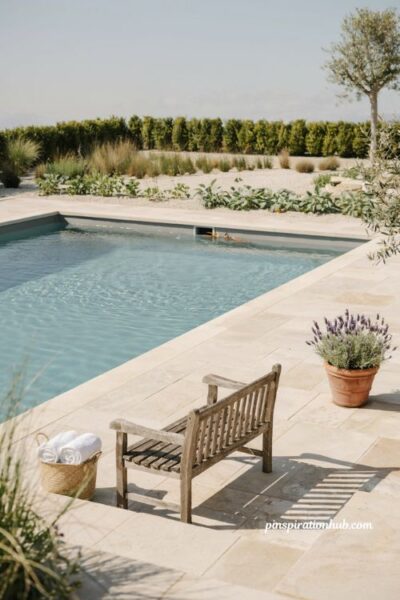
You don’t need a complex system to run a great natural pool. At the most essential level, a low-energy pump and a basic skimmer will circulate water through the regeneration zone and pull floating debris off the surface before it sinks and adds nutrients to the water. Starting with this simple setup and adding components as needed is a smart, cost-effective approach for first-time natural pool owners.
Frequently Asked Questions
Q: Do natural swimming pools require chemicals? Not in the traditional sense — most rely on plant filtration, gravel beds, and biological processes. Some owners add low-salt electrolysis as a supplementary treatment, but this avoids the harsh byproducts of chlorine.
Q: How much maintenance does a natural pool need? About half a day per month — mostly brushing surfaces, vacuuming debris, and trimming plants. It’s closer to garden maintenance than pool maintenance, which most people find far more enjoyable.
Q: Can you heat a natural swimming pool? Yes, using a solar heater, heat pump, or gas system. Just keep temperatures below 32°C to avoid stressing the aquatic plant life in the regeneration zone.
Q: Are natural pools more expensive than conventional ones? Installation typically costs around 10% more than a standard pool, but you save significantly over time by eliminating ongoing chemical costs and reducing maintenance crew needs.