
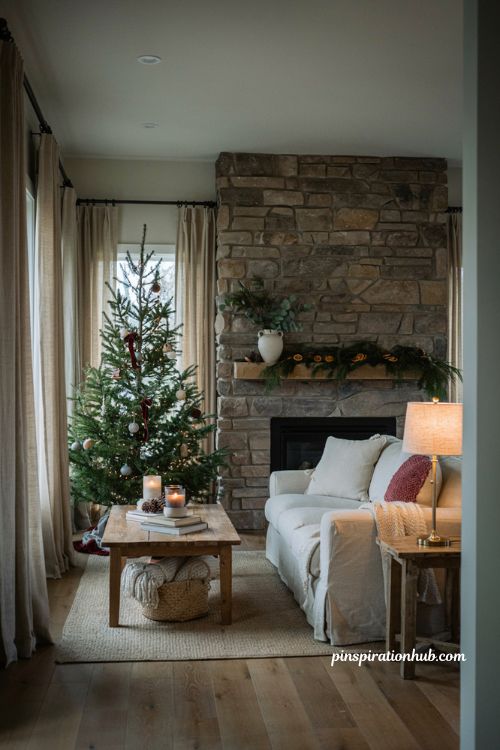
There’s something about a living room in December that just feels different — the lamps go warmer, the throw blankets come out, and every surface becomes an invitation for a little sparkle.
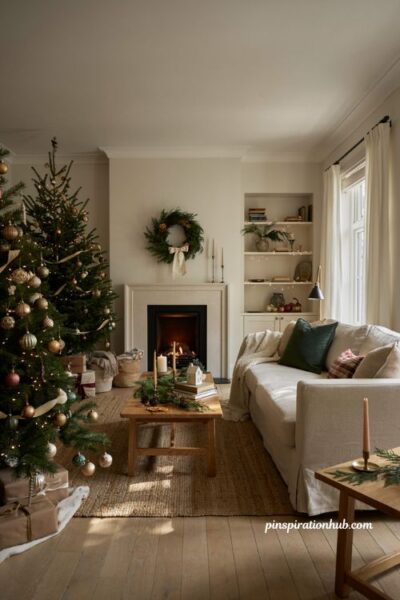
You don’t need a showroom-sized space or a professional decorator on speed dial to make it happen. A few well-placed touches, a color palette you actually love, and some layered lighting can turn an ordinary room into the kind of space people want to linger in all season long.
1. Layer in a Muted Color Palette With One Accent
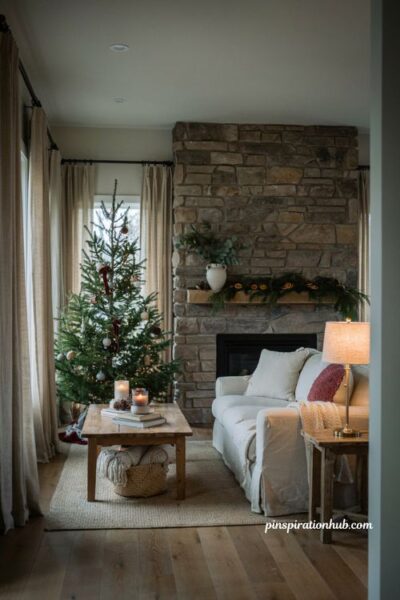
Pick one soft, neutral base — sage green, cream, or soft gray — and let it carry most of the room, then bring in a single richer accent like cranberry or deep gold in smaller doses. Try the accent color in ribbon, a few ornaments, or a throw pillow rather than spreading it evenly everywhere. This kind of restraint reads as intentional rather than themed, and it means your existing furniture and rugs won’t fight with the holiday additions. It also makes the room easier to transition out of January without a jarring color clash.
2. Style the Coffee Table as a Focal Point
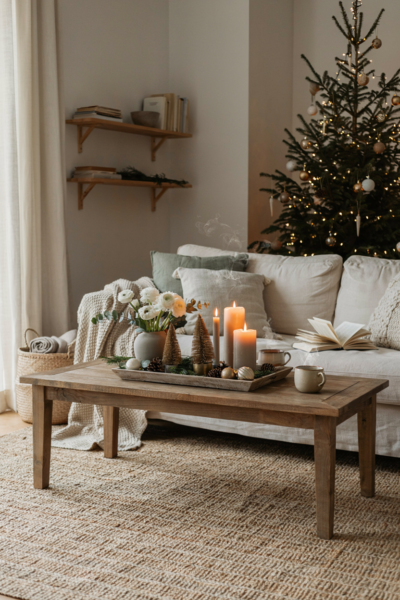
If your living room doesn’t have a mantel, your coffee table can carry the same visual weight. Group a low vase of white flowers, a pair of small bottle-brush trees, and a few thick pillar candles at varying heights to create a vignette that draws the eye down instead of up. Keep the cluster asymmetrical rather than perfectly centered — it looks more collected and less staged. A wooden tray underneath ties the pieces together and makes the whole thing easy to shift when you actually need the table.
3. Decorate the Empty Corners

Every living room has at least one corner that never quite gets used, and it’s the easiest spot to add holiday presence without touching your existing layout. A slim faux tree, a cluster of topiaries wrapped in ribbon, or even a single oversized ornament on a stand can fill that dead space nicely. Go a size up from what feels obvious — a corner swallows small decor fast. Anchoring the display with a woven basket or wooden stool at the base gives it a finished, grounded look.
4. Hang a Garland Along the Staircase or Curtain Rods
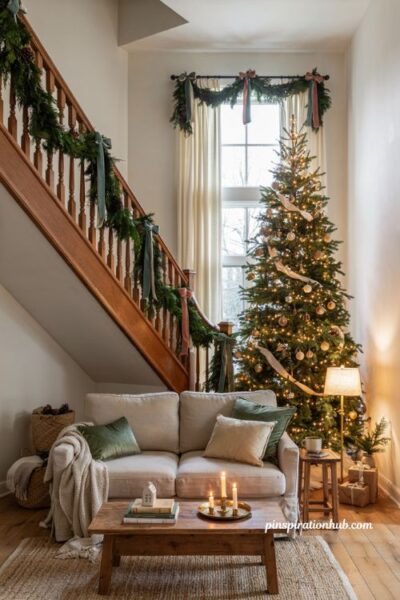
If your living room connects to a staircase, a draped garland fastened with long ribbon bows instantly makes the whole space feel considered from every angle. No staircase? The same trick works beautifully along curtain rods, taking advantage of vertical space you’re probably not using at all. Let the garland hang slightly uneven rather than perfectly taut — it reads more natural that way. Fresh greenery smells incredible, but a good faux mix holds its shape for weeks without shedding.
5. Group Ornaments in a Decorative Bowl
Not every ornament has to end up on a tree. Pile a collection of coordinating baubles into a low ceramic or scalloped bowl and set it on the coffee table or a shelf as an instant, no-effort centerpiece. Sticking to two or three finishes — say, matte cream and brushed gold — keeps it from looking cluttered. This is also a smart move if your ornament collection has outgrown your tree, or if you’re skipping a full tree this year altogether.
6. Try a Console Table Mantel Substitute

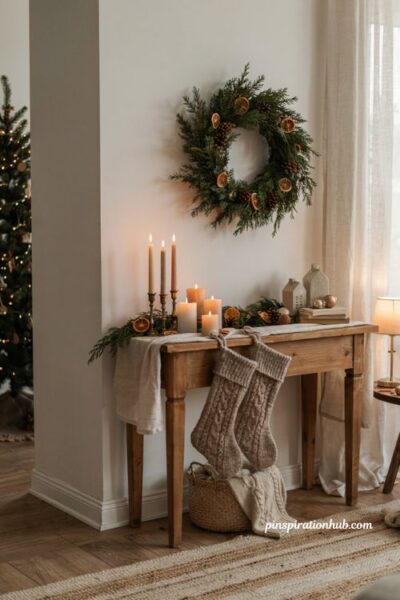
Without a fireplace, a console table pushed against a wall can absolutely stand in for a mantel. Add a wreath propped against the wall behind it, a pair of matching stockings, and a row of pillar candles across the top to mimic that classic hearth arrangement. Leaning the wreath rather than hanging it gives the display a slightly relaxed, layered feel. A runner underneath in a seasonal print or texture finishes the look without needing anything structural.
7. Add Wreaths in Unexpected Places
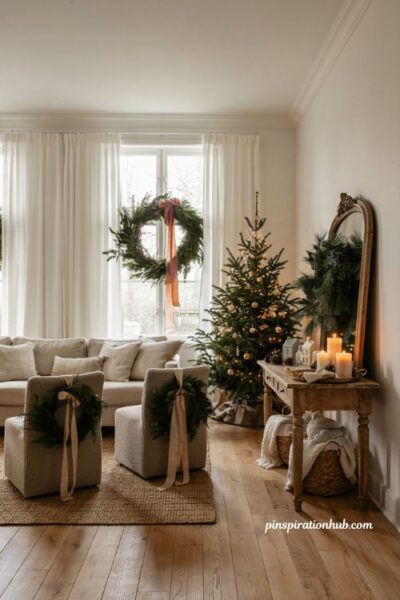
Wreaths don’t have to live only on the front door. Hang one on a window, prop one against a mirror, or even loop small versions around dining or accent chair backs for a detail most guests won’t expect. A mini wreath tied to the back of a chair also doubles as a clever spot for name cards if you’re hosting. Vary the size depending on where it lands — oversized on a window, small and simple on furniture — so nothing feels out of scale.
8. Mix in Metallic Accents
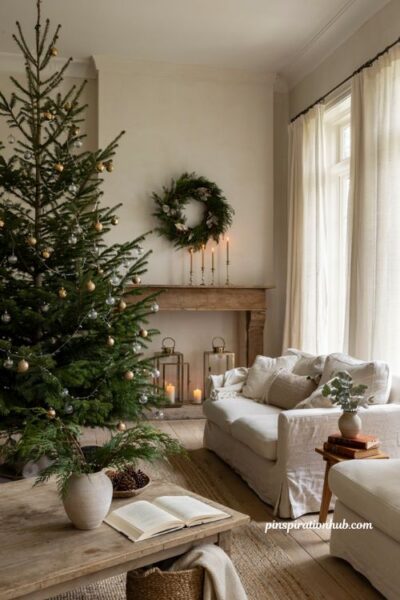
A little shine goes a long way in December light, which tends to be dimmer and cooler than the rest of the year. Bring in brushed gold candlesticks, a mercury glass ornament garland, or a wreath with metallic leaves woven through the greenery. Pair the metallics with matte textures like wool or linen so the room doesn’t feel overly glossy. Even swapping in a few metallic ornaments on an otherwise all-green tree adds noticeable depth.
9. Layer Ambient Lighting Everywhere
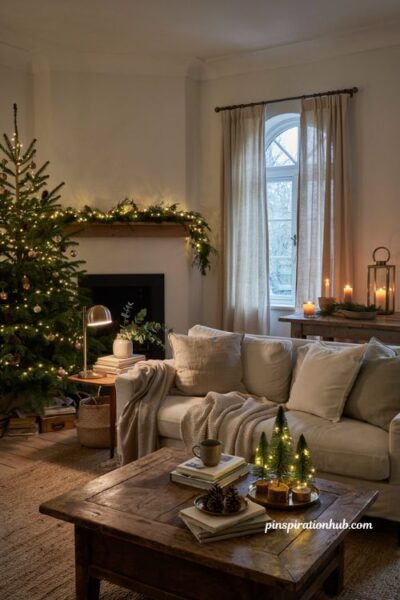
Cozy holiday lighting is rarely one single source — it’s several small ones working together. Combine a lit garland on a shelf, a scented candle on the side table, and a couple of illuminated tabletop trees on the coffee table for a room that glows from multiple directions after dark. Warm white bulbs read far cozier than bright white ones for this effect. Dimmable string lights are worth the small investment if you plan to keep this look up through the New Year.
10. Bring in Tabletop and Mini Trees
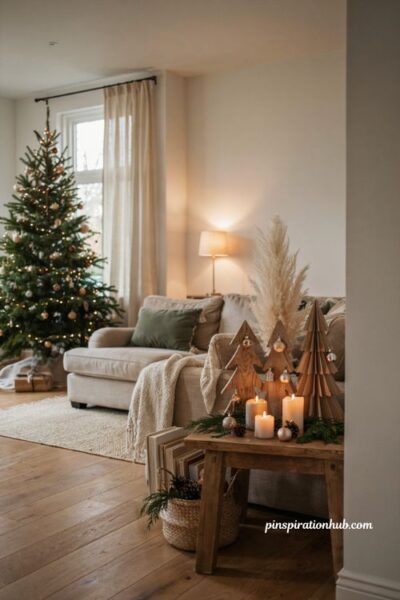
A full-sized tree isn’t the only way to get that classic Christmas look, especially in a smaller living room. Cluster a few tabletop trees of varying heights behind a sofa or on a side table using materials like feather branches, carved wood, or wrapped kraft paper for texture variety. Grouping three trees together, rather than spacing them out, creates a much stronger visual moment than one tree alone would. It’s also an easy way to repurpose ornaments too delicate for a full-height tree.
11. Dress the Windows With Wreaths or Garland
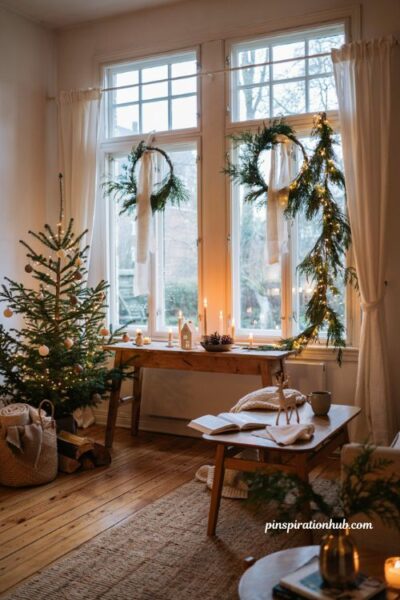
Bare windows can feel like a missed opportunity once the rest of the room is decorated. A simple hoop wreath hung with ribbon, or a lighted garland draped asymmetrically down one side of the frame, adds festivity without blocking any light during the day. Letting the garland trail longer on one side than the other gives it a more organic, less matchy feel. At night, the silhouette against the glass becomes part of the decor even from outside.
12. Swap in Seasonal Throw Pillow Covers
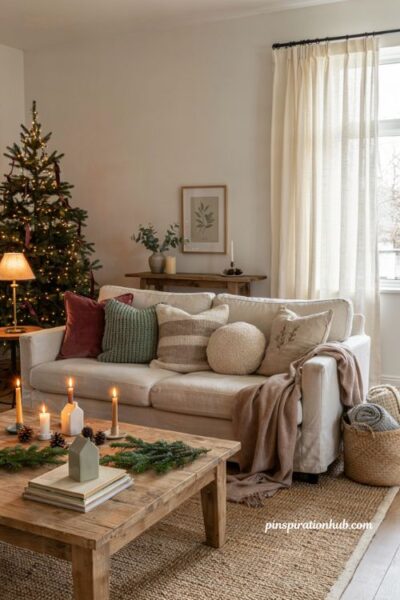
Pillow covers are one of the most budget-friendly ways to shift a room’s whole mood for the season, since you’re not buying new pillows at all — just new covers for the ones you already own. Mix a plush velvet cover with a woven or knit texture to add dimension rather than using the same fabric throughout. Two or three coordinating tones, rather than one flat color, keep the sofa from looking like it’s wearing a costume. They also store flat, which makes bringing them out again next year painless.
13. Style Open Shelving or Built-Ins
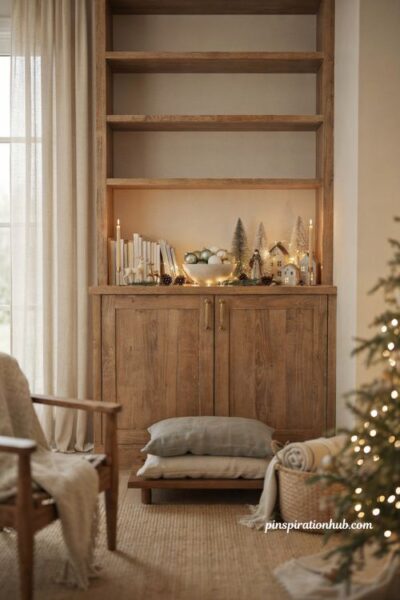
If your living room has bookshelves or built-in cabinetry, dedicate one or two shelves to a rotating holiday display instead of decorating the whole unit. Turn a few book spines inward to create a plain backdrop, then add small figurines, a strand of lights, or a cluster of ornaments in a dish. Leaving negative space between objects matters here — an overcrowded shelf reads busy rather than festive. This is also a great low-commitment way to test a new color scheme before applying it elsewhere in the room.
14. Add Fresh and Faux Greenery in Vases
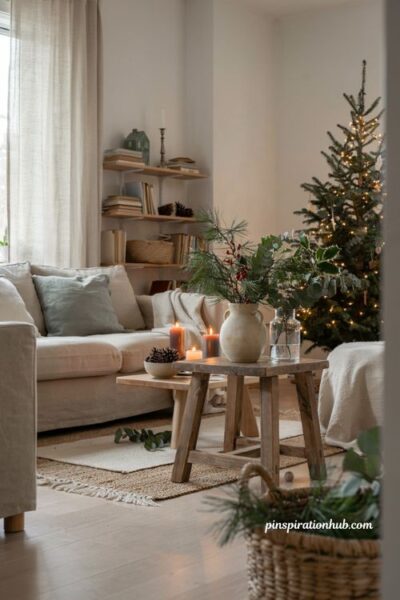
Evergreen doesn’t have to mean a full tree — a simple vase filled with pine branches, winterberry stems, or eucalyptus adds seasonal texture to a side table or bookshelf in minutes. Mixing two types of greenery, like a soft variety with something more structural like holly, gives the arrangement more visual interest than one type alone. Trim the stems at an angle and change the water every few days if you’re using fresh cuttings so they last through the season. A faux version works just as well if you’d rather not think about upkeep at all.
15. Keep the Entryway Consistent With the Living Room
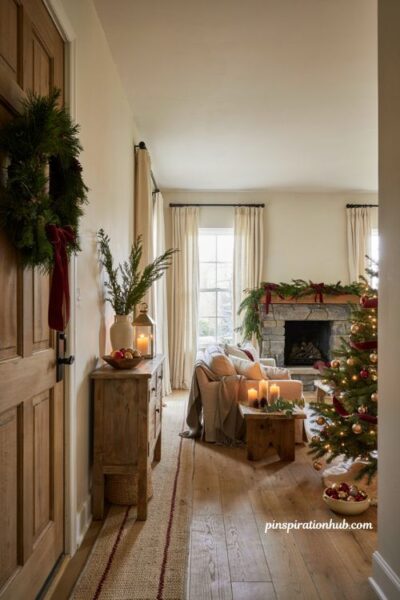
If your front door opens directly into your living space, treat the entry as part of the same design story rather than an afterthought. A wreath on the door, a small runner, and one or two accent pieces that echo your living room’s color palette create a seamless first impression the moment guests step inside. Repeating just one element — a ribbon color or an ornament shade — is enough to tie the spaces together without decorating the entry as its own separate project. It’s a small detail, but it’s the first thing anyone notices when they walk in.
Final Thoughts
Decorating a living room for Christmas doesn’t have to mean doing everything on this list — pick the three or four ideas that actually fit how you live in the space, and let the rest go. A coffee table vignette and a well-placed garland can carry a room just as well as a full theme with every surface covered. The best version of holiday decor is usually the one that still feels like your home underneath it, just a little warmer and a little more lit up than usual.
Frequently Asked Questions
Q: How do I decorate a living room for Christmas without a fireplace or mantel?
A console table, bookshelf, or even a coffee table can stand in as your focal point — style it with a wreath, candles, and a runner the same way you would a mantel.
Q: What’s a good color palette for Christmas living room decor?
A muted neutral base like sage green, cream, or gray paired with one richer accent color such as cranberry or gold tends to feel elegant rather than themed.
Q: How can I decorate a small living room for Christmas?
Focus on vertical space and multipurpose spots — curtain rods, corners, and windowsills — and choose one or two smaller trees instead of a single large one.