
The living room sets the tone for everything else you decorate this season, and if your style leans toward calm and considered rather than covered in tinsel, minimalist Christmas decor might be the better fit.
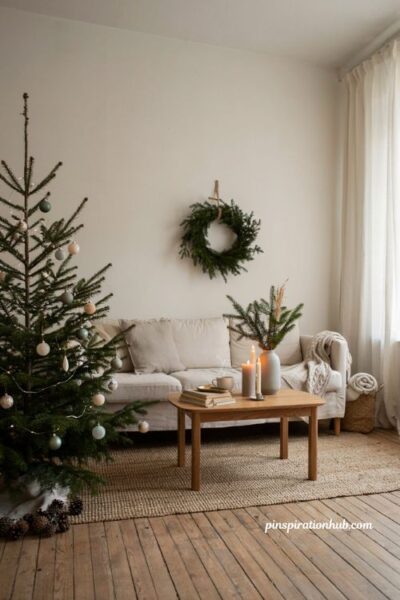
It’s not about skipping the holiday spirit — it’s about choosing fewer, more intentional pieces that actually get noticed instead of getting lost in visual clutter. If you’ve ever felt like your usual decorations disappear into a sea of everything else on the shelf, this approach flips that completely.
1. Start by Decluttering the Space
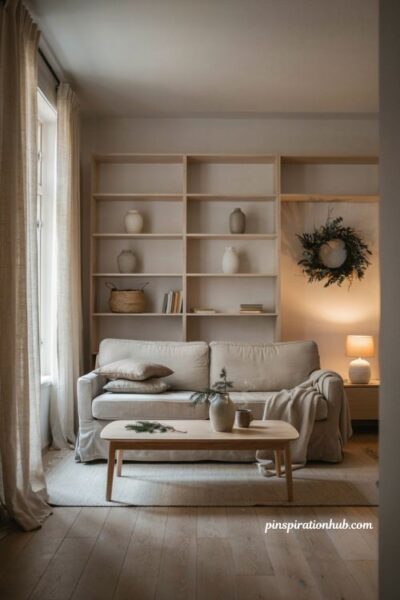
Before adding a single ornament, clear away the everyday items that tend to pile up on shelves, mantels, and side tables. A calm, empty surface gives your holiday pieces room to actually be seen instead of competing with whatever was already there. This doesn’t mean stripping the room down to nothing — it means making space so the few things you do add can stand out. Even ten minutes of tidying before you decorate makes a noticeable difference in how finished the room feels once the holiday pieces go up.
2. Choose One Neutral Color Palette

Building around whites, creams, grays, or soft beige gives a minimalist Christmas its signature calm, and it also means the decor blends seamlessly with most existing home interiors. These tones read as timeless rather than trend-driven, so they’ll still look elegant well beyond this particular season. If you want a touch more color, a single muted shade like sage green or pale blue layered into the neutral base adds interest without breaking the calm. Sticking to one dominant palette, rather than mixing several accent colors, is what keeps the whole look feeling intentional.
3. Lean on Natural Materials
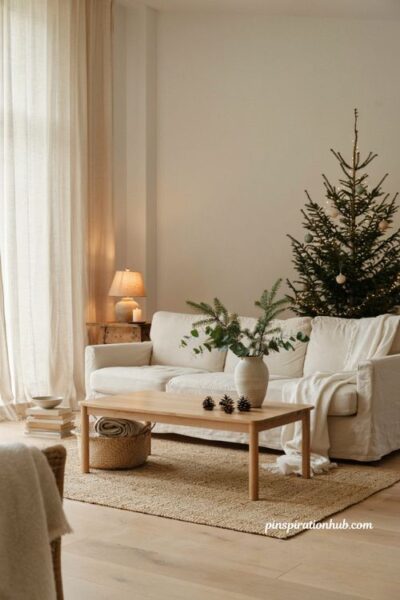
Wood, pinecones, fresh greenery, and tactile textiles like linen or wool bring warmth into a minimalist scheme without adding visual noise. These materials feel grounding rather than decorative for decoration’s sake, which is part of what makes the style feel so calm. A few sprigs of fir or eucalyptus in a simple vase does more for the room than a full garland would in this context. Choosing pieces that could believably exist in your home year-round, not just at Christmas, is a good test for whether something fits the minimalist approach.
4. Hang Scandinavian Paper Stars
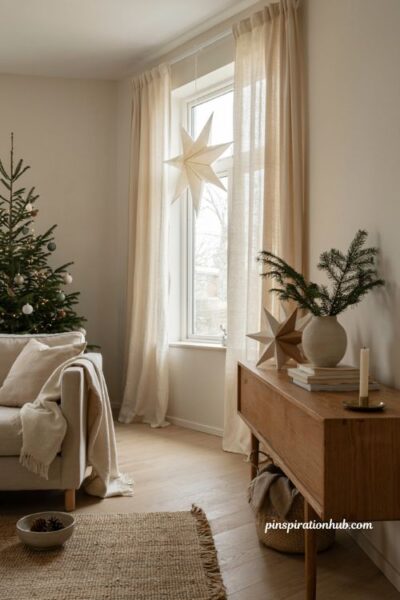
A paper star hung in a window or clustered in a small group on a sideboard brings a classic, understated holiday symbol into the room without needing anything elaborate. Mixing a large star with one or two smaller versions creates more visual interest than a single uniform size would. White, cream, or kraft paper versions keep the look aligned with a neutral palette, while a single metallic star adds subtle shine if you want a touch more sparkle. This is one of the most recognizable pieces of Scandinavian holiday decor, and it works in almost any room style.
5. Keep Ornaments Tone-on-Tone
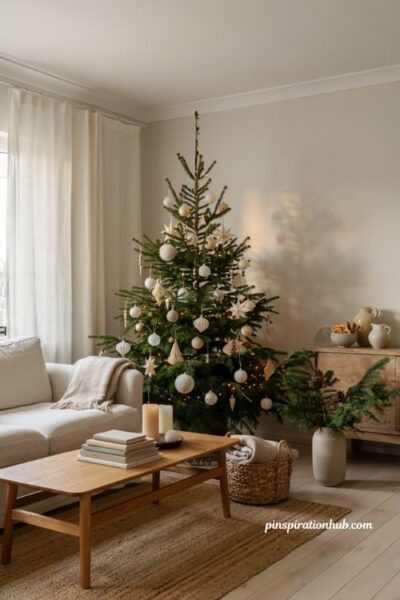
Rather than mixing several bold colors, choose ornaments in a tight range of related tones — white, cream, and pale gold, for example — so the tree or garland reads as considered rather than assembled from whatever was on sale. Mixing textures within that tone range, like matte glass alongside felt or paper ornaments, keeps the display from feeling flat. This approach also makes it much easier to add new pieces in future years, since almost anything within the palette will fit right in. A tree decorated this way tends to photograph beautifully against both light and dark walls.
6. Use Warm White Fairy Lights
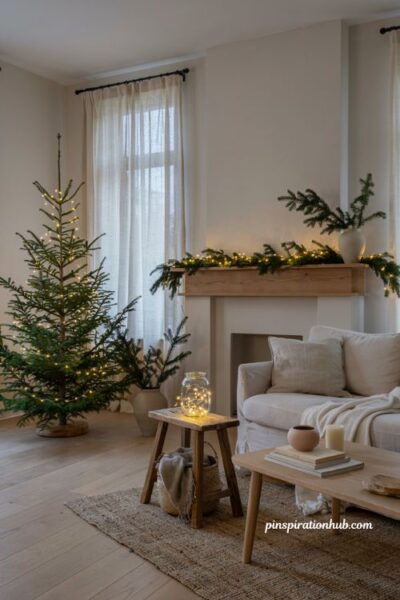
Skip multicolored string lights in favor of warm white fairy lights, which read as calming and elegant rather than bold or distracting. These lights work well wrapped around a tree, draped along a mantel, or simply coiled in a glass jar as a standalone accent piece. Because warm white light has a softer, more golden quality than cool white, it tends to suit a minimalist palette especially well. This is one of the easiest upgrades if your current lights lean toward brighter, cooler tones.
7. Light the Room with Candles or Lanterns
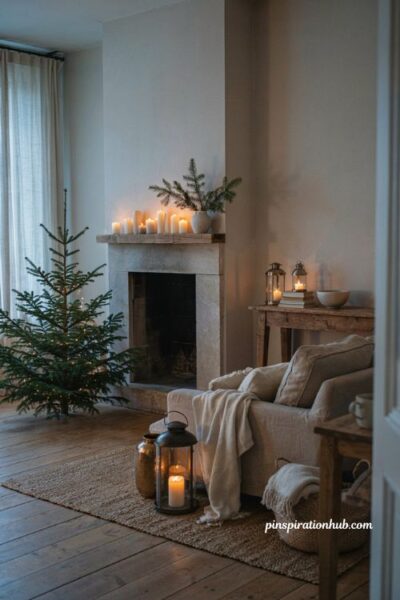
Candles bring an immediate sense of coziness to a minimalist Christmas setup, especially when clustered at varying heights on a mantel or dining table. If open flames aren’t practical in your space, flameless LED candles offer the same warm glow without the worry. Lanterns in neutral or metallic finishes add a slightly more rustic touch, whether placed on the floor, a console table, or used as a centerpiece. Either option adds warmth to a room that might otherwise feel a little too pared back after the initial decorating pass.
8. Add Wooden Accents
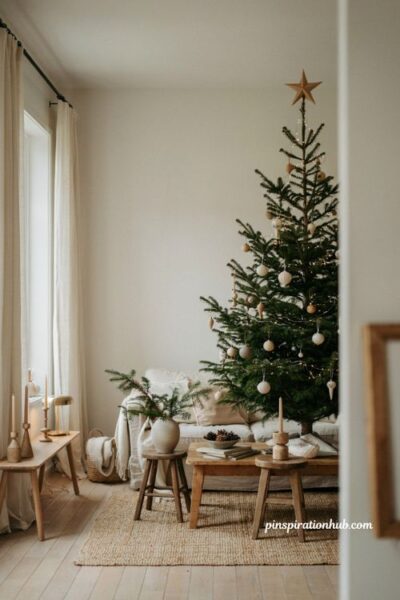
Wooden ornaments, candle holders, or a simple tree stand bring texture and warmth into a scheme that’s otherwise built on whites and neutrals. Left raw and unfinished, wood adds a soft, rustic edge, while a piece paired with brass or gold hardware reads as more refined. This material tends to look especially good against white walls or a flocked tree, where the contrast in texture stands out more clearly. A single wooden tree topper or base can carry this detail through the whole display without needing several separate pieces.
9. Choose a Simple Wreath Base
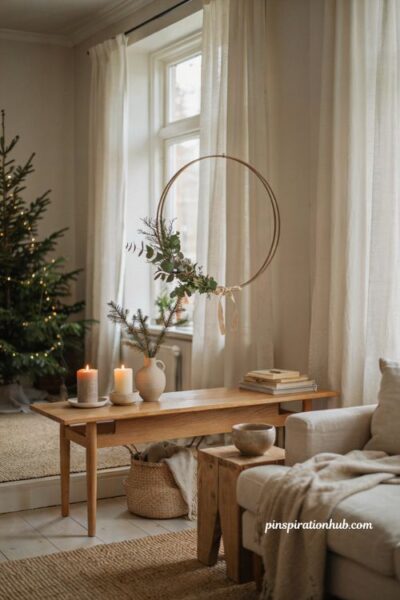
A plain metal hoop wreath offers a sleek, modern foundation that lets the greenery or other elements shine without competing for attention. A wooden ring base leans more rustic and organic if that suits your home better, while an asymmetrical, teardrop-shaped wreath adds a slightly more contemporary edge. Whichever base you choose, keeping the greenery sparse rather than densely packed is what keeps the wreath feeling minimalist rather than traditional. A single ribbon or no ribbon at all, rather than an elaborate bow, finishes the look without adding clutter.
10. Style the Mantel with One Statement Piece
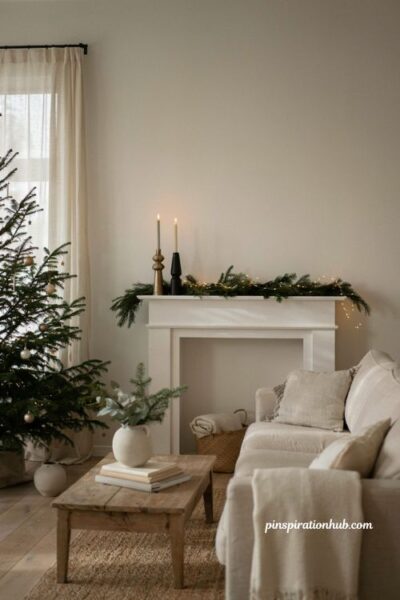
Clear the mantel completely before adding anything back, then choose one or two statement pieces — a pair of sleek candlesticks, a simple garland, or a framed holiday quote — rather than filling every inch of the surface. Metallic finishes like gold, silver, or matte black candlesticks add a modern, sophisticated touch when arranged at varying heights. A monochromatic garland in shades of green or white, draped loosely along the edge, adds festivity without overwhelming the clean look. The goal is a mantel that feels curated rather than fully covered.
11. Keep the Garland Monochromatic
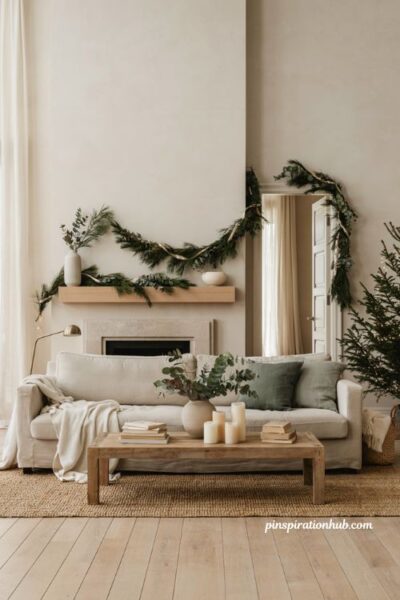
A single strand of garland made from natural greenery, dried eucalyptus, or simple pine works better in a minimalist scheme than anything mixed with multiple colors or textures. Letting it drape loosely rather than pinning it tightly gives the garland a more natural, less rigid look. If you want a bit of shine, a single metallic thread woven through is enough — resist the urge to add multiple accent colors on top of the greenery. This same approach works whether the garland goes on a mantel, a staircase, or a doorway.
12. Try a Minimalist Tabletop Tree
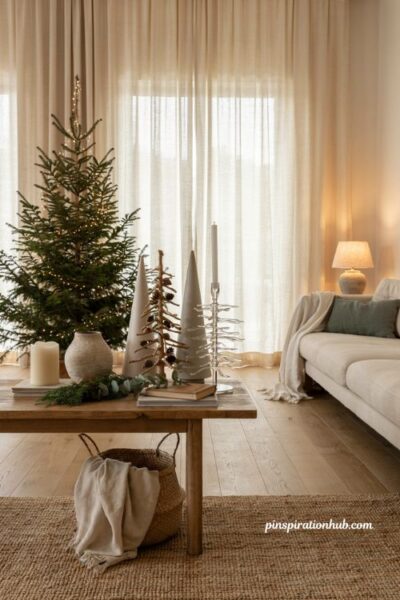
A shapely cone, crystal, or glitter branch tree on a side table or entry console brings holiday presence to a small space without the commitment of a full-sized tree. These work well paired with a small piece of fresh garland at the base, or displayed entirely on their own if you want to stay true to a pared-back look. Grouping two or three tabletop trees of slightly different heights together creates more visual interest than a single tree alone. This is a particularly good option for renters or anyone short on storage space once the season ends.
13. Style a Bowl of Foraged Fruit
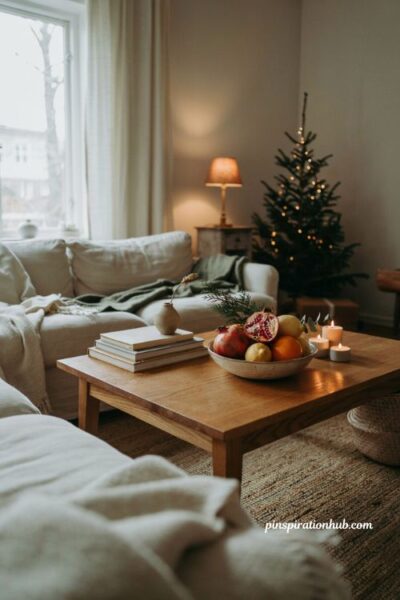
A bowl of pomegranates, or a simple arrangement of citrus, brings natural color and texture into a minimalist Christmas display without needing traditional ornaments at all. This works beautifully as a table centerpiece, or wired together and lit with tea lights for an unexpected mantelpiece garland. The natural imperfection of real fruit gives the display a slightly organic, still-life quality that manufactured decor can’t quite replicate. Swap the fruit out every few days if it’s staying on display for the whole season.
14. Make Paper Chains or Hand-Cut Decorations
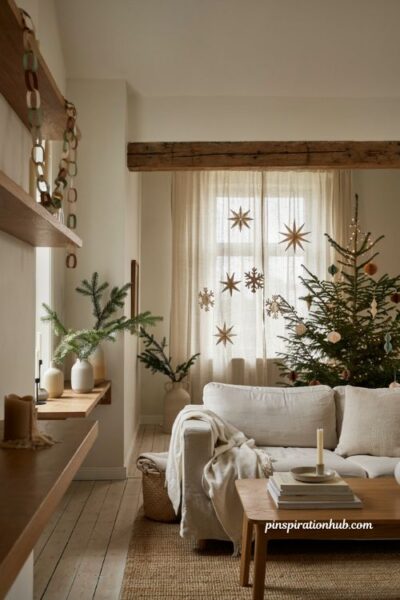
Simple paper chains in silver, green, brown, or gold craft paper bring a gently festive feel that harks back to a simpler, more handmade style of decorating. These are easy to make in an evening and just as easy to compost or recycle once the season ends, which suits anyone trying to keep holiday storage to a minimum. A few hand-cut paper snowflakes or stars scattered among the chains add variety without introducing a new material. This is also one of the more budget-friendly ideas on this list, since the materials are minimal and often already on hand.
15. Add Potted Bulbs for Fragrance and Color
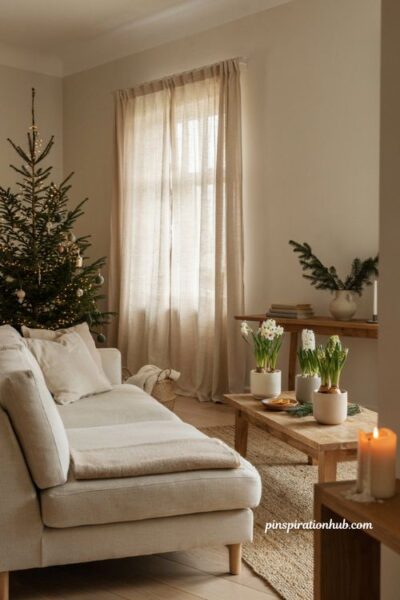
Forcing narcissus or hyacinth bulbs from November onward gives you fresh, fragrant flowers in time for the holidays, adding color and scent without a single plastic ornament involved. Displayed in a simple ceramic pot, these bulbs bring nature indoors in a way that feels considered rather than decorative for its own sake. This is a nice complement to a pared-back tree, since the living element adds warmth that an all-neutral scheme can sometimes lack. It’s also one of the few holiday additions that keeps growing and blooming as the season goes on, rather than sitting static.
Final Thoughts
A minimalist Christmas isn’t about doing less just to do less — it’s about making sure every piece you add actually earns its place in the room. Choose your neutral palette, pick a handful of natural or meaningful pieces, and resist the urge to fill every empty surface just because it’s December. Take a moment to enjoy the room you’ve built before the season gets busy — this quieter kind of holiday decorating tends to be the one you don’t feel like tearing down the second January arrives.
Frequently Asked Questions
Q: What colors work best for minimalist Christmas decor?
White, cream, gray, and beige form the most common neutral base, often paired with one muted accent like sage green or soft blue.
Q: How do you make a Christmas tree look minimalist?
Stick to tone-on-tone ornaments in a limited color range, use warm white lights instead of multicolored ones, and avoid overcrowding the branches.
Q: Is minimalist Christmas decor more affordable than traditional decorating?
It often is, since natural materials like foraged greenery, paper decorations, and fewer overall pieces tend to cost less than a fully stocked traditional display.