
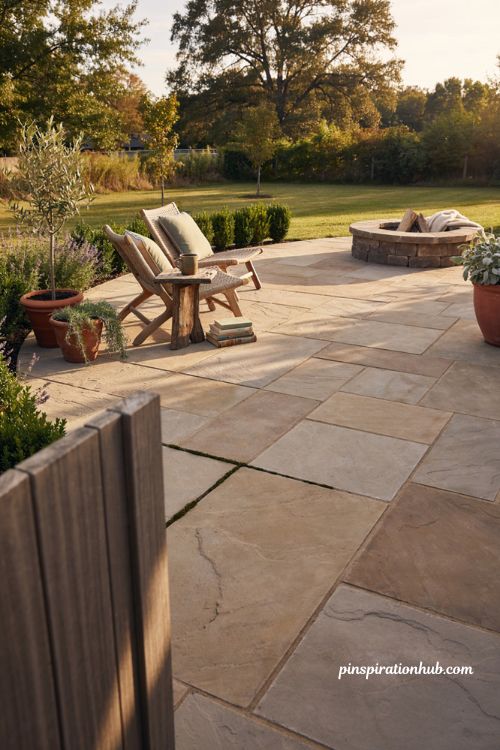
There’s something about a bare backyard that feels full of possibility and a little overwhelming at the same time. You’ve got the space, maybe a vague idea of what you want, but turning grass and dirt into a place people actually want to sit? That’s where pavers come in. They’re one of the most flexible materials out there, working just as well for a tiny reading nook as they do for a full outdoor kitchen setup. Whether you’re drawn to natural stone, classic brick, or clean-lined concrete, there’s a paver patio idea here that fits your style, your budget, and the way you actually want to use your yard.
1. Anchor the Space With a Fire Pit
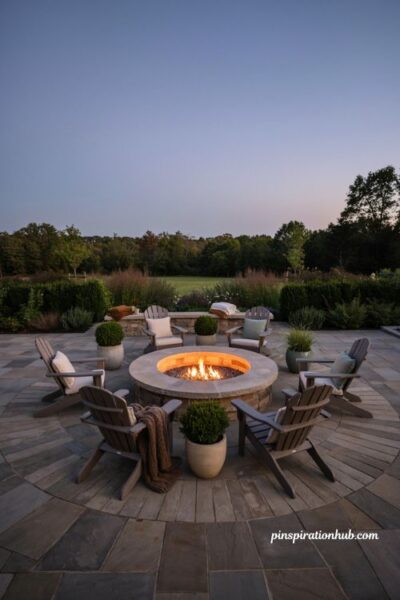
A fire pit gives your patio a reason to exist after the sun goes down. Frame it with thick, wide paver stones set in a circle, then fill the inset with crushed gravel so heat and sparks have somewhere safe to land. Surround it with a ring of Adirondack chairs or a low built-in bench, and toss a few weatherproof cushions on top for softness. The trick is scale — go a size bigger than you think you need, since people always end up pulling chairs in closer than you’d expect.
2. Build an Outdoor Room With a Pergola
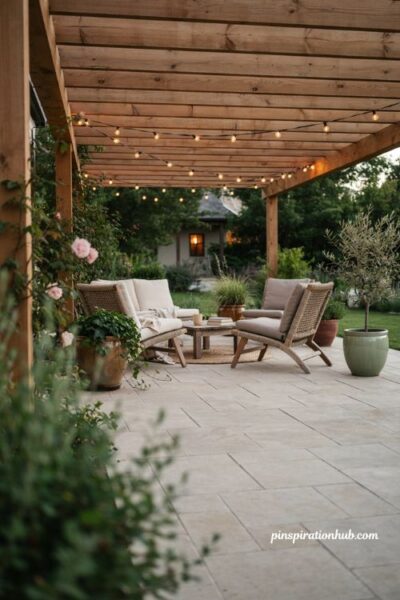
Pairing a pergola with your paver patio instantly makes the space feel like a room instead of just a slab outside. Choose a wood or vinyl structure with slats spaced for partial shade, then string café lights along the beams for evening ambiance. Underneath, lay pavers in a simple grid pattern so the structure above stays the visual focus. It’s a great fix if your patio currently feels exposed or shadeless during the hottest part of the day.
3. Lay Brick in a Herringbone Pattern
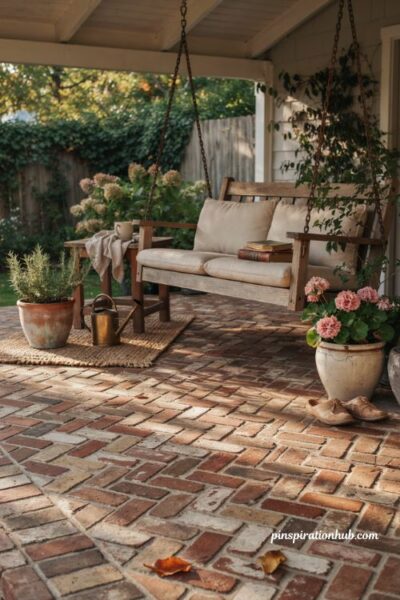
Herringbone brick has this timeless, slightly formal look that never seems to go out of style. The angled, interlocking layout adds movement to an otherwise flat surface, especially when you use antique or tumbled brick with a bit of color variation. It works beautifully under a covered porch or as the base for a swing set seating area. If you want the look without the cost of real clay brick, some concrete pavers now come manufactured to mimic that exact reddish, weathered tone.
4. Soften Hard Edges With Groundcover
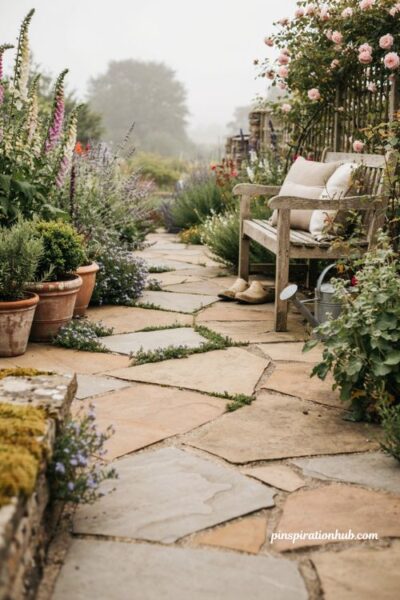
Leaving gaps between irregular flagstone slabs and filling them with low-growing plants like creeping thyme or Corsican mint turns a patio into something that feels grown, not just built. These plants tolerate light foot traffic, release a faint scent when brushed against, and help rainwater soak into the ground instead of running off. Space your stones a few inches apart rather than fitting them tightly, since that gap is exactly what gives the greenery room to spread.
5. Terrace a Sloped Yard Into Levels
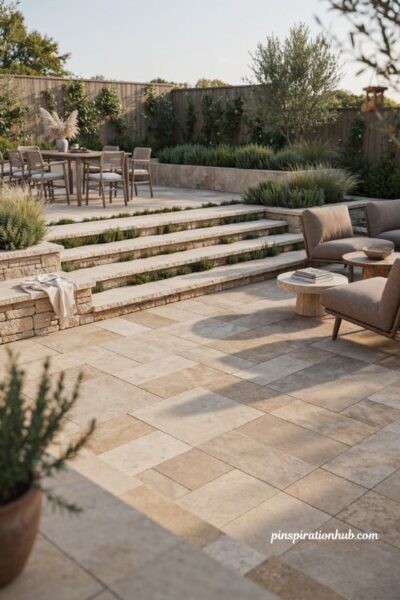
If your backyard has any kind of grade change, don’t fight it — build with it. Pairing a retaining wall with paver steps lets you carve out distinct terraced areas, maybe a dining level up top and a lounge area a few steps down. Each level gets its own function and its own view, and the wall itself can double as extra seating if you cap it with a flat, wide paver ledge. It’s an especially smart move for yards that otherwise feel awkward or unusable.
6. Extend Your Pool With a Matching Deck
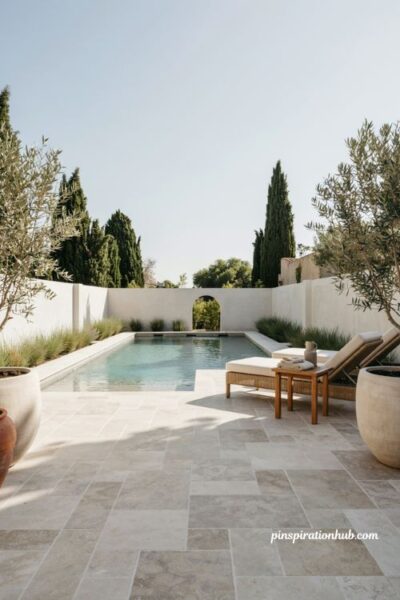
Concrete or textured stone pavers are the go-to choice for pool decks because they stay noticeably cooler underfoot than poured concrete, even in direct sun. Choose a slip-resistant finish and lay them in large-format squares for a clean, resort-like look around the water’s edge. Keep the color palette light — pale grays, sandy tans — since darker pavers absorb more heat and can get uncomfortable to walk on barefoot by early afternoon.
7. Give Your Outdoor Kitchen a Solid Base
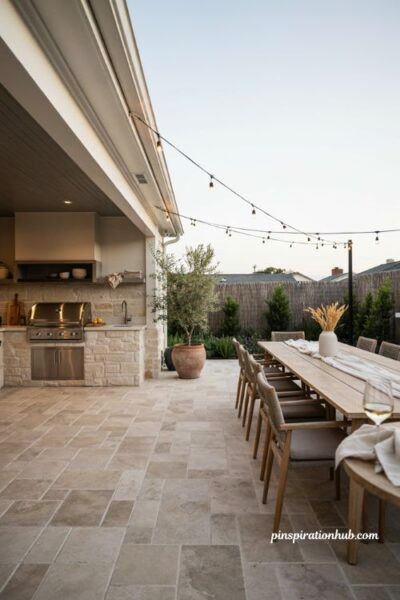
An outdoor kitchen needs flooring that can handle grease spills, heavy foot traffic, and constant heat exposure without cracking or staining. Pavers with built-in stain resistance are worth the upgrade here, especially near the grill and prep counter where messes are inevitable. Lay a slightly larger paver format around the cooking zone to visually separate it from the dining area a few feet away, even without adding a physical divider.
8. Carve a Flagstone Walkway
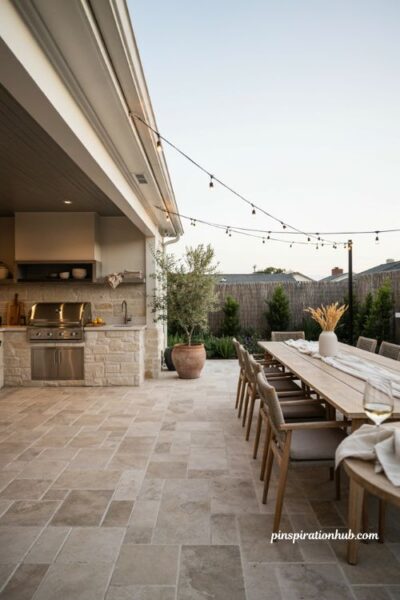
A stepping-stone path made from large, irregular flagstone slabs turns a stretch of lawn or gravel into an actual route from the house to the patio. Space the stones for a natural stride length, not perfectly even like tile, so the path feels organic rather than engineered. Planting low grass or moss in the gaps lets the whole thing blend into the yard over time instead of looking freshly installed forever.
9. Add Built-In Seat Walls
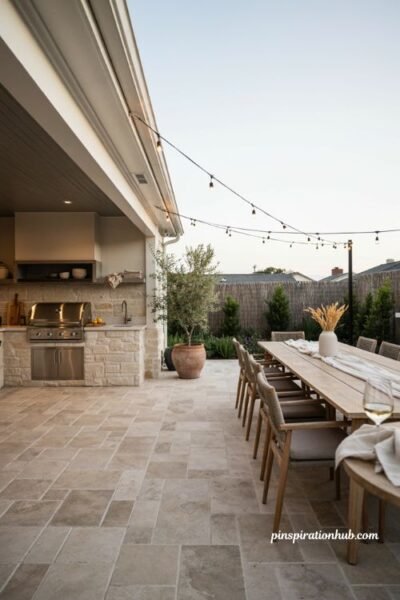
Skip the extra patio furniture and build seating right into the hardscape with a low wall system topped with a smooth bench cap. This works especially well framing a fire pit or defining the edge of a dining area, since it doubles as a boundary and a place to sit. Cap the wall in a contrasting paver tone so it reads as a design feature, not just a structural necessity, and finish the top edge wide enough to hold a drink.
10. Frame the Space With Columns and Planters
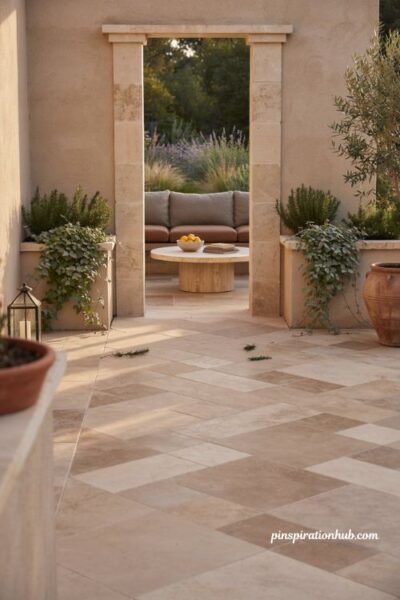
Architectural columns paired with built-in planters give a patio a sense of permanence that furniture alone can’t match. Use them to mark an entryway, support one end of a pergola, or simply bookend a seating area. Fill the planters with something that spills over the edge, like trailing rosemary or sweet potato vine, so the hard stone softens visually within a season or two of planting.
11. Mix Concrete Pavers With Pea Gravel
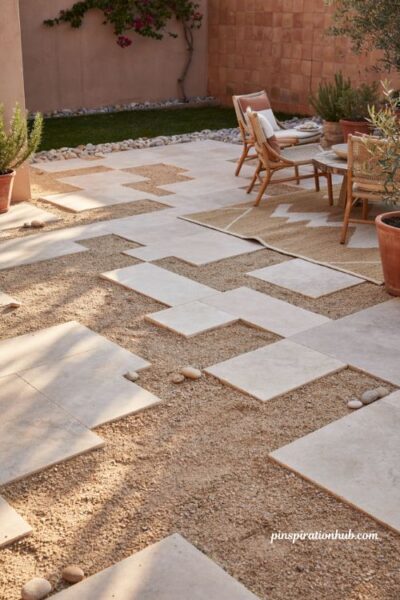
Staggering square or rectangular concrete pavers with generous gaps filled in pea gravel creates a relaxed, low-maintenance look that’s a lot more forgiving than a tightly fitted patio. It drains well, costs less than a solid paved surface, and gives you a natural spot to add a rug or outdoor furniture without worrying about perfect alignment. Mexican beach pebbles or a warm-toned gravel blend can add a surprising amount of color for very little extra cost.
12. Use Natural Stone for Steps and Transitions
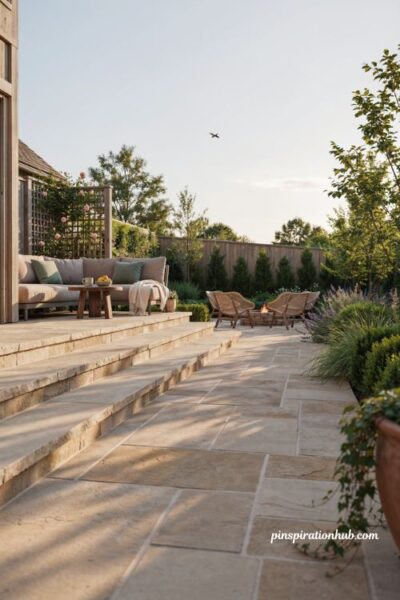
Where your patio meets a change in elevation, natural stone steps handle the transition far more gracefully than poured concrete ever could. Choose slabs in the same material family as your main patio surface — sandstone steps with a sandstone patio, for example — so the whole area reads as one connected design instead of two separate projects. Wide, shallow steps feel more inviting than steep, narrow ones, especially if kids or older family members use the space often.
13. Combine Fire and Water Features
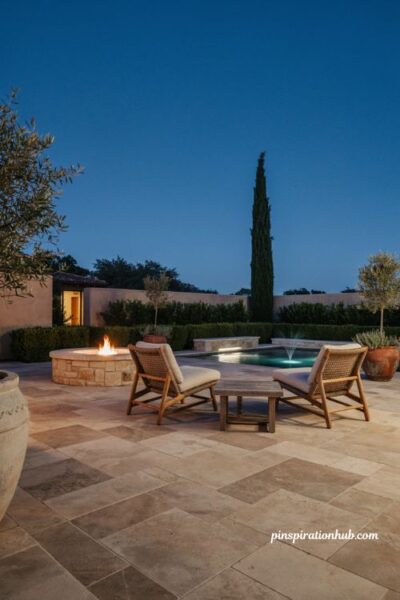
There’s a reason fire and water side by side feels so calming — the contrast between the two elements just works. Set a small fountain or reflecting pool a short distance from your fire pit, both framed in the same paver material so they read as a matched pair rather than two random additions. Even a modest water feature, just a foot or two across, adds enough ambient sound to change the whole mood of the space in the evening.
14. Play With a Checkerboard Pattern
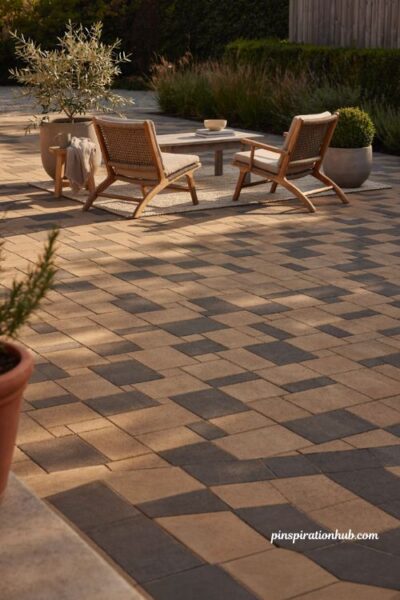
If a single paver color feels a little flat to you, alternate two tones in a checkerboard or diamond layout for instant personality. Red and gray brick is a classic pairing, but you can just as easily mix warm tan and charcoal concrete pavers for a more modern edge. This pattern reads best on a moderately sized patio where the eye has enough room to actually register the repeat, so it’s worth sketching the layout out before you commit to a full install.
15. Design Distinct Nooks Within One Patio
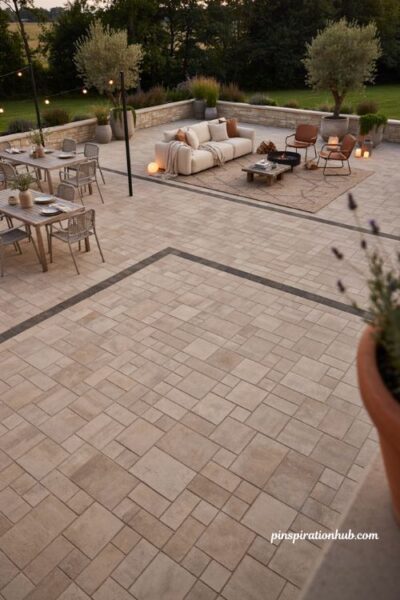
A single large paver surface doesn’t have to serve just one purpose. Use a change in paver color, pattern, or a thin banding strip to visually split the space into a dining nook, a lounge corner, and maybe a small fire pit zone, all without adding physical walls. Rugs, furniture groupings, and even different overhead lighting in each zone reinforce the separation, so the patio feels like several rooms instead of one big slab.
Final Thoughts
Once you start looking at paver options, it’s easy to get stuck comparing colors and patterns for weeks. Pick the one or two ideas here that solve the actual problem your backyard has right now, whether that’s a lack of shade, an awkward slope, or just a patio that’s never felt finished. Sketch out a rough layout, figure out which material fits your budget, and start there. The rest of the details — furniture, lighting, plants — are easy to add once the paver foundation is actually down.
Frequently Asked Questions
Q: What’s the most durable paver material for a patio?
Concrete pavers with a stain-resistant coating tend to hold up best against heavy use, weather, and everyday spills, though natural stone like bluestone or travertine is a close second if properly sealed.
Q: How much space should you leave between pavers?
It depends on the look you want — tight joints of about a quarter inch work for a clean, formal patio, while wider gaps of one to three inches are better if you’re planning to add groundcover or gravel.
Q: Are paver patios cheaper than poured concrete?
Pavers usually cost more upfront per square foot than poured concrete, but they’re easier and cheaper to repair since you can replace individual pieces instead of redoing the whole slab.
1 thought on “15 Brilliant Paver Patio Ideas for Your Dream Backyard Escape”