
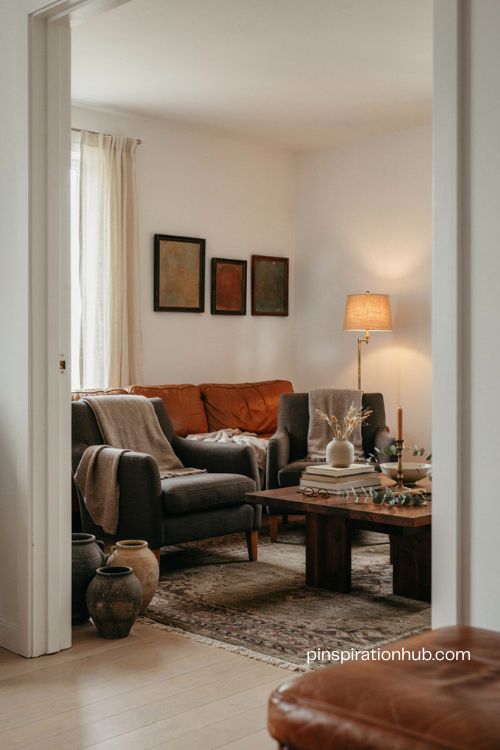
White walls are honestly the trickiest starting point for a moody living room — too bright to ignore, too blank to just leave alone. The good news is you don’t have to repaint everything to get that rich, layered feeling people love. White walls can actually work as the perfect canvas, letting darker furniture, textures, and accents do all the dramatic work instead. Here are fifteen ways to bring real depth and warmth into a white-walled living room without touching a paintbrush.
1. Let White Walls Be the Canvas, Not the Star
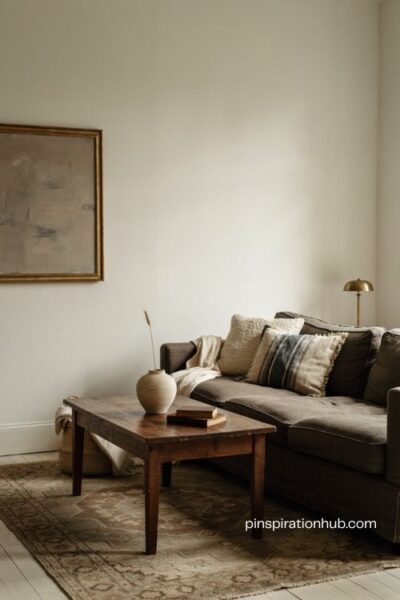
The biggest mindset shift for a moody white-wall room is treating the walls as a backdrop rather than a decision you need to fix. White walls give darker elements — furniture, art, textiles — room to stand out without competing for attention. This approach avoids the cramped feeling that can happen when every surface in a room is trying to be dramatic at once. Start by picking one or two dark pieces you want to feature, and let the white walls simply frame them.
2. Choose a Bold, Dark Sofa as Your Anchor
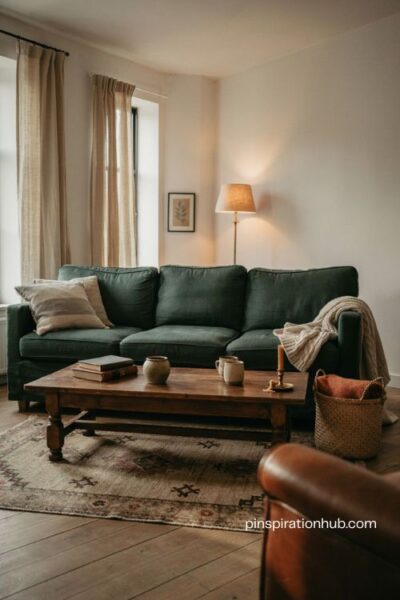
A sizable sofa in a deep, moody tone becomes the natural focal point of a white-walled room. Charcoal, deep navy, or forest green upholstery reads as rich and intentional against a bright backdrop, doing the visual heavy lifting so nothing else in the room has to. Pair it with a substantial dark coffee table for balance, and the two pieces together create enough contrast that the white walls stop feeling stark and start feeling like a deliberate design choice.
3. Add a Dark Accent Wall Instead of a Full Repaint
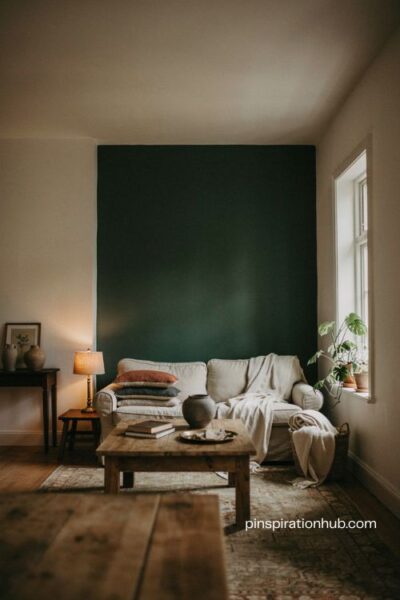
If you’re not ready to commit to painting every wall, a single accent wall in navy blue, charcoal gray, or forest green offers a lower-stakes way to test the moody look. This approach keeps most of the room bright while giving you one wall of real depth and drama. It’s also easier to reverse later if your taste changes, since you’re only repainting one surface instead of an entire room.
4. Layer In Velvet and Leather Textures
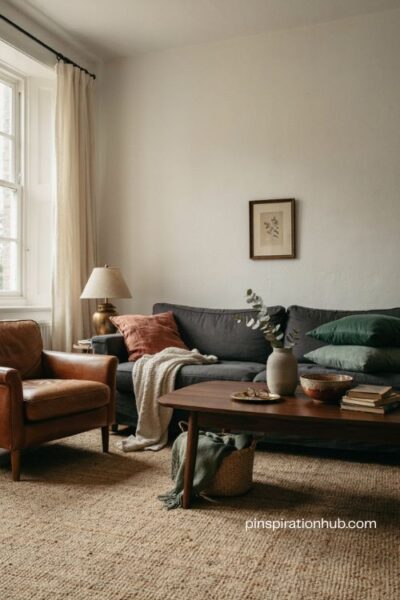
Texture does a lot of work in a moody room, especially one with white walls providing the backdrop. Velvet throw pillows, a leather accent chair, or a textured area rug introduce both warmth and richness without requiring any additional color commitment. These materials catch and hold light differently than flat white paint, which naturally adds depth and visual interest even in an otherwise bright space.
5. Hang Dark-Toned Artwork or Framed Images
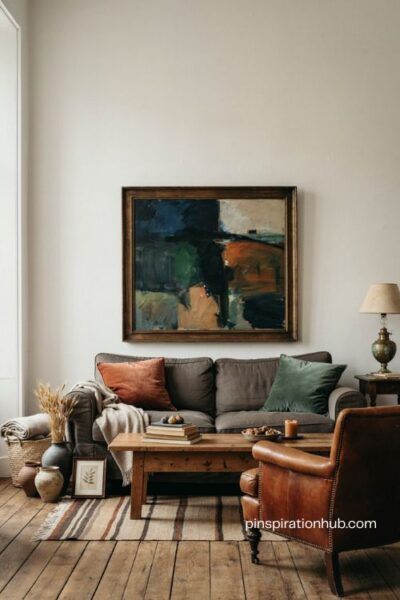
Artwork with darker tones reinforces a moody design motif while adding a personal touch to the room. A single large piece with deep, rich colors — think navy, forest green, or charcoal — creates a strong focal point against white walls, while a smaller gallery of similarly toned pieces spreads that moodiness across a larger section of wall. Either approach lets the art carry the drama so the walls themselves can stay neutral.
6. Bring In Plants With Dark Leaves
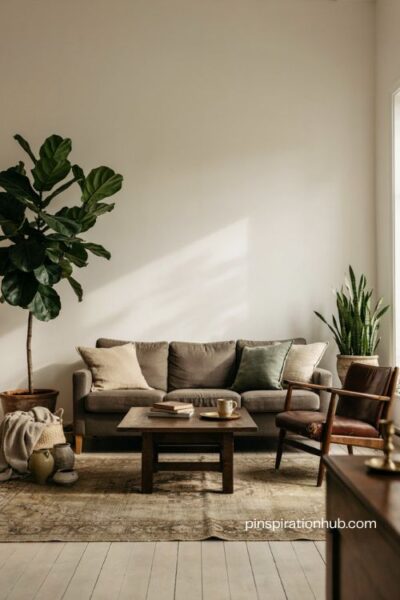
Greenery with deep, dark foliage softens the starkness of white walls while contributing to the overall moody feeling. Plants like a fiddle leaf fig, a snake plant, or anything with rich, saturated leaf color add life and texture to the room without introducing any new paint or fabric. Position them near the room’s other dark elements — the sofa, an accent chair — so they read as part of the same intentional palette rather than a separate decorating decision.
7. Layer Ambient, Task, and Accent Lighting
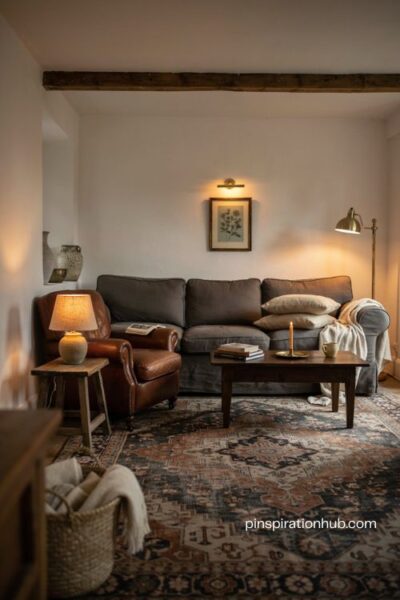
Lighting is what transforms a moody room from merely dark-accented to genuinely atmospheric. Combining ambient lighting for overall glow, task lighting for reading or activities, and accent lighting to highlight specific pieces creates a welcoming, layered feel that a single overhead fixture simply can’t achieve. Vintage or industrial-style fixtures add unique character on top of the functional benefit, giving the room another opportunity for personality against the white backdrop.
8. Try a Wallpapered Accent Wall for Texture and Depth
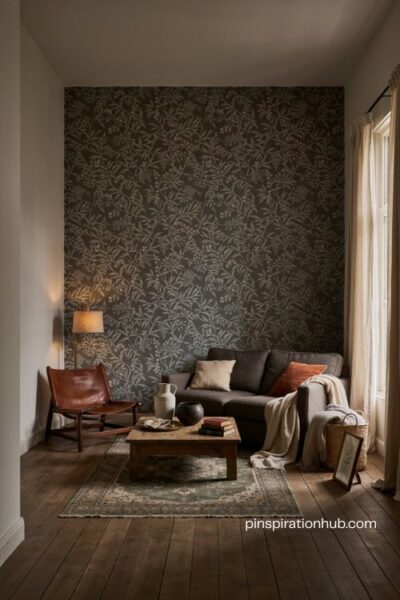
For a bolder statement than paint alone, wallpapering one wall in a darker design or heavily textured pattern creates an eye-catching centerpiece. This works particularly well behind a sofa or as a backdrop for a media console, since the wallpaper becomes the room’s clear focal point. Keep the rest of the walls white so the wallpapered section retains its impact rather than getting lost among competing patterns.
9. Add a Bold, Colorful Rug for Contrast
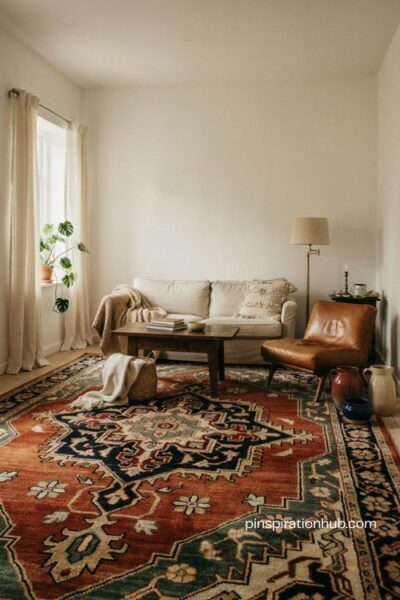
A rug doesn’t have to match a moody color palette exactly to contribute to the room’s depth — sometimes a bold, multicolored pattern against white walls creates an eclectic, layered feeling on its own. The contrast between crisp white walls and a richly patterned floor covering adds visual interest at ground level, balancing out any starkness overhead. This is an especially good option if you’re not ready to commit to dark furniture or wallpaper yet.
10. Vary Your Shades of White
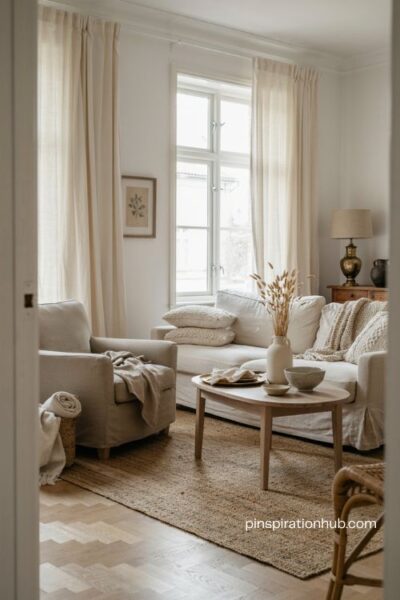
Not all white is created equal, and mixing shades — bright white, warm beige, soft greige — throughout a room adds subtle depth even before darker accents come into play. This layering technique gives a room dimension and keeps it from feeling flat or sterile, which makes the eventual introduction of moody accents feel even more intentional. A calming, sophisticated room often starts with this kind of tonal variation in the neutrals themselves.
11. Mix In Graphic Accents for Drama
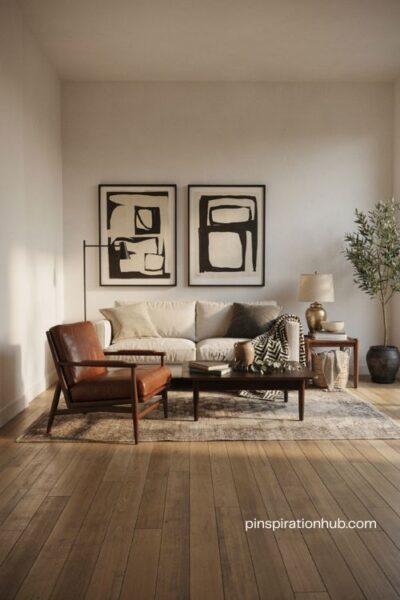
Darker neutrals like black and brown, introduced through graphic patterns or bold accent pieces, add real drama to an all-white space without overwhelming it. A patterned throw, a set of black-framed art, or an accent piece with strong graphic lines gives the eye something dramatic to focus on. Combining organic textures with these graphic accents creates a sophisticated feel that reads as curated rather than accidental.
12. Use a White-Painted Fireplace as a Modern Anchor
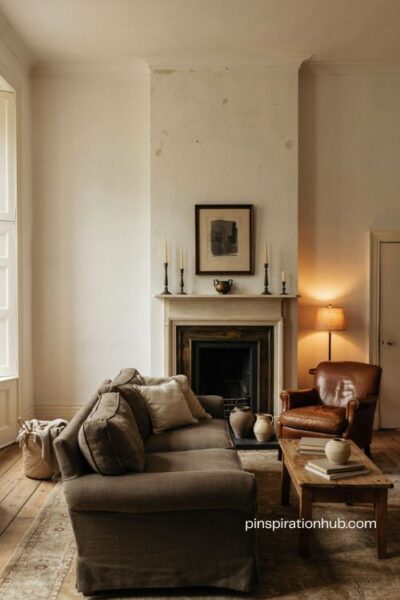
Painting an existing fireplace the same white as the surrounding walls modernizes a traditional feature while keeping the room’s canvas intact. Style the mantel with gold-toned or dark metal accents to introduce a touch of moodiness right at the room’s natural focal point. This approach works especially well in rooms where you want the fireplace to still command attention, just without the visual weight of a dark, heavy surround.
13. Add Cozy Texture Through a Bouclé Sofa or Sheepskin Throw
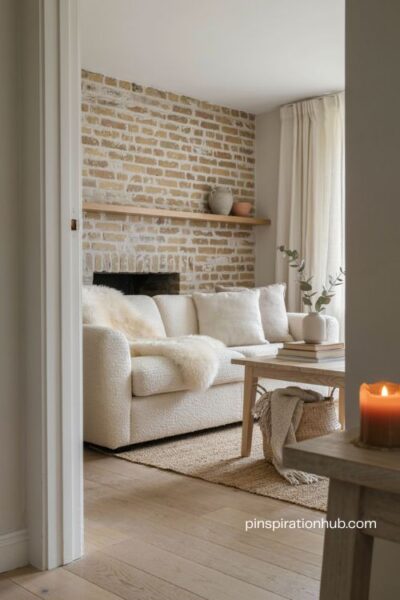
Combining lime-washed brick, matte white paint, and tactile materials like bouclé upholstery or a sheepskin throw makes an all-white living room feel genuinely cozy rather than cold. This textural approach proves that moodiness doesn’t always require dark color — sometimes warmth comes purely from how a room feels to touch. Light wood accents and simple curtains round out this look without pulling focus from the textures themselves.
14. Create a Mood Board Before You Commit
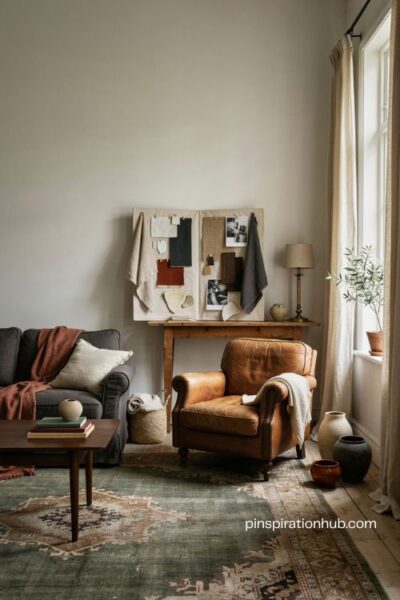
Before making any purchases, put together a mood board that captures the colors, textures, and styles you want to bring into the room. This step helps ensure a cohesive look across every element you add, rather than ending up with a collection of dark pieces that don’t quite work together. A clear vision upfront saves time and money, especially when you’re layering moodiness onto an existing white-walled space rather than starting from scratch.
15. Keep Statement Furniture Bold But Not Overwhelming
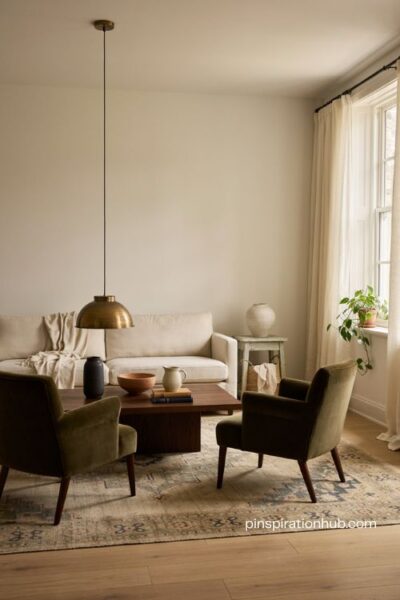
Choose furniture pieces that capture attention without dominating the entire room. A single standout light fixture or a pair of conversation-worthy side chairs can carry a white living room’s personality on their own, without needing every other element to compete for the same spotlight. This restraint is what keeps a moody white-wall room feeling curated and intentional rather than cluttered.
Final Thoughts
Sometimes the simplest changes really do have the biggest impact — a new rug, a bolder sofa, or even just a shift in your lighting can turn a plain white room into something that feels genuinely cozy and layered. You don’t need to overhaul everything at once; start with one or two of these ideas and let the rest build naturally from there. The white walls were never really the problem — they just needed the right supporting cast.
Frequently Asked Questions
Q: Can white walls really work for a moody living room?
Yes — white walls function as a neutral backdrop that lets darker furniture, textiles, artwork, and lighting carry the moody aesthetic, which can actually feel more spacious than an all-dark room.
Q: What’s the easiest way to add moodiness without painting?
Layered lighting, a dark area rug or sofa, and artwork with deeper tones are the fastest ways to introduce drama into a white-walled room without picking up a paintbrush.
Q: Do I need an accent wall to achieve a moody look?
No — while a single dark accent wall is one popular option, furniture, textiles, and lighting alone can create real depth and warmth even if every wall stays white.