
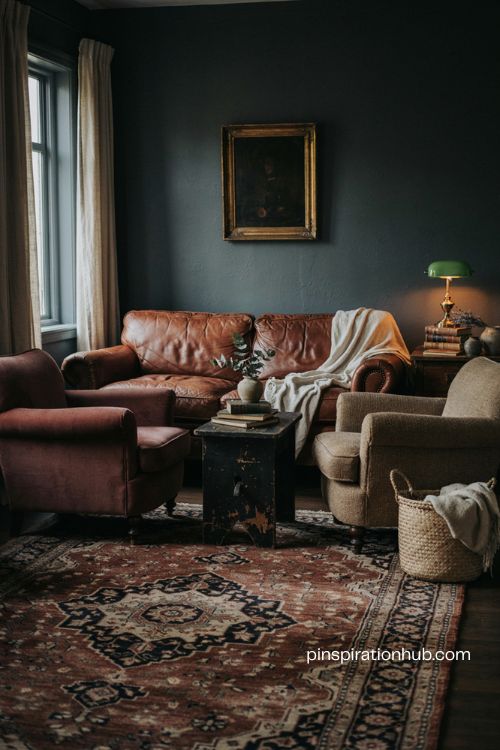
There’s a particular kind of magic in walking into a room and instantly feeling like it’s wrapping you in a giant hug. That’s the whole appeal of a dark moody living room — swathes of inky color, rich fabrics, and distressed metals coming together to create something bold, dramatic, and genuinely comforting. The British have a word for this kind of space: a “snug,” a small, comfortable room built entirely for peace and relaxation. Here are fifteen ways to bring that same magic into your own living room, whether you’re ready to go full black or just want to dip a toe into the dark side.
1. Go All In With Black Walls
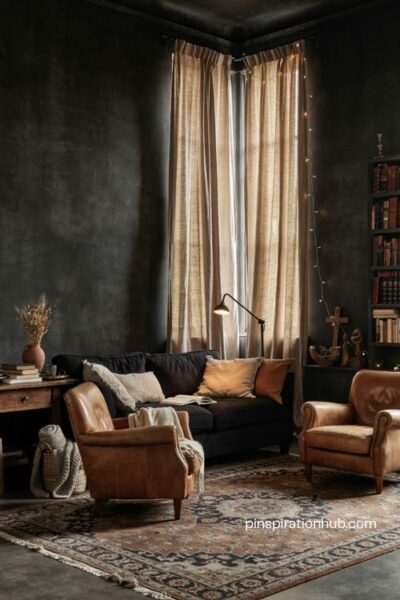
There’s no moodier a room than one wrapped entirely in black, but the trick to pulling it off is balance. Pair black walls with warming elements like tan leather, oatmeal-colored drapes, and earthy accessories such as earthenware vases and wooden ornaments. Mixing a black sofa with a couple of tan armchairs keeps the room from feeling like a cave, and fairy lights or warm-bulb lamps add just enough glow to soften the drama. This look works especially well in rooms with plenty of natural light or high ceilings, since the space can absorb the intensity without feeling closed in.
2. Try an Ornate Feature Wall
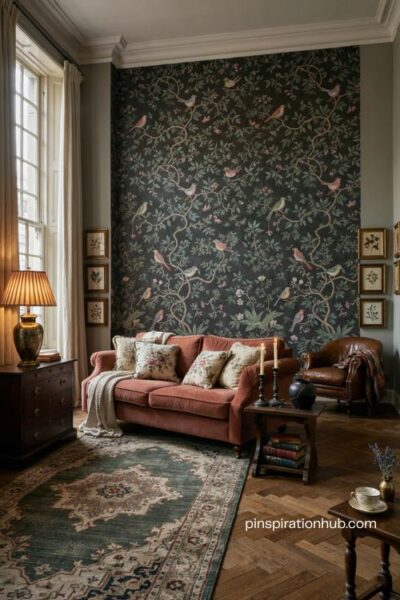
A single dramatic wall does a lot of heavy lifting in a moody living room. Victorian-style wallpaper with intricate patterns, or a one-of-a-kind painted mural, gives the space real personality without requiring you to commit to dark paint everywhere. Adding softer elements like florals, birds, or nature motifs within the design helps balance out an otherwise all-encompassing dark backdrop. Distressed metal candlesticks and antique brass lamps pair beautifully with this kind of statement wall.
3. Add a Gothic Gallery Wall
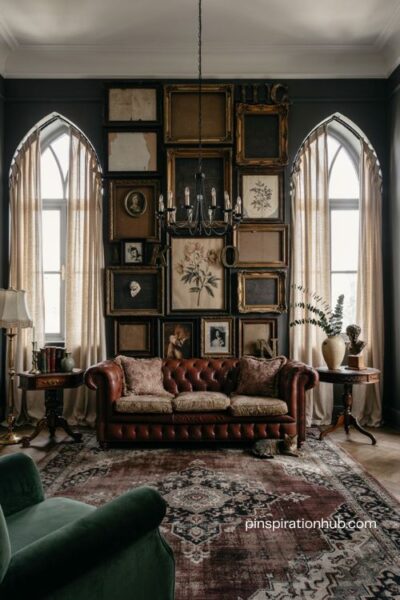
If you’re drawn to a “more is more” approach, a standout gallery wall can carry an entire room’s mood on its own. Mix printed cushions, ornate empty picture frames, metal wall letters, and unexpected decor pieces for a look that feels curated rather than random. A striking modern chandelier overhead ties the whole gallery together and adds one more layer of drama to an already bold space. This approach works best when you commit fully — half-hearted gallery walls tend to look unfinished rather than intentional.
4. Lighten the Load With a Touch of White
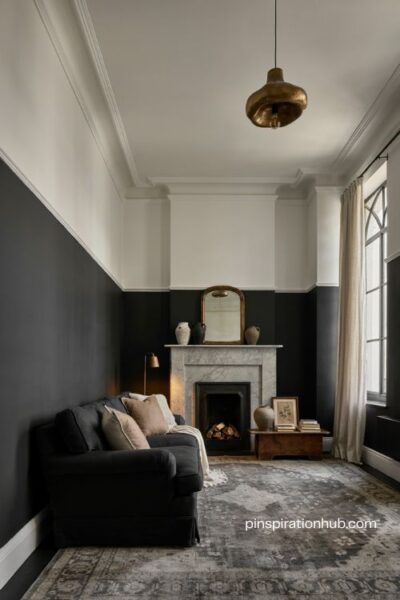
A dark room doesn’t have to feel heavy from floor to ceiling. Painting the upper walls or ceiling white while keeping the lower portion black creates a monochrome effect that lifts the whole space. Pair this with a cool marble fireplace and a playful feature light fixture, and the room reads as sophisticated rather than oppressive. Against this lighter backdrop, an aged brass mirror or other metallic accent really gets to shine.
5. Pair Black and Gold for Instant Glamour
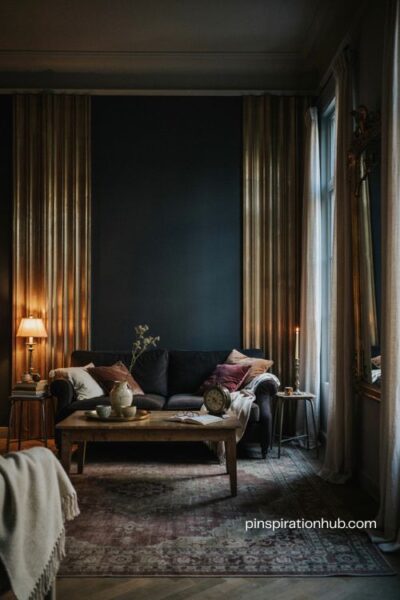
Black and gold is one of the most powerful color combinations in interior design, and it’s a natural fit for a moody living room. Highlight gold touches through accessories scattered around a statement dark wall, or go bolder with brass paneling that adds texture along with color. This combination photographs beautifully in low light, which makes it a strong choice for a room where you’ll spend a lot of evening time.
6. Use Velvet to Pull Colors Together
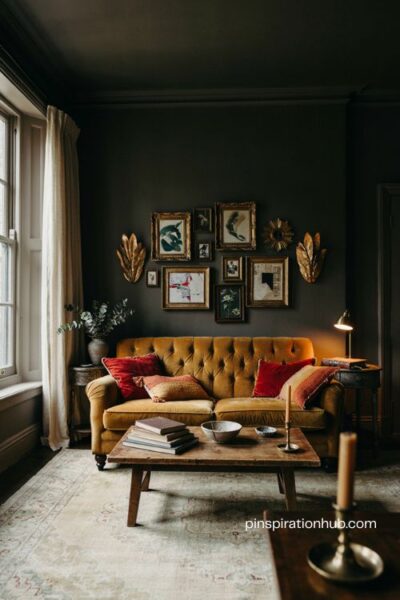
Velvet has a way of making any color feel richer, and it’s especially effective at tying a room’s palette together. A sofa in soft mustard velvet, for example, can pull gold tones from a nearby gallery wall while matching the texture of brass wall art elsewhere in the room. Red scatter cushions add a splash of boldness against a matte black backdrop, while a pale-toned rug brings in just enough light to keep the whole scheme from feeling too heavy.
7. Swap Black for a Rich Navy
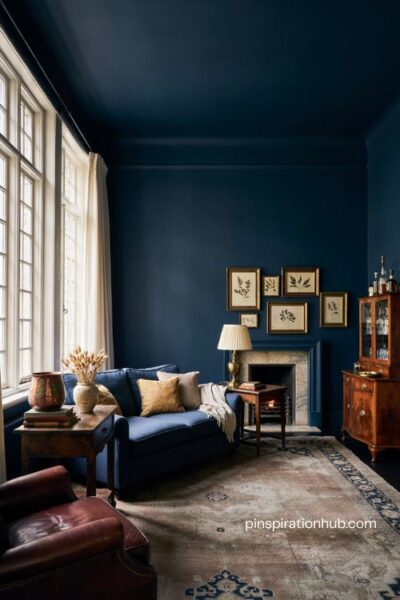
If painting your entire living room black feels like too big a leap, navy blue offers a softer entry point into the moody aesthetic. Paint walls and even the fireplace surround in a deep midnight shade, then pair it with brass accents for a combination that reads as elegant rather than harsh. Aged copper is another option worth considering here — its warm orange undertones complement blue beautifully, especially when it shows up in something like a polished walnut drinks cabinet.
8. Build a Feature Wall From Patinated Metal
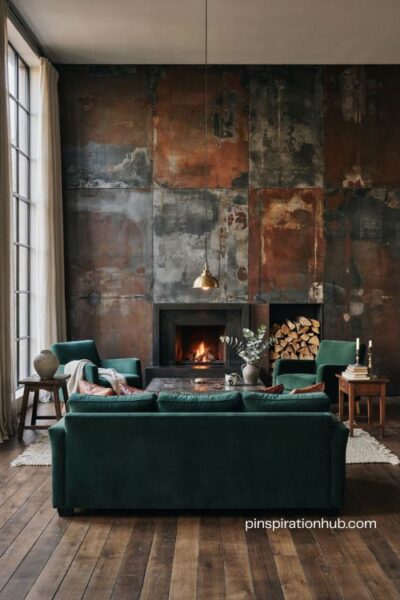
Not every dark and moody living room needs to start with a paint can. A media or feature wall made entirely of aged, patinated metal creates a dramatic, industrial feel before you’ve even considered a single color swatch. Incorporating a working fireplace into this kind of wall, along with neat log storage, adds warmth and function to the drama. Pair it with jewel-toned or deep bottle-green seating for an even moodier finish.
9. Embrace Maximalist Styling in Low-Light Rooms
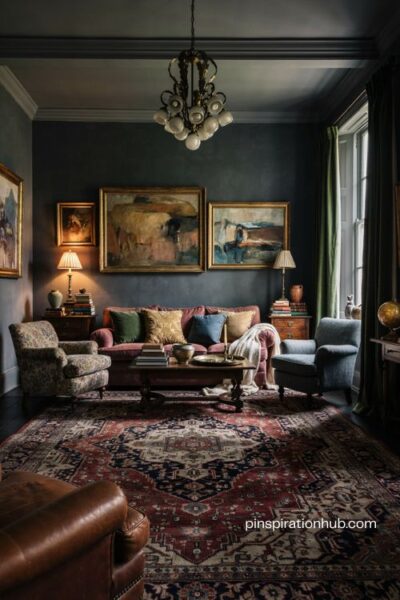
A room with a low ceiling and limited natural light might seem like a poor candidate for a dark palette, but sometimes the boldest choice is the right one. Large statement paintings, mixed textures, and an oversized chandelier can turn a challenging space into something that feels cozy rather than cramped. The key is layering enough visual interest that the room reads as intentionally maximalist rather than accidentally cluttered.
10. Take Moody Modern in a Contemporary Direction
Dark and moody doesn’t have to mean Victorian gothic. A storm-cloud gray wall paired with a section of copper cladding brings the whole aesthetic firmly into contemporary territory. This approach works particularly well in newer builds or minimalist spaces, where the mottled, textured finish adds warmth and depth without relying on ornate detailing or heavy patterns.
11. Combine Copper and Corten Steel Tones
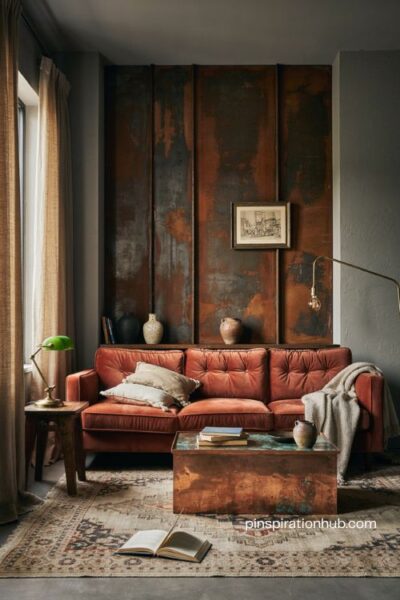
A warm metallic palette built around copper and weathered Corten steel brings an industrial edge to a moody living room without feeling cold. An inviting velvet sofa in a rust or russet tone nods to these metallic finishes, while charcoal gray walls provide unexpected but effective contrast. Vintage brass lamps and a mix of softer fabrics keep the overall look from feeling too hard-edged.
12. Anchor the Room With a Dark Fireplace Surround
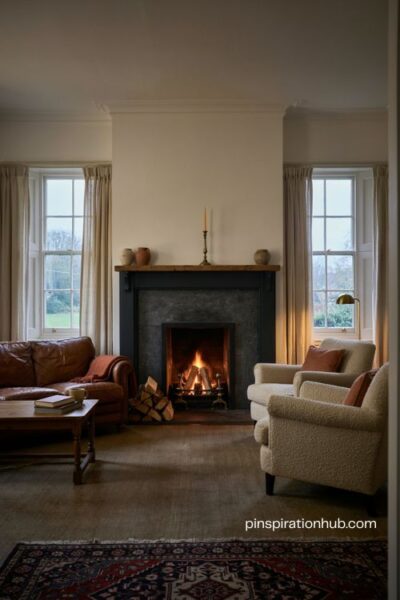
A fireplace naturally draws the eye, which makes it the perfect place to lean into moody design. A deep painted surround, dark stone, or brick gives the room architectural weight, and the flicker of an actual fire deepens the cocooning effect once evening sets in. Keep the mantel styling simple so the fireplace itself remains the clear visual anchor rather than competing with too many small decor pieces.
13. Layer Multiple Shades of the Same Color
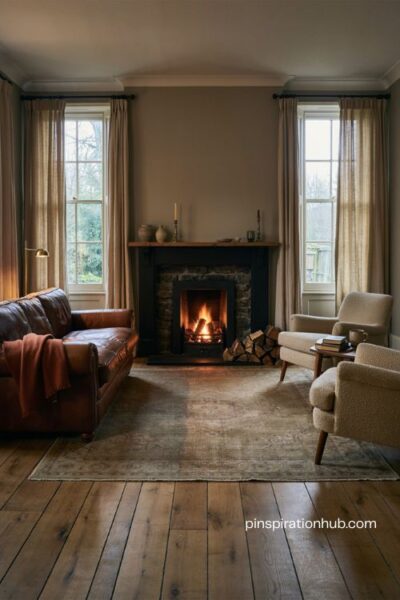
Using more than one shade of a single color — several grays, several greens, several blues — helps break up a moody scheme without introducing visual chaos. As a general rule, let the darkest shade dominate, use a mid-tone as a secondary layer, and reserve the lightest shade for small accents only. This layered approach gives the room real depth while still reading as one cohesive palette rather than several competing ideas.
14. Add Warmth With Aged Brass Lighting
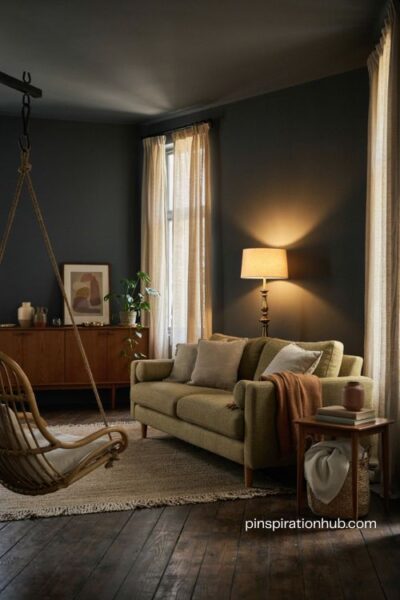
Lighting fixtures do more than illuminate a moody room — they set its entire tone. An aged or antique brass floor lamp, especially one with a warm-toned shade, adds a golden glow that photographs beautifully against dark walls. This is particularly effective in retro or mid-century inspired spaces, where a rattan hanging chair or coir carpet can round out the vintage feel alongside the warm metal tones.
15. Soften Sombre Walls With Nature Motifs
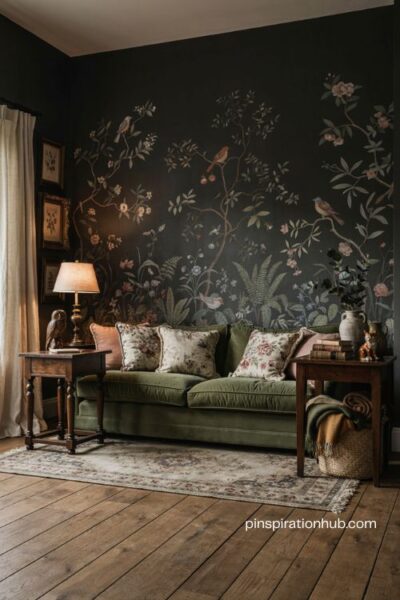
An all-black or all-dark room can start to feel heavy without something to break up the intensity. Incorporating florals, birds, stags, or other nature-inspired motifs — whether through wallpaper, a painted mural, or artwork — softens an otherwise all-encompassing dark backdrop. This detail keeps the room feeling alive and layered rather than simply dark for the sake of being dark.
Final Thoughts
A dark moody living room isn’t about chasing a trend — it’s about creating a space that feels like it’s telling you everything’s going to be alright the moment you walk in. Whether you go all the way with black walls or start small with one deep accent, the goal is the same: a room with real depth, warmth, and personality. Pick one idea that speaks to you here, and let the rest of the space build around it over time.
Frequently Asked Questions
Q: Will a dark moody living room feel too small or closed in?
Rooms with plenty of natural light or higher ceilings handle a full dark palette well, while smaller or dimmer rooms often do better with a lighter touch of white on the ceiling or trim to keep things feeling open.
Q: What colors work best for a dark moody living room?
Black, charcoal, deep navy, forest green, and rich plum are all popular choices, and pairing any of them with warm metals like brass or copper keeps the space feeling inviting rather than cold.
Q: How do I make a dark living room feel cozy instead of gloomy?
Layered warm lighting, natural textures like wood and leather, and a few softening touches like florals or greenery are what turn a dark color scheme into a genuinely cozy space rather than a flat, gloomy one.