
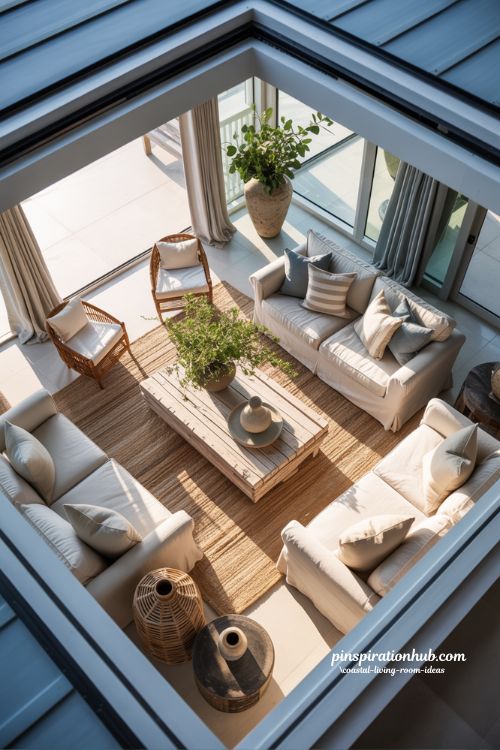
There’s something almost magical about walking into a room that instantly makes you feel like you’re at the beach — even when you’re nowhere near one. That’s exactly the promise of a coastal living room done right. It’s not about stuffing seashells into every corner or hanging fishing nets on the wall. It’s about that specific kind of calm: the light, the air, the colors that feel borrowed from the sea. If you’ve been dreaming of coastal living rooms that actually feel elevated and liveable — not kitschy — you’re in exactly the right place.
- Coastal style works in any home, from beachfront properties to landlocked city apartments
- The key elements are a natural color palette, organic textures, and maximized light
- You don’t need an ocean view to create a room that feels like the best version of a summer day
Why Coastal Living Rooms Are Having a Moment
Coastal decor has quietly shifted away from the nautical-themed rooms of decades past. Today’s coastal living rooms are more refined, more versatile, and honestly, more beautiful. They pull inspiration from the seashore without being literal about it — think pale driftwood tones, weathered textures, and layered blues that feel as rich and variable as the ocean itself.
The real appeal is how coastal style translates across different homes and lifestyles. A family in a suburban home can achieve the same airy, sun-warmed feeling as someone in a beachfront property. The design language is universal: light, warmth, natural materials, and a color palette that never tries too hard.
| Style Variation | Key Colors | Best Materials | Mood |
|---|---|---|---|
| Coastal Minimalist | White, pale blue, beige | Linen, light wood | Calm, uncluttered |
| Coastal Boho | Neutrals, blue, warm gold | Rattan, jute, cotton | Relaxed, layered |
| Coastal Farmhouse | White, soft blue, black accents | Shiplap, weathered wood | Cozy, transitional |
| Coastal Midcentury | Sandy beige, navy, white | Clean-lined furniture, glass | Sophisticated, retro |
| Moody Coastal | Blue-gray, dark wood, cream | Rattan, Edison bulb fixtures | Atmospheric, rich |
17 Beautiful Coastal Living Room Ideas Worth Saving
1. Go Boho With Layered Natural Textures
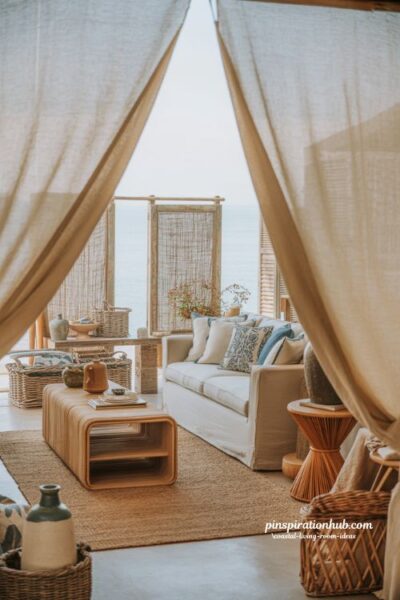
A coastal boho living room hits the sweet spot between relaxed and intentional. Scatter patterned blue and white throw pillows across a neutral sofa, then layer in natural textures — a jute rug, a rattan side table, a woven basket or two. The key is keeping the backdrop calm so the textural details can do their work. This combination feels effortlessly collected rather than decorated, and it photographs beautifully for any season.
- Stick to a blue-and-white pillow palette with one warm accent color
- Choose a neutral sofa to anchor the layered look without competing
- Mix at least three different natural textures for depth
2. Paint One Wall in Moody Blue-Gray
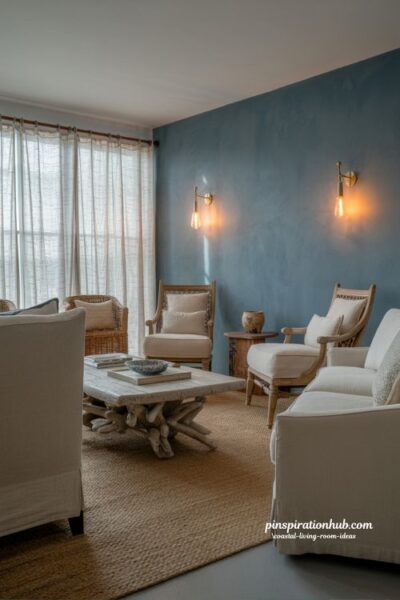
Not every coastal room needs to be bright white. A moody, grayish-blue accent wall adds the kind of atmospheric depth you find in a harbor town on a cloudy afternoon — and it’s stunning. Contrast it with pale linen textiles, rattan chairs, and warm Edison bulb wall sconces for that soft, glowing ambiance. The mix of dark and light creates a color palette as variable and interesting as the sea itself, without feeling heavy.
- Choose a blue-gray that reads warm, not cold, in your specific lighting
- Pair with cream or pale linen upholstery to balance the depth
- Warm bulb sconces make this look feel cozy rather than dramatic
3. Use Navy and Sandy Beige Together
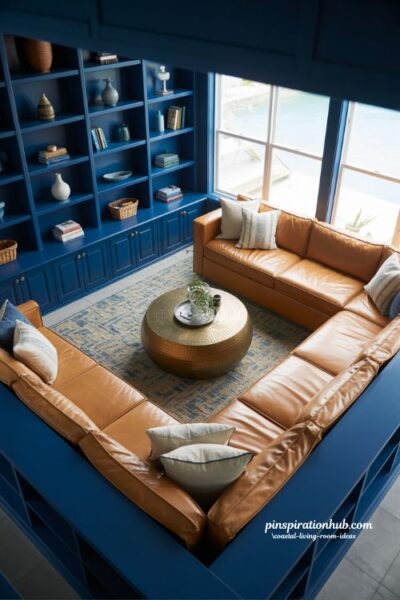
Dark navy and sandy beige is one of those combinations that simply works. It’s the ocean and the beach sitting side by side. Try navy floor-to-ceiling built-ins paired with a large sandy beige leather sectional, then tie the room together with a blue-and-tan patterned area rug. A hammered metal coffee table styled with a few blue books completes the look. It’s polished and coastal without leaning into any obvious beach clichés.
- Navy built-ins read as bold but grounded when paired with warm neutrals
- A leather sectional in sandy beige adds durability alongside visual warmth
- Use a patterned rug to bridge the two main colors naturally
4. Add Sailor Stripes Through Accessories
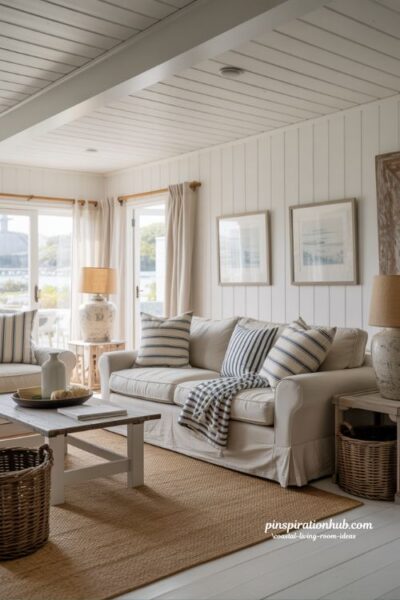
You don’t need to paint your walls or buy new furniture to bring coastal energy into your living room. Sailor stripes — classic navy and white — introduced through pillows, a throw blanket, and a framed print or two can completely shift the feel of a space. Pair these with a white shiplap ceiling for a cozy, cottage-by-the-sea vibe. The trick is keeping stripes as accents, not the main event, so the room stays relaxed instead of themed.
- Limit stripe patterns to soft goods: pillows, throws, and small framed prints
- A white shiplap or beadboard ceiling amplifies the coastal cottage effect
- Balance stripes with solid neutral pieces so the room feels curated
5. Maximize Light With Minimal Window Treatments
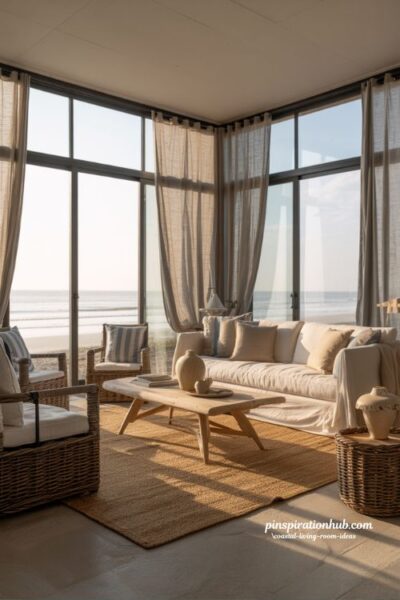
In a coastal living room, natural light is one of your most important design elements. Keep window treatments clean and simple — gauzy linen curtains, solar shades, or nothing at all if your privacy allows it. Let the light move through the room freely and watch how it shifts the colors of your furniture and walls throughout the day. If you have a water view, let it serve as living wall art. The outdoors should feel like part of the room.
- Sheer or gauzy curtains filter light beautifully without blocking the view
- Clean solar shades are a practical choice for rooms facing direct sunlight
- Avoid heavy drapes — they contradict the airy coastal aesthetic entirely
6. Layer Tonal Blues From Art to Accessories
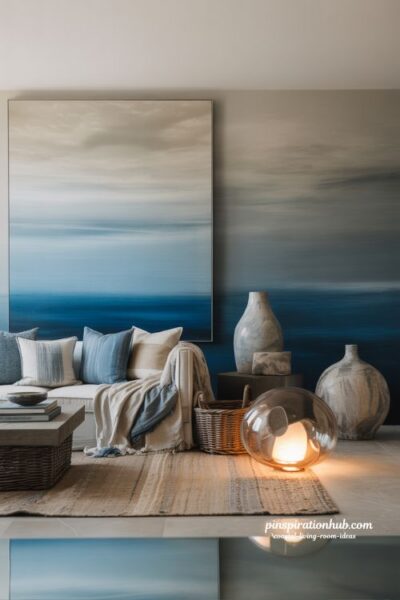
Tonal blue layering is an easy way to add coastal depth without committing to a dramatic paint color. Start with a statement piece of blue wall art, then echo those tones through throw pillows, a ceramic vase, and maybe a woven basket in a blue-adjacent shade. The result feels natural rather than calculated — like the blues simply found their way there. An airy glass bubble floor lamp adds a lighthearted finishing note that keeps the room from taking itself too seriously.
- Choose blues in the same temperature family to keep the tonal look cohesive
- A glass accent lamp adds visual lightness and an almost oceanic quality
- Let artwork be the anchor — build your blue accessories from its tones outward
7. Bring In Weathered Ceiling Beams
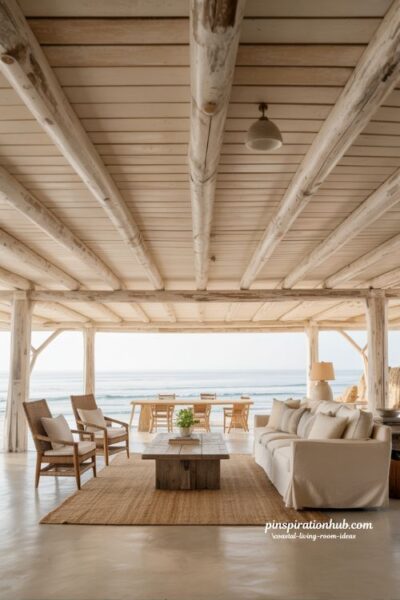
Weathered wood ceiling beams are one of those details that quietly make a coastal room feel like it has real character. They add a warm, rustic note that grounds the calming modern furnishings below. Pair them with a pale coastal color palette — whites, soft blues, sandy neutrals — and the contrast between the aged wood above and the fresh, light palette below creates a layered, lived-in look that’s genuinely beautiful. No beach house required.
- Faux beam options work beautifully if your ceiling can’t support structural wood
- Stick to weathered or whitewashed finishes rather than polished wood for a coastal feel
- Complement beams with simple pendant lights to draw the eye upward naturally
8. Mix Coastal With Midcentury Modern Lines
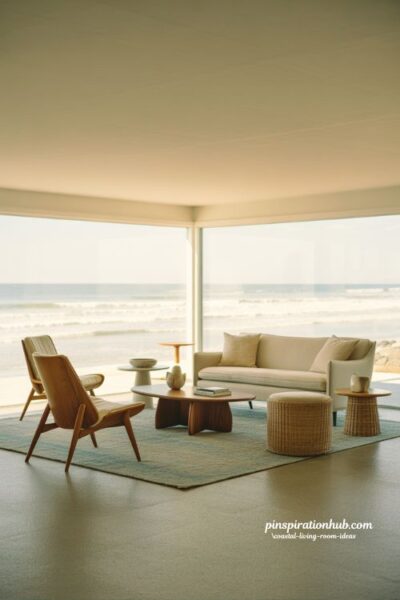
Coastal and midcentury modern are a surprisingly natural pairing. Clean architectural lines, low-profile furniture, and a palette of sandy beige, white, and soft blue connects both aesthetics without any tension. The midcentury structure keeps coastal style from feeling too casual, while the coastal palette softens what might otherwise feel too rigid. The result is a living room that feels considered and a little timeless — a room that’s relaxed but still has real design intention behind it.
- Choose furniture with tapered legs and simple profiles to hit that midcentury mark
- Sandy beige and white upholstery keeps the coastal softness intact
- Avoid nautical accessories here — let the palette do the coastal work
9. Style Your Built-Ins With Natural Objects

Built-in shelving is a coastal living room’s best friend when it’s styled thoughtfully. Rather than filling every shelf with books or decorative objects, use a mix of natural elements — a piece of driftwood, woven baskets, ceramic vessels in earth tones, and a trailing plant. Leave breathing room on the shelves. The goal is warmth and intentionality, not maximalism. Natural textures on built-ins reinforce the coastal aesthetic without requiring a single seashell in sight.
- Group objects in odd numbers and vary heights for a curated, organic feel
- Neutral-toned ceramics and natural baskets complement any coastal color scheme
- Empty space on shelves is a design choice — don’t feel the pressure to fill everything
10. Add a Live Edge Coffee Table
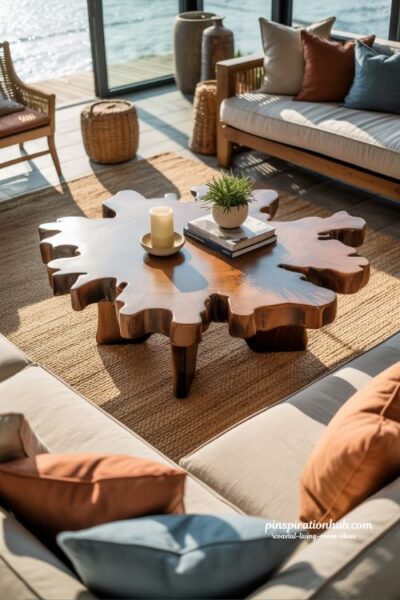
A live edge coffee table brings the kind of organic, nature-forward energy that coastal style is built on. The irregular edge references driftwood, shoreline, and natural form all at once. Pair it with a blue and warm neutral color scheme, and add patterned textiles in shades of blue and orange — a punchy contrast that gives the room life without disrupting its calm. The result is a Southern California beach house vibe that travels to any zip code beautifully.
- Choose a live edge table in a lighter wood tone to keep the room feeling airy
- Patterned pillows in blue and a warm contrasting color add playful energy
- Style the table simply: a candle, a small plant, and a stack of books is enough
11. Try Coastal Minimalism With a Pale Palette
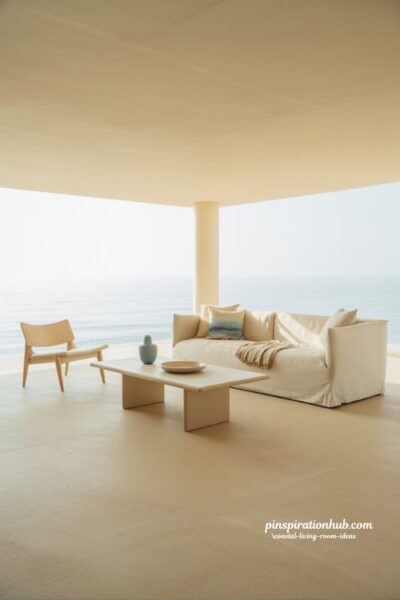
Coastal minimalism might be the most liveable version of this style. Use whites, the palest of beige tones, and just the softest whisper of blue — in an accent pillow, a single ceramic, a light throw. The restraint is the whole point. An uncluttered space with these colors creates that hallmark coastal feeling: airy, calm, and deeply relaxing. You’re not decorating a room here. You’re creating an environment where the absence of noise is itself the design statement.
- Limit your color palette to three tones maximum: white, beige, and one blue
- Choose furniture with soft, rounded forms to reinforce the gentle aesthetic
- Resist the urge to add more — editing is the skill that makes minimalism work
12. Use Blue and Pink Together Like a Sunset
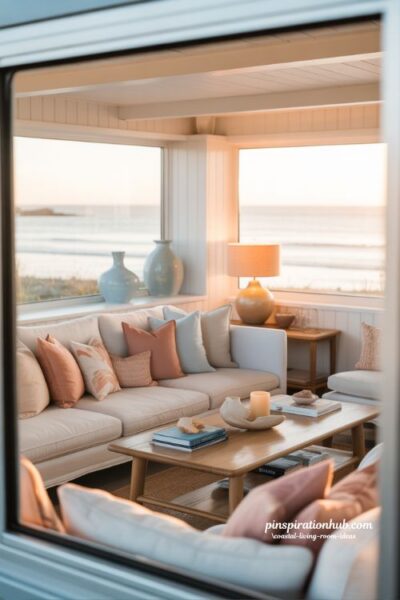
Coastal color doesn’t have to stop at blues and whites. The sky at sunset sits right above the water, and those sunset tones — soft pink, warm peach, muted coral — are as coastal as any ocean blue. Try pastel blue accessories alongside white walls and gold accents, then add pink throw pillows for color variation that feels completely natural. It’s a warmer, more personal take on coastal style that feels current and genuinely inviting in a way that blue-white alone sometimes doesn’t.
- Keep sunset tones soft and muted — saturated pink competes, blush complements
- Gold accents bridge the blue and pink tones without feeling forced
- This palette works beautifully in rooms that face warm evening light
13. Install French Doors for an Indoor-Outdoor Feel
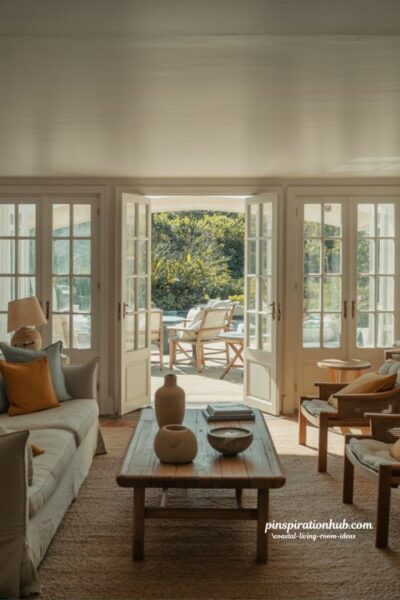
If your space allows it, French doors connecting your living room to an outdoor patio are one of the most effective ways to create a true coastal atmosphere. The flow between inside and outside, the glimpse of sky and garden, the natural light flooding in from two directions — all of it reinforces that breezy coastal feeling. Use a range of blue and brown tones inside to create visual continuity with whatever landscape sits beyond the doors.
- Even a view of a small patio creates the feeling of indoor-outdoor connection
- Use matching flooring inside and out to strengthen the transition visually
- Keep window treatments minimal or absent to preserve the open, flowing feel
14. Add Coastal Art and Photography
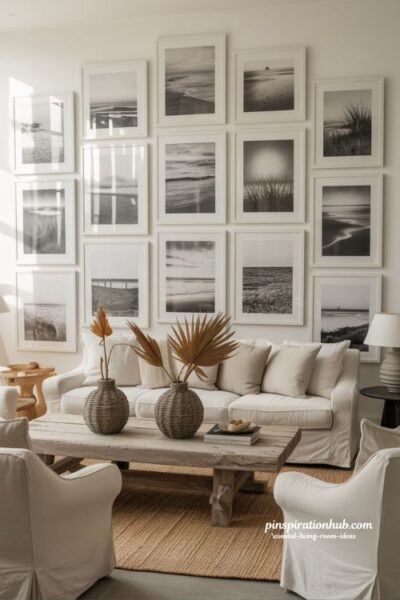
Black-and-white seaside photography is one of the most elegant ways to bring coastal energy into a room without touching the walls or furniture. Frame a small collection of beach scenes — waves, shoreline, sea grass — and hang them as a cohesive gallery. Interior designer Maite Granda used this technique in a Florida living room alongside a weathered wood table and woven vases filled with palm leaves, and the effect was entirely coastal without being obvious about it.
- Black-and-white photography works in formal and casual coastal rooms alike
- Keep frames consistent for a gallery wall that feels intentional, not collected randomly
- Pair photography with one natural element nearby — dried botanicals or woven texture
15. Use Pale Sky Blue Paint on the Walls
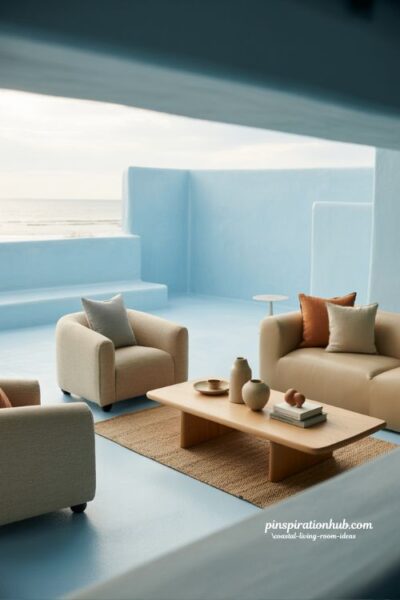
Painting your living room walls in a pale sky blue is a quiet but impactful move. It envelops the room in color without feeling heavy, and it creates an instant backdrop that makes whites, beiges, and warm wood tones glow. Mix sandy beige armchairs, rusty brown accents, and gray soft furnishings against those pale blue walls, and the result is a subtle, sophisticated coastal atmosphere. No ocean view required — the room becomes its own horizon.
- Choose a blue that reads pale and airy rather than saturated or cool
- Warm accent tones in rust and caramel stop the blue from feeling too cold
- Soft sculptural furniture shapes complement this palette beautifully
16. Contrast Light Walls With Dark Wood Floors
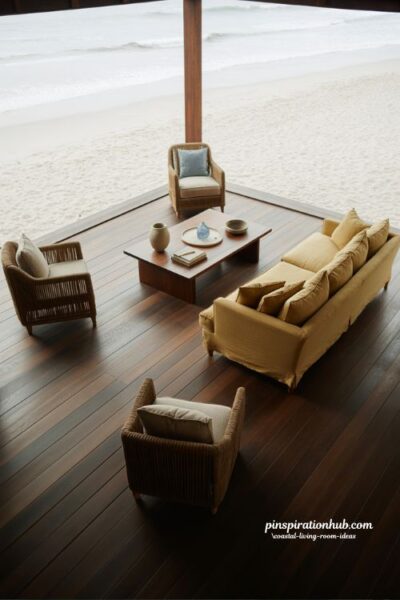
If you love warmer tones, a coastal look built around dark hardwood floors and ceiling beams is a genuinely stunning direction. The contrast between the dark, grounded wood and a pale coastal palette above creates richness and depth. Focus on warm browns and beiges in the upholstery, then introduce hints of blue in pillows and art. The result feels coastal and sophisticated — a beach house for people who love character as much as calm.
- Dark floors work best when the walls are kept pale to balance the contrast
- Choose upholstery in warm, natural tones rather than stark white
- Blue accents in pillows and soft goods complete the coastal connection
17. Prove Coastal Style Works Anywhere
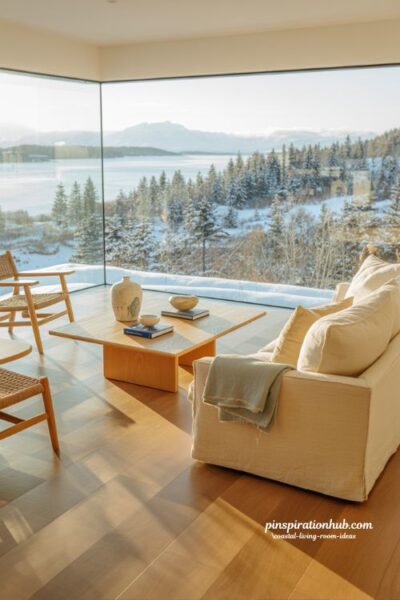
The best coastal living rooms aren’t necessarily next to the water. Michelle Berwick Design created a living room with a genuine coastal feel — breezy, light-filled, and utterly calm — set against a backdrop of snow-topped trees in the Canadian mountains. That’s the real promise of this style. It’s a feeling, not a location. Light colors, natural materials, simple forms, and a palette borrowed from the sea. Those ingredients work in any room, in any climate, in any home.
- Coastal style is about atmosphere, not geography — commit to the palette and the feeling
- Natural materials are the through line that makes the style credible anywhere
- Keep the room uncluttered regardless of setting — breathing room is non-negotiable
Coastal Living Room Style at a Glance
| Idea | Budget Level | Best Room Size | Difficulty |
|---|---|---|---|
| Tonal Blue Layering | Low | Any | Easy |
| Sailor Stripe Accessories | Low | Any | Easy |
| Pale Sky Blue Wall Paint | Low | Medium–Large | Easy |
| Moody Blue-Gray Accent Wall | Low | Any | Easy |
| Live Edge Coffee Table | Mid | Medium–Large | Easy |
| Weathered Ceiling Beams | Mid–High | Any | Moderate |
| French Doors | High | Ground Floor | High |
| Built-In Styling | Low | Any | Easy |
| Coastal Photography Gallery | Low | Any | Easy |
| Navy and Sandy Beige Palette | Mid | Any | Easy |
Frequently Asked Questions About Coastal Living Rooms
What colors define a coastal living room?
The core palette is white, sandy beige, pale blue, and soft green — colors borrowed directly from the seashore. From there, you can add warmth with earth tones, richness with navy, or softness with blush and peach. The key is keeping the palette natural and relatively soft. Highly saturated colors tend to undermine the calm, airy quality that coastal rooms are built on.
Do coastal living rooms only work near the ocean?
Not at all. Coastal style is defined by a feeling — light, open, calm, and naturally textured — not by geography. Michelle Berwick Design created a beautiful coastal living room in the Canadian mountains. The palette and materials do the work, not your zip code. If anything, a coastal living room feels even more like an escape when you’re not actually near water.
What materials should I use in a coastal living room?
Natural materials are the backbone of any coastal living room. Rattan, jute, wicker, linen, cotton, weathered wood, and sisal are all at home here. Avoid anything that feels synthetic or overly polished — the goal is warmth and texture that references the natural world. Gold and hammered metal accents add warmth in small doses without competing with the organic materials around them.
How do I create a coastal living room on a budget?
Start with what you already have. Paint is the single highest-impact change you can make — a pale blue or soft white wall transforms a space instantly. Then layer in coastal accessories over time: a jute rug, textured throw pillows, a piece of driftwood, black-and-white beach photography. Thrift stores and estate sales are excellent sources for rattan chairs, woven baskets, and vintage coastal prints that look genuinely collected rather than bought as a set.
Can coastal style feel sophisticated rather than kitschy?
Yes, absolutely — and that’s exactly what today’s coastal design is aiming for. Keep accessories edited and restrained. Avoid literal nautical objects like anchors, ship wheels, or novelty seashell decor unless used very sparingly. Instead, let the palette, the textures, and the quality of light carry the coastal feeling. A room with pale blues, linen upholstery, and weathered wood reads as sophisticated and coastal without ever looking like a souvenir shop.
What’s the difference between coastal and nautical style?
Nautical style is more literal — rope accents, boat motifs, red-white-and-blue palettes, anchors, and direct references to sailing and the sea. Coastal style is more abstract and refined. It references the feeling of being by the water rather than the objects associated with it. Coastal rooms are generally calmer and more versatile — they work in any setting without requiring a specific theme or set of accessories to make sense.
How do I add coastal style to a living room with dark walls?
Work with the darkness rather than against it. Pair dark walls with pale, natural upholstery, rattan and woven accessories, and warm wood tones that create contrast. Introduce coastal color through textiles — blue and beige pillows, a natural jute rug, linen curtains in cream or white. Maximize any available natural light, and consider adding warm-toned lighting fixtures that create a glowing, atmospheric effect similar to a coastal evening.
1 thought on “17 Stunning Coastal Living Room Ideas That Feel Like a Beach Day”