
There’s a reason fall porches get shared and saved more than almost any other seasonal decor — they’re the one part of the house everyone sees, whether they ring the doorbell or just walk by on an evening stroll.
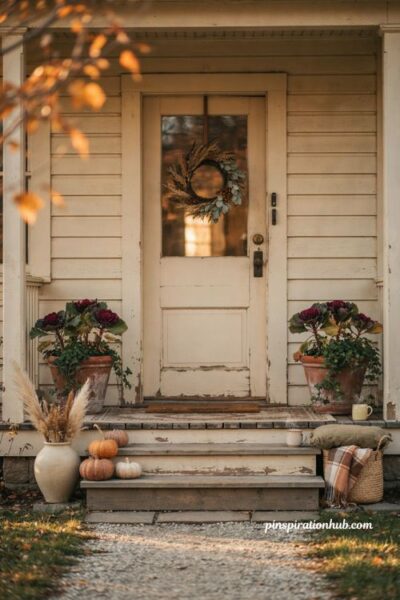
A good fall porch does more than announce the season; it makes the whole entry feel like somewhere you’d actually want to sit for a minute with a cup of cider. The nice part is that you don’t need a sprawling wraparound porch or a big budget to pull it off. A few well-chosen elements, repeated with a little intention, go a lot further than piling on everything from the craft store at once. Here are fifteen ways to get your own porch there.
1. Go Big With a Pumpkin Pile
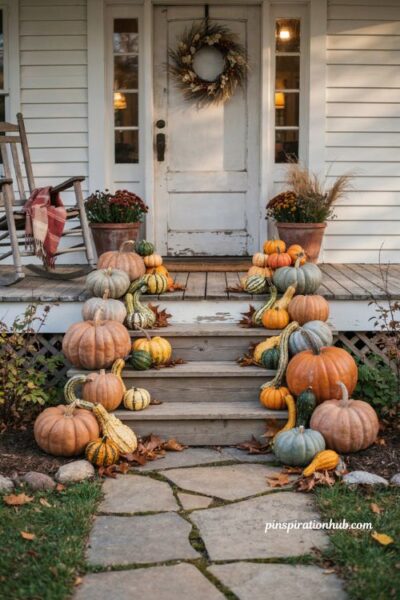
One or two pumpkins are nice, but a full, abundant pile is what actually stops people on the sidewalk. Mix heirloom varieties in different shapes, colors, and sizes rather than sticking to a uniform batch of orange ones, and group them in odd numbers, threes and fives read more natural than even groupings. Let some spill down the steps instead of lining them up in a neat row. This works on porches of any size, since you can scale the pile up or down, just keep at least three feet of walkway clear so the display doesn’t block the door.
2. Layer a Rug Under Your Doormat
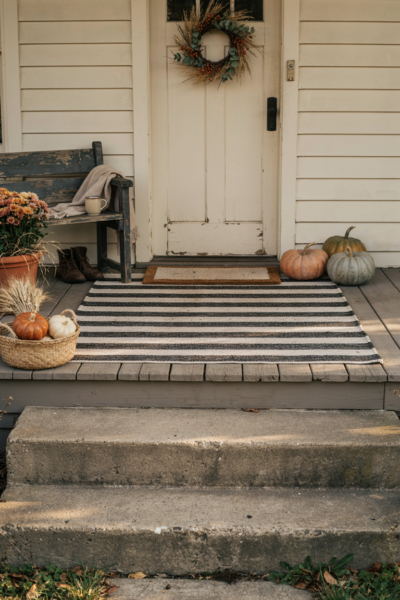
Placing a doormat directly on top of a slightly larger outdoor rug instantly makes a porch look more styled without much extra effort. A black-and-white striped rug is a classic base that works with almost any color scheme layered on top, while a seasonal doormat with a fun phrase adds the personality. Keep the pairing proportional to your porch size so it doesn’t overwhelm a smaller entry, and choose materials that can handle foot traffic and a little weather, since this combo tends to get walked on more than anything else in your display.
3. Choose One Statement Wreath
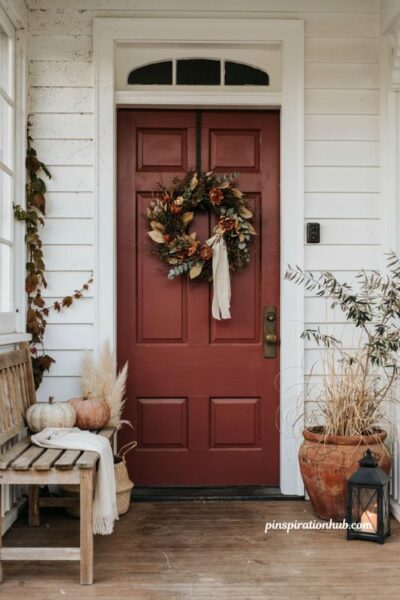
A single, full wreath on the door does more visual work than almost any other element on this list, which makes it worth spending a little extra on. Look for one with real dimension, mixed textures like dried florals, twigs, and a bit of ribbon, rather than a flat, single-material design. If your entry has a double door or extra width, consider hanging two matching wreaths instead of one for a more symmetrical, doubled-up impact. Either way, this is usually the first thing people notice, so it’s worth choosing before you build out the rest of the porch.
4. Add Seating With a Cozy Throw
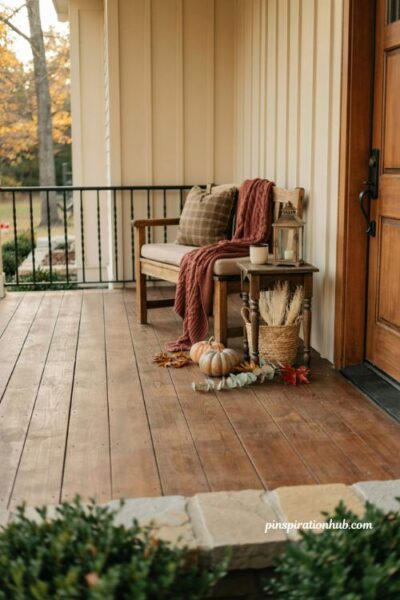
A bench, a pair of rocking chairs, or even just one chair with a pillow turns a porch from a pass-through into an actual destination. Drape a plaid or cable-knit throw over the arm or seat for that lived-in, ready-to-linger feeling, and add a lantern or small side table nearby if there’s room. Even a narrow porch can usually fit one bench along the wall without blocking the walkway. This detail matters more than it seems, since it signals that the space is meant to be used, not just looked at from the street.
5. Repeat Two or Three Colors Throughout

Picking a tight color palette and repeating it across every element, your pumpkins, your rug, your wreath ribbon, is what makes a porch look pulled together instead of randomly assembled. Black, orange, and white is a classic combination that reads as crisp and intentional rather than cluttered, but any two or three colors work as long as you stick to them consistently. Resist the urge to introduce a new shade with every new item you buy. The repetition is subtle, but it’s often the difference between a porch that looks curated and one that looks like leftover odds and ends.
6. Fill Planters With Mums and a Spiller
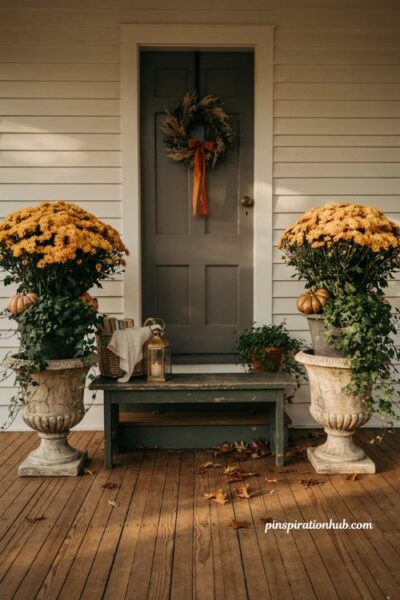
A pair of urns flanking the door, planted with mums in a single color family and a trailing plant like ivy or ornamental sweet potato vine spilling over the edge, gives a porch instant polish. Tuck a small pumpkin or gourd into each planter for extra texture once the mums are in. Mums need consistent watering to hold up through the season, so check the soil regularly rather than assuming they’ll take care of themselves. When they eventually fade, most varieties can be transplanted into a garden bed, where they’ll often come back again next year.
7. Add Lanterns With Timer Candles
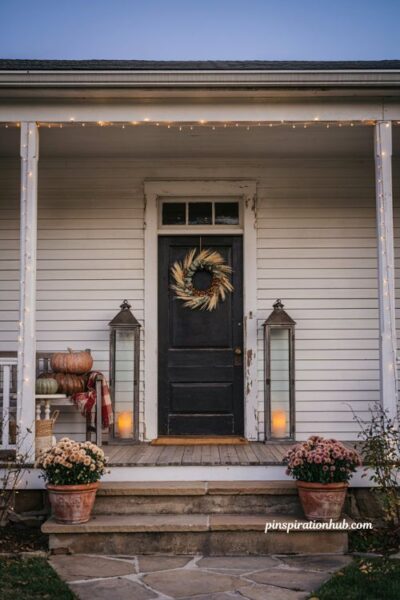
As the days get shorter, a porch that only looks good in daylight is only doing half its job. A pair of lanterns with flameless, timer-set candles on either side of the door will click on automatically at dusk and give the whole entry a warm glow without any extra effort on your part. String lights along a railing or overhead beam add a softer, more ambient layer of light if you want something beyond the lanterns. This small addition tends to get the most compliments once the sun goes down and the porch actually gets used.
8. Bring In Corn Stalks and Natural Fillers
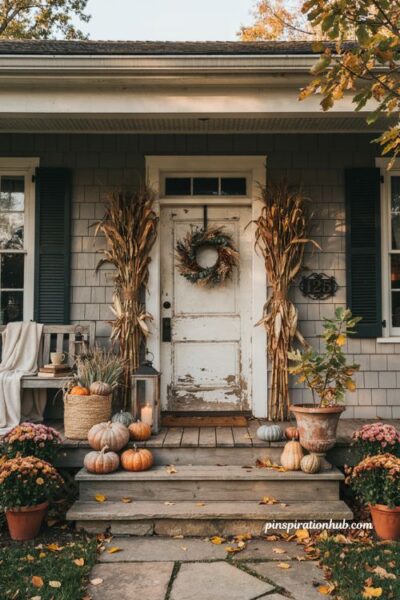
Corn stalks bundled and tied near the door bring height and texture that pumpkins alone can’t offer, and if you have access to a field or farm stand, they’re often free or close to it. Dried grasses, small clipped branches, and corn husks work well as filler in urns and baskets between the bigger elements. These natural pieces last the whole season without much maintenance, unlike fresh florals, and they give the porch a slightly wilder, less manicured look that pairs nicely with a more polished wreath or planter nearby.
9. Let the Decor Spill Into the Yard
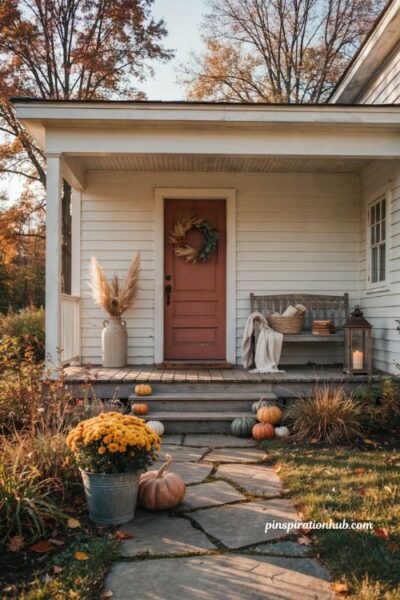
A porch doesn’t have to stop at the top step. Placing a round planter or a small cluster of pumpkins in the front garden bed, near the walkway leading up to the door, extends the seasonal feeling and makes even a small porch read as bigger and more intentional. This works especially well if your actual porch space is limited, since it lets you add more without crowding the steps themselves. A single planter with mums and a pumpkin tucked beside it is usually enough to make the connection between yard and porch feel deliberate.
10. Scale Down Smartly for a Small Porch
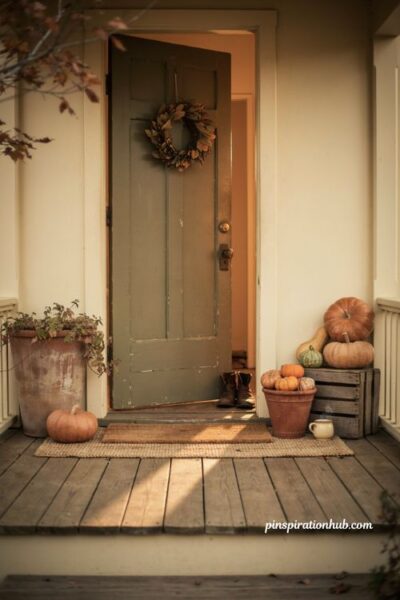
A tiny porch can look just as finished as a large one if you keep the layout simple rather than trying to fit everything on this list into a few square feet. Stick to one or two planters, a layered rug, three to seven pumpkins, and a single wreath, then think vertically with stacked pumpkins or a tall planter instead of spreading everything out. A tight, repeated color palette does even more heavy lifting on a small porch, since there’s less visual space to distract from a mismatched item.
11. Hunt for Flea Market Finds

Instead of buying everything new, a trip to a flea market or antique fair can turn up pieces with real patina, an old scale, a weathered trunk, a rusted piece of farm equipment, that add character no mass-produced decor really matches. These finds don’t need to be Halloween or fall-specific at all; a worn wooden crate or an old metal bucket works just as well filled with pumpkins as it would sitting empty. This approach also tends to be more budget-friendly than buying new seasonal decor every year, since these pieces get reused well beyond just the fall season.
12. Mix Smooth Pumpkins With Bumpy Gourds
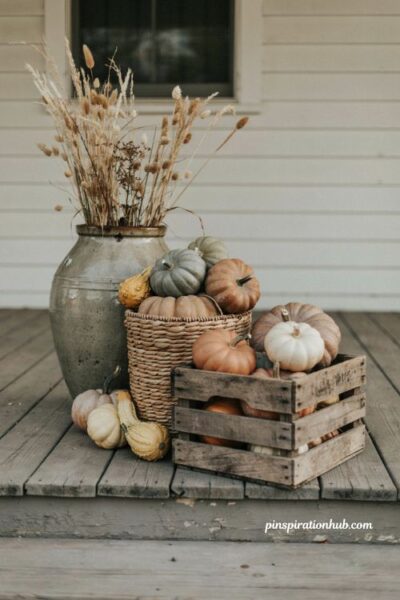
Relying on just one type of pumpkin makes a display feel flatter than it needs to. Combining smooth, classic pumpkins with warty, ridged, or oddly shaped gourds adds visual interest and keeps the eye moving across the arrangement instead of settling on one repeated shape. Tuck the display into baskets, wooden crates, or stoneware crocks rather than setting everything directly on the ground, since raising the pumpkins even a few inches gives the whole grouping more presence. A mix of two or three pumpkin types is usually enough to avoid a flat, uniform look.
13. Set Up a Cider Station for Guests
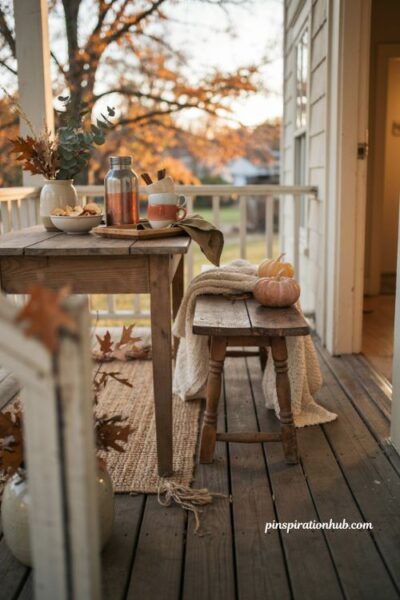
If you’re planning to host anyone this season, turning part of your porch into a small cider station makes the space feel like an extension of your kitchen rather than just a walkway. A simple setup, a tray with a thermos or slow cooker of warm cider, a stack of mugs, and a few napkins, gives guests somewhere natural to gather. This works especially well on a porch that already has a bench or a small table, since people tend to linger wherever there’s a place to set down a drink.
14. Add Elegance With Wicker Topiaries
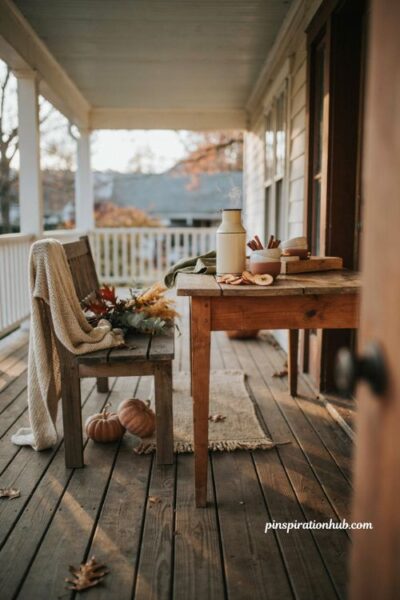
Faux topiaries in wicker baskets bring a bit of structure and year-round elegance that pumpkins alone don’t offer, since they can stay out well past the fall season if you want. Pair them with a mix of pumpkin and gourd varieties at the base, then top the whole arrangement with a wreath in a complementary color for a display that feels layered rather than flat. This combination works particularly well flanking a front door in matching pairs, giving the entry a symmetrical, more formal feel than a casual pumpkin pile alone.
15. Work In Plaid for Extra Coziness
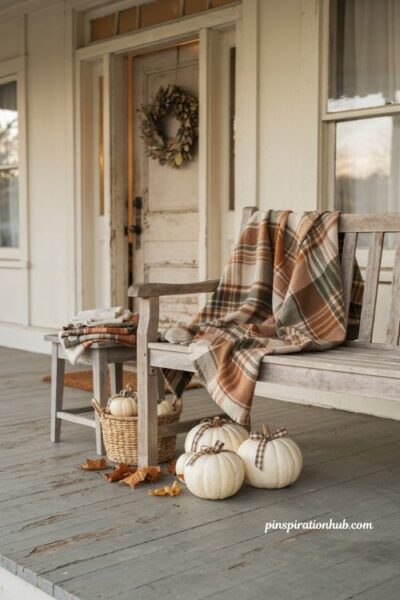
Plaid shows up everywhere in fall decor for a reason, it reads as instantly cozy without needing much explanation. Layer a plaid throw over a bench, wrap plaid ribbon around a few white pumpkins, or use a plaid tablecloth if your porch has a small table. Because plaid patterns vary so much in color, you can usually find one that fits whatever palette you’ve already committed to elsewhere on the porch. It’s a small addition, but it’s often the detail that makes a porch feel finished rather than just seasonal.
Final Thoughts
None of this actually requires a big budget or a weekend of hard labor — most of these ideas come down to picking a direction and staying consistent with it, rather than buying more. The porches that photograph the best usually aren’t the most expensive ones, they’re the ones where every piece looks like it belongs with the others. Start with whatever you already have on hand, add in one or two new pieces if you need them, and don’t feel obligated to fill every square inch of the space just because you can.
Frequently Asked Questions
Q: How many pumpkins should I put on my fall porch? A general rule is about one pumpkin per foot of porch width, though three to seven pumpkins in varying sizes works well for most small to medium porches.
Q: When should I start decorating my porch for fall? Most people begin in late August or early September, adding richer colors and more layers as October approaches.
Q: What’s the easiest way to update a fall porch decor look on a budget? A new doormat, a layered rug, and a fresh wreath cover the most visible spots on a porch and cost far less than replacing planters or furniture.