
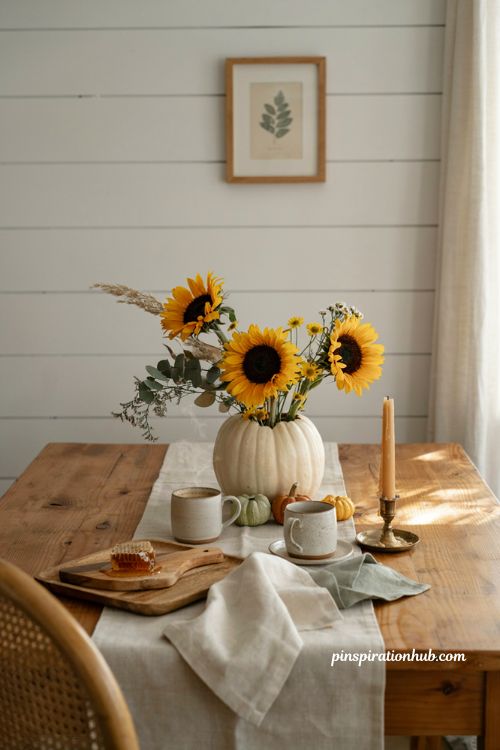
You don’t need a florist’s budget to make a pumpkin look like it belongs in a magazine spread. Some of the prettiest arrangements out there are nothing more than a hollowed-out pumpkin, a handful of grocery store blooms, and a little patience.
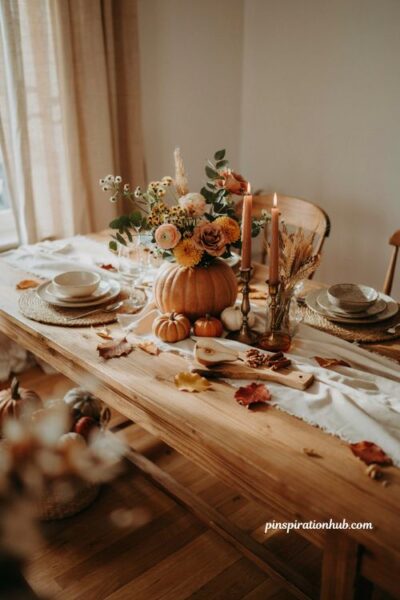
Once you get the hang of the basic technique, it becomes one of those projects you’ll want to repeat every single fall — for your own table, for gifts, for pretty much any excuse to gather flowers and get your hands a little dirty. Here are fifteen ways to build a pumpkin flower centerpiece that feels a lot more expensive than it actually is.
1. Classic Floral Foam Pumpkin
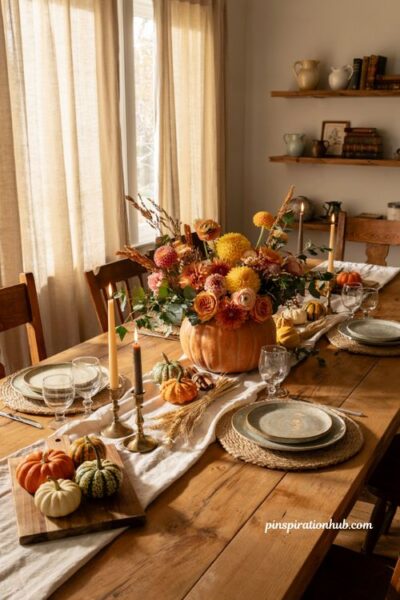
Cut the top off a fresh pumpkin, scoop it out, and line the inside with a sheet of plastic before fitting in a piece of soaked floral foam. The plastic keeps moisture from seeping into the pumpkin walls, which helps the whole arrangement hold up longer. Start with your sturdiest stems around the base, then layer in smaller blooms and greenery until the foam is fully covered. This is the most traditional approach and gives you the most control over shape and fullness.
2. Glass Insert with Flower Frog
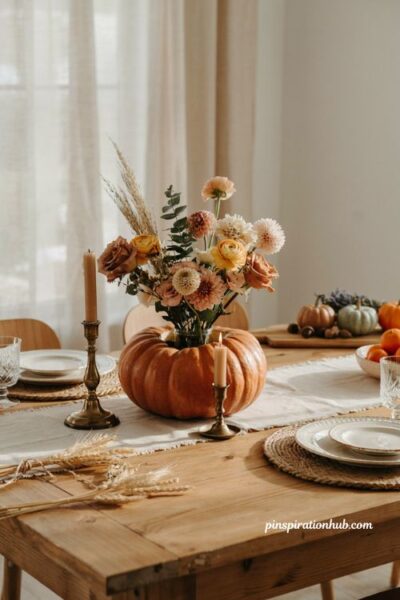
Instead of floral foam, trace a glass or plastic bowl onto the top of your pumpkin and cut along that line so the bowl fits snugly inside. Fill the bowl with water and set a flower frog in the bottom to hold stems in place as you arrange. This method makes it easy to pull the whole floral insert out and refrigerate it separately if you’re hosting over several days. It also tends to keep flowers fresher longer than foam does.
3. Foraged Fall Leaf Base
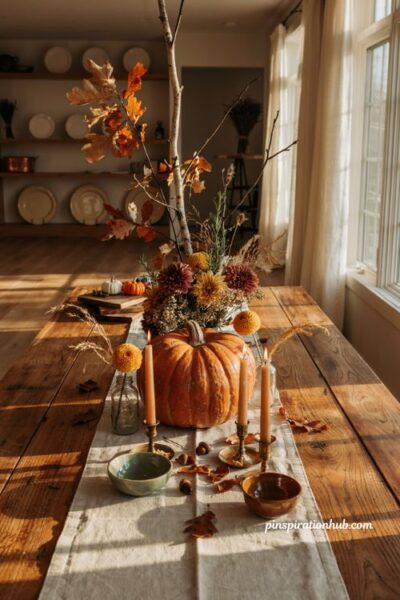
Start your arrangement with a handful of foraged branches — plum, oak, or whatever colorful leaves you can find nearby — tucked in around the base before adding a single flower. Building the structure with leaves first gives the piece a wilder, more natural shape instead of a tight, formal dome. Fill in with sturdier blooms like dahlias or mums next, then use smaller filler flowers to patch any gaps. Finish by tucking a few more leaves in at the very end for texture.
4. Sunflower and White Pumpkin Pairing
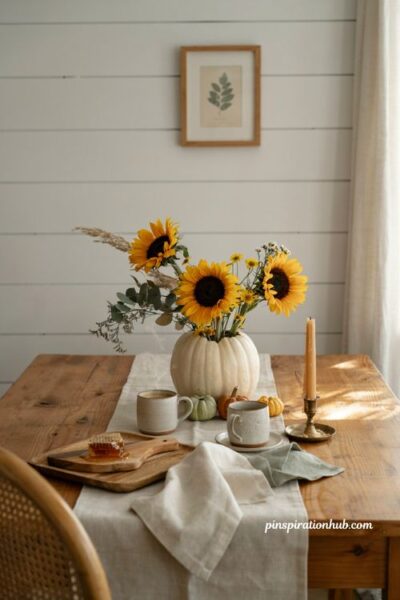
A white or cream pumpkin makes an especially good canvas for bright sunflowers, since the pale color lets the yellow really pop. Keep the arrangement loose and slightly asymmetrical rather than perfectly round for a more relaxed look. A few smaller accent flowers tucked around the sunflowers add depth without stealing the spotlight. This combination works well on a breakfast table where you want a cheerful, low-effort centerpiece.
5. Burgundy and Cream Dahlia Mix
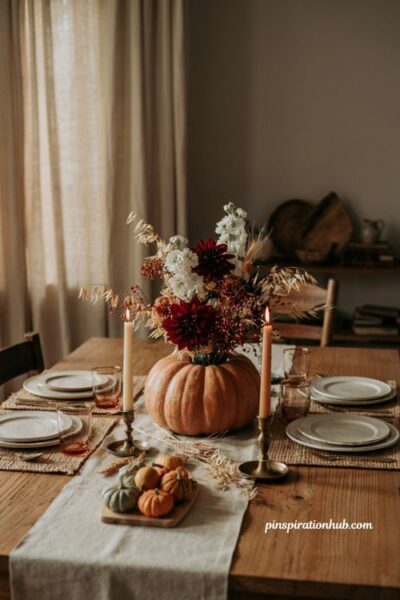
Pair deep burgundy dahlias with white stock and a few sprigs of red hypericum berries for a centerpiece with real depth of color. Coordinate the pumpkin itself in a muted orange or green heirloom variety so it doesn’t compete with the florals. Add dried wheat stems around the edges for a bit of textural contrast against the smooth petals. This combination reads as elegant enough for a Thanksgiving table without feeling overly formal.
6. Succulent-Filled Pumpkin
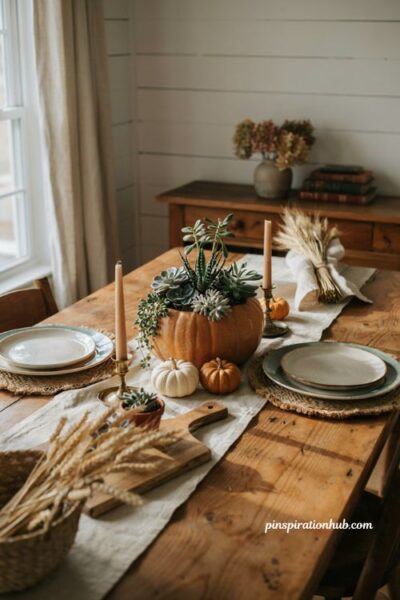
Skip cut flowers entirely and fill a hollowed pumpkin with potting soil instead, then plant an assortment of small succulents directly inside. This version lasts much longer than a cut floral arrangement since the succulents can keep growing as long as they get some light. Once the pumpkin itself starts to break down later in the season, simply transplant the succulents into a regular pot to keep enjoying them indoors. It’s a great option if you want a centerpiece that isn’t just for one dinner.
7. Removable Top Arrangement
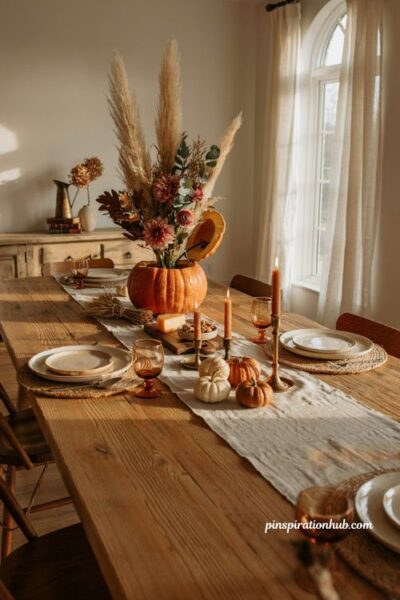
Instead of discarding the pumpkin’s lid, keep it and use a piece of floral wire threaded into the foam to prop it back up at an angle above the arrangement. This creates a more sculptural, layered look than a standard flat-topped pumpkin. It works especially well with taller stems that need a little extra height to stand out. Guests will notice the detail even if they can’t quite figure out how you did it.
8. Kangaroo Paw and Mixed Texture Bowl
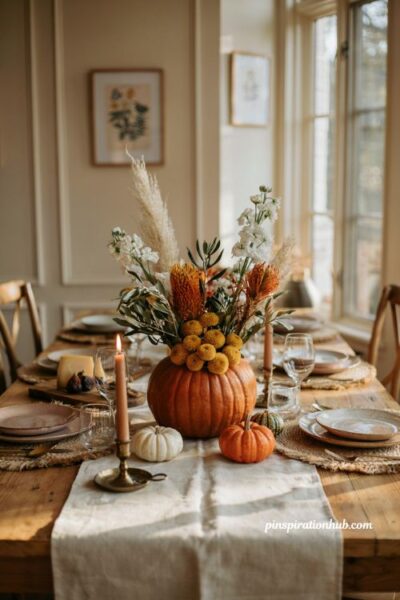
Combine kangaroo paw, mums, and stock for a centerpiece with a lot of textural variety in one small space. Start with the mums to establish a rounded shape, then weave in the spikier kangaroo paw stems for contrast. Stock adds a softer, more delicate layer on top of the structure. This kind of mixed-texture arrangement photographs beautifully if you’re planning to share it online.
9. Multiples Down a Long Table
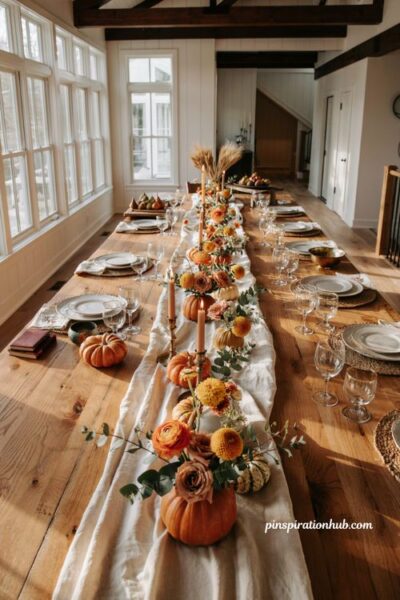
For a longer dining table, make several smaller pumpkin arrangements instead of one large centerpiece, spacing them evenly down the center. Using the same color palette across each one keeps the table feeling cohesive rather than scattered. This approach also solves the problem of centerpieces blocking sightlines, since each one stays low and contained. It’s especially practical for events where you’ll need arrangements at multiple tables anyway.
10. Blue-Gray Heirloom Pumpkin Base
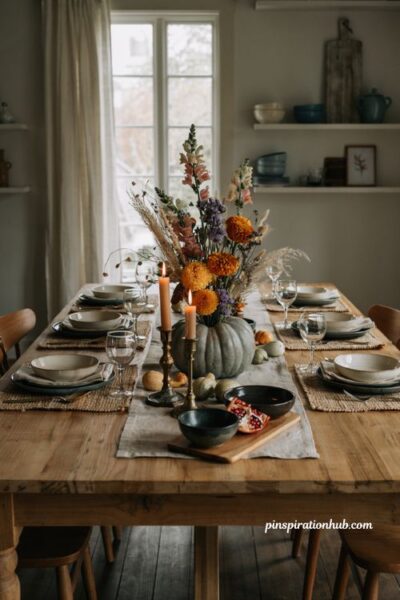
Heirloom pumpkins in blue and gray tones make an unexpectedly striking base for warm-colored flowers like marigolds and chrysanthemums. The cooler pumpkin color creates contrast that a standard orange pumpkin doesn’t offer. Lavender and snapdragons tucked into the mix add height and softness against the pumpkin’s smooth, matte skin. This is a good option if your table linens or dinnerware already lean toward a moodier palette.
11. Small Juice Glass Insert
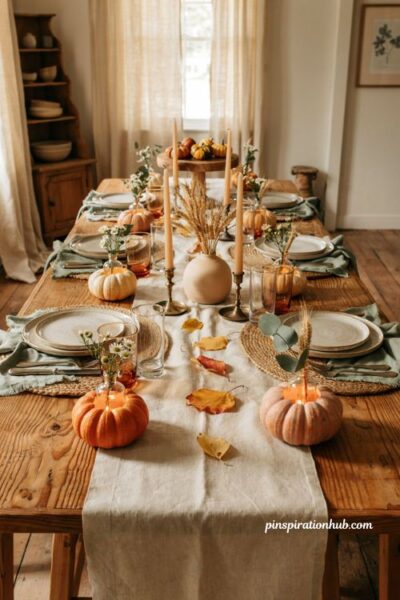
For a mini version of this project, use a small pumpkin with a juice glass as the water-holding insert instead of a larger bowl. This scaled-down size is perfect for a place setting at each guest’s spot rather than one large shared centerpiece. Keep the flower selection simple — two or three stems is usually enough for a pumpkin this size. Guests can even take theirs home as a small party favor afterward.
12. Roses and Fern Statement Piece
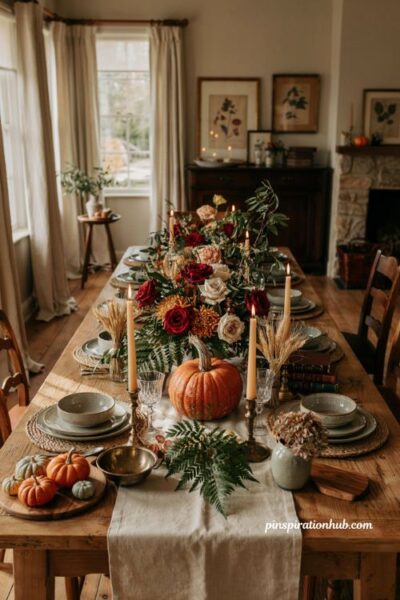
For a fuller, more dramatic look, pack a large pumpkin base with red and cream roses alongside mums, ferns, and trailing leaf branches. Let some of the branches extend well above the pumpkin itself for added height and drama. This style works best as a single, standout centerpiece rather than something you’d repeat down a long table. It’s a good choice for a more formal fall dinner or a special celebration.
13. Gourd Variation for Texture
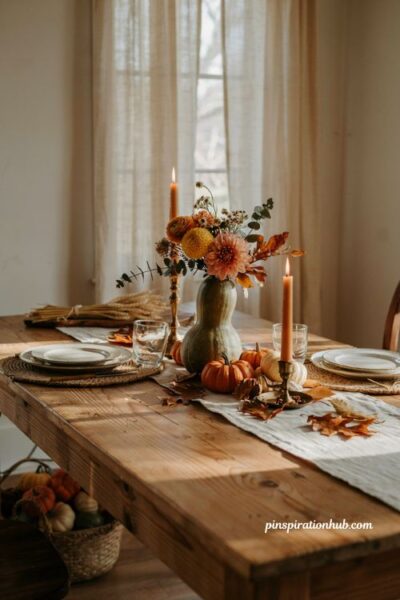
Swap the standard pumpkin for a uniquely shaped gourd to give the arrangement a different silhouette. Gourds often have longer necks or unusual curves that add visual interest a round pumpkin can’t offer. The floral technique stays exactly the same — hollow it out, insert your water source, and build your arrangement as usual. Mixing a few gourd-based pieces in with traditional pumpkin ones adds nice variety to a larger tablescape.
14. Wheat and Pear Accented Arrangement
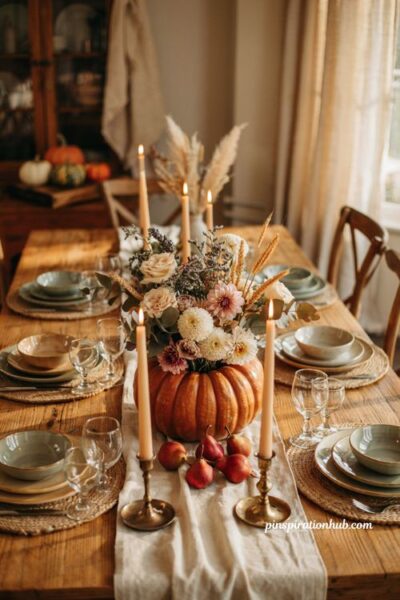
Add fall fruit like small red pears alongside your florals for an arrangement that leans more harvest than purely decorative. Tuck the pears in gently near the base so they look nestled rather than balanced precariously on top. Dried wheat stems woven throughout add a golden, textural note that pairs nicely with the fruit. This variation is especially fitting for a Thanksgiving table where a nod to the harvest feels appropriate.
15. Faux Flower Version for Longevity
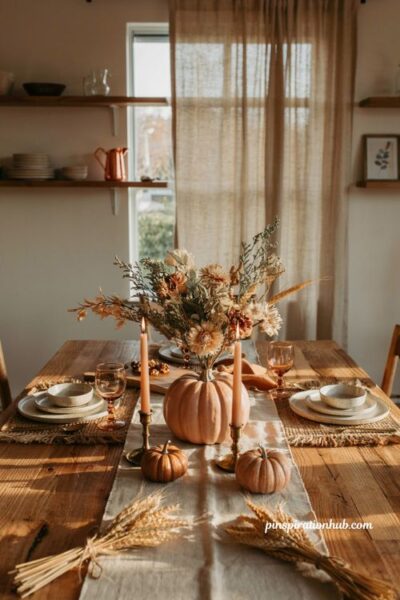
If you want the look without the upkeep, use a carvable faux pumpkin filled with faux floral stems instead of fresh ones. This version can be assembled once and reused every year, which makes it worth the slightly higher upfront cost. Choose stems with a slightly matte or dried finish so they read as more natural rather than obviously artificial. It’s an especially good option if you’re making several arrangements for an event and don’t want to worry about wilting.
Final Thoughts
A pumpkin flower centerpiece has a way of making even a simple weeknight dinner feel a little more special, and that’s really the whole point of making one. There’s no single right way to do it — some of the best versions come from whatever flowers happened to look good at the store that day. So the next time you’re standing in front of a pumpkin display trying to decide which one to bring home, why not grab a bunch of flowers too? What could your table look like with just one afternoon and a pumpkin from the market?
Frequently Asked Questions
Q: How long does a pumpkin flower arrangement last?
Most fresh pumpkin flower arrangements stay looking good for about one to two weeks if the pumpkin is kept cool and out of direct sunlight.
Q: Can I make the arrangement ahead of time for an event?
It’s best to assemble it no more than one to two days in advance, since fresh flowers look their brightest when they’re newly cut and arranged.
Q: Do I need floral foam to make a pumpkin flower arrangement?
No — a glass or plastic bowl filled with water and a flower frog works just as well and tends to keep flowers fresher than floral foam does.
2 thoughts on “15 Simple Pumpkin Flower Centerpieces for a Cozy Fall Table”