
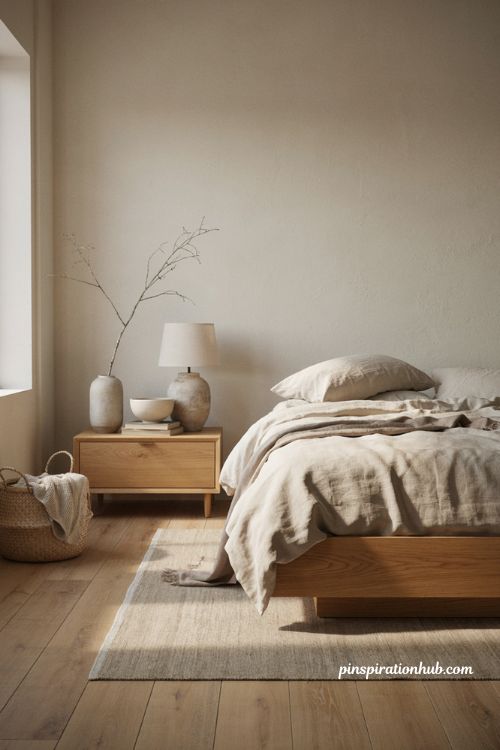
You don’t need a huge budget to make a bedroom feel like a retreat. Some of the calmest, most beautiful bedrooms out there are built on just a handful of ingredients — light wood, soft neutrals, and a few textured pieces chosen with real intention. That’s the whole idea behind Japandi style, a blend of Japanese minimalism and Scandinavian coziness that strips a room down to what actually matters. It’s not about having less for the sake of it; it’s about making sure everything left in the room earns its spot. Here are 15 Japandi bedroom ideas that show how simple, natural choices add up to something genuinely serene.
1. Start With a Low Platform Bed
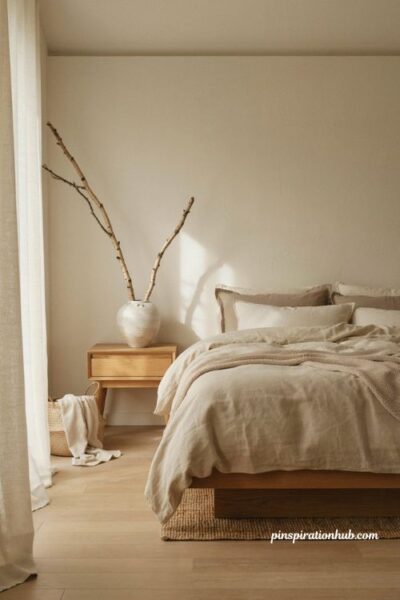
A low-profile platform bed is the anchor of almost every Japandi bedroom, and it’s usually the first decision to make. Choose a solid wood frame in light oak or a darker walnut, depending on whether you want the room to feel airy or a bit more grounded. Skip the tall, upholstered headboard — the point is to sit close to the floor, which echoes the Japanese tradition of low furniture and creates that calm, settled feeling. Pair it with simple, rumpled linen bedding rather than anything too crisp or matched, since a little imperfection is part of the look.
2. Layer In Warm, Earthy Neutrals
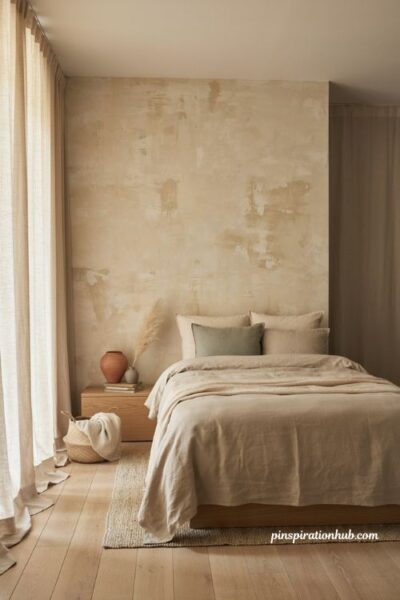
Japandi rooms lean on a palette of warm whites, greige, and soft beige rather than stark, cool white. Try a lime-washed or textured plaster finish on one wall for subtle depth, then bring in muted sage or terracotta through a single throw pillow or a piece of pottery. The goal is a backdrop calm enough to disappear into, so save any bold color for one small accent rather than spreading it across the room. This kind of restraint is what keeps a neutral palette from reading as boring instead of soothing.
3. Add a Slatted Wood Accent Wall
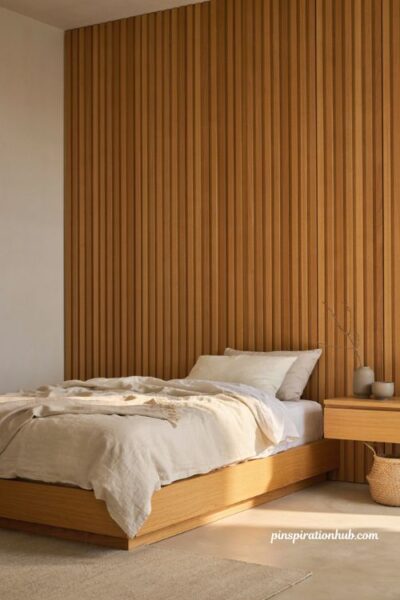
Vertical wood slats behind the bed instantly read as Japandi and add texture without cluttering the room. Use a warm, mid-tone wood to contrast against lighter walls, or go darker for a more dramatic, boutique-hotel feel. The repetition in the slats brings a subtle sense of structure and rhythm to the space, which is part of why it feels so calming to look at. If a full accent wall isn’t possible, even a slatted wardrobe door or a single slatted room divider brings the same effect on a smaller scale.
4. Bring In a Paper Pendant Light
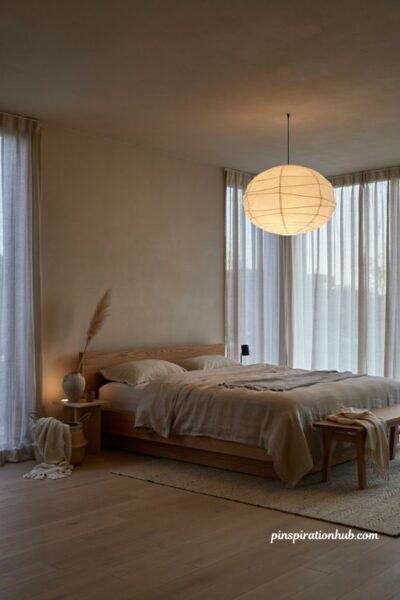
A large, sculptural paper pendant, like the classic Noguchi-style lantern, softens a room in a way that no overhead fixture can match. Hang it low over the bed or in an empty corner so it becomes its own quiet focal point. The diffused light it casts in the evening is warmer and gentler than anything from a regular lamp, which suits the slow, grounded mood Japandi is going for. Pair it with sheer linen curtains during the day so the whole room stays soft and glowing rather than harshly lit.
5. Choose a Low, Simple Nightstand
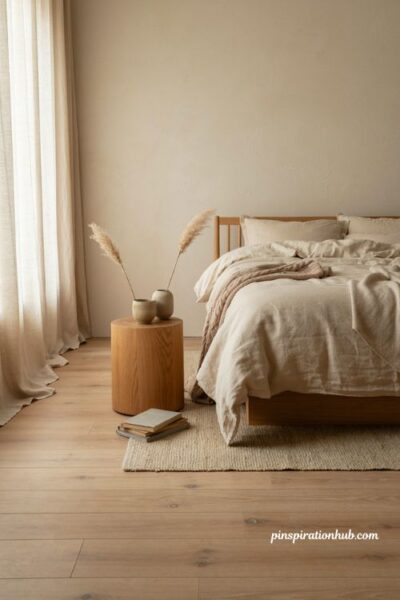
Skip the tall dresser-style nightstand and go with something low and minimal instead, even a simple wooden stool if that’s all the space you have. The lower profile keeps the room feeling open and reinforces that grounded, close-to-the-floor quality that defines Japandi furniture. Top it with just one or two objects, like a small ceramic cup or a single stem in a vase, rather than a cluttered surface of daily items. That kind of editing is what makes a nightstand feel intentional instead of just functional.
6. Mix Light and Dark Wood Tones
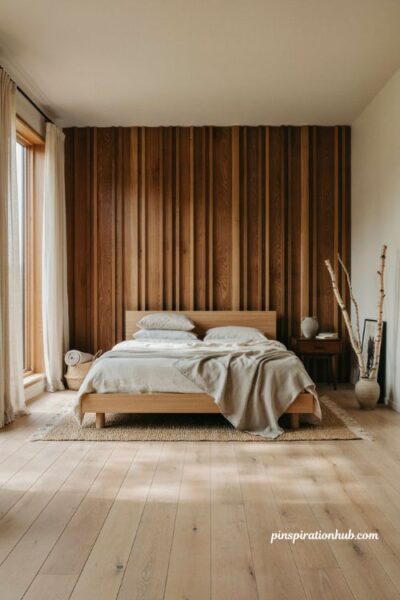
Japandi style often pairs a lighter wood, like natural oak, with a darker one, like stained walnut or ash, somewhere else in the room. Try a light oak bed frame against a dark wood accent wall, or a dark nightstand next to lighter flooring. This contrast keeps an all-neutral room from feeling flat, since the eye has two distinct tones to move between. Keep the ratio uneven, mostly light with dark as the accent or vice versa, rather than splitting the room evenly between the two.
7. Dress the Bed in Rumpled Linen
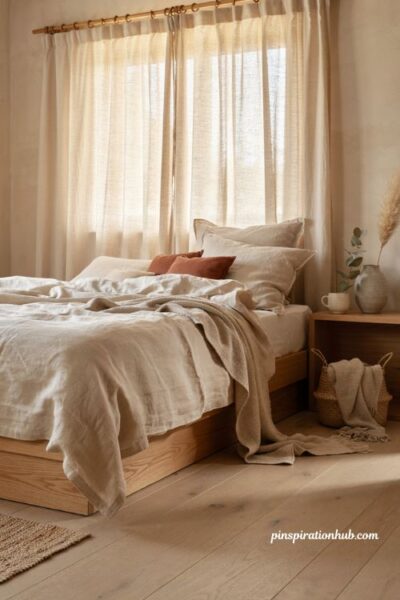
Perfectly pressed, matched bedding actually works against the Japandi look, which values a bit of natural imperfection. Choose unbleached or muted-toned linen and let it sit a little rumpled rather than smoothing it flat. Add one or two cushions in a warm, earthy tone like burnt terracotta or muted rust for a touch of color against all the neutral fabric. This slightly lived-in quality is part of the wabi-sabi principle at the heart of the style, where imperfection is treated as beautiful rather than something to fix.
8. Add a Low Bench at the Foot of the Bed
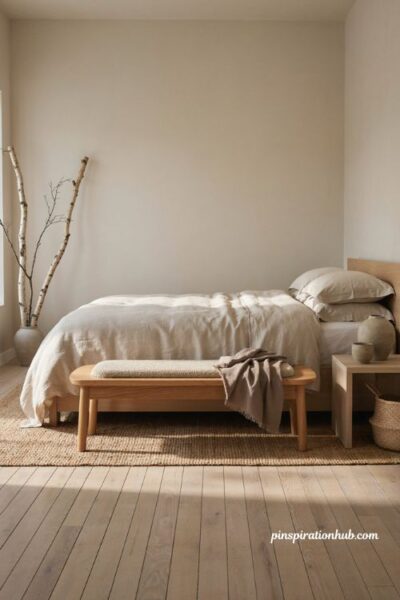
A simple wooden bench at the foot of the bed is both functional and quietly sculptural, giving you a spot to sit while getting dressed or set down a folded throw. Choose solid oak or walnut in a clean, unfussy shape rather than anything ornately carved. This kind of piece does double duty in a Japandi room, since it adds a horizontal line that balances the height of the bed while still keeping the overall furniture count low. A woven or boucle cushion on top adds just enough texture to keep it from feeling too austere.
9. Bring the Outside In With a Full-Height Window
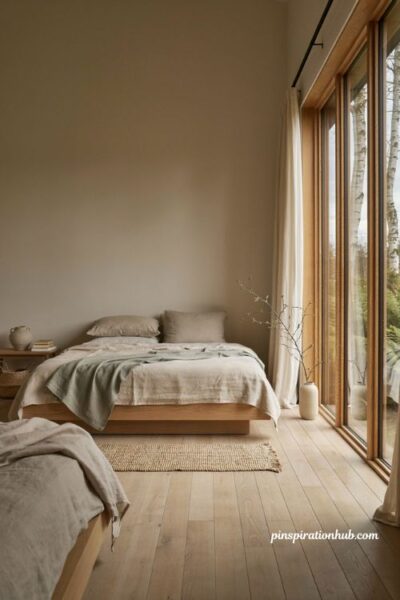
If your layout allows it, a full-height window dressed in sheer, unlined linen curtains connects the bedroom to whatever’s outside, whether that’s a garden, trees, or just open sky. Japandi design leans heavily on this relationship with nature, since both Japanese and Scandinavian traditions treat the outdoors as part of the room rather than something separate from it. Let the curtains stay loose and gathered rather than tightly tailored, so they soften the light instead of blocking it. Even a smaller window with the same sheer treatment brings some of that same open, airy feeling.
10. Introduce One Imperfect Ceramic Piece
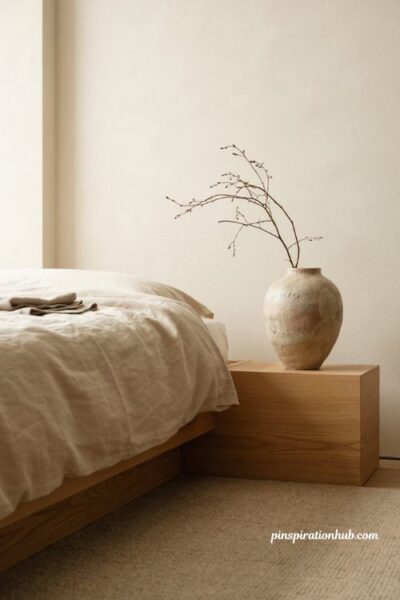
A single handmade stoneware vase or an irregularly shaped ceramic cup does more for a Japandi room than a whole shelf of matching decor ever could. Look for pieces with visible texture, a slightly uneven glaze, or an asymmetrical shape, since that imperfection is the whole point. Place it on the nightstand or a low shelf where it can actually be seen and appreciated, not tucked away in a cluttered corner. This is the wabi-sabi principle in its simplest form: one meaningful, imperfect object says more than a dozen decorative ones.
11. Use Rattan and Cane for Texture
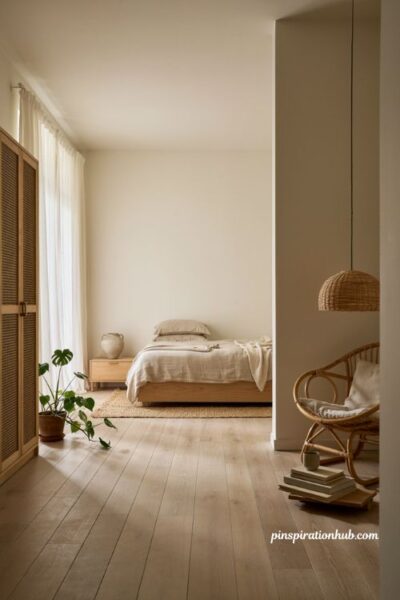
Rattan and cane bring warmth and lightness to a Japandi bedroom without adding visual weight, which matters in a style built around restraint. Try a cane-fronted wardrobe door, a woven pendant shade, or a rattan armchair tucked into a reading corner. These natural materials keep an all-wood, all-neutral room from feeling too heavy or monotone. Since rattan has an inherently organic, slightly irregular texture, it also reinforces that handmade, imperfect quality the whole style is built around.
12. Keep Storage Fully Integrated
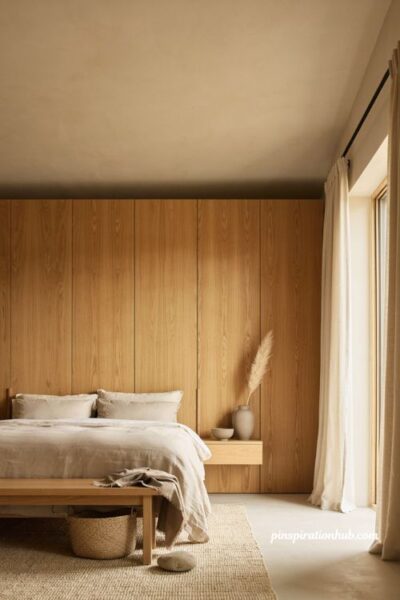
Visible clutter is the fastest way to undo a Japandi room, so built-in or flat-fronted, handleless wardrobes do a lot of the heavy lifting here. Wrapping a wall in matching wood paneling that conceals closet doors keeps the whole room looking like one continuous, calm surface rather than a collection of separate furniture pieces. If built-ins aren’t an option, a simple wardrobe system with plain doors and no visible hardware gets you most of the way there. The less your eye catches on storage, the calmer the whole room reads.
13. Try a Tatami-Inspired Flooring Section
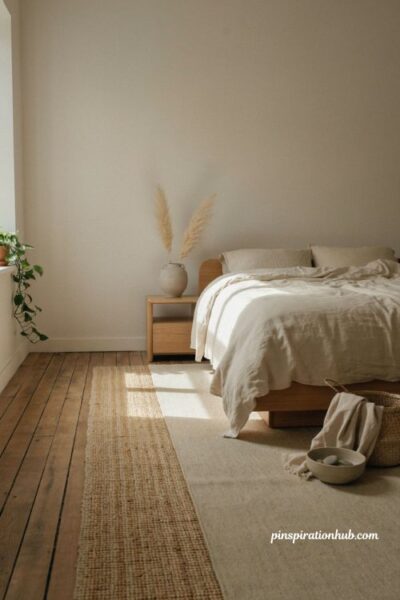
A small section of tatami matting beside the bed nods directly to Japanese tradition and adds a soft, textured transition from the main flooring. It doesn’t need to cover the whole room — even a modest strip beside a low platform bed makes the connection to Japanese design more literal. Pair it with a light oak bed frame so the natural materials feel continuous rather than competing with each other. This is a detail that’s easy to skip, but it’s also one of the more distinctive, memorable choices you can make in the room.
14. Add a Shoji-Style Screen or Room Divider
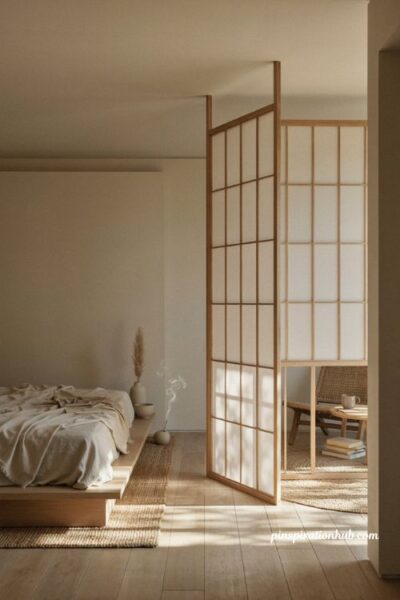
A slatted or paper-paneled screen brings a soft, filtered quality to natural light as it moves through the room, plus it’s a practical way to section off a reading nook or wardrobe area without a solid wall. The shadow play these screens create as the light shifts throughout the day adds a quiet, ever-changing detail that a plain wall never could. Keep the rest of the room simple around it, since the screen itself is doing plenty of visual work. It’s a subtle way to bring an authentic Japanese element into an otherwise Scandinavian-leaning space.
15. Edit the Room Down to What You Actually Need
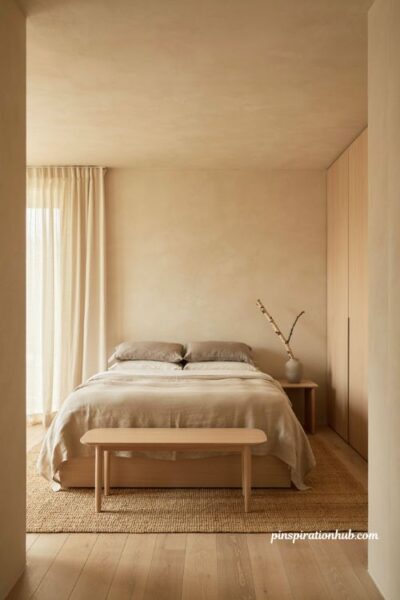
The last step in any Japandi bedroom isn’t adding anything — it’s removing what doesn’t need to be there. Walk the room and ask whether each object is serving a real function or just sitting there out of habit, then clear away anything that fails that test. Surfaces should stay mostly empty, storage should stay hidden, and the few objects left should each feel chosen rather than accumulated. This kind of editing is what actually creates the calm the whole style promises, more than any single piece of furniture or paint color ever could.
Final Thoughts
A Japandi bedroom isn’t really about buying a specific set of furniture — it’s about being a little more intentional with what you already have. Pick one or two ideas from this list that feel most realistic for your space, whether that’s swapping in warmer bedding or finally hanging that pendant light you’ve been eyeing. The rest can come together slowly, piece by piece, which actually fits the spirit of the style better than rushing to buy everything at once. However far you take it, even small changes toward warmth and simplicity will make the room feel noticeably calmer to be in.
Frequently Asked Questions
Q: What’s the difference between Japandi and regular minimalism?
Japandi is minimalist in furniture count, but it’s warmer and more textured than typical minimalism, relying on natural materials like wood, linen, and rattan rather than sleek, cold surfaces.
Q: What colors work best in a Japandi bedroom?
Warm whites, greige, soft sage, and terracotta are the core palette, usually paired with light and dark wood tones for contrast.
Q: Do I need a low bed for a Japandi bedroom to work?
A low-profile platform bed is one of the most recognizable elements of the style, but the look can still come through with warm woods, natural textures, and a pared-back palette even with a standard bed frame.