
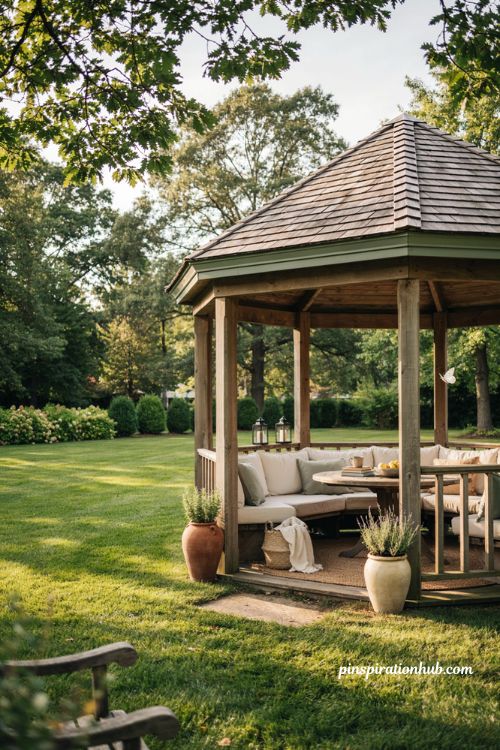
Backyards with a big blank patch of lawn are honestly the trickiest ones to figure out. You know you want something out there, but a plain patio set never quite feels like enough, and a full addition feels like overkill. A gazebo sits right in that sweet spot — enough structure to feel like a real destination, without the cost or commitment of building onto your house. Whether you’re after shade for lazy afternoons, a covered spot for dinner parties, or a cozy nook to disappear into with a book, these gazebo ideas will help you figure out exactly what yours should look like.
1. Set Up a Poolside Lounge
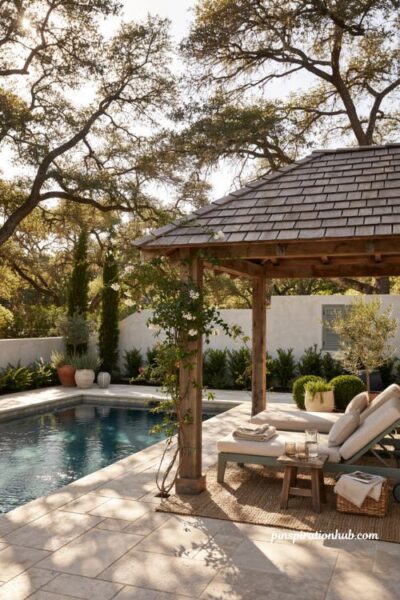
A gazebo positioned right off the pool deck gives swimmers somewhere to dry off, grab a snack, or escape the sun without heading all the way back inside. Furnish it with low, weather-resistant seating and a small side table for drinks, and keep the flooring simple — pavers or a raised wood deck both work well here. Position it so it catches a little afternoon shade naturally, since that’s when the space gets used the most.
2. Build an Al Fresco Dining Room
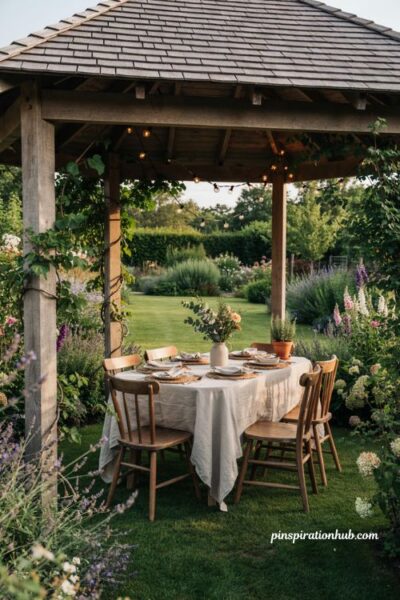
A simple wood-framed gazebo can turn ordinary backyard meals into something that feels like eating at your favorite restaurant patio. Add a cloth-covered table, café-style chairs, and string lights overhead for evening dinners, then let climbing vines or nearby garden beds fill in the view. Keep the structure open on at least two sides so the space still feels connected to the yard rather than boxed in.
3. Anchor It With a Fireplace
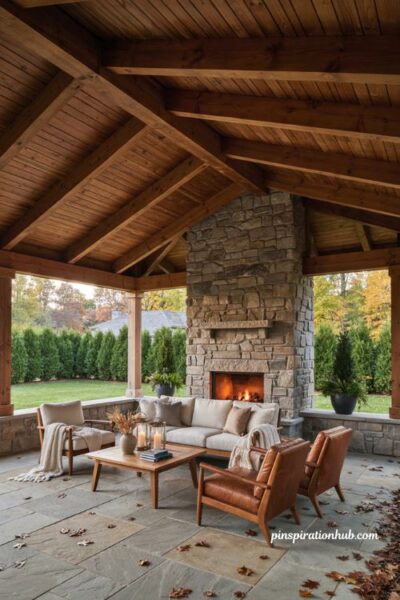
Adding a built-in fireplace to your gazebo instantly makes it a year-round space instead of just a summer one. Pair it with a vaulted wood ceiling and comfortable lounge furniture so it reads more like an outdoor living room than a garden structure. A stacked stone surround on the fireplace tends to hold up best against weather, and it gives you a natural focal point to arrange seating around on chilly fall evenings.
4. Create a Hot Tub Hideaway
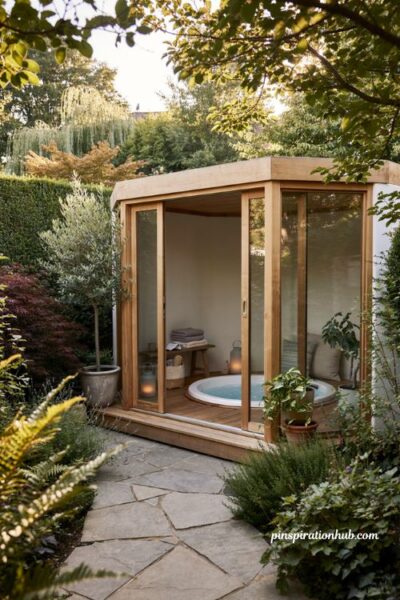
Housing a hot tub inside a gazebo means you get privacy and weather protection without losing the outdoor feel entirely. A half-glass wall is a smart middle ground — it blocks wind and prying eyes while still letting you take in the view while you soak. This setup works especially well if your yard doesn’t offer much natural privacy, since the structure itself does that job for you.
5. Add a Full Outdoor Kitchen
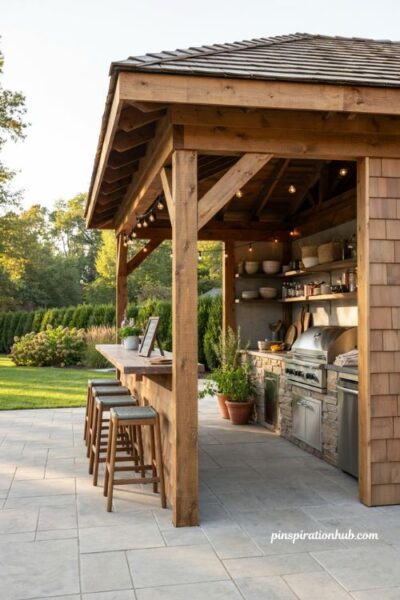
For serious backyard entertainers, a gazebo built around a full kitchen setup — grill, counter space, maybe even a small fridge — keeps cooking and hosting in one covered area. Choose a heat- and stain-resistant flooring material like concrete pavers underfoot, since spills and grease are inevitable near a working grill. Adding a bar-height counter along one side gives guests a spot to perch while you cook, without crowding the actual workspace.
6. Hang Curtains for Privacy
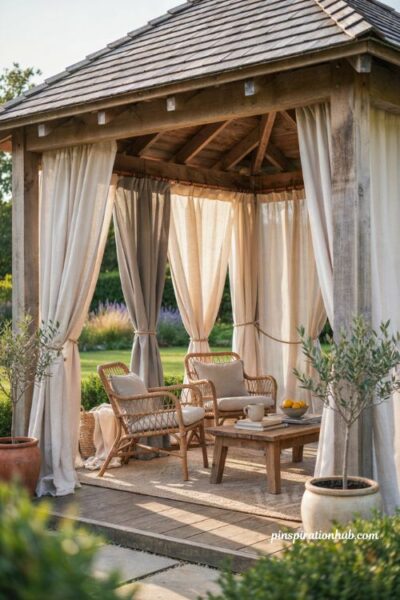
Lightweight curtain panels around the open sides of a gazebo let you switch between full sun exposure and complete privacy in about ten seconds. Sheer fabric softens the whole structure visually and moves nicely in a breeze, while heavier canvas panels block wind and give more coverage on cooler evenings. Tie them back with simple rope loops during the day so they don’t feel like they’re closing the space in.
7. Screen It In Against Bugs
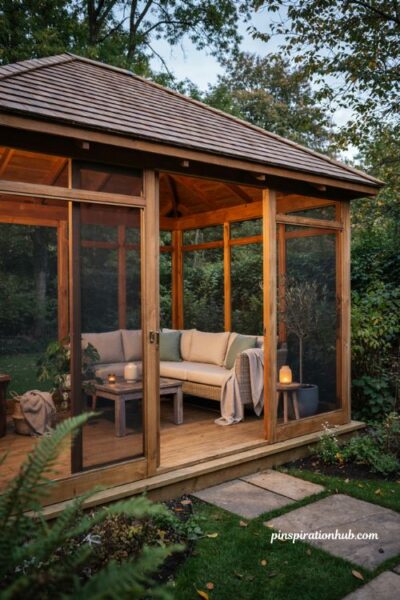
If mosquitoes or gnats are the reason you avoid your backyard after dusk, a screened-in gazebo solves that problem without sacrificing airflow. Screen doors on at least one side make it easy to get in and out without letting bugs slip through, and the mesh still lets a breeze move through the whole space. This is a particularly smart upgrade if your yard backs up to woods, water, or anywhere else bugs tend to gather.
8. Install a Ceiling Fan Overhead
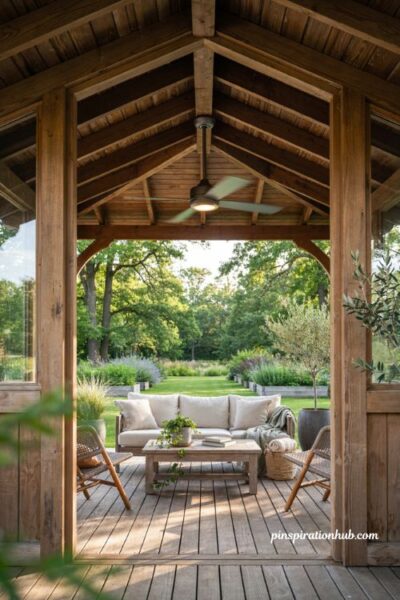
Shade alone isn’t always enough once summer humidity sets in, which is exactly why a ceiling fan mounted to the gazebo’s rafters makes such a difference. It keeps air moving even on still, muggy afternoons and doubles as a spot to hang a pendant light if you go with a fixture that combines both. Look for a fan rated for damp or outdoor locations so it holds up to weather exposure over time.
9. Lay a Path to Guide the Way
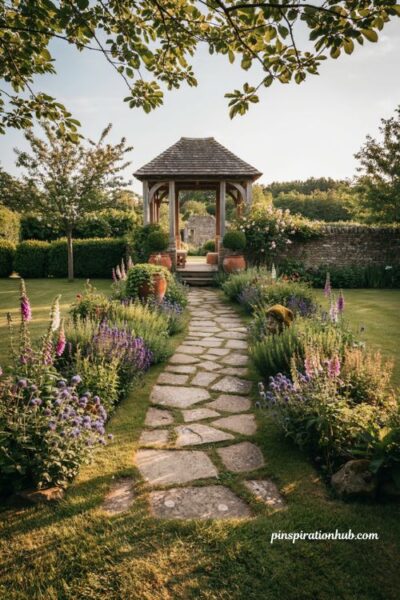
If your gazebo sits off to one side of the yard, a stepping-stone or paver path leading toward it makes the whole space feel intentional rather than randomly placed. Space the stones for a natural walking stride and let grass or low groundcover fill the gaps between them. Trees or shrubs planted along the route add a sense of arrival, almost like you’re walking toward a little hideaway tucked into the landscape.
10. Go Grand With Columns
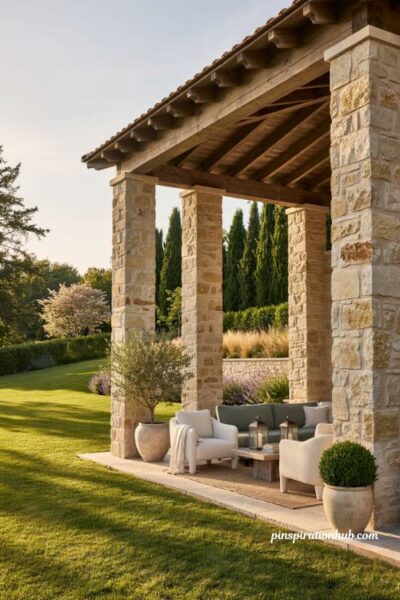
Substantial stone or wood columns give a gazebo real architectural weight, turning it into the clear focal point of the yard instead of just another furniture grouping. This style works especially well for larger properties where a delicate structure would get visually lost. Pair the columns with low seating so the height of the posts feels even more dramatic, and consider matching the column material to any existing stonework near your house or patio.
11. Keep It Rustic With Natural Wood
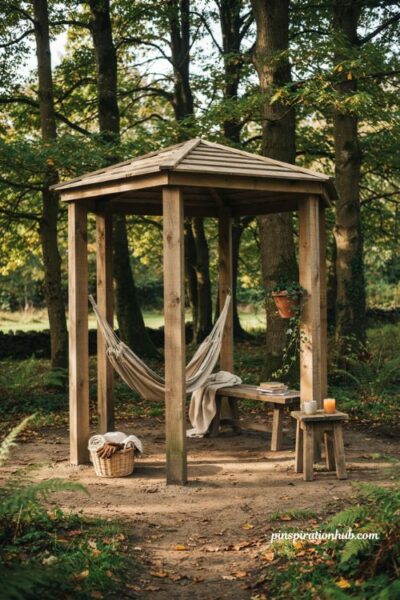
Unpainted wood posts and shingles that echo the bark and texture of nearby trees let a gazebo blend into a wooded or naturalistic yard instead of standing out against it. This look works well with simple furnishings — a hammock, a bench, maybe a small side table — rather than anything too polished. Over time, the wood weathers and grays slightly, which only adds to that settled, been-here-forever feeling.
12. Hang a Hammock Inside
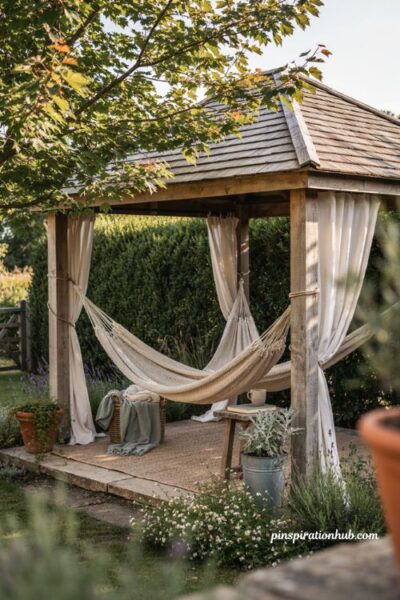
A gazebo built specifically around a hanging hammock or hammock chair gives you shade and sun protection while you nap or read, which a hammock strung between two trees can’t offer. Curtains around the sides add privacy for an afternoon rest, and a small side table within reach keeps a drink or book close by. This idea works particularly well in a smaller yard, since the whole structure can be scaled down to fit just one or two people.
13. String It With Ambient Lighting
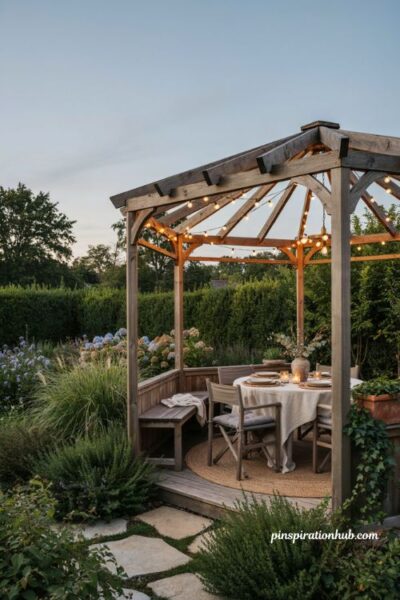
Café-style string lights hung from the rafters or a chandelier suspended from the center beam instantly change the mood of a gazebo once the sun goes down. Warm white bulbs tend to feel cozier than bright white ones, and dimmable options let you adjust the vibe from a quiet dinner to a livelier gathering. Running the wiring along the structure’s existing beams keeps everything looking intentional instead of like an afterthought.
14. Fit In a TV for Movie Nights
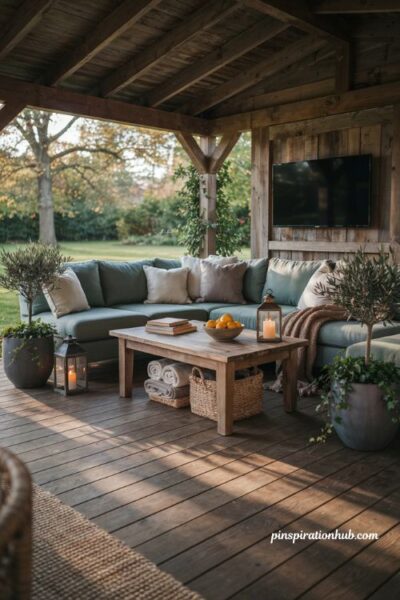
Mounting a weatherproof television inside a gazebo, sometimes cleverly hidden behind a decorative panel until it’s needed, turns the space into an outdoor media room for game days and movie nights. Pair it with deep, comfortable seating and a sectional-style layout so everyone has a good sightline. Just make sure the screen faces away from direct afternoon sun, or glare will make it nearly impossible to see anything.
15. Refresh It Seasonally
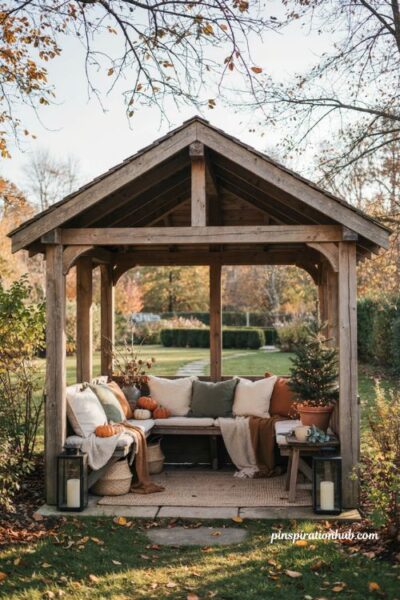
A gazebo doesn’t have to look the same all year — swapping out cushions, rugs, and small decor pieces with the seasons keeps the space feeling current without any real construction involved. Think warm layered textiles and pumpkins in fall, or simple string lights and a small tree for the winter holidays. It’s a low-cost way to keep using the space year-round instead of letting it sit empty once summer ends.
Final Thoughts
Pick one idea from this list that solves the actual problem your backyard has, whether that’s harsh sun, bugs at dusk, or just a yard that’s never felt finished. Sketch out roughly where it would go, figure out which roof style and size actually fits your space, and start pricing out materials from there. Once the structure itself is up, the fun part — furniture, lighting, seasonal touches — comes together fast, and honestly, that’s the part most people end up loving the most.
Frequently Asked Questions
Q: How much does it cost to build a backyard gazebo?
Costs vary widely based on size and materials, but a basic wood or metal kit gazebo typically runs a few thousand dollars, while a custom-built structure with a foundation, electrical, and finishes can run significantly higher.
Q: Should a gazebo be placed on concrete or grass?
A solid, level surface like concrete, pavers, or a wood deck is generally more stable and long-lasting than placing a gazebo directly on grass, which can shift and become uneven over time.
Q: What’s the difference between a gazebo and a pergola?
A gazebo has a full, solid roof and often closed or partially closed sides, while a pergola typically has an open lattice top and is left open on at least one side.