
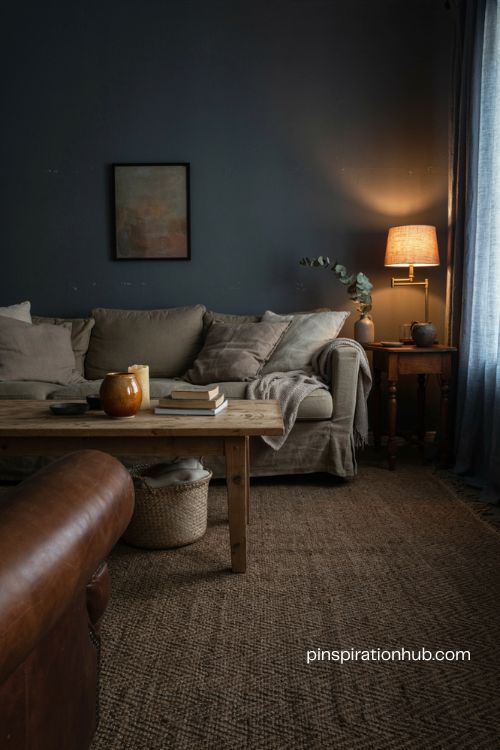
The living room sets the tone for the whole house, and lately, more homeowners are ditching the all-white, all-bright look in favor of something with real depth. Moody design isn’t about making a room feel dark or gloomy — it’s about layering color, texture, and lighting so the space feels like a warm hug instead of a showroom. Whether you’re ready to paint the walls charcoal or just want to add a few dramatic touches, here are fifteen moody living room ideas to help you get that cozy, cocooning feel.
1. Start With a Dark, Livable Wall Color
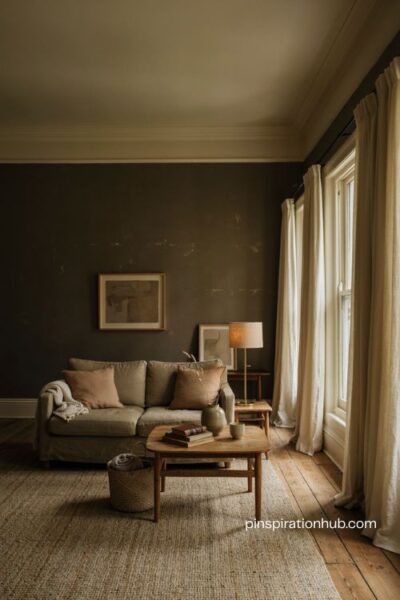
Charcoal, olive, forest green, smoky blue, and deep taupe all make excellent moody foundations, but the right shade depends heavily on how much natural light your room gets. In a dimmer space, skip the darkest possible paint just because it photographs well online — a softened green or warm charcoal delivers the same depth while still reflecting enough light to feel welcoming. Brighter rooms can handle richer navy or chocolate brown without feeling like a cave. Either way, painting the trim a lighter shade helps keep the space from tipping into overwhelming.
2. Build the Room Around One Deep Anchor
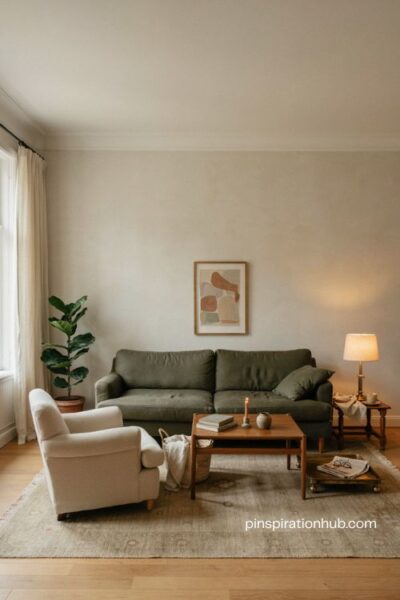
Rather than making every surface dramatic, pick one element to carry the mood — a deep green sofa, a charcoal built-in, or an oversized dark area rug. Let that piece set the emotional tone first, then bring in smaller decorative touches that relate to it rather than compete with it. An olive sofa, for instance, pairs beautifully with walnut furniture, aged brass accents, and cream upholstery, since everything stays within the same visual family instead of feeling like five unrelated ideas crammed into one room.
3. Layer Lighting Instead of Relying on One Fixture
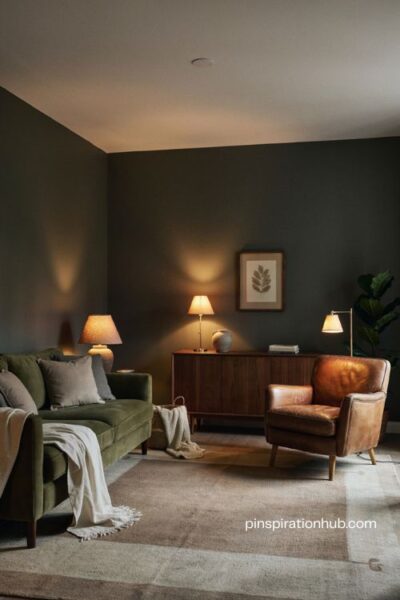
A single bright overhead light flattens a moody room and makes dark walls look harsh rather than rich. Instead, create several small pools of warm light at different heights — a table lamp beside the sofa, a floor lamp near a reading chair, a small accent light on a console. Warm bulbs make wood, leather, and velvet look noticeably richer than cool white ones do. If you do use overhead lighting, choose a dimmable fixture so the room can shift from daytime brightness into a softer evening glow.
4. Choose a Tonal or Monochrome Color Scheme
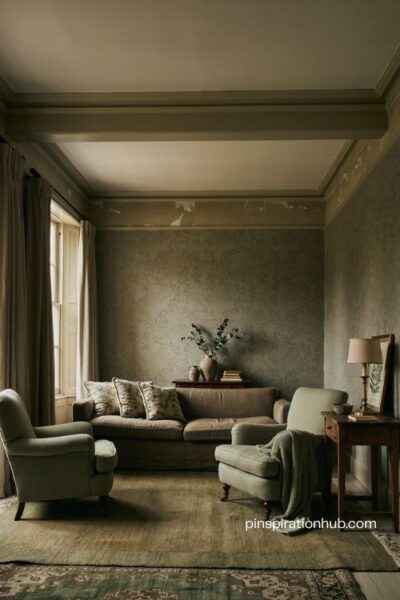
For a more playful take on moody than straight dark neutrals, try building the whole room around a single tonal family. Consistency matters most here — paint, furniture, lighting, and textiles all need to share the same undertone for the look to actually read as cohesive rather than mismatched. A textured or patterned wallpaper in the same color family, paired with trim and molding painted to match, pulls the whole scheme together and gives the room a curated, intentional feel.
5. Let Natural Wood Tones Shine
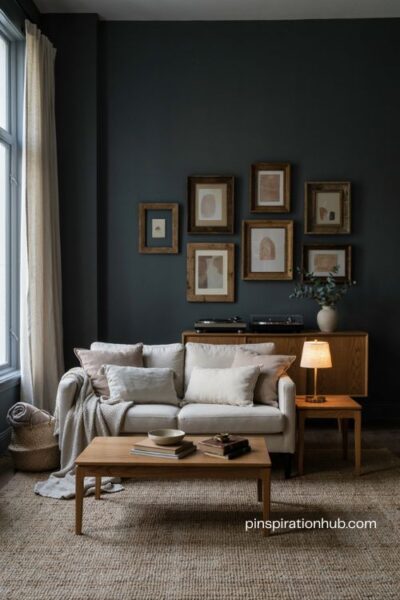
Warm, stained wood brings organic texture into a dark room and keeps it from feeling flat or one-note. Walnut coffee tables, oak media consoles, and reclaimed timber accents all soften deep paint colors while adding real visual interest. Repeating the same wood tone in two or three spots — a coffee table, a side table, a picture frame — creates enough consistency to feel connected rather than scattered, even in a room with several different pieces of furniture.
6. Add Luxurious, Touchable Textures
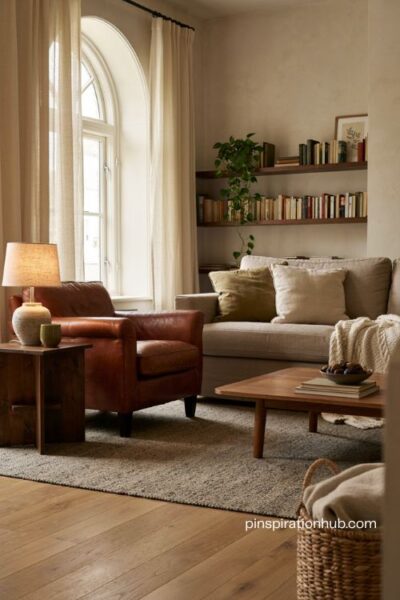
Dark color palettes can start to feel flat if every surface has the same finish, which is where texture earns its keep. Combine a linen sofa with a chunky knit throw, a textured wool rug, matte ceramics, and a softly brushed metal accent to give the eye somewhere new to land at every turn. Metallic finishes in warm brass tones, paired with leather or velvet upholstery, add a final layer of richness that makes the whole space feel finished rather than half-done.
7. Use Dark Blue as Your Base Color
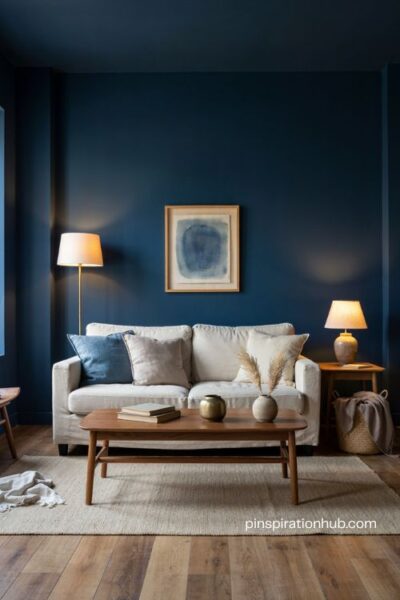
Deep, dramatic blues are one of the most popular starting points for a moody room, and for good reason — they read as sophisticated without feeling harsh. Use darker blues as accents through pillows and artwork for a lighter approach, or commit fully with a navy wall, ceiling, or set of painted cabinets for something bolder. Balancing the blue with softer, complementary tones or warm wood accents keeps the color from feeling intimidating or overly cool.
8. Bring In a Statement Moody Wallpaper
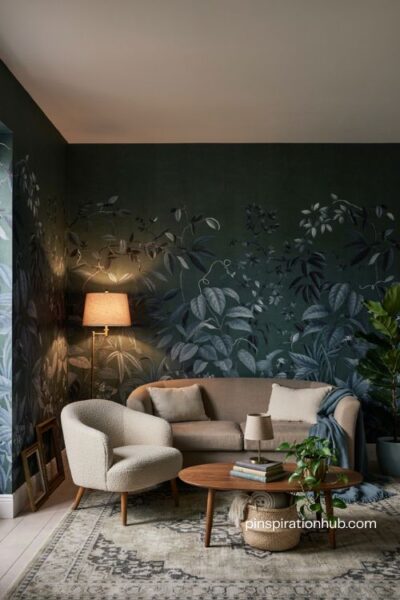
Wallpaper in dark colors and eye-catching patterns can transform a room without requiring a full redesign. A rich, patterned design works as a furniture backdrop, an accent wall, or a full-room wrap for maximum drama. To keep the space from feeling closed in, balance a bold wallpaper with organic shapes, brass or gold accents, and a bit of greenery — these elements keep the room feeling harmonious rather than overwhelming.
9. Layer in Real, Living Plants
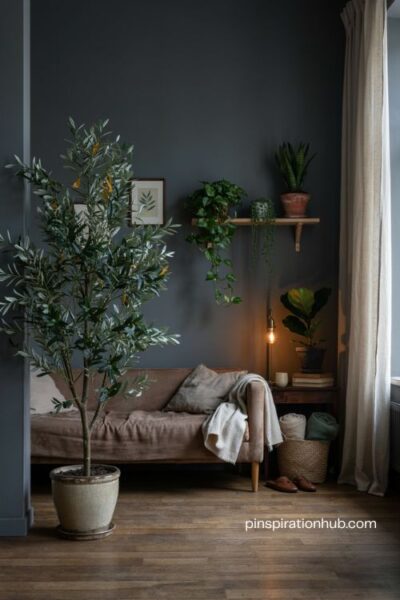
Plants make dark interiors feel fresher without disrupting the mood you’ve built. One substantial plant in an empty corner, or a few smaller ones grouped on shelves and side tables, adds life and softens hard edges. Olive trees, rubber plants, and trailing varieties all work especially well when the room gets enough natural light. Stick to planters that support the palette — aged ceramic, terracotta, or dark metal — rather than bright plastic pots that pull focus from the rest of the design.
10. Create a Cozy Reading Corner With Its Own Glow
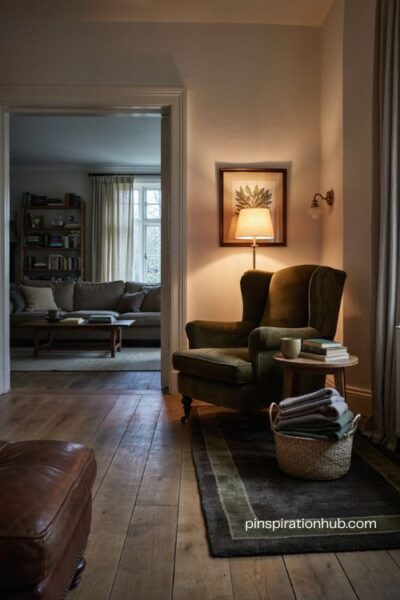
A small, functional zone gives a moody living room a sense of purpose beyond just looking atmospheric. Set a comfortable chair beside a floor lamp, add a small side table, and keep a basket of books or blankets nearby. Focus the lighting specifically on the chair rather than the whole room — that contrast between a softly lit reading nook and the darker space around it adds real depth while still supporting an everyday activity like curling up with a book.
11. Layer Artwork for Character and Warmth
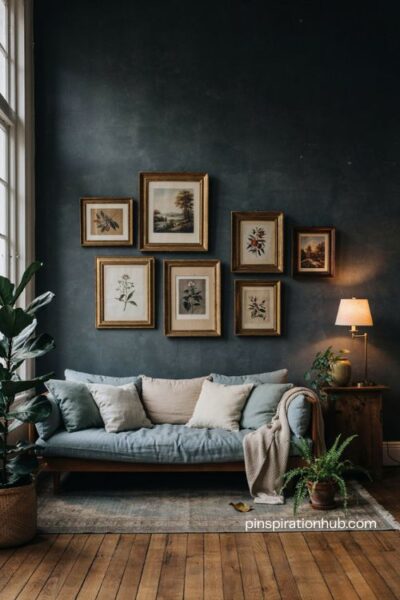
Dark walls make an excellent backdrop for artwork, especially pieces with antique frames or unexpected placements. Layers of art alongside real plants add life to a moody room without introducing too much brightness. Look for pieces featuring cream, muted gold, dusty blue, or soft green rather than stark white backgrounds, since these tones stay in conversation with the room’s palette instead of fighting against it.
12. Make the Fireplace or Media Wall the Evening Focal Point
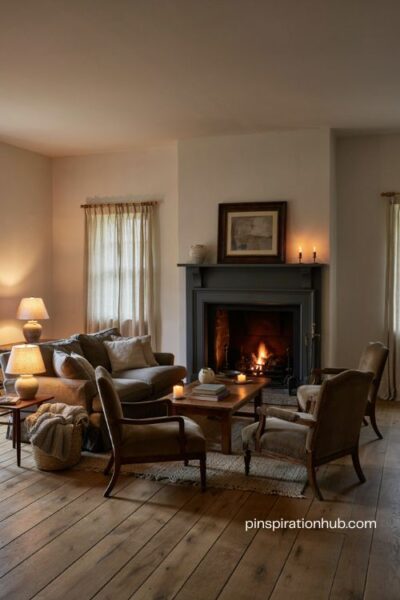
If your living room has a fireplace, let it anchor the entire mood. A deep painted surround, warm stone, or dark brick gives the room architectural weight, and the glow of an actual fire only deepens the cocooning effect after dark. Without a fireplace, a media wall or console can perform the same role — pair a dark backdrop with warm wood tones, understated artwork, and low-level lighting to create a calm visual center rather than a wall crowded with accessories.
13. Pair Leather With Soft Fabrics for Contrast
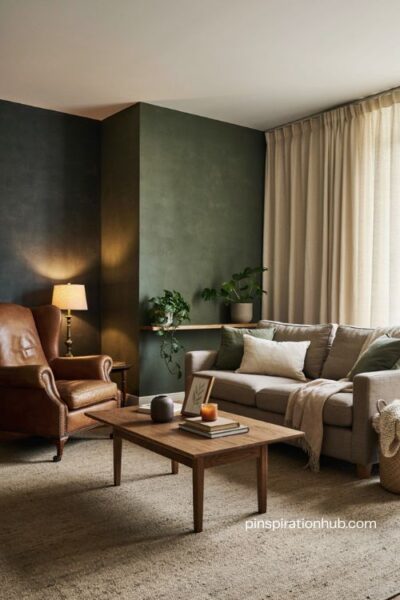
Contrast in a moody room doesn’t have to mean black against white — material contrast often works even better. A cognac leather chair adds real warmth against deep green or charcoal walls, while velvet cushions and brushed cotton throws keep the surrounding seating soft and inviting. Choosing matte, slightly weathered materials over anything glossy helps the room absorb light gently rather than reflecting it harshly, which keeps the whole space feeling settled.
14. Keep Contrast Soft Rather Than Extreme
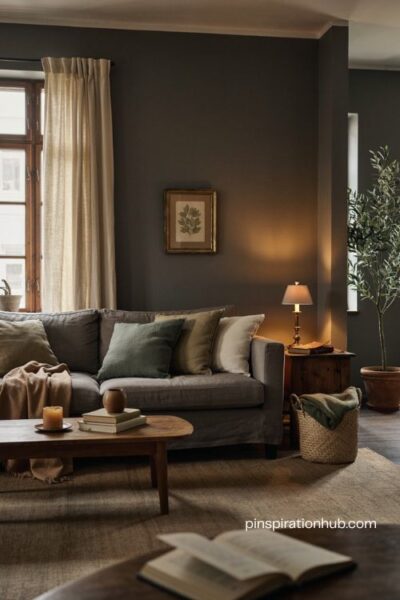
The most successful moody rooms rarely rely on stark contrast — instead, they use small shifts between closely related tones. Charcoal meeting smoky gray, olive meeting moss green, brown meeting camel: these pairings feel intentional rather than jarring. Save your brightest contrast for one or two key spots, like a cream cushion or a brass lamp, so the eye has a clear place to land. Keeping most of the room within a tight tonal range is what makes those small highlights actually pop.
15. Design for Everyday Comfort First
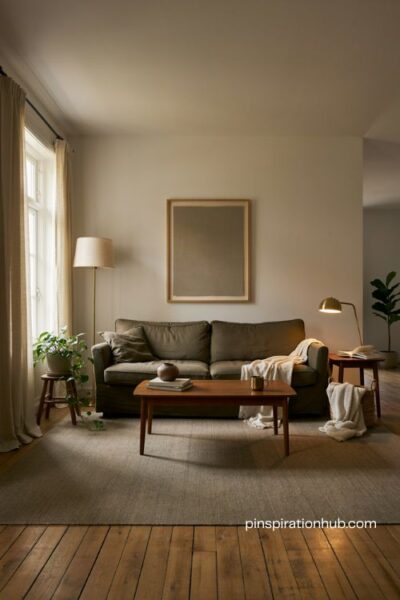
A beautiful moody room still needs to function on an ordinary Tuesday evening. Make sure the sofa is genuinely comfortable, tables sit within easy reach, walking paths stay open, and lamps provide enough light for reading. If you’re building the space gradually, start with the sofa, rug, main lighting, and one large anchor piece before layering in artwork, plants, and smaller accessories. This keeps the design from feeling visually crowded even as the dark palette adds real drama.
Final Thoughts
A moody living room isn’t about painting everything black and calling it done — it’s a mood, a vibe, something you build in layers until the whole space feels like it’s inviting you to slow down. Pick one deep color to start, add warmth through wood and texture, and let the lighting do the rest of the emotional work. Start small if you’re not ready to commit to a full repaint, and let the room evolve from there.
Frequently Asked Questions
Q: Will a moody living room make a small space feel smaller?
Not necessarily — softened dark colors like charcoal or olive paired with lighter trim, warm lighting, and reflective brass accents can keep a small room feeling cozy rather than cramped.
Q: What’s the easiest way to try a moody look without painting?
Layered lighting, a dark area rug, textured throw pillows, and one or two pieces of moody artwork can shift a room’s atmosphere significantly without committing to a full paint job.
Q: Does a moody living room need a lot of natural light to work?
Rooms with limited natural light can still go moody, but softer shades like a muted green or warm charcoal tend to work better there than the darkest possible paint, which can feel closed-in without enough light to balance it.